
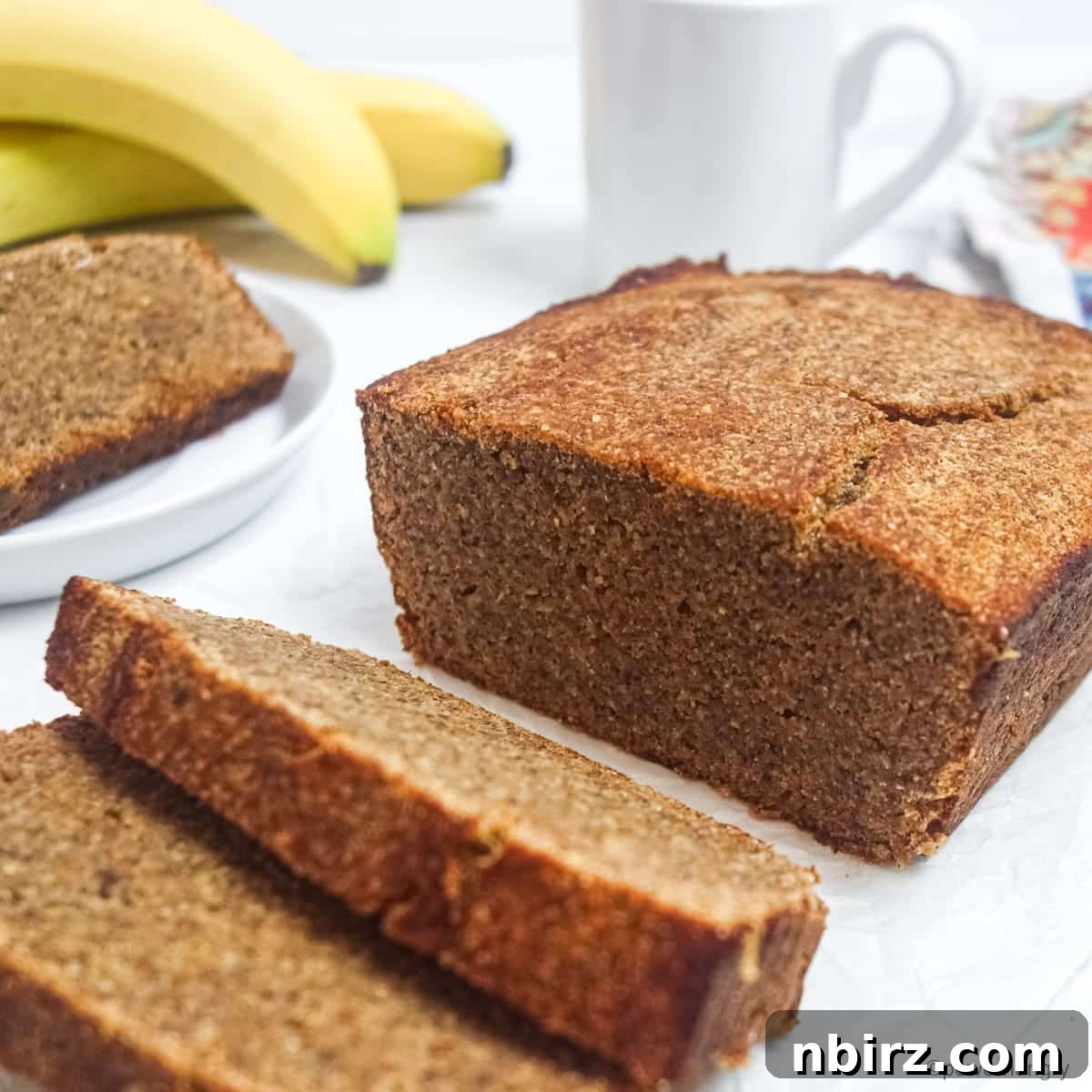
Welcome to the ultimate recipe for the **best vegan coconut flour banana bread**! This truly exceptional loaf is not only incredibly delicious but also remarkably quick and easy to prepare. Crafted with health and dietary needs in mind, this bread proudly boasts being entirely oil-free, gluten-free, grain-free, and nut-free. Whether you’re navigating specific dietary restrictions or simply seeking a healthier, plant-based alternative to a classic comfort food, this recipe delivers a moist, firm texture and rich, sweet flavor that will delight your senses.
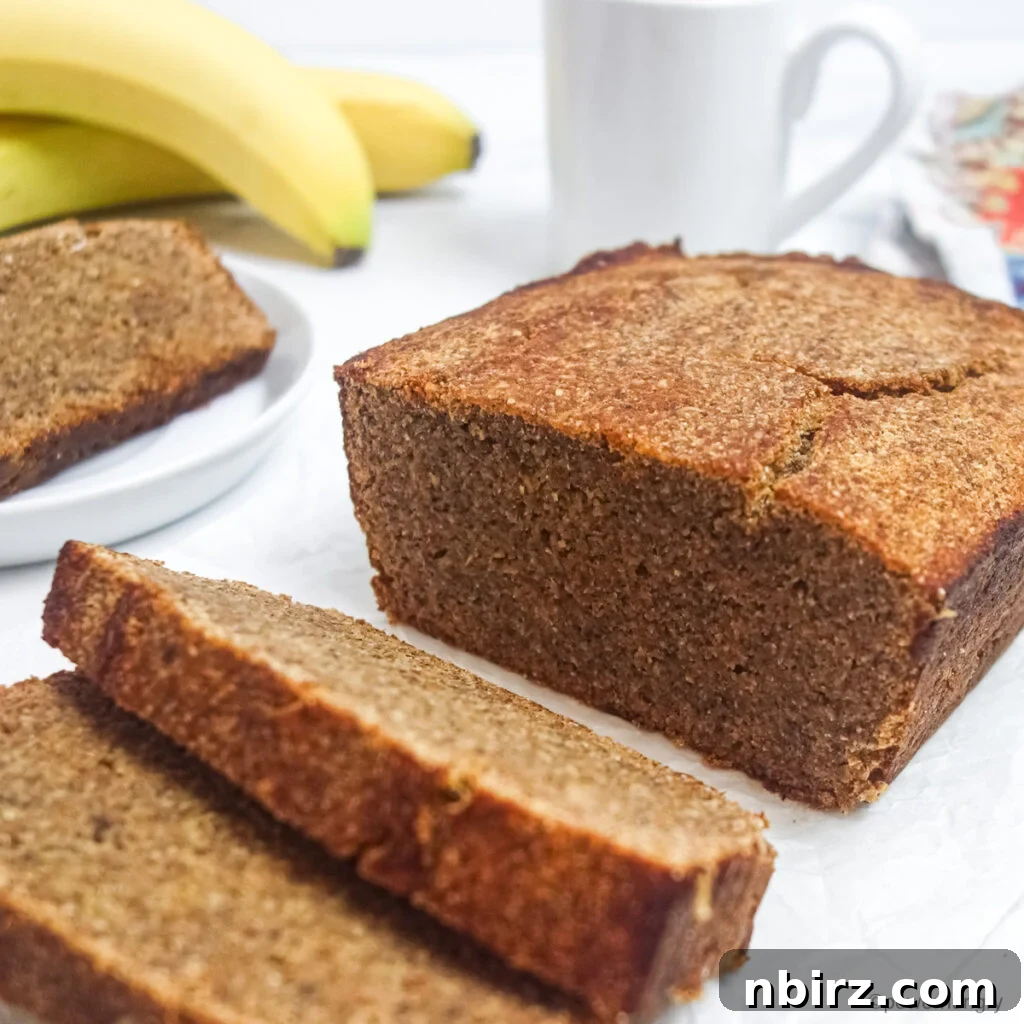
Bake the Best Vegan Coconut Flour Banana Bread
Banana bread is a beloved classic, cherished for its comforting aroma and sweet, tender crumb. However, finding a recipe that caters to various dietary needs without compromising on taste or texture can often feel like a culinary quest. This recipe rises to the challenge, offering a fantastic solution for those seeking a vegan, gluten-free, grain-free, oil-free, and nut-free option. It’s a testament to how simple ingredients can come together to create something truly extraordinary and wholesome.
Unlocking the Magic of Vegan Coconut Flour Banana Bread
Yes, absolutely! Creating a delicious vegan banana bread solely with coconut flour is not just possible, it’s a game-changer. Unlike many specialized recipes, you won’t need to blend multiple alternative flours or incorporate nut butters to achieve the perfect consistency. The secret lies in understanding the unique properties of coconut flour and how it interacts with other plant-based ingredients.
Coconut flour is truly distinct from most other flours. Its incredibly high absorbency means it’s used in much smaller quantities compared to wheat or even other gluten-free flours. This characteristic makes it unsuitable for direct substitution in most recipes without extensive testing and adjustment. Traditional coconut flour baking often relies heavily on a multitude of eggs to provide the necessary structure and moisture. However, after rigorous testing and refinement, I’ve perfected an easy-to-follow recipe that yields an intensely flavorful banana bread with a moist yet remarkably firm texture, all without a single egg or drop of oil.
This innovative approach not only makes the bread accessible to more people but also highlights the versatility of plant-based baking. The result is a loaf that stands tall, slices beautifully, and satisfies even the most discerning palates, proving that dietary restrictions don’t have to mean sacrificing deliciousness.
Exceptional Benefits of This Unique Recipe
This easy coconut flour banana bread recipe offers a plethora of benefits that make it an outstanding choice for any baker. It’s designed to be inclusive and nourishing, addressing common dietary needs and preferences without compromise:
- Vegan: Completely egg-free and dairy-free, this recipe aligns with a plant-based lifestyle, making it suitable for ethical reasons, lactose intolerance, or egg allergies.
- Oil-Free: By omitting added oils, this banana bread is lighter and healthier, perfect for those monitoring fat intake without sacrificing moisture or flavor.
- Grain-Free: Ideal for Paleo or primal diets, this bread avoids grains, focusing on nutrient-dense ingredients.
- Gluten-Free: A safe and delicious option for individuals with celiac disease, gluten sensitivity, or those choosing to avoid gluten.
- No Additional Flours: This recipe exclusively uses coconut flour, simplifying the ingredient list and highlighting its unique texture.
- Xanthan Gum-Free: For those who prefer to avoid common gluten-free thickeners, this recipe achieves its perfect structure naturally.
- Nut-Free: A fantastic option for school lunches or gatherings where nut allergies are a concern, ensuring everyone can enjoy a slice.
- Minimal Ingredients: With a straightforward list of accessible ingredients, this recipe proves that healthy and delicious baking doesn’t require a specialty pantry.
- Easy to Prepare: Designed for simplicity, even novice bakers will find this recipe manageable and rewarding, yielding impressive results with minimal effort.
Beyond these practical benefits, this banana bread is truly a delightful treat. Its rich, tropical flavor profile, combined with its satisfying texture, makes it a go-to recipe for breakfast, snacks, or even a light dessert.
Essential Ingredients for Your Easy Vegan Coconut Flour Banana Bread
The precise measurements for each ingredient can be found in the recipe card at the end of this article. You can easily toggle between US Customary (volume) and Metric (weights) for your preferred measurement system.
Crafting this incredible vegan coconut flour banana bread requires a careful selection of ingredients, each playing a vital role in achieving its unique flavor and texture:
- Coconut flour: The star ingredient! Its unique absorbency is key to this bread’s texture. Always measure accurately.
- Very ripe bananas: The foundation of flavor and natural sweetness. The riper, the better for depth of taste and moisture.
- Flaxseed meal: Acts as our vegan “egg” replacer, binding the ingredients and contributing healthy omega-3s.
- Coconut sugar: Provides a rich, caramel-like sweetness. Options for other granulated sweeteners are available in the recipe card notes.
- Vanilla extract: Enhances the overall flavor profile with its warm, aromatic notes.
- Cinnamon: A classic pairing with banana, adding warmth and spice.
- Baking soda: Our leavening agent, ensuring a perfect rise and tender crumb.
- Salt: While optional, a small amount of salt balances the sweetness and elevates all the other flavors. It’s not essential for the bread’s structure, but highly recommended for taste.
You will also need a very small amount of water to activate the flaxseed meal and contribute to the dough’s moisture. Remember, while salt brings out the full spectrum of flavors, you can adjust or omit it according to your preference without compromising the bread’s success.
Regarding flaxseed meal, you can use either regular flaxseed meal (which is typically a darker brown) or golden flaxseed meal. I personally favor golden flaxseed meal for its slightly milder flavor, which allows the banana and coconut notes to shine even more. However, rest assured that both varieties will perform equally well in this recipe, delivering consistent results every time.
The Golden Rule: Use Very Ripe Bananas for Optimal Banana Bread Success
Just like in most banana bread recipes, the ripeness of your bananas is paramount for this vegan coconut flour version. For the absolute best results, select bananas with abundant brown spots or even entirely brown peels. This level of ripeness guarantees maximum natural sweetness and ensures they are soft enough to mash effortlessly into a super-fine consistency with just a fork or potato masher. Ripe bananas not only impart intense flavor but also contribute significantly to the bread’s moistness and tender texture.
Don’t fret if you have an abundance of ripe bananas and no immediate baking plans. You can easily peel them and store them in a freezer-safe container or bag. Frozen ripe bananas are perfect for future use in banana bread, smoothies, or other baked goods, allowing you to be prepared for spontaneous baking whenever the craving strikes.
Step-by-Step Guide: How to Make Vegan Coconut Flour Banana Bread
Please find the full, detailed directions conveniently located in the recipe card at the bottom of this page.
Making this delightful vegan coconut flour banana bread is a straightforward process. Follow these steps for a perfect loaf every time:
Step One: Prepare Your Oven and Loaf Pan
Begin by preheating your oven to 350°F (180°C). This ensures the oven is at the correct temperature when your bread is ready to bake, promoting an even rise and thorough cooking. Next, prepare a 9×5-inch (22.5 x 12.5 cm) loaf pan. You can spray it generously with a nonstick cooking spray, or for a completely oil-free version, lightly grease it with a minimal amount of oil or opt for a high-quality non-stick loaf pan. Proper pan preparation is key to preventing your delicious bread from sticking.
Step Two: Thoroughly Combine the Wet Ingredients
In a spacious mixing bowl, combine the mashed ripe bananas, water, flaxseed meal, coconut sugar, and vanilla extract. Whisk these ingredients together until they are thoroughly blended and a smooth, cohesive mixture forms. The flaxseed meal will begin to absorb liquid and create a gel-like consistency, acting as our plant-based binder. Ensuring these wet ingredients are well-incorporated is crucial for the overall consistency of your banana bread.
Step Three: Incorporate the Dry Ingredients
Now, add the coconut flour, ground cinnamon, baking soda, and salt to the bowl containing your wet ingredients. Stir vigorously until all the dry ingredients are completely combined with the wet mixture. Unlike traditional wheat-based baking, there’s no need to worry about overmixing here, as coconut flour is gluten-free. So, mix thoroughly until no pockets of dry flour remain. The mixture will transform from a typical batter into a moist yet notably firm dough. This dense consistency is exactly what you’re looking for with coconut flour, indicating proper hydration.
Step Four: Evenly Spread the Dough in Your Prepared Pan
Because this recipe results in a thick, firm dough rather than a pourable batter, you have a couple of options for transferring it to the loaf pan. You can simply scoop the dough into the pan and press it down firmly, or you can first shape the dough into an oblong form that roughly matches the size of your pan before placing it inside. Whichever method you choose, ensure the dough is pressed evenly into the pan, creating a smooth top for consistent baking and an appealing final presentation.
Step Five: Bake Your Banana Bread to Perfection
Place the prepared loaf pan into your preheated oven and bake for approximately 50 to 55 minutes. The bread is done when it achieves a deep golden-brown color on top and a wooden toothpick or a thin skewer inserted near the center of the loaf comes out with only a few moist crumbs clinging to it. If it comes out wet, continue baking for a few more minutes. Avoid overbaking, as this can lead to a dry texture, especially with coconut flour.
Step Six: Cool the Bread Properly
Once baked, remove the loaf pan from the oven. Allow the bread to cool in the pan for about 15-20 minutes on a wire rack. This initial cooling period allows the bread to set and prevents it from crumbling. After this, gently run a thin butter knife around the edges of the pan to help release the loaf. Carefully invert the pan and transfer the loaf onto a cooling rack to cool completely. Cooling completely is crucial for developing the final firm texture and for easier, cleaner slicing.
Slice and Savor Your Perfectly Baked Loaf
Once your vegan coconut flour banana bread has completely cooled, it’s ready to be sliced and enjoyed. Use a sharp, non-serrated knife for the cleanest cuts; a serrated knife can sometimes pull at the moist, firm structure of the bread. You’ll notice that the slices are both firm and slightly fragile due to the bread’s delightful moistness. This unique texture is part of its charm!
If you prefer an even firmer texture, there’s a simple trick: toast your slices. This small extra step can transform the bread’s consistency to be more “bread-like” and less delicate.
Enjoy It Your Way: Plain or Toasted
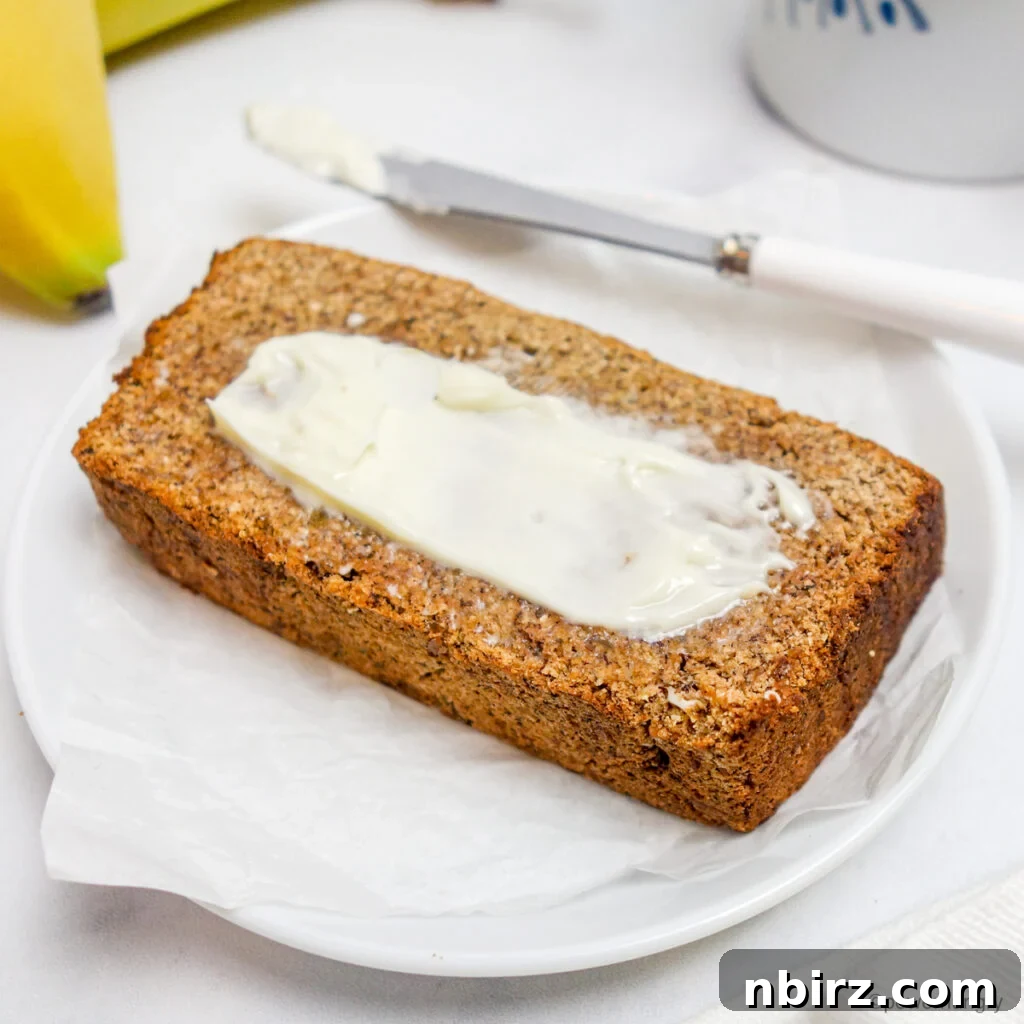
The beauty of this vegan coconut flour banana bread lies in its versatility. You can enjoy it simply plain, savoring its naturally sweet, moist, and firm texture. However, if you’re inclined towards a less moist and more robust slice, a quick toast in a toaster or pan is all that’s required. Toasted slices gain a wonderful crispness on the outside and a firmer, more “bread-y” texture that some find irresistible. I personally enjoy it both ways, depending on my mood and the occasion, and encourage you to experiment and discover your favorite way to indulge!
If you’ve been searching for a delicious banana bread that fits your grain-free, gluten-free, oil-free, or plant-based eating plan, or if, like me, you simply adore exploring new variations of this classic treat, then this tender, tropically-inspired loaf is sure to become a new favorite. I can personally vouch for its excellence as a pre-run morning fuel, providing sustained energy and delightful flavor. Its unique profile and satisfying qualities make it a standout.
Happy Baking!
Frequently Asked Questions (FAQ)
How Should I Store Vegan Coconut Flour Banana Bread?
Proper storage is essential to maintain the freshness and quality of your vegan coconut flour banana bread. Once completely cooled, store the loaf in an airtight container. It will keep well at cool room temperature for up to 2 days. For longer storage, you can refrigerate it for up to 1 week. If you wish to extend its shelf life even further, the bread freezes beautifully for up to 6 months. For freezing, slice the bread first and then store the slices in an airtight container or freezer bag, separating layers with parchment paper for easy retrieval.
Is There a Substitute for the Coconut Flour?
Given the unique properties of coconut flour, there is no direct, simple substitute for it in this specific recipe. Coconut flour absorbs a significant amount of liquid and behaves very differently from other flours. Attempting to substitute it with almond flour, oat flour, or wheat flour will drastically alter the texture and moisture content, leading to unsatisfactory results. However, if you are looking for other delicious vegan and gluten-free banana bread options, don’t worry – I have plenty of recipes tailored for various flours! You can explore a wide assortment of vegan, gluten-free banana bread recipes right here on PowerHungry. Just search “banana bread” for more choices.
A few examples of my other popular banana bread recipes include:
- Vegan Oat Flour Banana Bread (Oil-Free, Nut-Free, Gluten-Free)
- Vegan Quinoa Flour Banana Bread (GF, Oil-Free Option)
- Vegan Almond Flour Banana Bread {5 ingredients, oil-free}
- Vegan Chickpea Flour Banana Bread
- Chocolate Chickpea Flour Banana Bread {vegan, grain-free}
- 4-Ingredient Vegan Oil-free Banana Bread {gluten-free, added sugar-free}
Is There a Substitute for the Coconut Sugar?
Yes, absolutely! You can easily substitute the coconut sugar with an equal amount of your preferred granulated sweetener. This allows for flexibility based on what you have on hand or specific dietary needs. Excellent alternatives include:
- Light or dark brown sugar, for a richer, more molasses-like flavor.
- A 1:1 granulated sugar or brown sugar replacement, often used in low-carb or sugar-free baking.
- Standard granulated sugar (white sugar) for a clean, classic sweetness.
You can also opt for an equal amount of liquid sweetener, such as pure maple syrup or agave nectar. If you choose a liquid sweetener, remember to reduce the total amount of added water in the recipe to just 2 tablespoons (30 mL) to maintain the correct dough consistency.
Is There a Substitute for the Flaxseed Meal?
Flaxseed meal plays a crucial role as a binder and egg replacer in this vegan recipe. An equal amount of ground chia seeds (also known as chia meal) would likely work well as a substitute, offering a similar binding capacity. However, please note that I have not personally tested this substitution, so results may vary slightly.
If you do not adhere to a plant-based diet and consume eggs, you can easily swap the flaxseed meal and the added water for three large eggs. This will also provide excellent binding and structure, albeit altering the vegan nature of the recipe.
Explore More Delicious Coconut Flour Bread Recipes
If you’ve fallen in love with baking with coconut flour, you’re in luck! I have developed a range of other fantastic recipes that showcase the versatility of this unique ingredient. From savory loaves to sweet treats, there’s much more to explore:
- Vegan Coconut Flour Sandwich Bread {gluten-free, oil-free}
- Vegan Oil-Free Coconut Flour Bread {4 ingredients, GF}
- Vegan Coconut Flour Flax Bread
- 100% Coconut Flour Bread Rolls {vegan, keto, 4 ingredients}
Vegan Coconut Flour Banana Bread (GF, oil-free)
Camilla
5 minutes
1 hour
52 minutes
1 hour
14
Equipment
-
1 9×5 inch loaf pan
Ingredients
-
2
cups
mashed very ripe bananas -
1/2
cup
flaxseed meal -
1/3
cup
coconut sugar, (see notes for options) -
1/4
cup
water -
1
teaspoon
vanilla extract -
1
cup
coconut flour -
1
teaspoon
ground cinnamon -
1
teaspoon
baking soda -
1/2
teaspoon
salt
Instructions
-
Preheat the oven to 350F (180C). Spray a 9×5-inch loaf pan with nonstick baking spray.
-
In a large bowl, whisk the bananas, water, flaxseed meal, coconut sugar and vanilla extract until blended.
-
Add the coconut flour, cinnamon, baking soda and salt to the bowl. Stir until completely blended (the result will be a thick, moist dough, not the usual batter for banana bread).
-
Press and spread the dough into the prepared pan (or first shape into an oblong and then place in pan). Press so that it is an even, smooth loaf.
-
Bake the bread in the preheated oven for 50 to 55 minutes until deep golden brown and a toothpick inserted near the center of the loaf comes out with only a few moist crumbs attached.
-
Transfer the pan to a cooling rack and cool for 20 minutes before removing from the pan. Cool completely before slicing.
Notes
Coconut Sugar Options: Please feel free to use the granulated sweetener of your choice in place of the coconut sugar (e.g., light or dark brown sugar, a 1:1 granulated sugar replacement, or granulated sugar). You can also use 1/3 cup (75 mL) maple syrup or other liquid sweetener and reduce the total amount of water to 2 tablespoons (30 mL).
Nutrition
Serving:
1
serving
|
Calories:
111
kcal
|
Carbohydrates:
18
g
|
Protein:
3
g
|
Fat:
3
g
|
Saturated Fat:
1
g
|
Polyunsaturated Fat:
2
g
|
Sodium:
172
mg
|
Fiber:
3
g
|
Sugar:
10
g
Like this recipe? Rate and comment below!