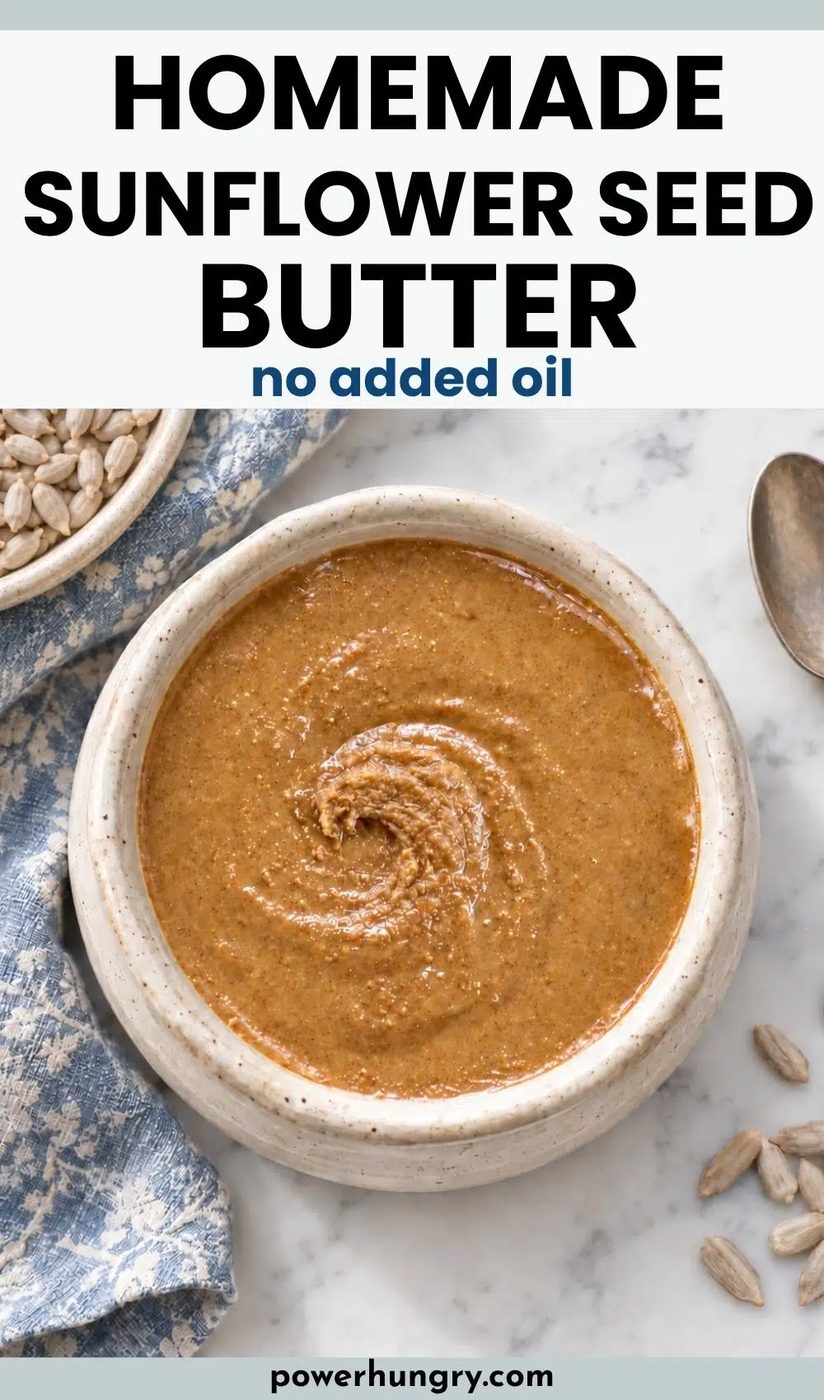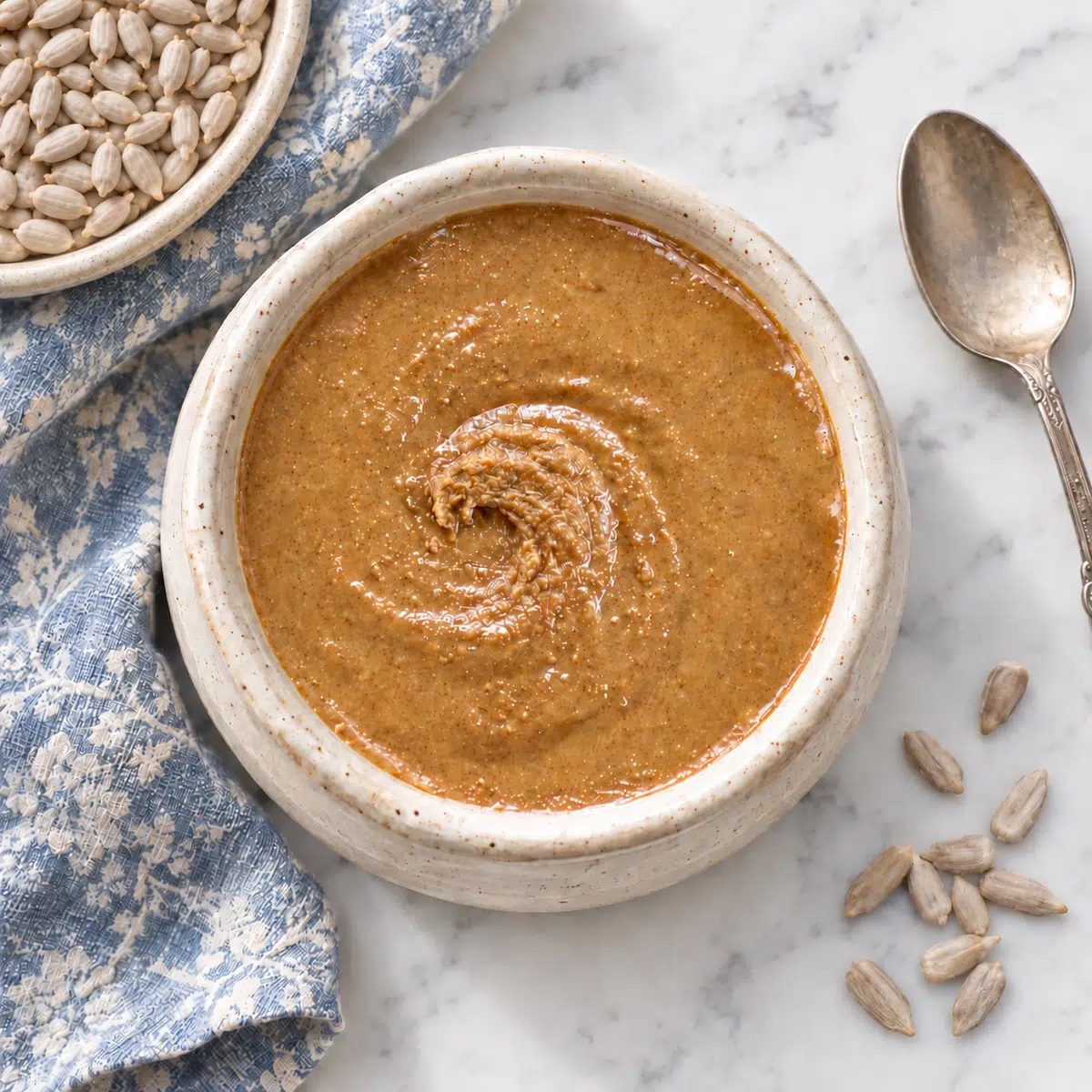
Roasted sunflower seeds turn into smooth, spreadable sunflower seed butter with a food processor or high-speed blender and no added oil. Sweeten it to taste, leave it unsweetened, or use the keto option in the recipe notes.
Introduction
I first made this sunflower seed butter for my sister, Rebecca, who is allergic to peanuts. Growing up, she had to convince people that even a little peanut butter could hurt her. A good kitchen-made alternative matters to me for that reason—and this one is also satisfying straight from the spoon!
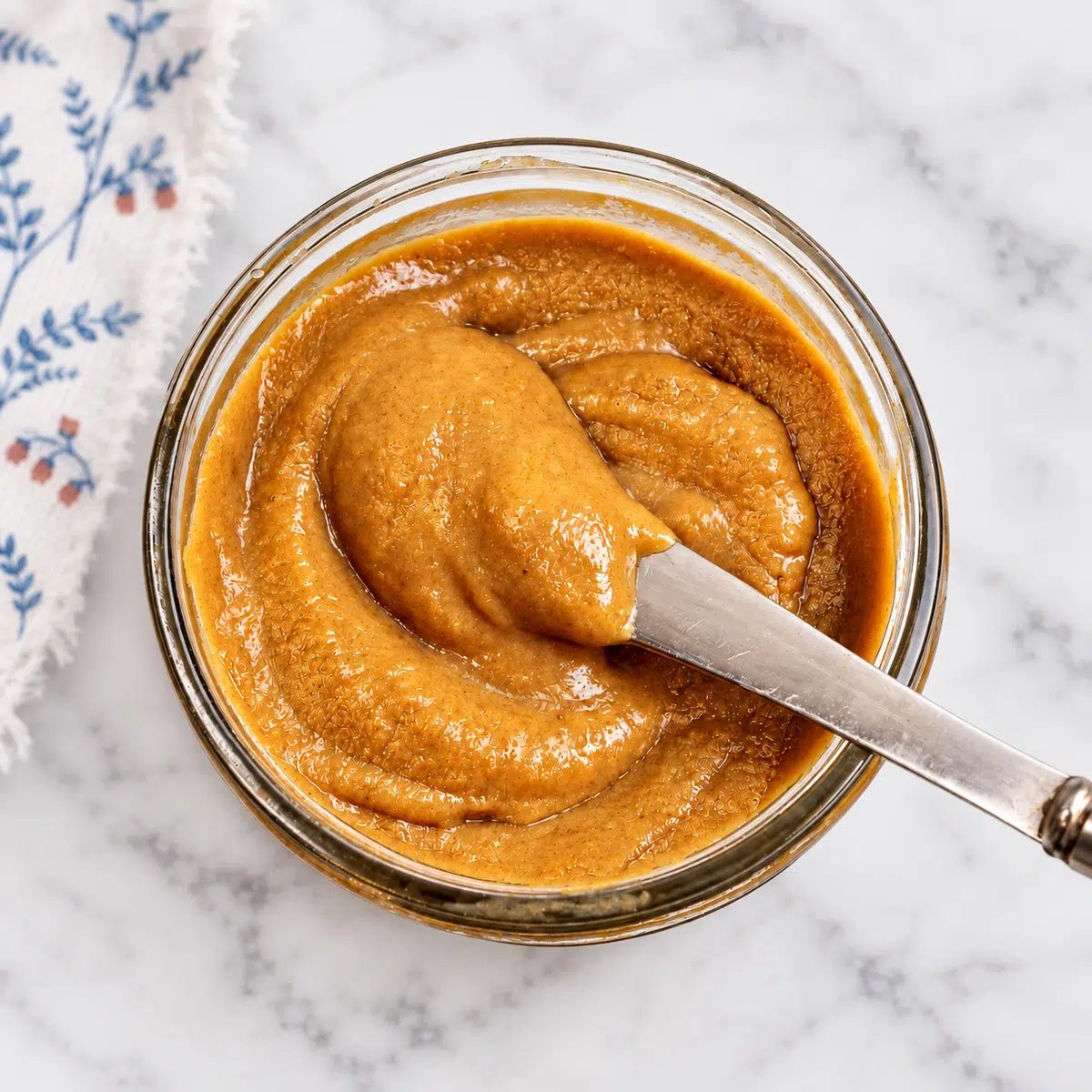
The method is plain: roast the sunflower seeds, let them cool, and process them until they release their oils. The mixture looks like coarse flour at first, then clumps into a stiff ball. Keep going. After several more minutes of processing and scraping, it becomes creamy and spreadable without a drop of added oil.
Why You’ll Love This Recipe
- Plain ingredients.Made with hulled sunflower seeds, coconut sugar, and salt, with the sweetener adjustable or optional.
- No added oil.The seeds become creamy as you process them.
- Peanut-free.An option when you need a peanut-free spread (note: check that all ingredients, and equipment, are suitable for your allergy needs).
- Frugal.Sunflower seeds are relatively inexpensive, especially compared to most nuts, as well as pre-made sunflower seed butter.
- Rich in vitamins and minerals.Sunflower seeds are an excellent source of vitamin E, as well nourishing fats, and a good sources of minerals such as zinc, selenium and copper.
Ingredients
The exact amounts of each ingredient are indicated in the recipe card at the end of the post.Toggle betweenUS Customary(volume) andMetric(weights) for preferred measurement option.
- Raw sunflower seed kernels:Choose hulled kernels, not seeds in their shells. Roasting brings out their flavor. Already-roasted kernels can be used instead; skip the roasting step.
- Coconut sugar:Adds sweetness after the butter has become smooth. You can adjust it or omit it.
- Fine sea salt:Balances the flavor. Taste after blending and adjust as desired.
How to Make Sunflower Seed Butter
Note that the complete instructions are also in the recipe card below.
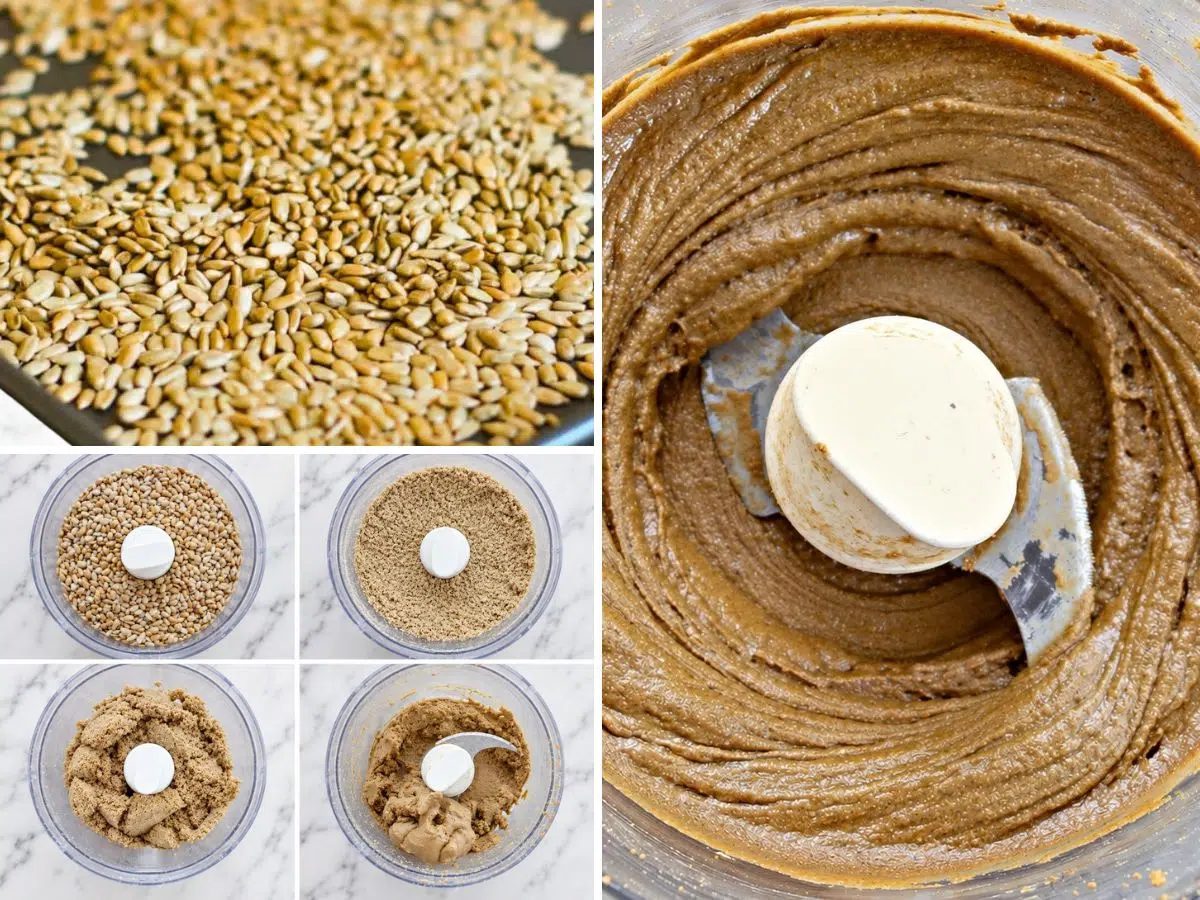
- Roast the seeds.Spread the raw, hulled sunflower seed kernels on a large rimmed baking sheet, keeping them away from the edges. Roast at 350°F (175°C) for 10 minutes, stir, then roast for about 8 minutes more, until golden and fragrant. Watch closely toward the end so they do not burn. If using already-roasted kernels, skip this step.
- Cool completely.Immediately transfer the roasted kernels to a food processor or high-speed blender to stop the cooking. Let them cool completely before processing.
- Process through the clumpy stage.Process until the seeds resemble coarse flour. Scrape down the container and continue until the mixture clumps and then pulls together into a rough, thick butter, scraping as needed.
- Keep processing until smooth.Process for another 4 to 5 minutes, stopping to scrape occasionally, until the seed butter changes from stiff and dry-looking to smooth and creamy. The final stage takes patience.
- Season and store.Add the coconut sugar and salt and process until combined. Taste and adjust if desired, then transfer to tightly covered jars or containers and refrigerate.
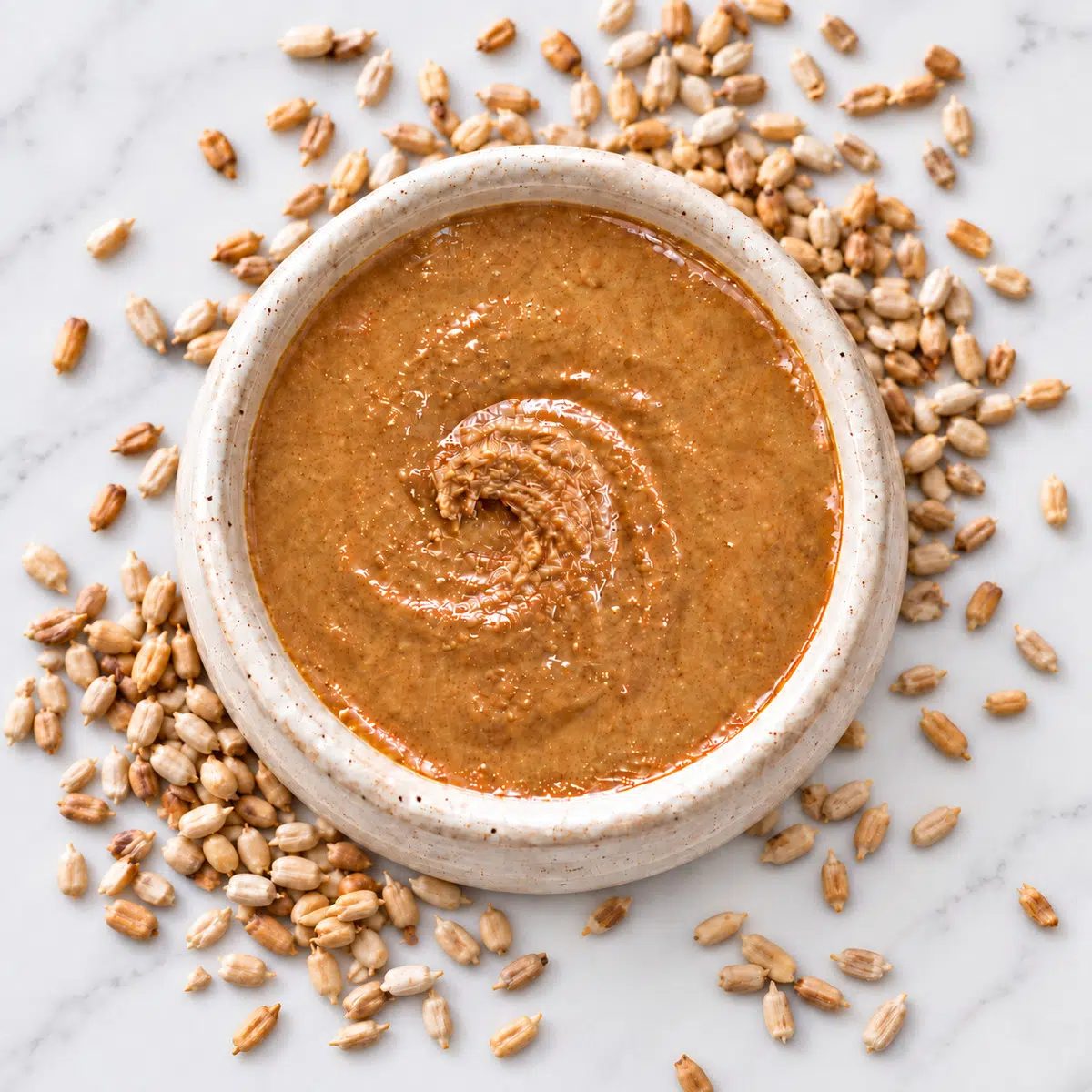
Taste and Texture
Roasting gives the sunflower seeds a deeper, toasty flavor. The finished butter is thick, creamy, and spreadable; the sweetness and salt can be adjusted to your taste. It will look grainy and stiff before it turns smooth, so do not stop processing at the clumpy stage.
Storage
Transfer the finished sunflower seed butter to jars or other airtight containers. Refrigerate for up to 6 months.
Serving Suggestions
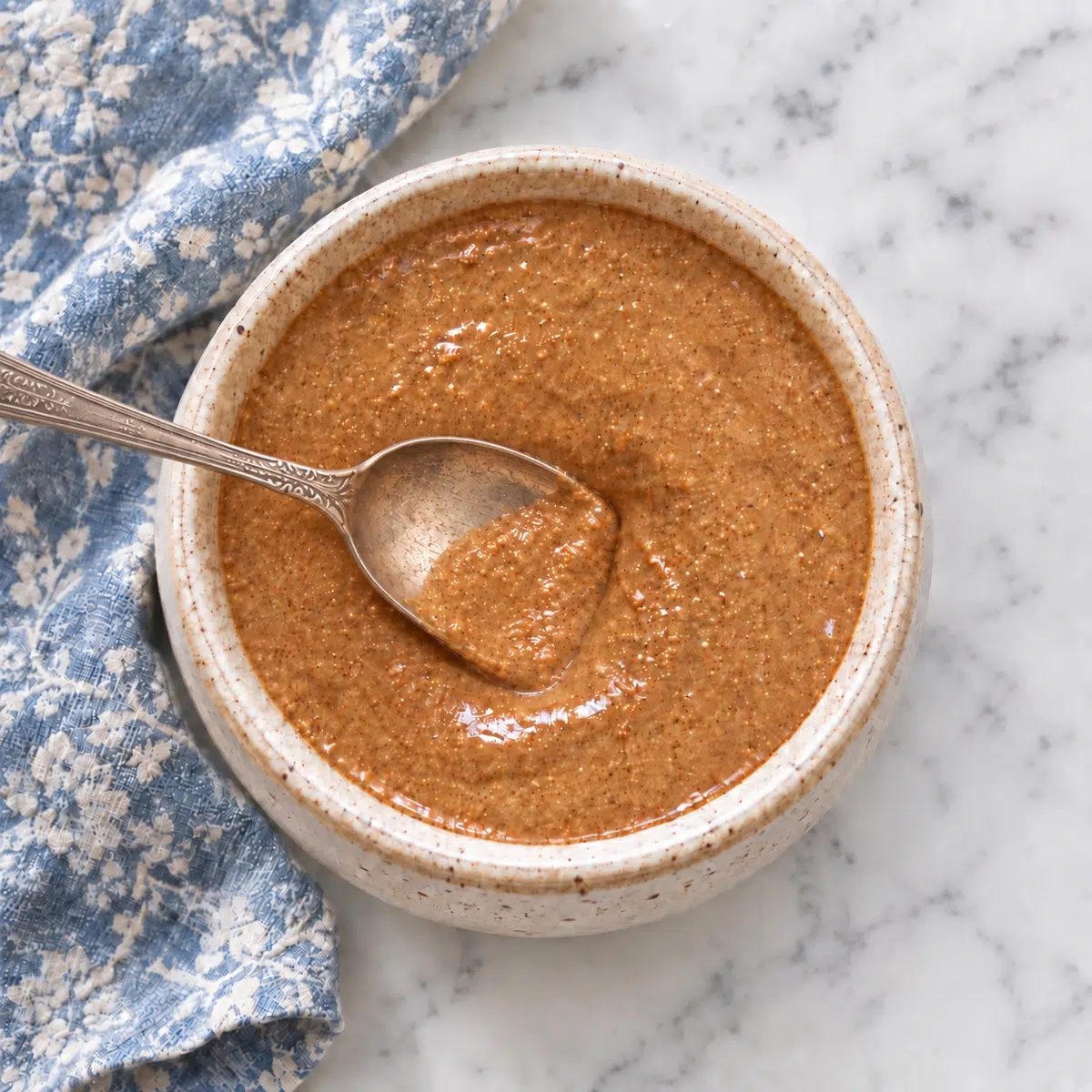
Enjoy and use sunflower butter as you would nut butters, such as almond butter or peanut butter!
Spread it on toast, use it make jam and sunflower seed butter sandwiches, dip apple slices in it, add to a smoothie, or enjoy a spoonful straight from the jar. You can also use it in myVegan Sunflower Seed Chocolate Chip Cookies.
Variations
Unsweetened sunflower seed butterOmit the coconut sugar for a less sweet spread. Taste the butter after processing and adjust the salt to your liking.
Keto optionOmit the coconut sugar or use an equal amount of a keto-friendly liquid or granular sweetener, as noted in the original recipe. The nutrition information for the coconut-sugar version does not describe this variation.
Maple cinnamon sunflower seed butterReplace the coconut sugar with an equal amount of maple syrup and add 1/2 to 1 teaspoon of ground cinnamon, to taste.
Tips for Success
Keep the seeds away from the pan edgesSpread the kernels in an even layer and leave a little space around the rim. Seeds touching the hot edges can brown too quickly. Stir after the first 10 minutes and watch closely during the final minutes.
Do not stop when the mixture forms a ballThe coarse flour and thick clumps are normal stages. Stop to scrape the container, then process for several more minutes until the butter becomes smooth and creamy.
Substitutions
Already-roasted sunflower seedsUse hulled, roasted sunflower seed kernels and skip the oven step. Check whether they are salted before adding the recipe’s salt; taste and adjust accordingly.
Other sweetenersThe original recipe offers brown sugar, cane sugar, maple syrup, date sugar, date syrup, agave nectar, or honey in place of coconut sugar. Add the sweetener after the seed butter is smooth and adjust the amount to taste. Honey makes the butter nonvegan.
Frequently Asked Questions
Do I need to add oil to make sunflower seed butter?No. Keep processing the sunflower seeds, stopping to scrape the container as needed. Their own oils make the butter smooth and creamy.
Can I use a blender instead of a food processor?Yes. You can use a high-speed blender as an alternative. Stop and scrape the container as the seeds move from coarse flour to clumps and then smooth butter.
Can I leave out the sugar?Yes. The coconut palm sugar, or other sweetener, is optional. Leave it out for an unsweetened sunflower seed butter and adjust the salt to taste. The kitchen-made sunbutter will have a slightly more savory flavor without the sweetener.
Is this sunbutter free of common allergens?The sunflower seed butter does not contain peanuts or tree nuts. However, check the seeds, sweetener, and processing equipment for any relevant peanut cross-contact. My recipe does not promise a universally peanut-safe product because it will depend on the ingredients and equipment.
Kitchen-made Sunflower Seed Butter
- Prep Time: 20 minutes
- Cook Time: 18 minutes
- Total Time: 38 minutes
- Servings: 2 cups (16 fl ounces)
Ingredients
- 3 cups raw sunflower seed kernels (hulled sunflower seeds) see notes for use roasted seeds
- 3 tablespoons coconut sugar (see notes for options)
- 1/2 teaspoon fine sea salt
Method
- Preheat the oven. Set the oven to 350°F (175°C).
- Spread the seeds. Arrange the sunflower seed kernels in an even layer on a large rimmed baking sheet , keeping them away from the edges of the pan.
- Roast the seeds. Bake for 10 minutes, stir, then bake for about 8 minutes more, until golden brown and fragrant. Check often in the final minutes to avoid burning.
- Cool completely. Immediately transfer the roasted kernels to the bowl of a food processor or high-speed blender to stop the cooking. Cool completely.
- Process and scrape. Process until the kernels resemble coarse flour. Stop and scrape the container. Continue processing until they clump and form a rough, thick butter, stopping to scrape as needed.
- Process until creamy. Continue for 4 to 5 minutes, stopping and scraping occasionally, until the mixture turns smooth and creamy.
- Season. Add the coconut sugar and salt; process until combined. Taste and adjust the sweetness and salt as desired.
- Store. Scrape into tightly covered jars or containers and refrigerate.
Notes
Allergen Note: Check the seeds, sweetener, and processing equipment for any relevant peanut cross-contact. The recipe does not promise a universally peanut-safe product, it is dependent upon the ingredients and the equipment you use. Sweetener options: Brown sugar, cane sugar , maple syrup , agave nectar, or honey can replace the coconut sugar ; adjust the amount to taste. Honey makes the butter nonvegan. You can also omit the sweetener. Keto option: Omit the coconut sugar or replace it with an equal amount of a keto-friendly liquid or granular sweetener. The original recipe lists separate keto nutrition figures; the standard nutrition panel applies to the coconut-sugar recipe. Already-roasted kernels: Skip the roasting step. If the kernels are salted, taste before adding all of the salt. Storage: Refrigerate in tightly covered containers for up to 6 months.