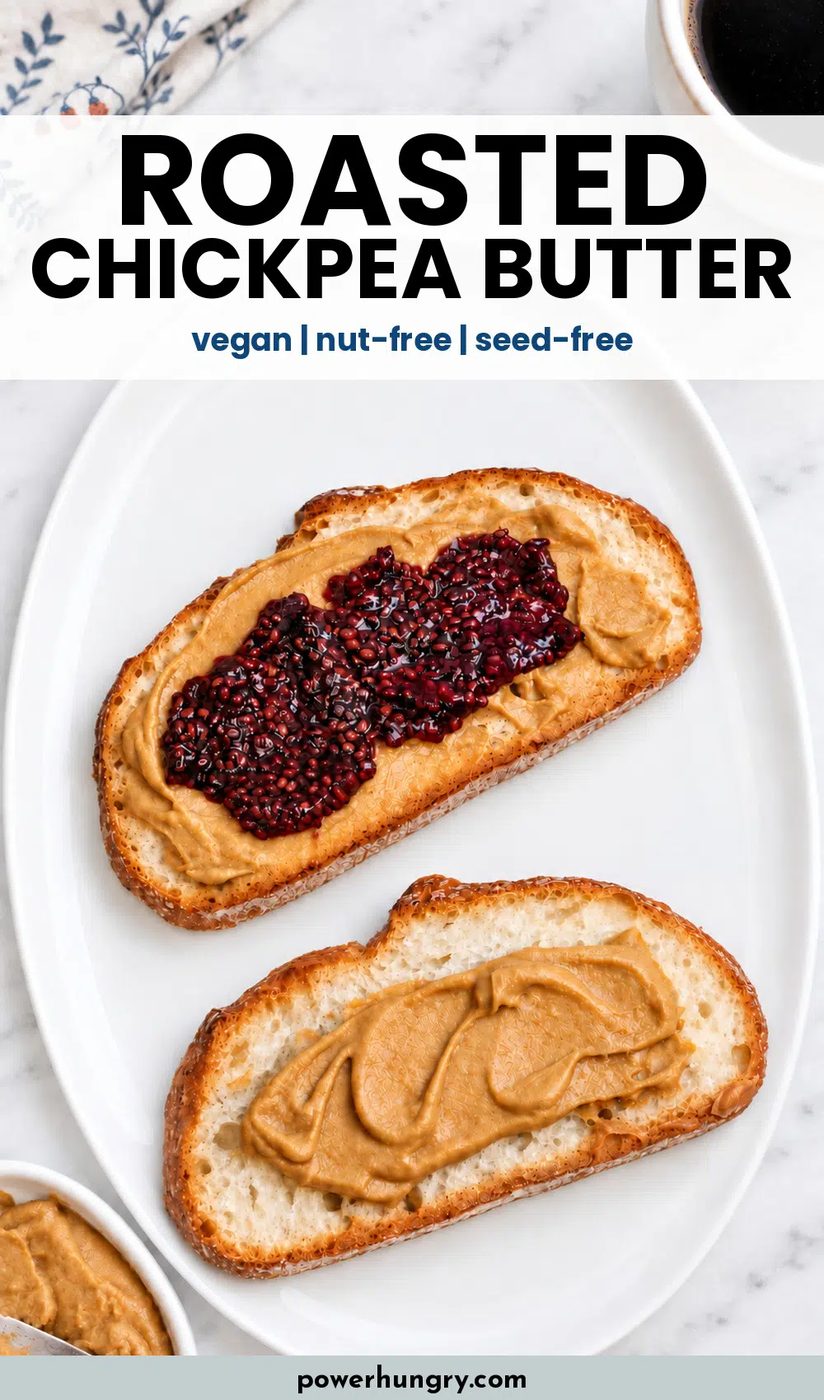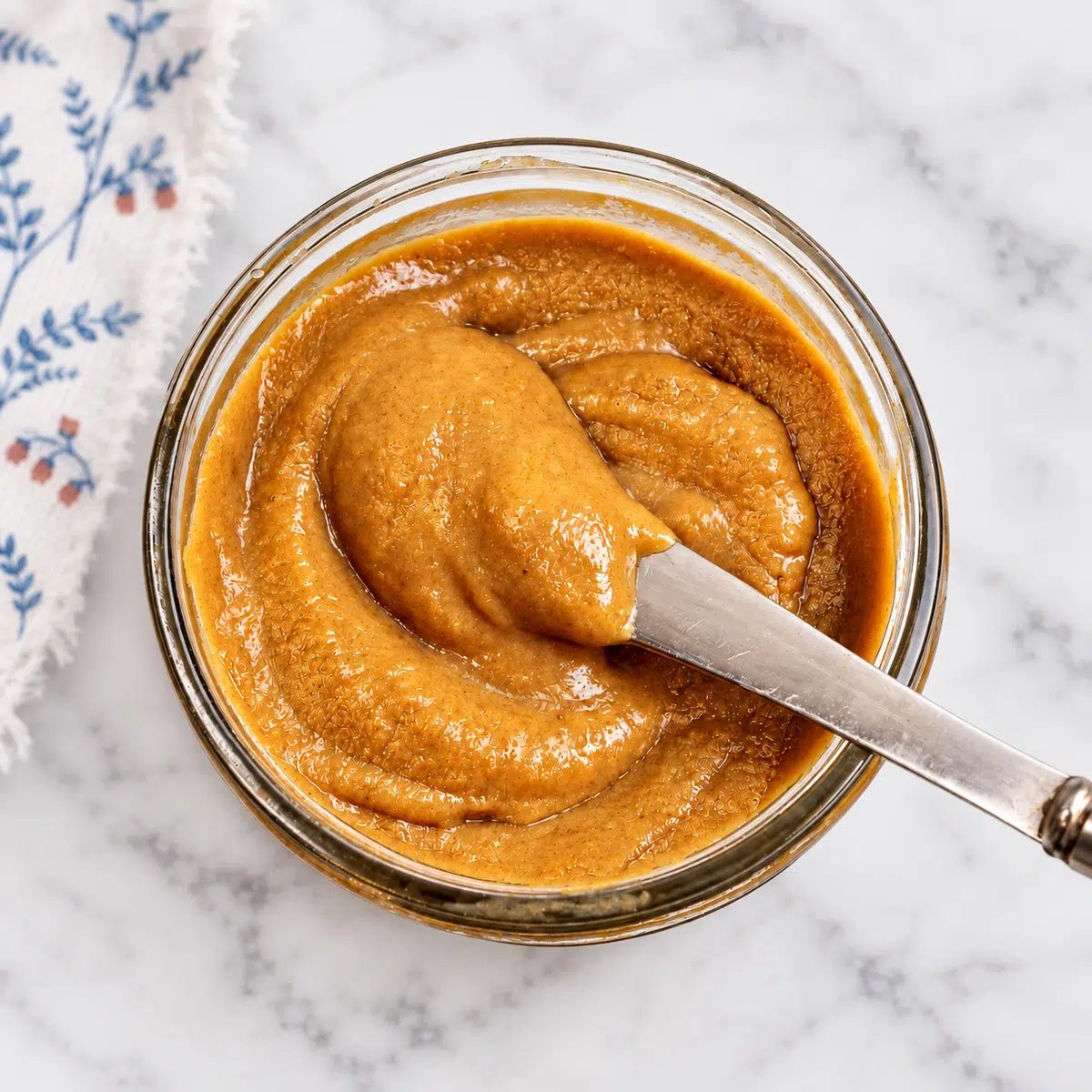
Smooth, creamy roasted chickpea butter is a satisfying nut-free, seed-free alternative to peanut butter. Made from chickpea flour on the stovetop, it has a rich, toasty flavor and a spreadable texture that is reliable for toast, sandwiches, crackers and more. The recipe is also vegan, gluten-free, grain-free and soy-free.
Introduction
Peanut butter alternatives are near and dear to my heart. My sister is allergic to peanuts and hazelnuts, and I cannot count the number of times she became ill after well-meaning adults gave her food containing “only a little bit” of peanuts. That was several decades ago, and I am deeply grateful that food-allergy awareness has improved.
I am equally happy to share a peanut butter alternative that is made without nuts, seeds or soy: roasted chickpea butter. It begins with chickpea flour rather than whole chickpeas. Toasting the flour in coconut oil mellows its raw flavor and gives the finished spread the deep, roasted taste we associate with nut butters.
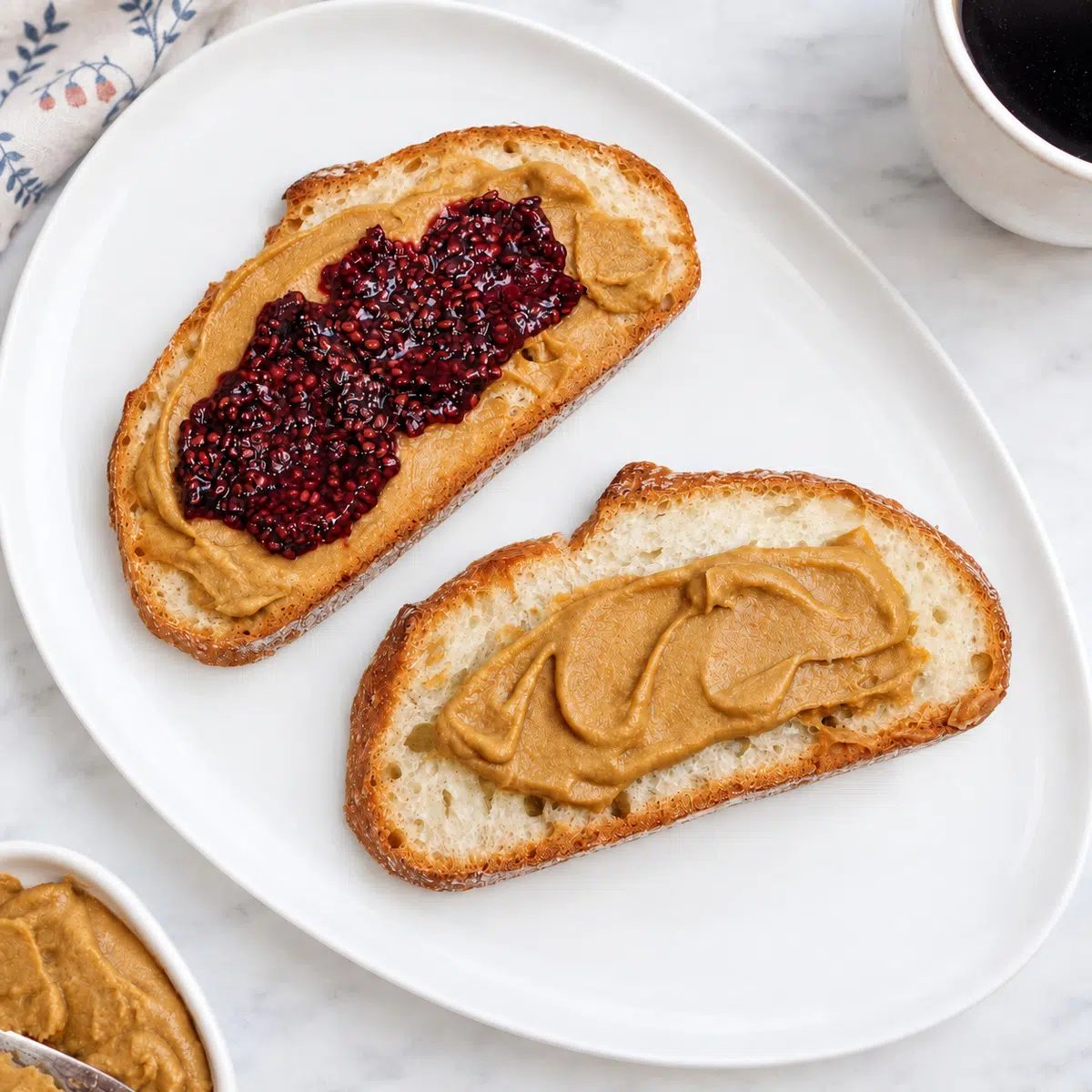
Food allergies may be the reason you seek out this recipe, but flavor is the reason to make it again. The butter is smooth, rich and lightly sweet, with a consistency similar to natural peanut butter. It is also straightforward to make, surprisingly frugal and ready for everything from toast to a very satisfying CB&J—chickpea butter and jam.
Why You’ll Love This Recipe
- Free from several common allergens:It contains no peanuts, tree nuts, seeds, dairy, eggs or soy.
- Rich, roasted flavor:Browning the chickpea flour gives the spread a deep, nutty-tasting flavor without nuts.
- Smooth and spreadable:Blending the fully cooled mixture creates a creamy consistency that firms as it chills.
- Made with pantry ingredients:The short ingredient list is plain, affordable and straightforward to keep on hand.
- Versatile:Use it on toast, sandwiches, crackers or anywhere you would normally reach for a nut or seed butter.
- Vegan and grain-free:It is also gluten-free when made with certified gluten-free chickpea flour.
- Plant-based protein.4 grams of protein per 1/4 cup.
Ingredients for Roasted Chickpea Butter
The exact amounts of each ingredient are indicated in the recipe card at the end of the post.Toggle betweenUS Customary(volume) andMetric(weights) for preferred measurement option.
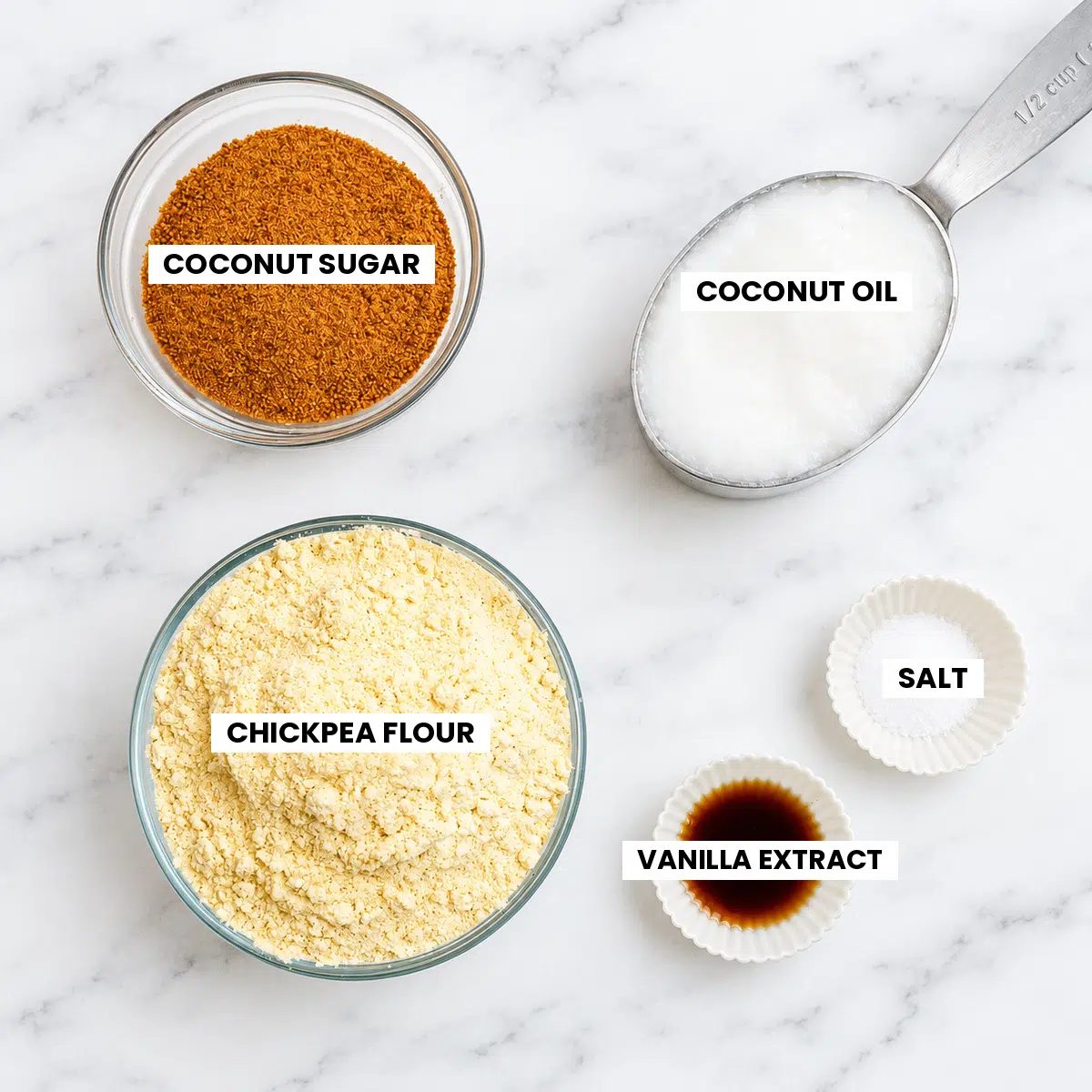
- Chickpea flour:The foundation of the recipe. Chickpea flour may also be labeled garbanzo bean flour. I have made the recipe successfully with besan (gram flour), using an equal weight. Besan is typically made from smaller, darker desi chickpeas, so its color may be more yellow. For the most consistent texture, weigh the flour or lightly spoon it into the measuring cup and level it without packing.
- Coconut oil:The oil allows the chickpea flour to toast evenly and gives the chilled butter a firm yet spreadable consistency. Refined coconut oil is a good choice if you do not want a noticeable coconut flavor.
- Coconut sugar:A modest amount rounds out the roasted flavor and gives the butter the subtle sweetness of roasted nuts without making it taste like a dessert spread.
- Salt:Salt balances the light sweetness and brings the toasted flavor forward.
- Vanilla extract:Vanilla adds warmth and helps create a familiar nut-butter flavor.
- Boiling water:Hot water cooks and hydrates the toasted flour. Because evaporation varies by pan, stove, climate and cooking time, you may need a little additional water during blending.
How to Make Roasted Chickpea Butter
Note that the complete instructions are also in the recipe card below.
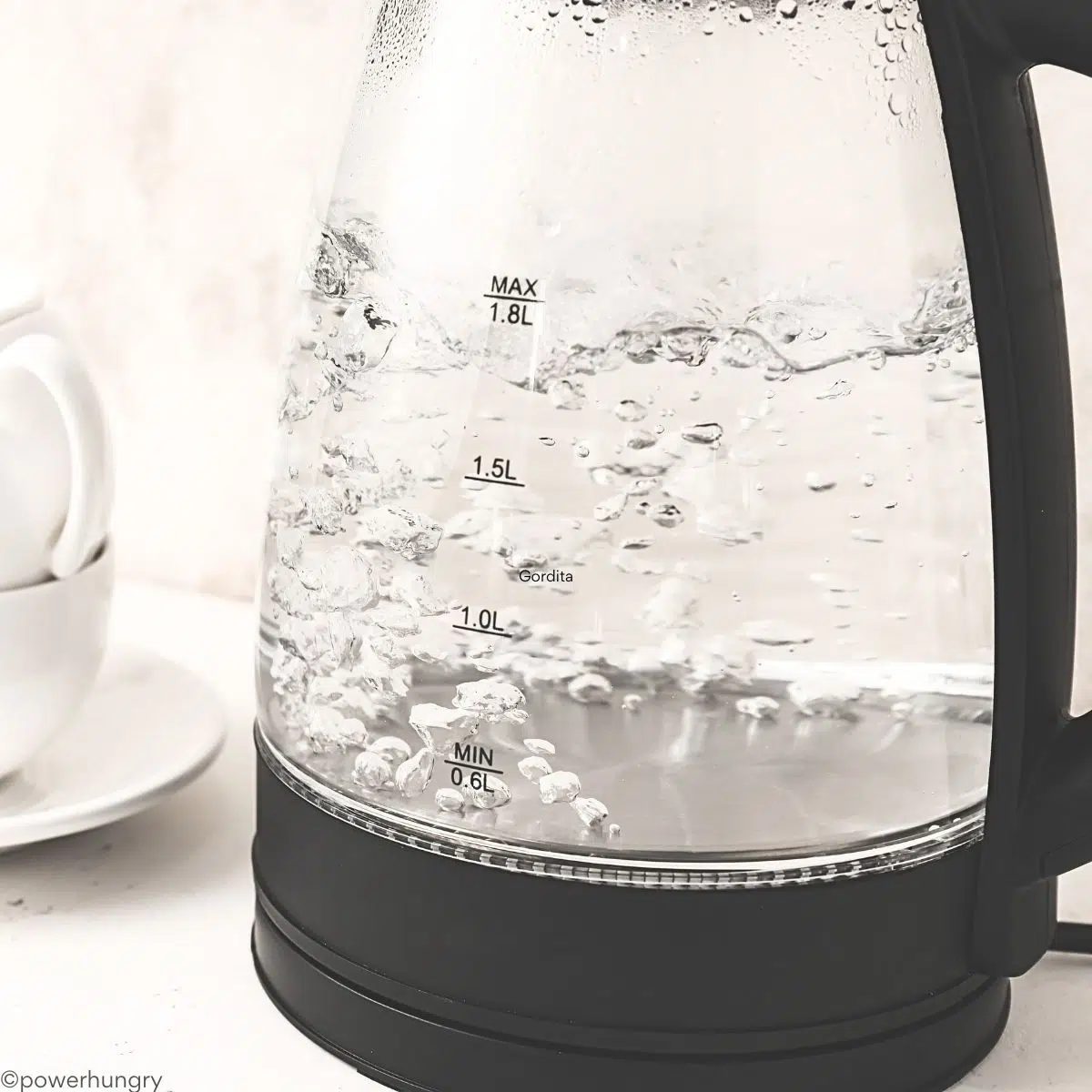
- Boil the water.Bring a little more water than the recipe requires to a boil before you begin to brown the flour. You will need it as soon as the flour is toasted.
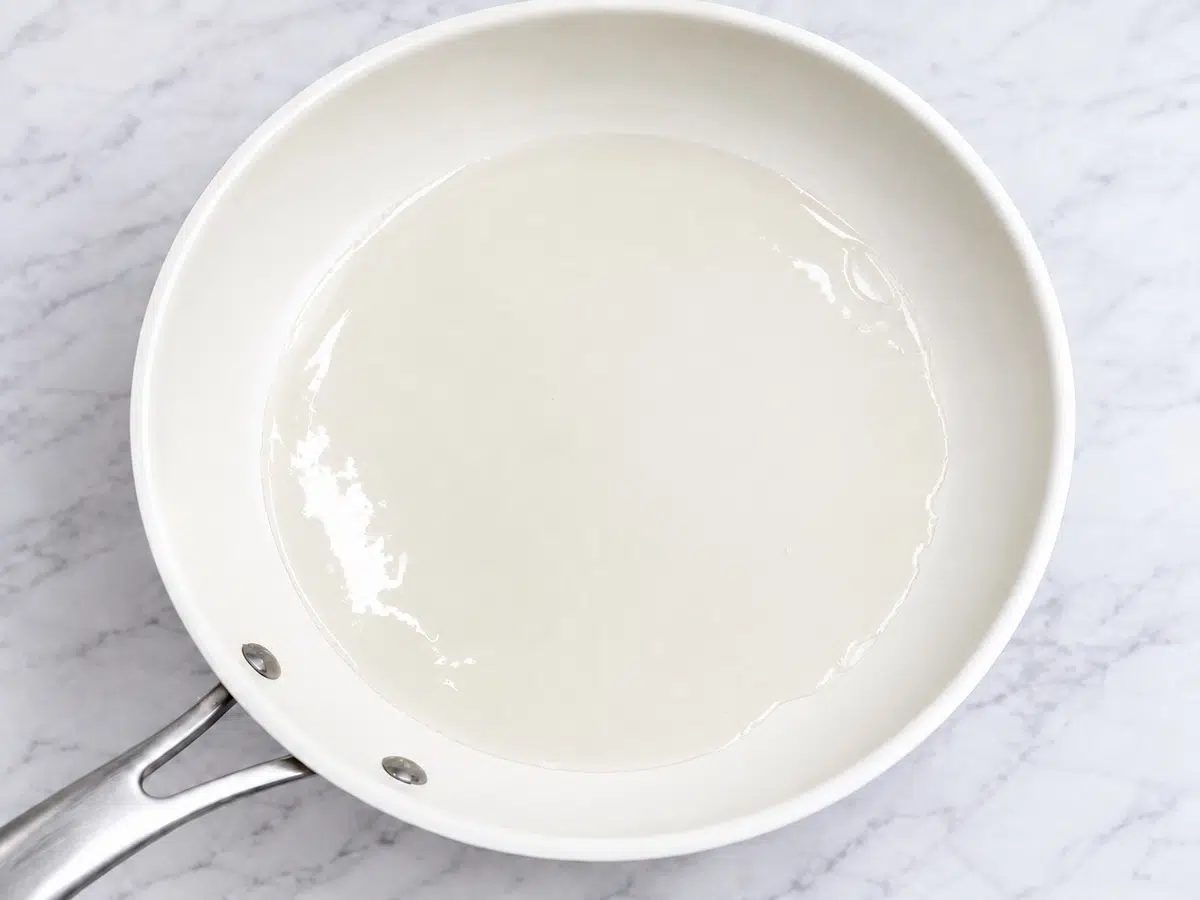
- Melt the coconut oil.Heat the coconut oil in a large nonstick skillet or large saucepan over medium heat.
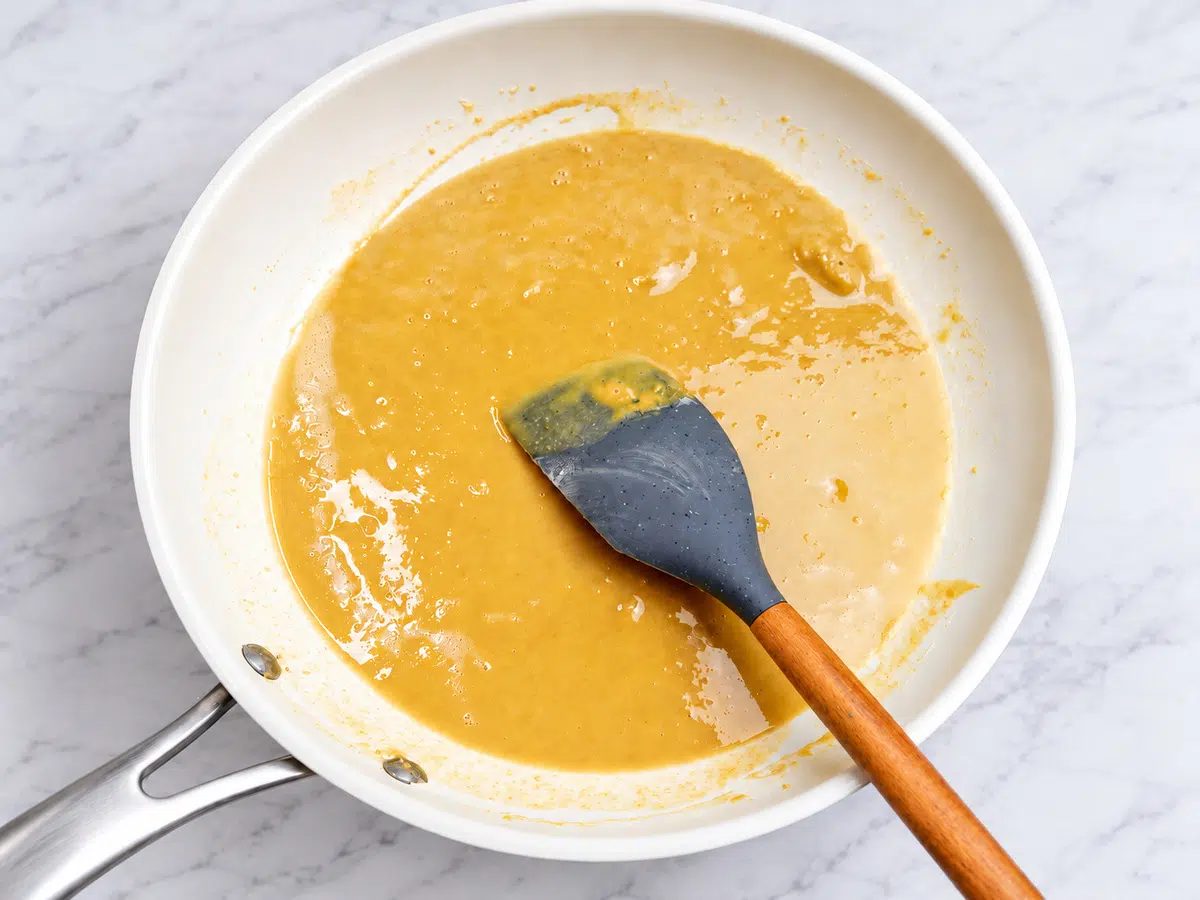
- Add the flour and salt.Stir in the chickpea flour and salt until evenly combined with the oil.
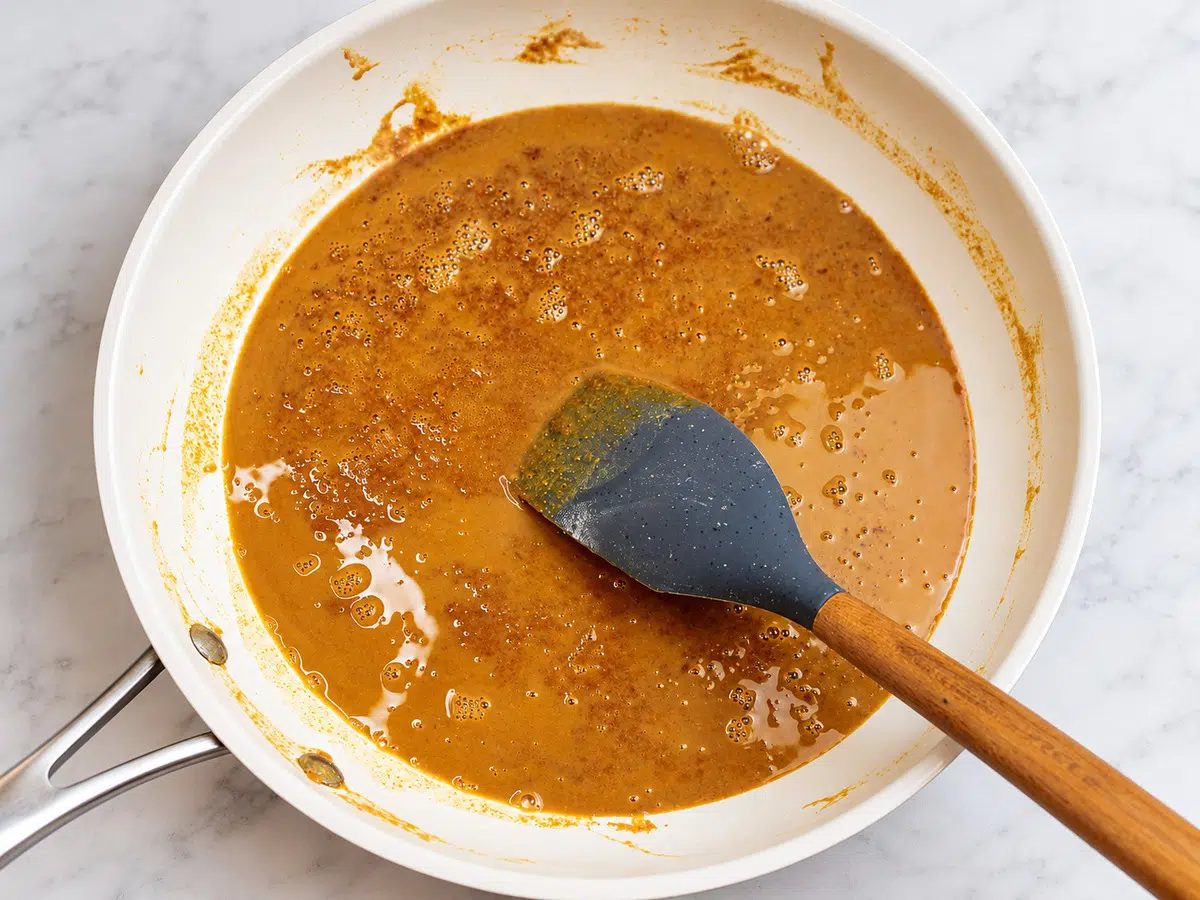
- Toast the chickpea flour.Cook and stir over medium to medium-low heat for 5 to 6 minutes, until the mixture is dark golden brown. Use the color and toasted aroma as your guides; adjust the heat if it is browning too quickly.
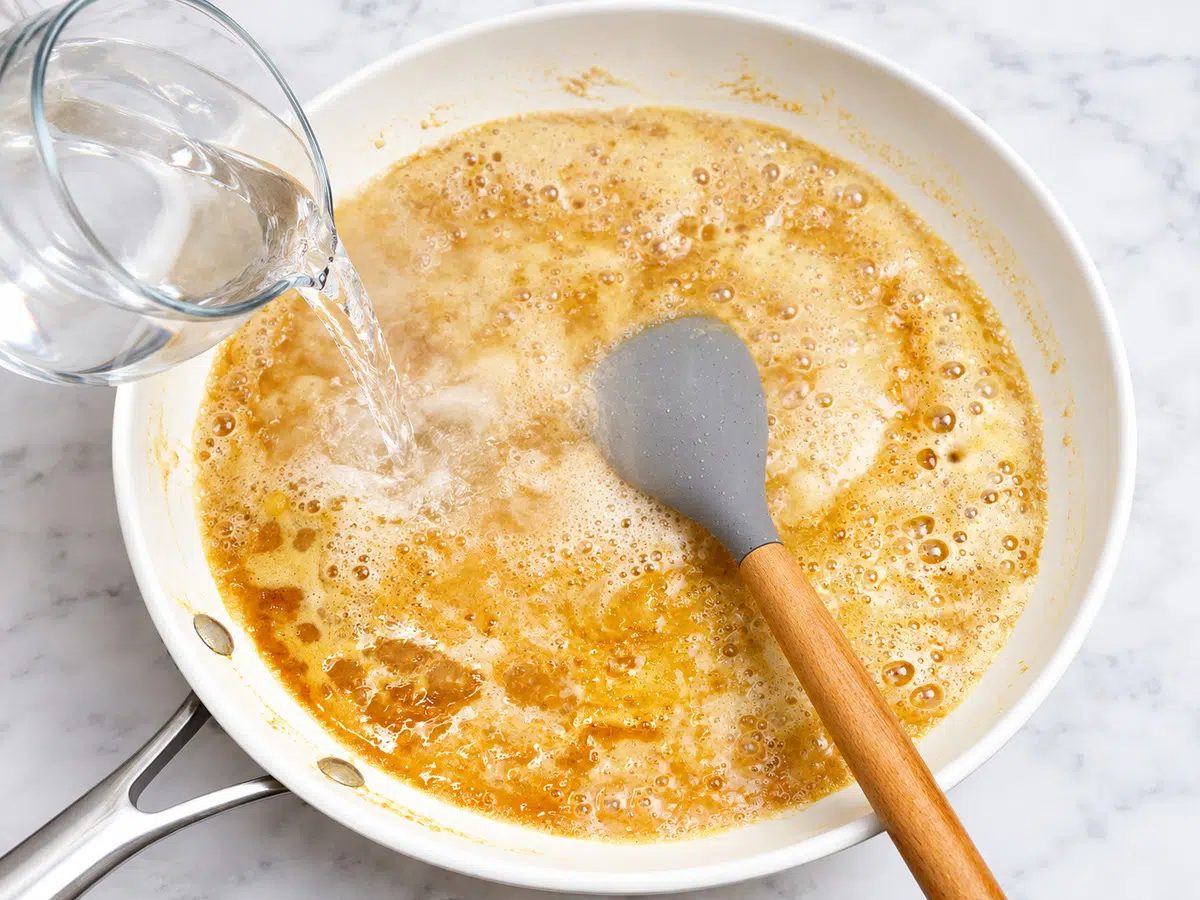
- Carefully add the boiling water.Reduce the heat to low, then slowly pour in the measured boiling water. The mixture will bubble vigorously at first, so add it gradually and keep your face and hands back from the skillet.
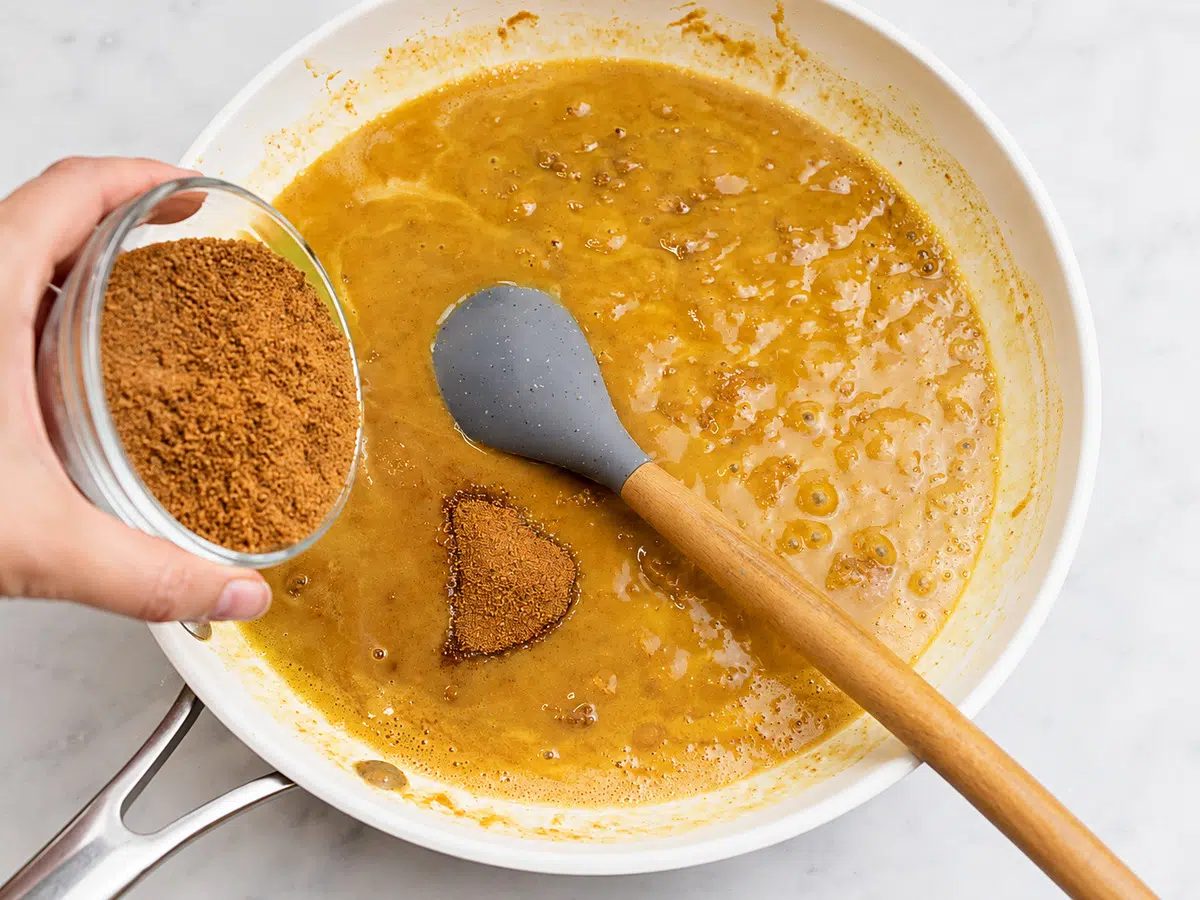
- Add the sugar and cook.Stir in the coconut sugar. Continue cooking and stirring for 6 to 7 minutes, until the mixture is a rich, dark golden brown. It will become thick as it cooks. The finished butter will lighten during blending.
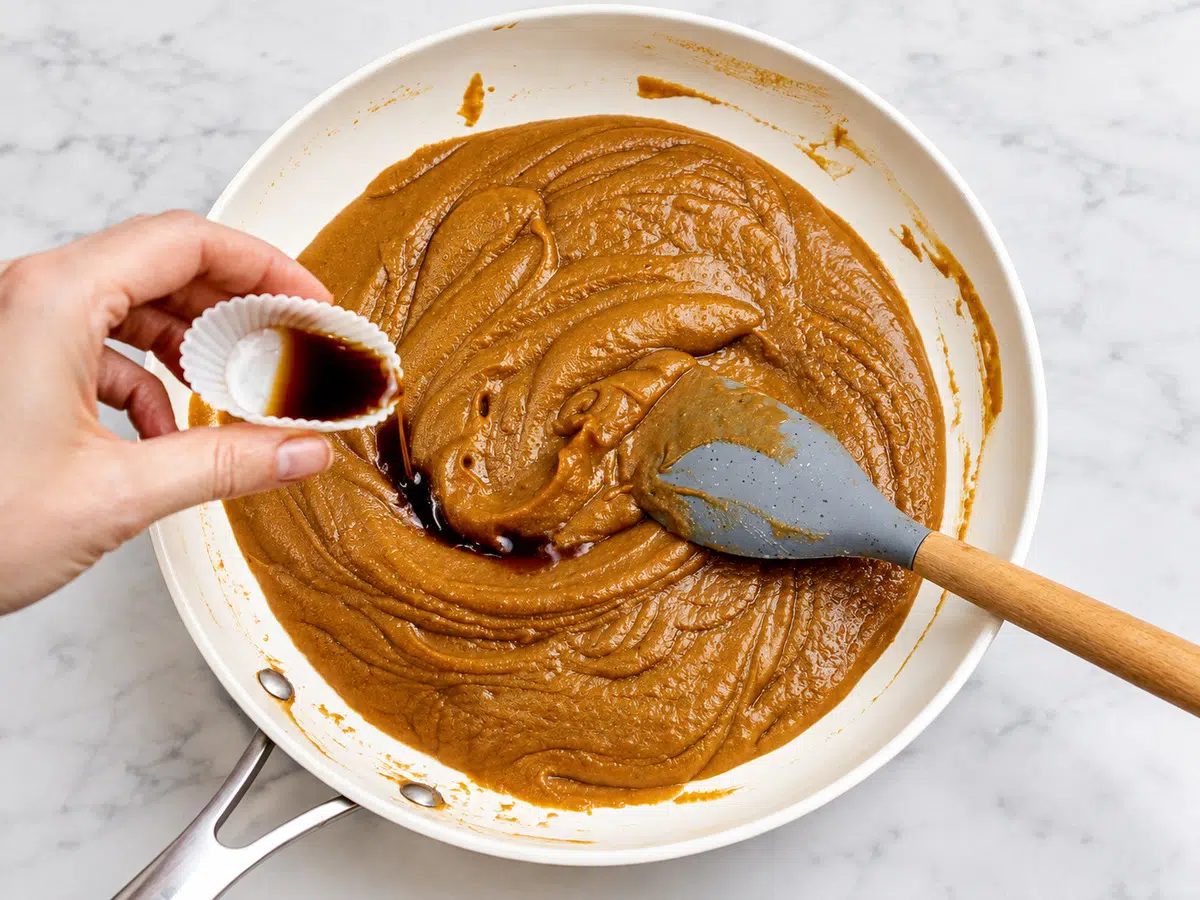
- Add the vanilla and cool.Remove the skillet from the heat and stir in the vanilla. Let the mixture cool completely in the skillet, or transfer it to a heatproof bowl and refrigerate it once it is no longer hot.
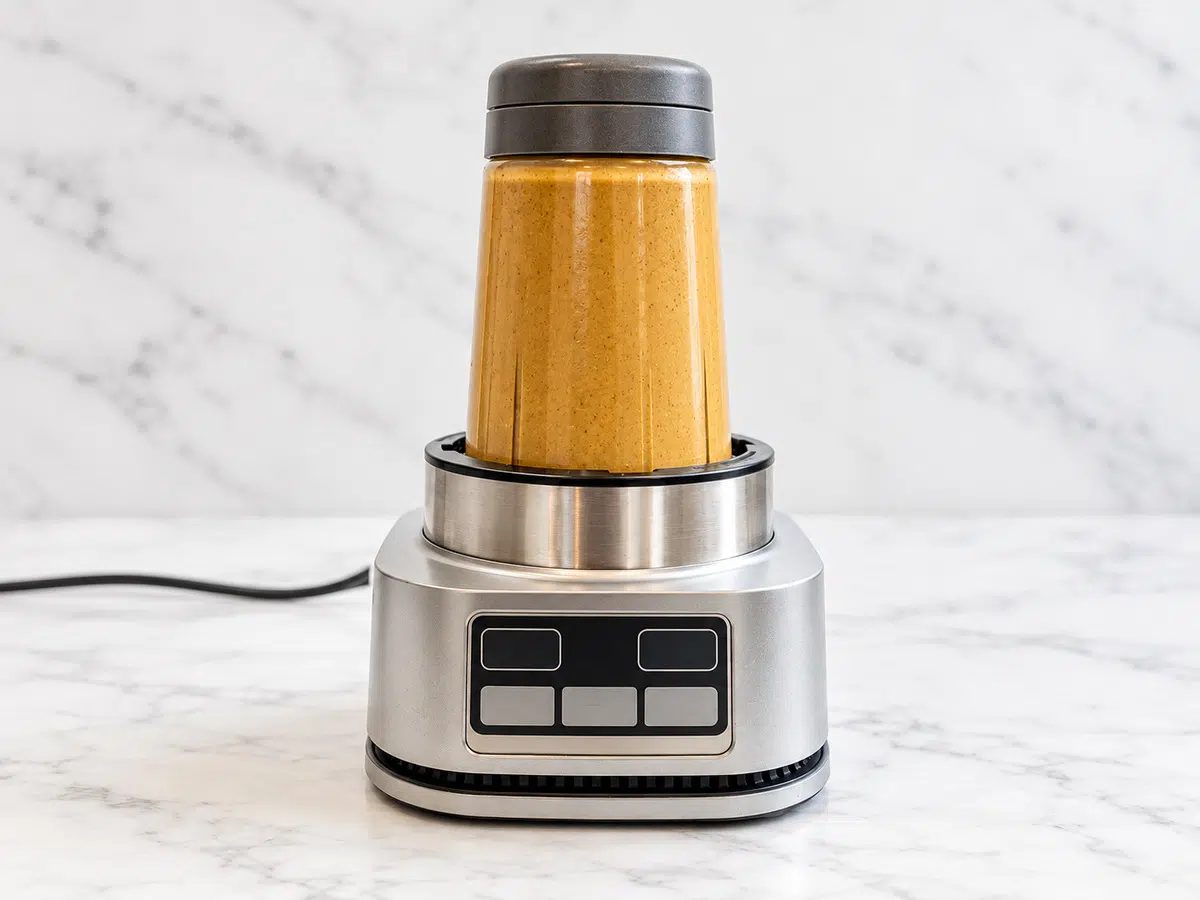
- Blend until smooth.Transfer the completely cooled mixture to a blender. Blend until smooth and no longer grainy, stopping several times to scrape down the sides. If the mixture is too stiff for the blender or remains thicker than you prefer, add water 1 tablespoon at a time and blend again. Variations in evaporation make this adjustment normal.
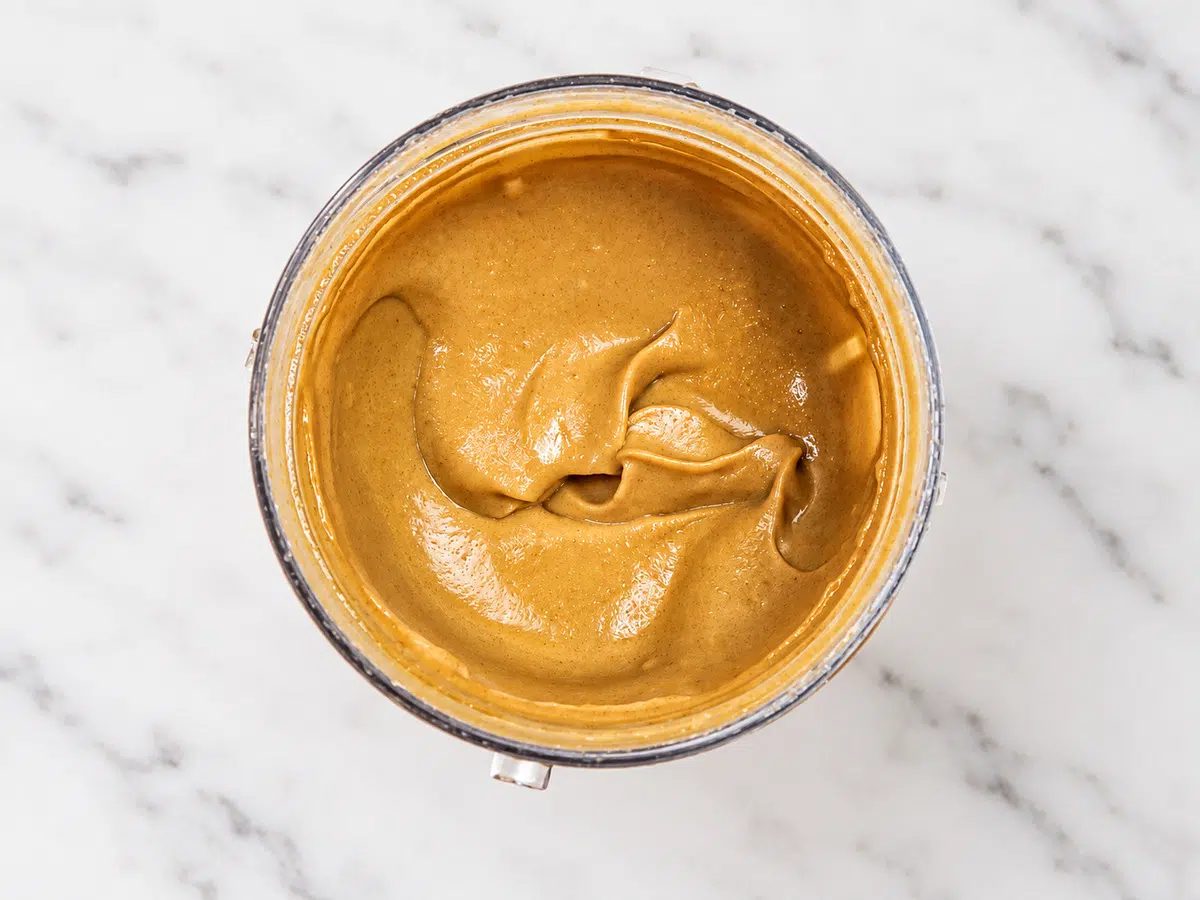
- Chill until set.Transfer the chickpea butter to an airtight container and refrigerate for at least 2 hours. It will thicken as it chills but remain spreadable.
Taste and Texture
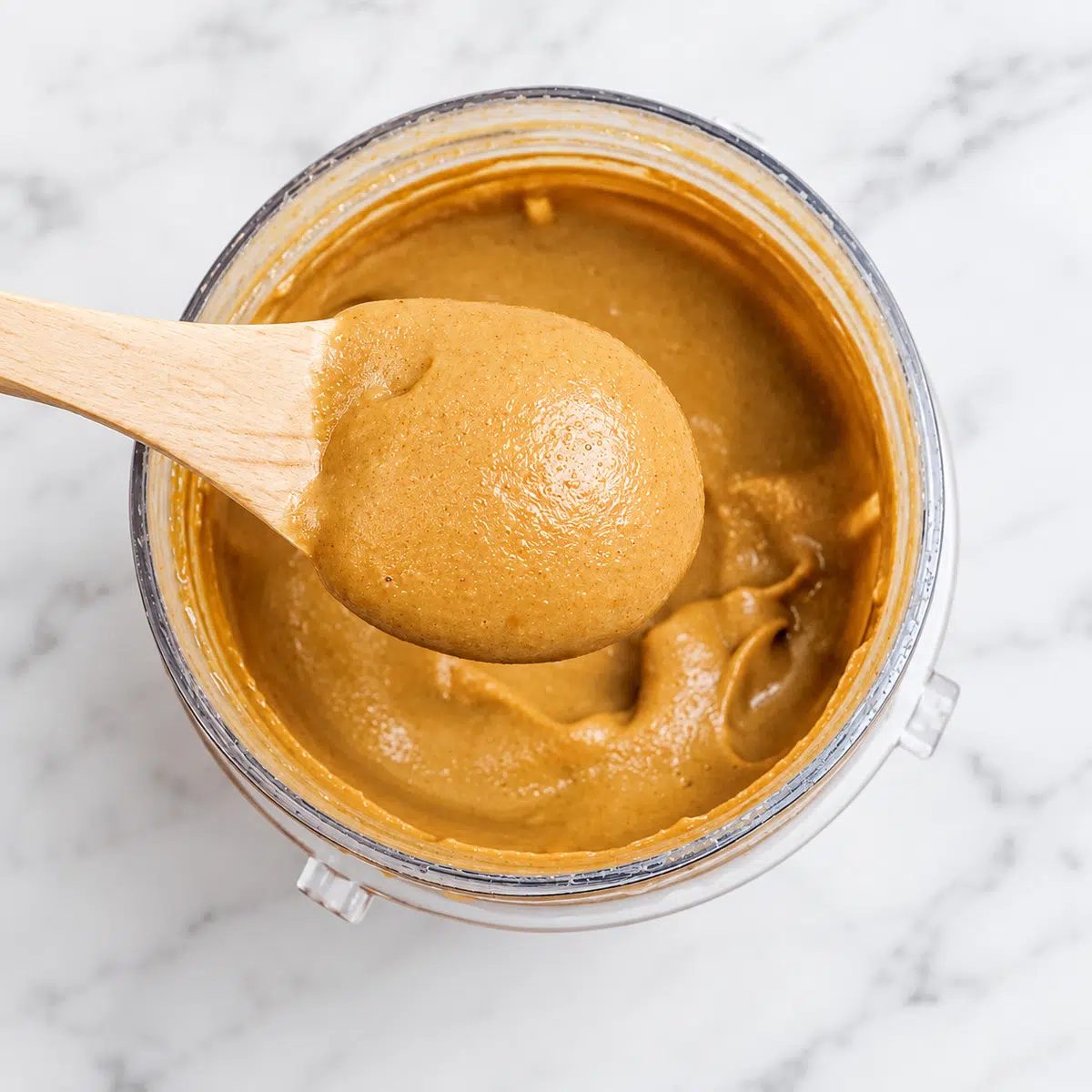
Roasted chickpea butter has a smooth, creamy texture similar to natural peanut butter. Toasting transforms the chickpea flour’s raw, grassy flavor into something deeper, warmer and distinctly nutty-tasting. Coconut sugar and vanilla add just enough sweetness to echo the natural sweetness of roasted peanuts; the finished spread is lightly sweet rather than sugary.
Storage
Store the roasted chickpea butter in an airtight container in the refrigerator for up to 1 month. Recycled jam jars work especially well. For longer storage, freeze it in an airtight, freezer-safe container for up to 6 months. Thaw overnight in the refrigerator, then stir or re-blend until smooth before serving.
Flavor Variations
- Warm spice:Add a generous pinch or up to 1 teaspoon of cinnamon, ginger, cardamom, allspice or pumpkin pie spice.
- Chocolate:Blend in cocoa powder to taste for a chocolate chickpea spread. Add extra water by the tablespoon if the cocoa makes the mixture too thick.
- Chocolate crunch:Stir in cacao nibs after blending.
- Salted chickpea butter:Add a small pinch of flaky salt on top when serving, or adjust the salt in the spread to taste.
Serving Suggestions
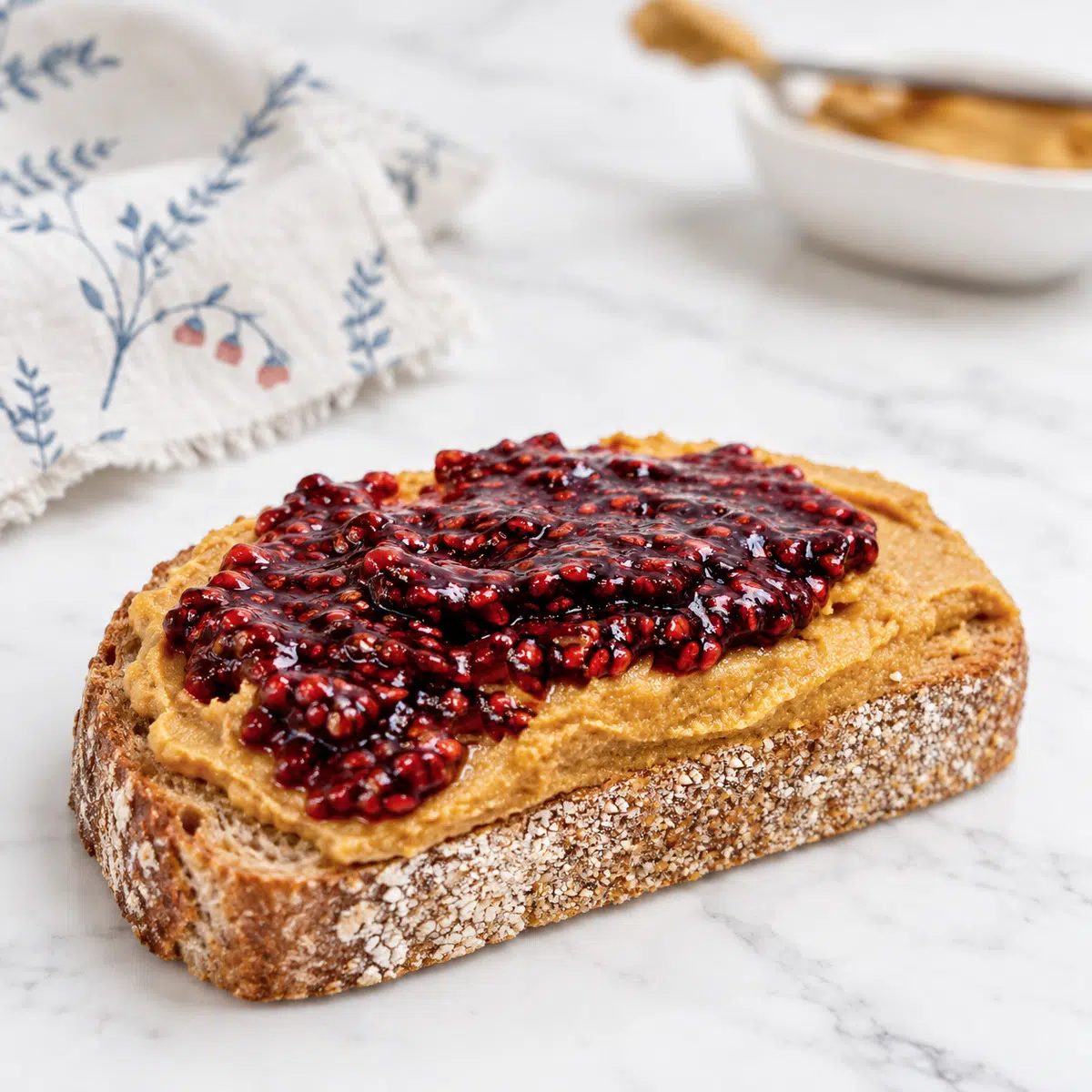
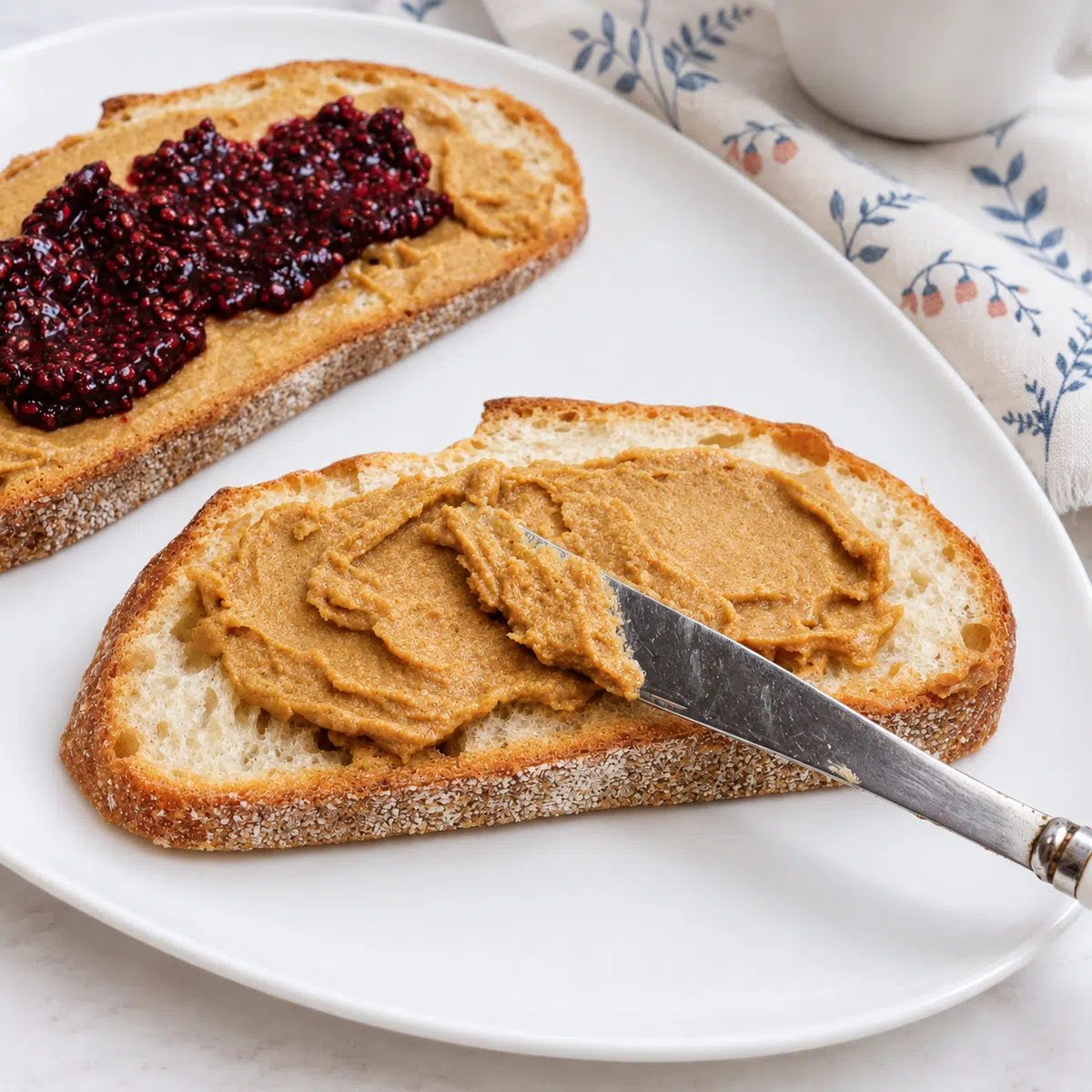
My number one serving suggestion is a CB&J: chickpea butter and jam layered between slices of bread. It is also satisfying spread on toast, bagels, English muffins, rice cakes or crackers, or served with apple slices and other fresh fruit.
Roasted chickpea butter can replace peanut butter, almond butter, cashew butter, tahini or sunflower seed butter in smoothies, dips, sauces, salad dressings and stir-fries. I have not yet tested it as a direct replacement for peanut butter in baked goods such as cookies, cakes, muffins or breads.
Flavor variations
- Sweet spices:add a teaspoon of sweet spices, such as cinnamon, ginger (or fresh ginger, while cooking the chickpea flour), cardamom, pumpkin pie spice or allspice.
- Savory spices.Take the spread in a savory-sweet direction by add savory spices such as garlic powder, paprika, garam masala, curry powder or curry paste.
Tips for Success
Weigh the chickpea flour if possibleToo much flour is the most likely cause of an excessively stiff mixture. For the reliable result, use 120 g of chickpea flour. If measuring by volume, lightly spoon the flour into the cup and level the top with a straight edge; do not scoop or pack it.
Have the boiling water ready before you toast the flourBegin heating the water before the chickpea flour goes into the skillet. Once the flour is dark golden brown, the boiling water needs to be added promptly so the flour does not continue browning in the hot pan.
Watch the color, not only the clockStoves and pans vary. Stir frequently and cook until the flour mixture reaches a deep golden-brown color and smells toasted. Lower the heat if it begins to brown too quickly.
Adjust the consistency during blendingThe amount of water lost during cooking varies with the pan, heat, altitude, humidity and cooking time. If the cooled mixture is very stiff or looks like play dough, it is not ruined. Add water 1 tablespoon at a time while blending until the butter is completely smooth and spreadable.
Cool the mixture completely before blendingBlending the mixture only after it is fully cool is both safer and important for judging its consistency. Stop several times to scrape the sides and continue blending until no graininess remains.
Ingredient Substitutions
Can I use besan or gram flour?Yes. I have made the recipe with both lighter-colored chickpea flour and besan, using an equal weight, with the same results. Besan is generally made from smaller, darker desi chickpeas, so its color may differ from chickpea flour made from larger kabuli chickpeas.
What can I use instead of coconut sugar?Replace the coconut sugar with an equal amount of brown sugar, natural cane sugar, maple syrup, date syrup or agave nectar. For a sugar-free sweetener such as monk fruit or xylitol, remove the skillet from the heat first, then add the sweetener to taste before blending.
What can I use instead of coconut oil?Use an equal amount of melted plant butter (the firm stick or block style, not a tub spread), mild olive oil or avocado oil. Olive oil and avocado oil remain liquid when chilled, so the chickpea butter will not set as firmly as it does with coconut oil or plant butter. One reader reported excellent results with very light-tasting olive oil. I do not recommend using coconut milk in place of the coconut oil.
Frequently Asked Questions
Can I make chickpea butter with canned chickpeas?No, not in this recipe. Cooked whole tender chickpeas and uncooked chickpea flour behave differently, so canned chickpeas cannot be substituted for the flour here.
Why is my chickpea butter as stiff as play dough?The flour may have been packed into the measuring cup, or more water may have evaporated during cooking. Weighing 120 g of flour prevents overmeasuring. If the mixture is already cooked, add water 1 tablespoon at a time while blending until it becomes smooth and spreadable.
Can I leave out or reduce the sugar?Yes. The sugar can be reduced or omitted without preventing the recipe from working. I prefer to include at least 1 to 2 teaspoons because a small amount of sweetness helps mimic the flavor of roasted nuts. The full amount produces a lightly sweet spread, not a dessert spread.
Can I make roasted chickpea butter without oil?I have not developed an oil-free version and do not recommend replacing the oil with water. The oil is needed to toast the chickpea flour and create the rich flavor and creamy consistency of the spread.
Can I use a food processor instead of a blender?A food processor should work, although I have not tested it. Process the fully cooled mixture until completely smooth, stopping often to scrape the bowl, and add water 1 tablespoon at a time if needed. A blender is the reliable-tested option for the smoothest texture.
Can I use roasted chickpea butter in baking or cooking?I have not yet tested it as a direct replacement for peanut butter in cookies, cakes, muffins or breads. It works well in flexible uses such as smoothies, dips, sauce recipes (e.g., mixed with tomato purée and spices), salad dressings, tofu dishes, and stir-fries.
Roasted Chickpea Butter (Nut-Free Peanut Butter)
- Prep Time: 15 minutes
- Cook Time: 12 minutes
- Total Time: 27 minutes
- Servings: 28 tablespoons
Ingredients
- 2 cups boiling water
- 1 cup chickpea flour (120 g)
- 1/4 cup coconut sugar (see notes for options)
- 1/2 cup coconut oil (see notes for options)
- 1/2 teaspoon salt
- 2 teaspoons vanilla extract
Method
- Boil the water. Bring a little more than 2 cups of water to a boil in a saucepan or kettle. Keep it hot; you will need 2 measured cups immediately after the chickpea flour is toasted.
- Melt the coconut oil . Melt the coconut oil in a large nonstick skillet , large saucepan or large pot over medium heat.
- Add the flour and salt. Stir in the chickpea flour and salt until evenly combined with the oil.
- Toast the flour. Cook and stir over medium to medium-low heat for 5 to 6 minutes, until the mixture is dark golden brown and smells toasted. Lower the heat if it begins to brown too quickly.
- Add the boiling water. Reduce the heat to low. Slowly and carefully pour in 2 cups of boiling water; the mixture will bubble vigorously at first, then settle into a simmer.
- Add the sugar and continue cooking. Stir in the coconut sugar . Cook and stir for 6 to 7 minutes longer, until the mixture is thick and a rich, dark golden brown. It will become lighter after blending.
- Add the vanilla and cool. Remove the skillet from the heat and stir in the vanilla. Cool completely in the skillet, or scrape the mixture into a heatproof bowl, cool, and refrigerate until ready to blend.
- Blend until smooth. Transfer the completely cooled mixture to a blender. Blend until completely smooth and no longer grainy, stopping several times to scrape down the sides. If it is too stiff to blend or thicker than you prefer, add water 1 tablespoon at a time and blend again until smooth and spreadable.
- Chill until set. Transfer the chickpea butter to one or more airtight containers. Refrigerate for at least 2 hours, until cold and set. It will thicken as it chills but remain spreadable.
Notes
Measuring the flour: For the most consistent texture, weigh 120 g of chickpea flour . If using cups, lightly spoon the flour into the measuring cup and level it; do not scoop or pack it. Too much flour can produce an excessively stiff mixture. Consistency: Water loss varies with the pan, heat, altitude, humidity and cooking time. If the cooled mixture resembles play dough, add water 1 tablespoon at a time while blending. It is not ruined. Storage: Store in an airtight container in the refrigerator for up to 1 month. Freeze in an airtight, freezer-safe container for up to 6 months. Thaw overnight in the refrigerator, then stir or re-blend until smooth. Coconut sugar alternatives: Use an equal amount of brown sugar, natural cane sugar , maple syrup , date syrup or agave nectar. The sugar can also be reduced or omitted; I prefer at least 1 to 2 teaspoons for a more rounded, nutty-tasting flavor. Add sugar-free sweeteners off the heat, to taste, before blending. Coconut oil alternatives: Use an equal amount of melted firm-style plant butter, mild olive oil or avocado oil . Olive oil and avocado oil produce a softer set because they remain liquid when chilled. Variations: Add a generous pinch or up to 1 teaspoon of cinnamon, ginger, cardamom, allspice or pumpkin pie spice. For a chocolate variation, blend in cocoa powder to taste, adding extra water by the tablespoon if needed. Stir in cacao nibs after blending for crunch.