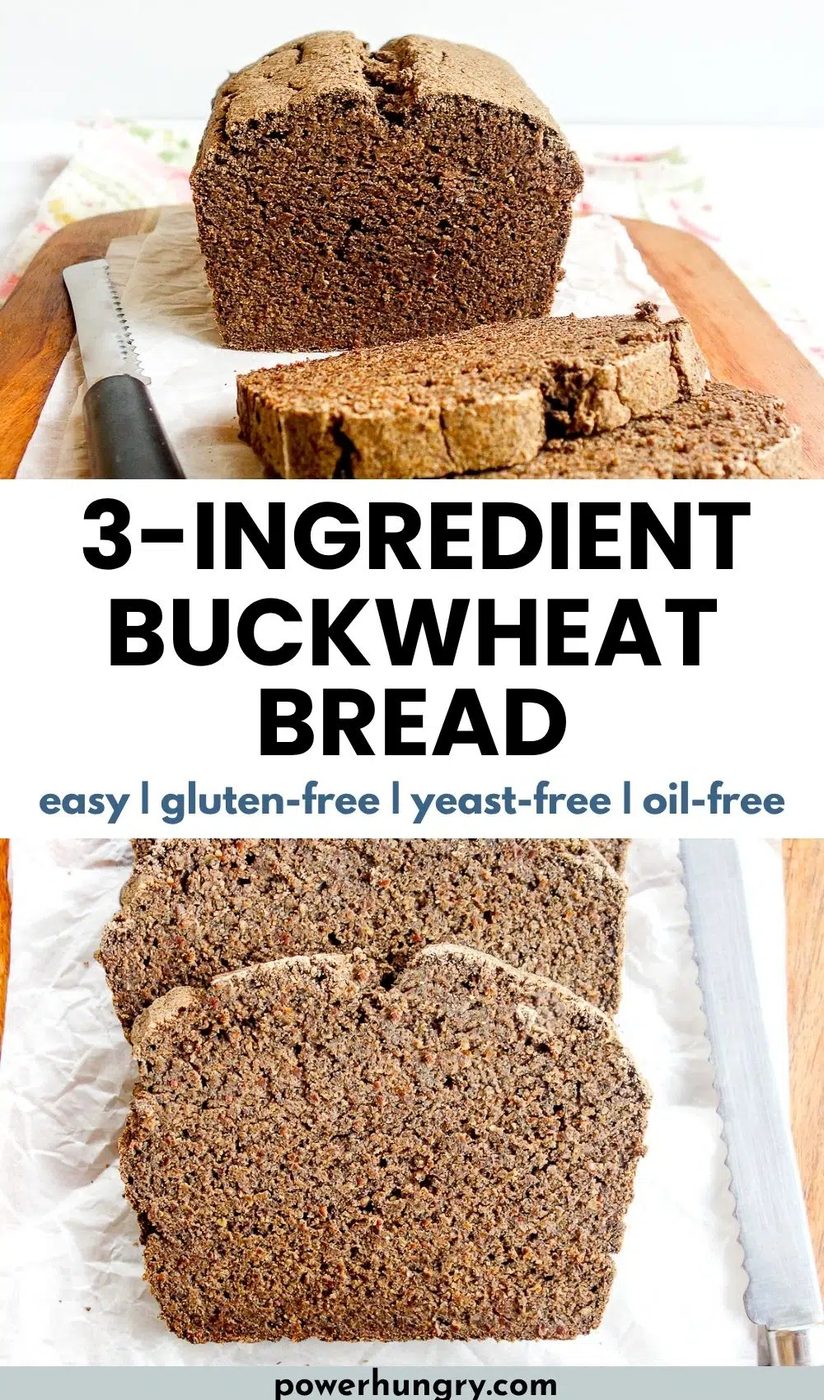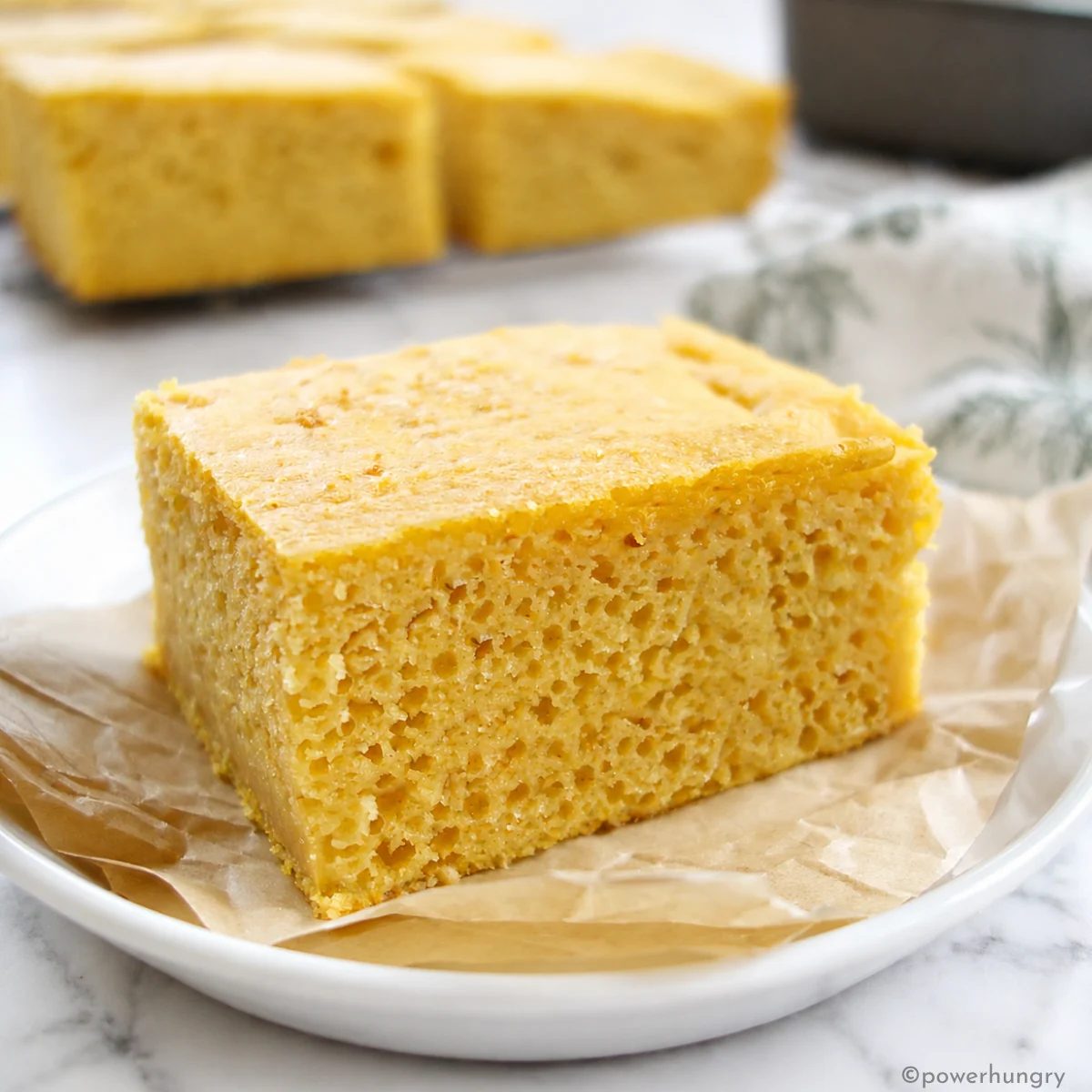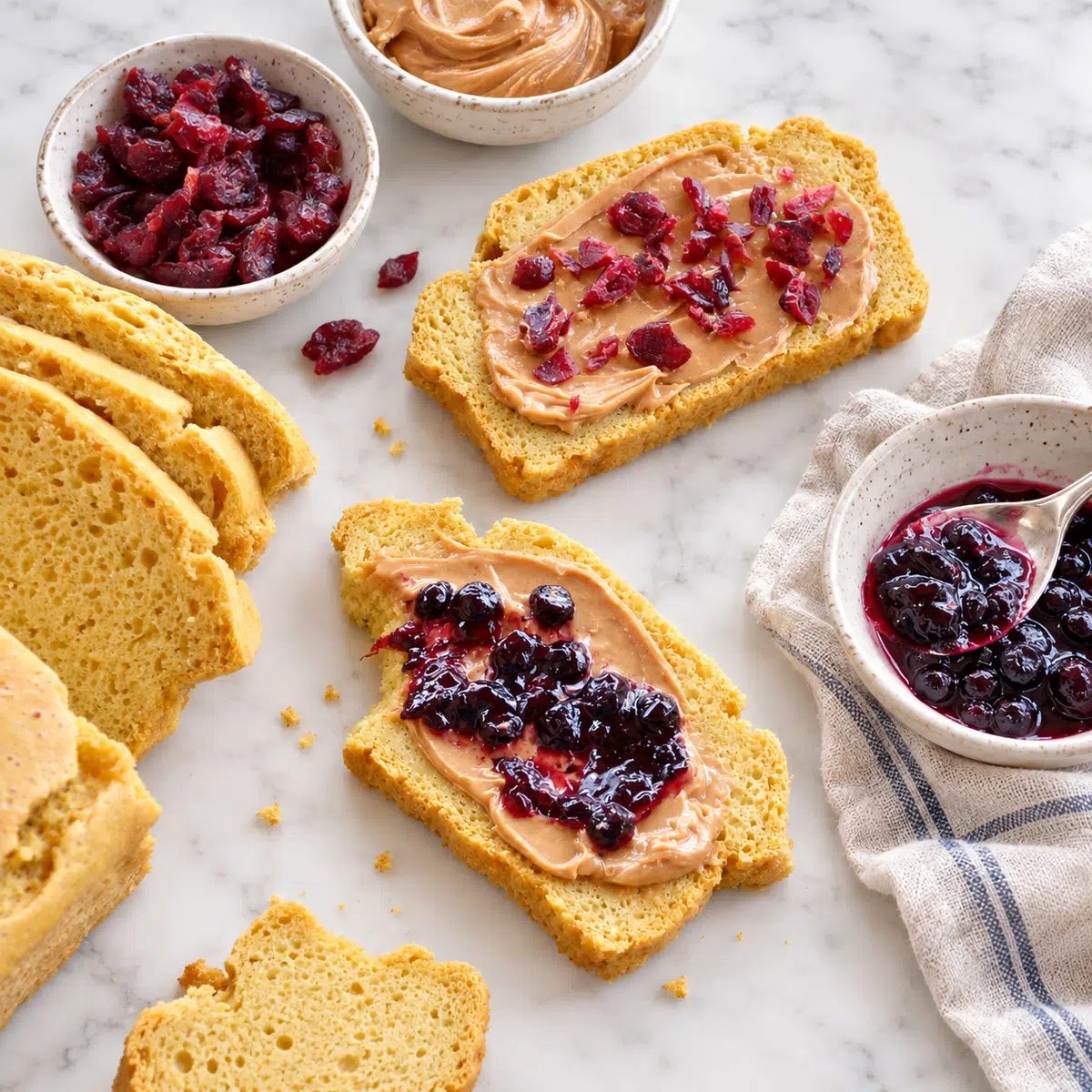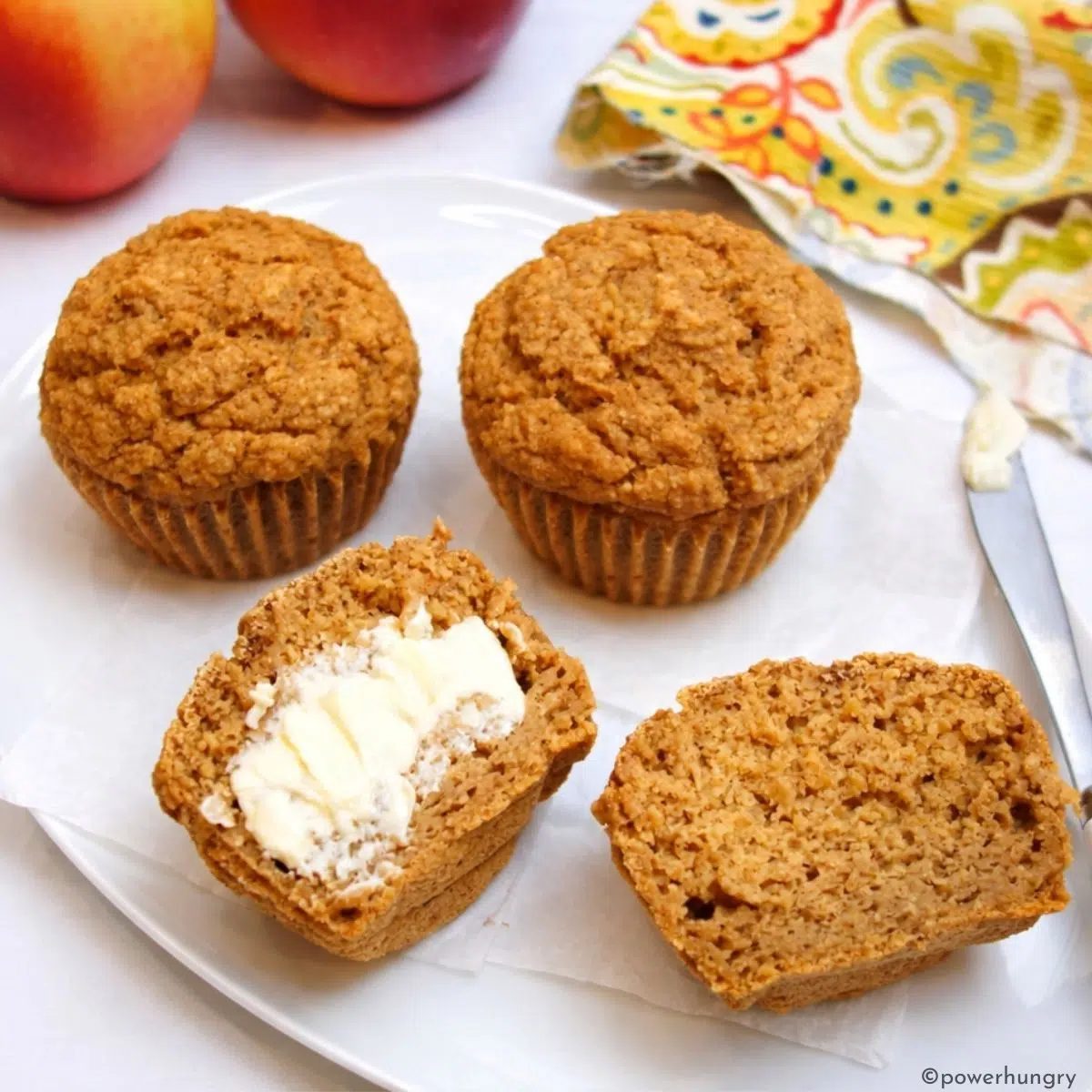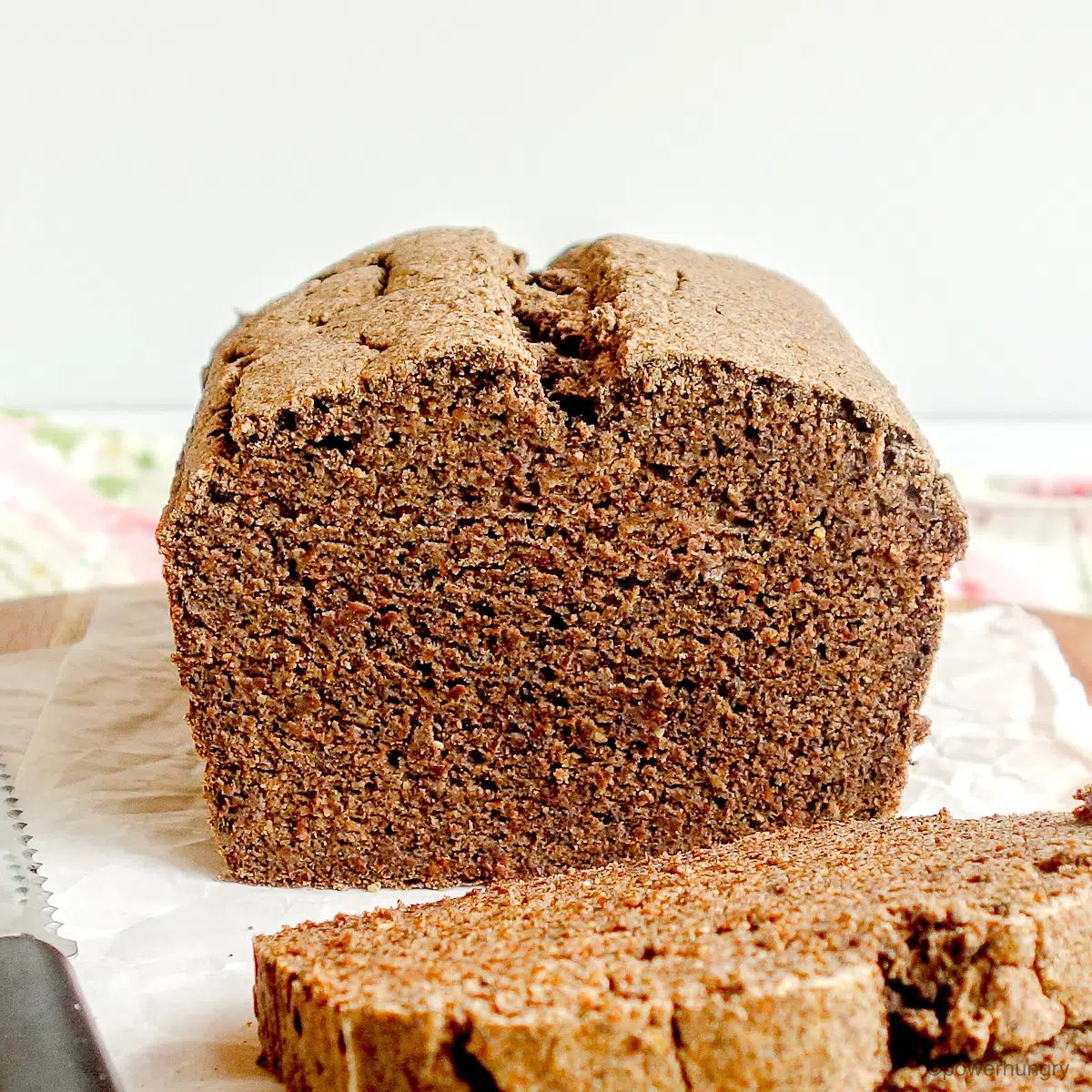
Hearty 3-ingredient buckwheat bread is made with buckwheat flour, flaxseed meal and baking powder, plus water and optional salt. Each substantial slice has 6 grams of protein and 6 grams of fiber, and the straightforward one-bowl loaf is vegan, gluten-free, oil-free, yeast-free, sugar-free, nut-free and psyllium-free.
Introduction
A slice or two of hearty bread is my go-to snack, breakfast, lunch, dinner—you get the idea . I am perfectly content gnawing on an unadorned slice, but I am even happier when I take another minute to make avocado toast, add almond butter and berries, or assemble a sandwich from whatever useful odds and ends are waiting in the refrigerator.
Good bread means good eating, guaranteed.
This 3-ingredient buckwheat bread is an especially practical example. There are no buckwheat groats to soak or ferment, no collection of gluten-free flours and starches to measure, and no yeast to activate. Buckwheat flour forms the entire flour base; flaxseed meal adds structure and substance; and baking powder supplies the rise. Water brings the batter together, and salt is optional.
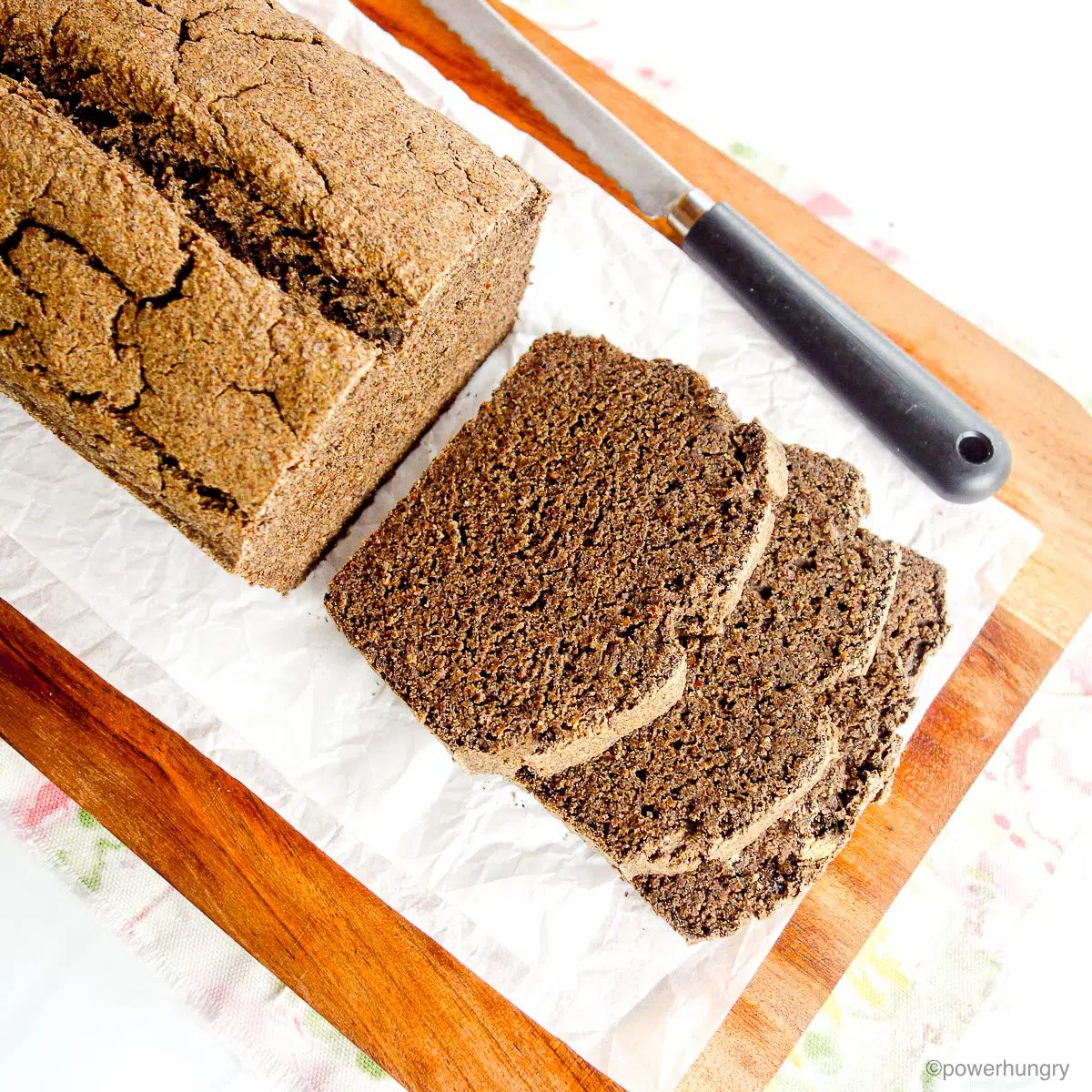
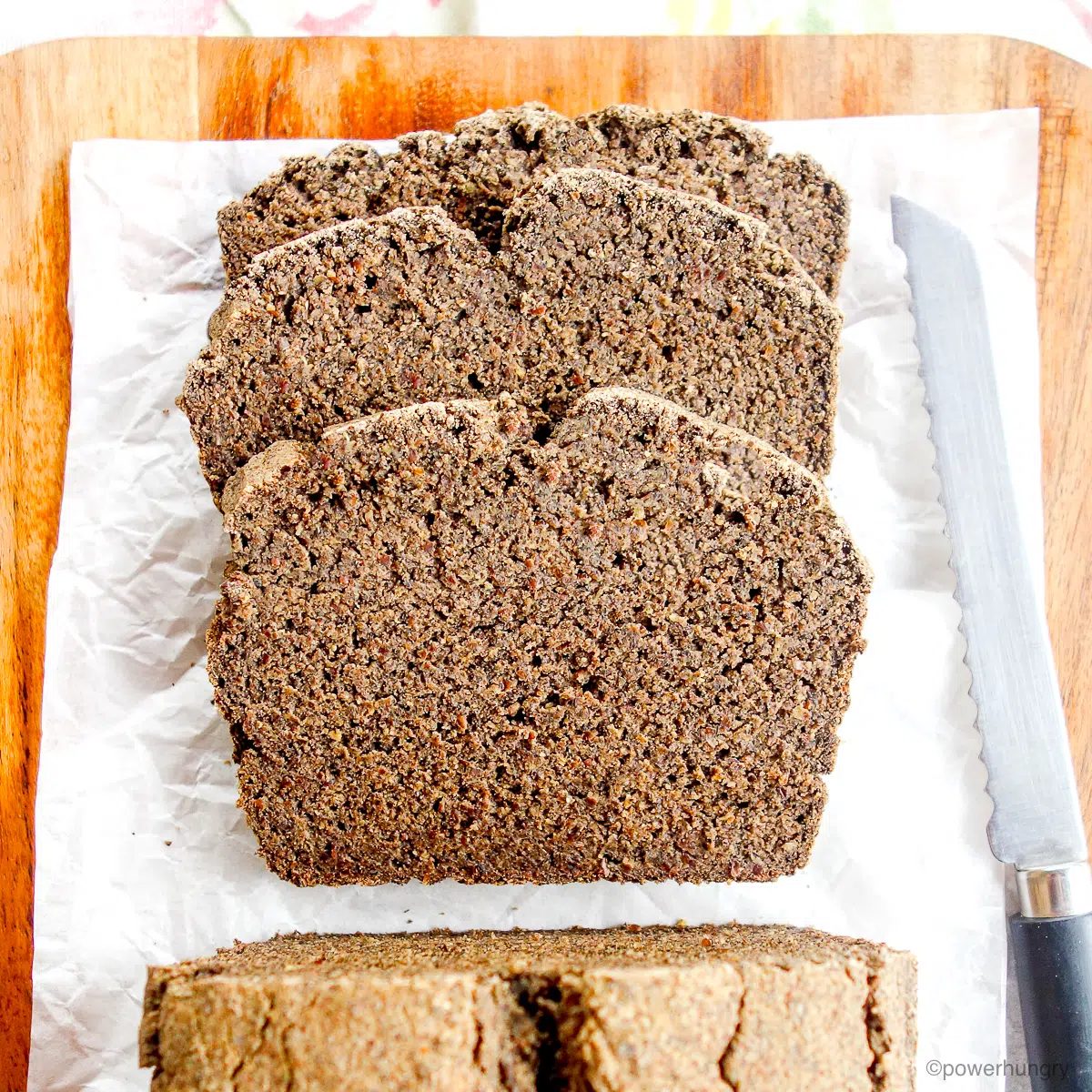
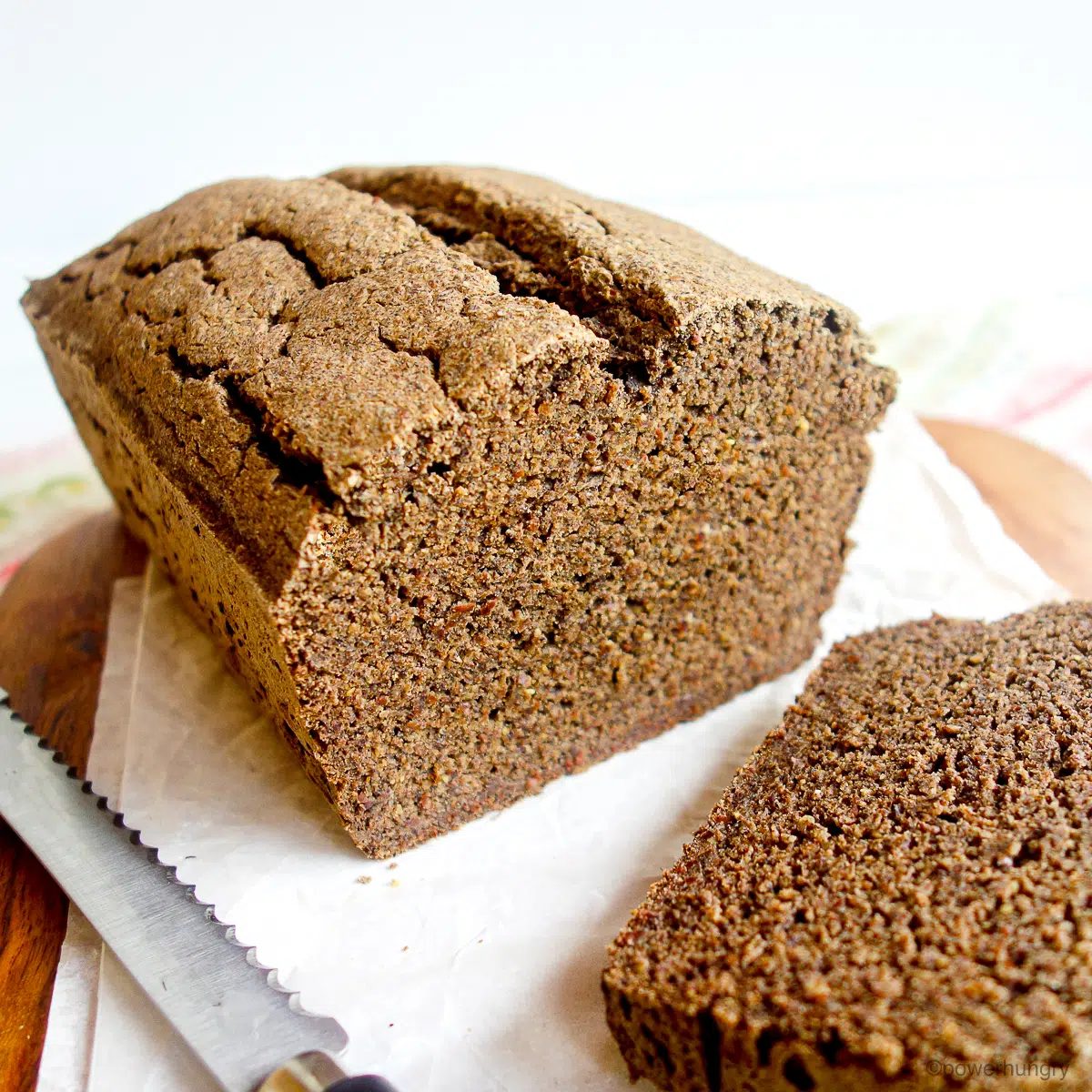
The finished loaf is firm, moist and deeply nutty, much like the dense whole-grain breads of northern Europe. It is not intended to imitate a lofty white sandwich loaf. Slice it thinly—chilling makes this especially straightforward—and toast it for crisp edges and a tender, satisfying center.
Buckwheat bread is also impressively sustaining. According to the current recipe-card calculation, each of the 14 slices provides 6 grams of protein and 6 grams of fiber. It works equally well with sweet or savory toppings, freezes beautifully, and requires only about five minutes of hands-on preparation.
Minimalist baking does make accuracy important. Weigh the buckwheat flour and flaxseed meal whenever possible, use active baking powder, preheat the oven before mixing, move the batter into the oven promptly, and let the loaf cool completely before slicing. Those small details make this remarkably short formula work.
Buckwheat Bread at a Glance
- Made with 3 main ingredients, plus water and optional salt
- 6 grams of protein per slice
- 6 grams of fiber per slice
- Vegan, egg-free and dairy-free
- Gluten-free, with certified gluten-free baking powder as needed
- Yeast-free and knead-free
- Oil-free and sugar-free
- Nut-free, starch-free, xanthan-gum-free and psyllium-free
- One bowl and about 5 minutes of preparation
- Excellent thinly sliced and toasted
- Freezer-friendly for up to 6 months
Why You’ll Love This Recipe
- It stores exceptionally well.Chill the loaf for neat, thin slices, then refrigerate it for a week or freeze it for up to 6 months.
- Three ingredients do the essential work.Buckwheat flour, flaxseed meal and baking powder make the loaf; water and optional salt complete the batter.
- There is no soaking or fermenting.Unlike buckwheat loaves made from the fermentation of whole groats, this one begins with flour and goes directly into the oven.
- No instant yeast or kneading is required.Baking powder lifts the thick batter, so there is no proofing time or dough handling.
- It is genuinely substantial.Each slice has 6 grams of protein and 6 grams of fiber according to the current recipe-card calculation.
- The flavor works in both directions.Its deep, nutty character is satisfying with almond butter and fruit as well as hummus, avocado, soup and savory sandwich fillings.
- It suits many dietary needs.The loaf is vegan, gluten-free, oil-free, yeast-free, sugar-free, nut-free and made without psyllium, xanthan gum or added starch.
What is Buckwheat?
Despite its name, buckwheat is not a type of wheat. It is a naturally gluten-free pseudograin—a seed used in much the same way as a grain—and is botanically related to rhubarb and sorrel.
Buckwheat has an earthy, distinctly nutty flavor that becomes especially appealing when baked. It also contains all nine essential amino acids. In this bread, pairing buckwheat flour with flaxseed meal produces a filling loaf with both protein and fiber, without a gluten-free flour blend or added starch.
If you need the bread to be strictly gluten-free, check that the buckwheat flour and baking powder are labeled or certified gluten-free. Buckwheat itself contains no gluten, but cross-contact can occur during growing, milling or packaging.
Ingredients
The exact amounts of each ingredient are indicated in the recipe card at the end of the post.Toggle betweenUS Customary(volume) andMetric(weights) for preferred measurement option.
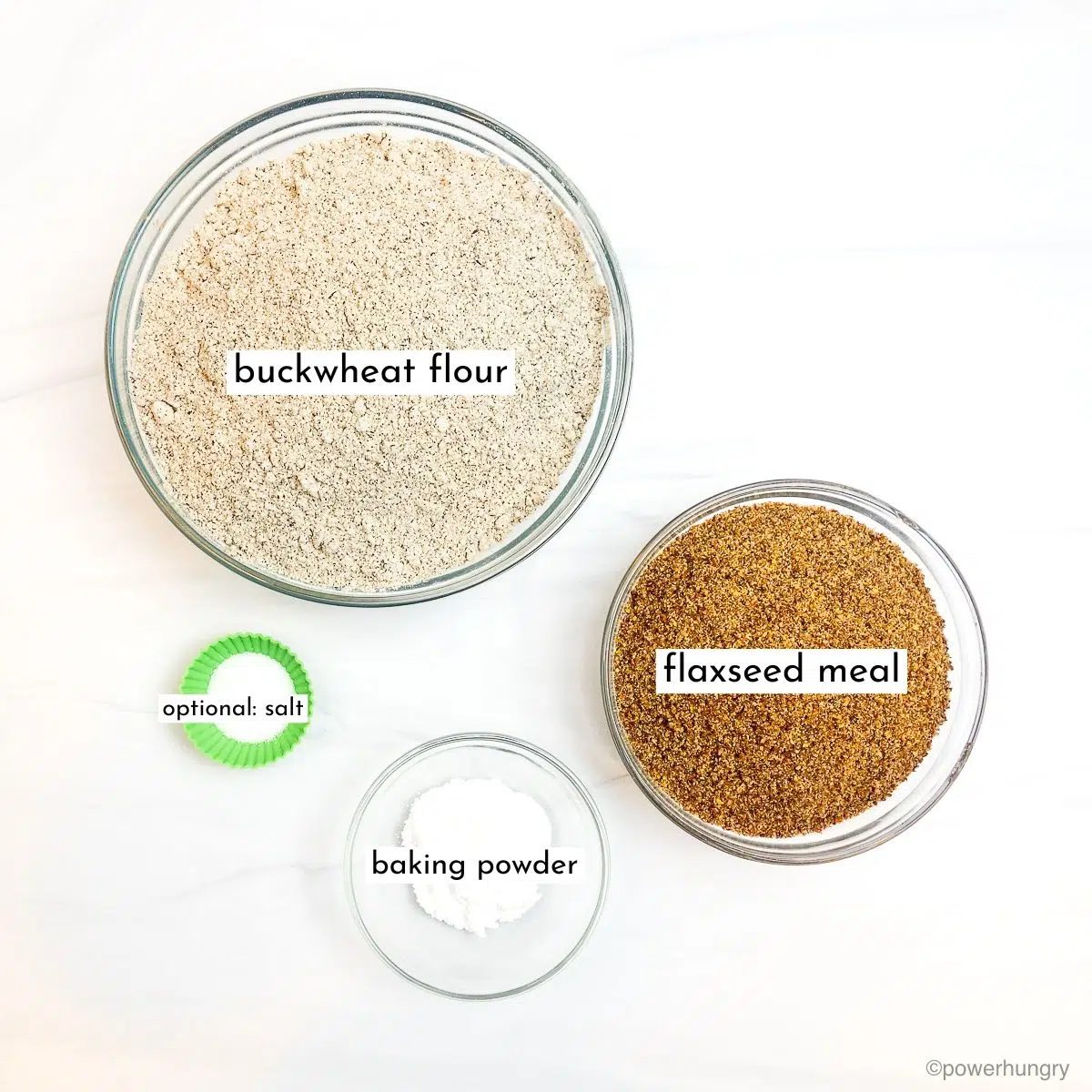
- Buckwheat flour:Light or dark buckwheat flour works. Light flour has a somewhat milder flavor and paler color; dark buckwheat flour includes more of the hull and has a deeper, earthier taste. Buckwheat flour is the only flour in the recipe.
- Flaxseed meal:Ground flaxseed absorbs water and binds the loaf in place of eggs, gluten, starch or psyllium. Use finely ground flaxseed meal and measure it carefully; extra flaxseed can make the batter too dry.
- Baking powder:Baking powder supplies the rise in this yeast-free loaf. Use a certified gluten-free product if needed and make sure it is fresh and active.
- Water:Water hydrates the buckwheat flour and flaxseed meal, transforming the dry ingredients into a thick batter. I use filtered tap water.
- Fine salt (optional):Salt rounds out the nutty flavor. Keep it, reduce it or omit it according to your preferences and dietary needs.
Tip: Grind Your Own Buckwheat Flour
Whole buckwheat groats can be turned into flour in a high-speed blender in about one minute. You can also use a clean electric coffee grinder, working with no more than about 1/4 cup at a time.
Grind the groats until finely powdered. A food processor is not a good tool for this job; the hard groats tend to escape the blade rather than break down into a consistently fine flour. Store any extra flour in an airtight container in the freezer.
Step by Step Directions
Note that the complete instructions are also in the recipe card below.
- Prepare the oven and pan.Preheat the oven to 350°F (180°C). Line a 9-by-5-inch (22.5-by-12.5-cm) loaf pan with parchment paper. If the loaf does not need to be completely oil-free, lightly grease or spray any exposed sides of the pan.
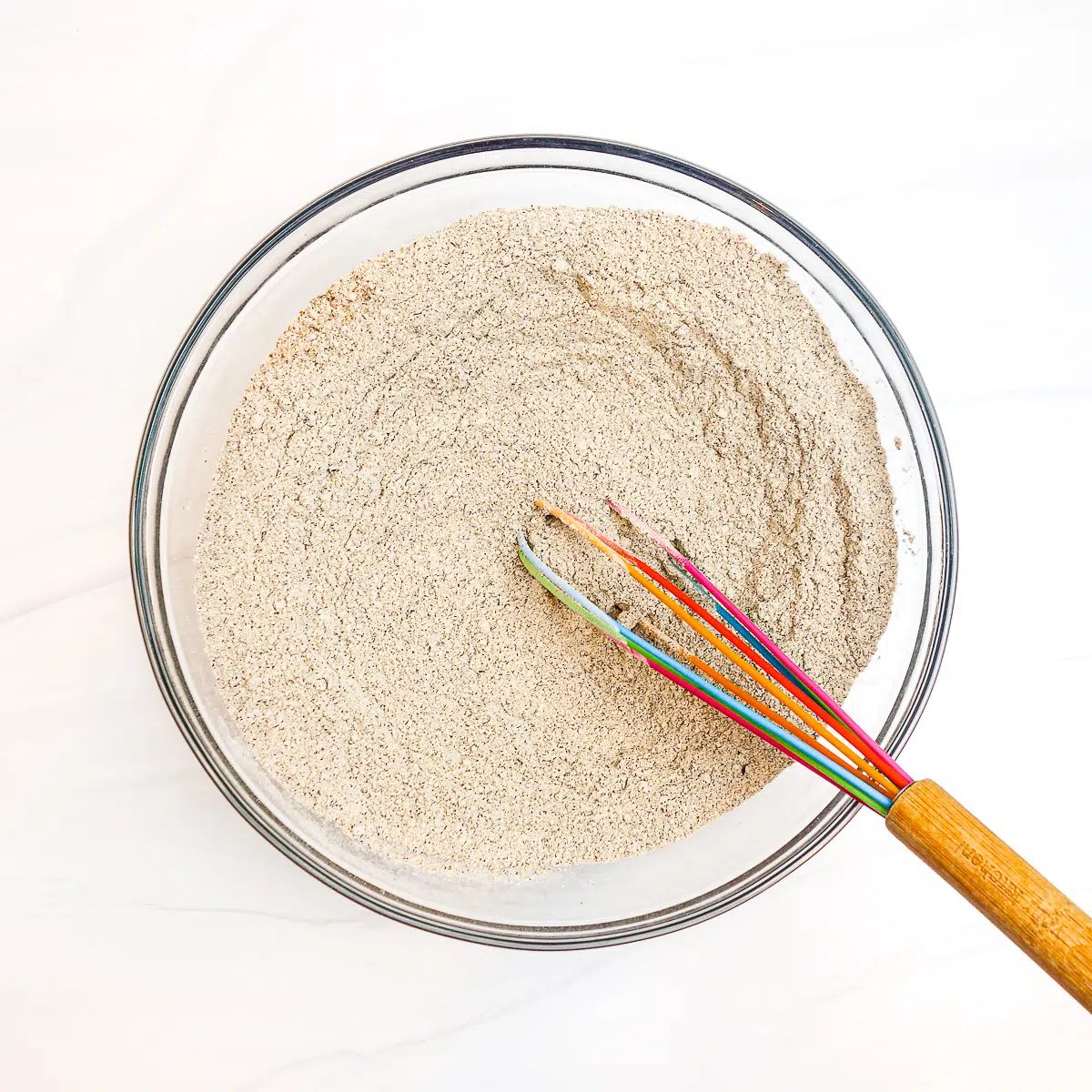
- Combine the dry ingredients.In a large mixing bowl, thoroughly whisk the buckwheat flour, flaxseed meal, baking powder and optional salt. Break up any small clumps and distribute the baking powder evenly.
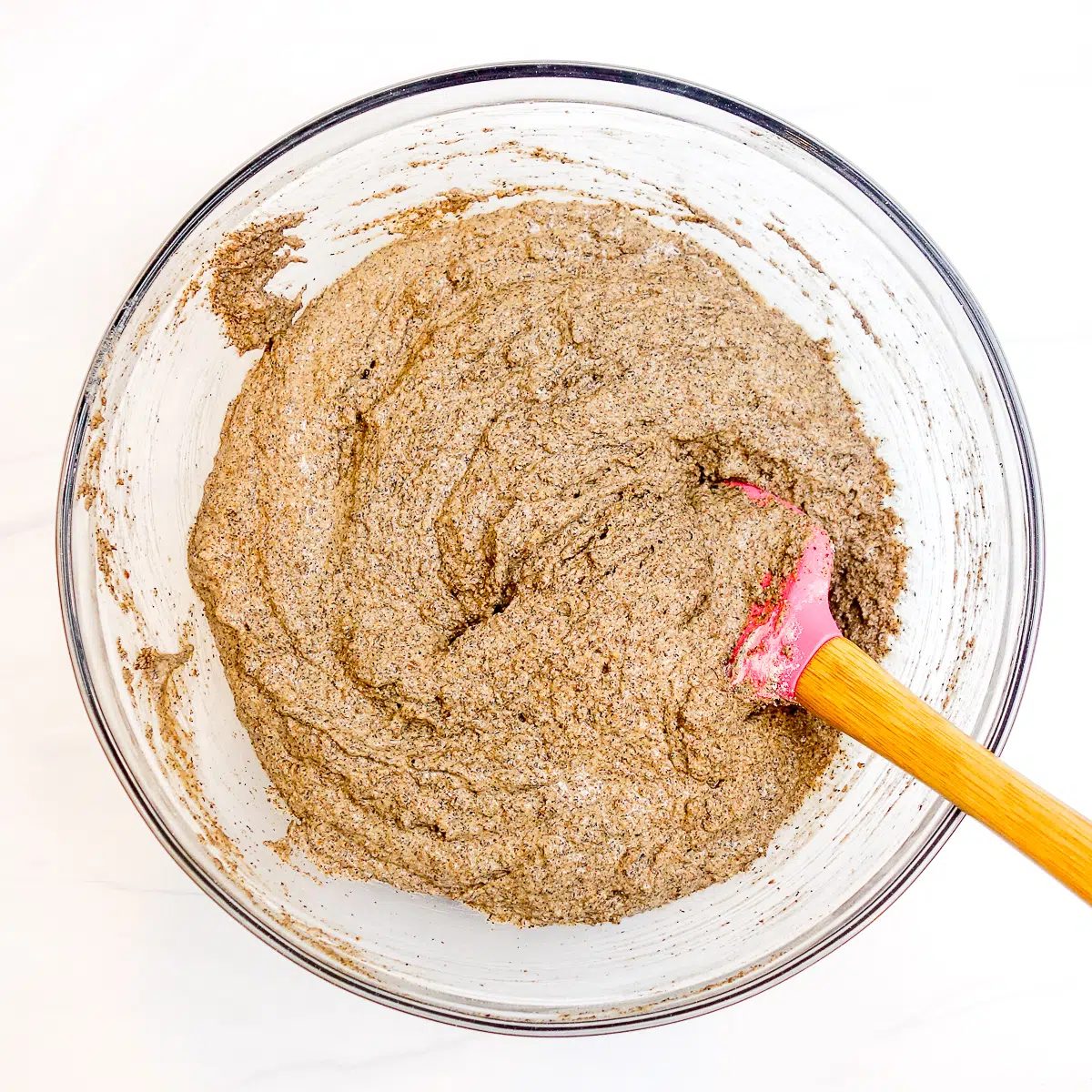
- Add the water.Pour in the water and stir with a wooden spoon or silicone spatula until no dry pockets remain. The batter should be thick rather than pourable, but it should be evenly hydrated and spreadable.
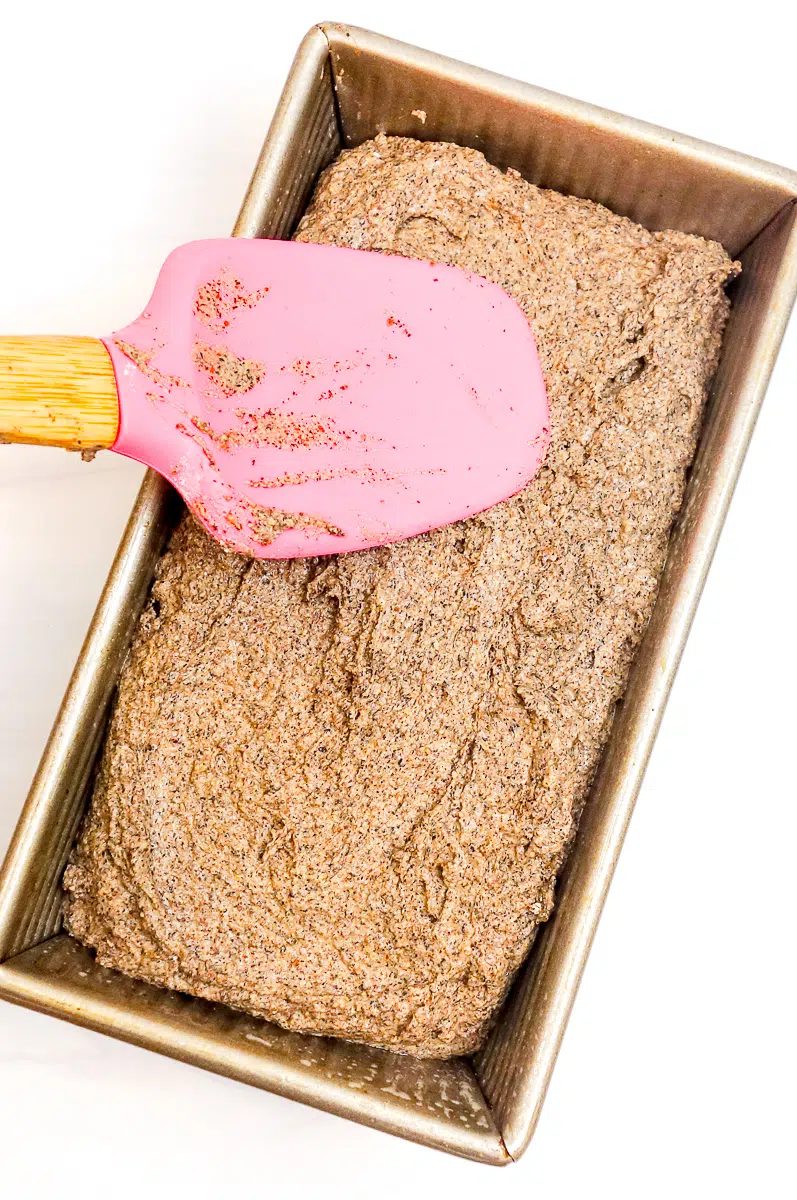
- Fill the pan promptly.Immediately scrape the batter into the prepared loaf pan. Spread it evenly and smooth the surface with the spoon or spatula. Baking powder begins reacting as soon as it is hydrated, so do not leave the mixed batter sitting while the oven heats.
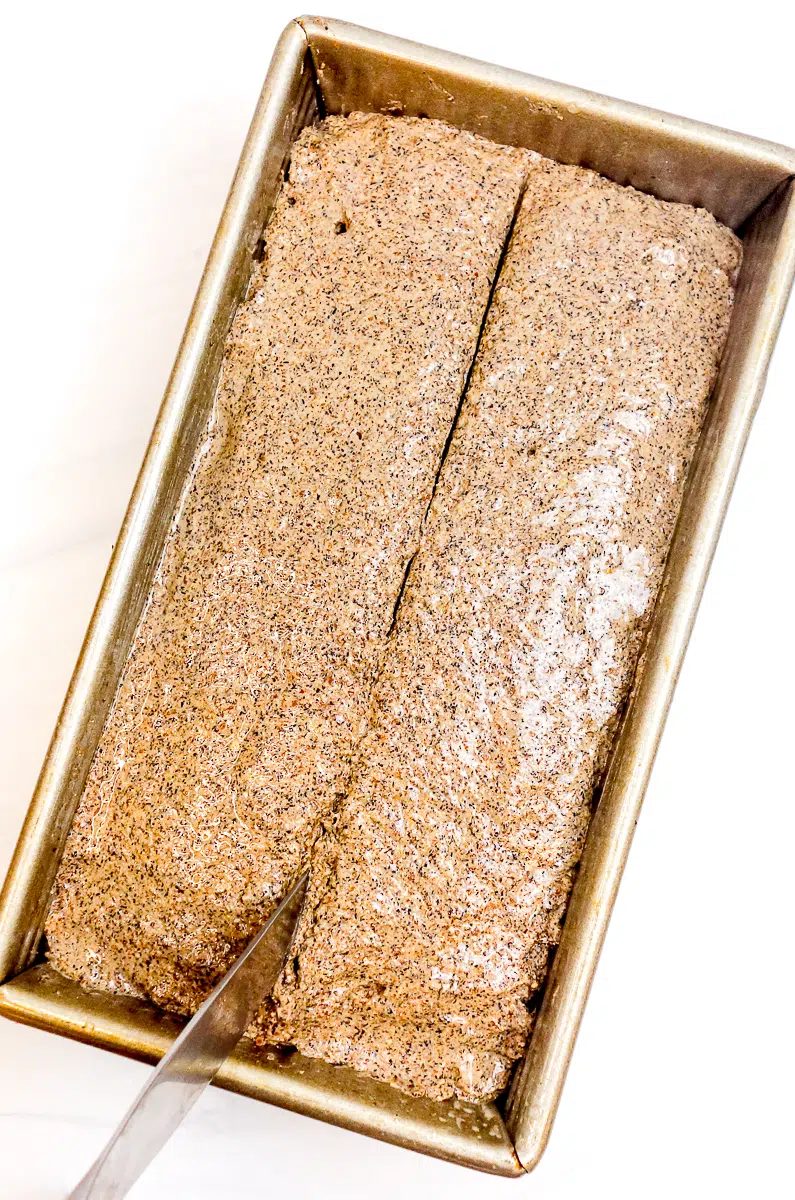
- Slash the loaf.Use a sharp knife to cut a lengthwise slash at least 1/2 inch (1 cm) deep through the center of the batter. The slash gives the dense loaf a controlled place to expand.
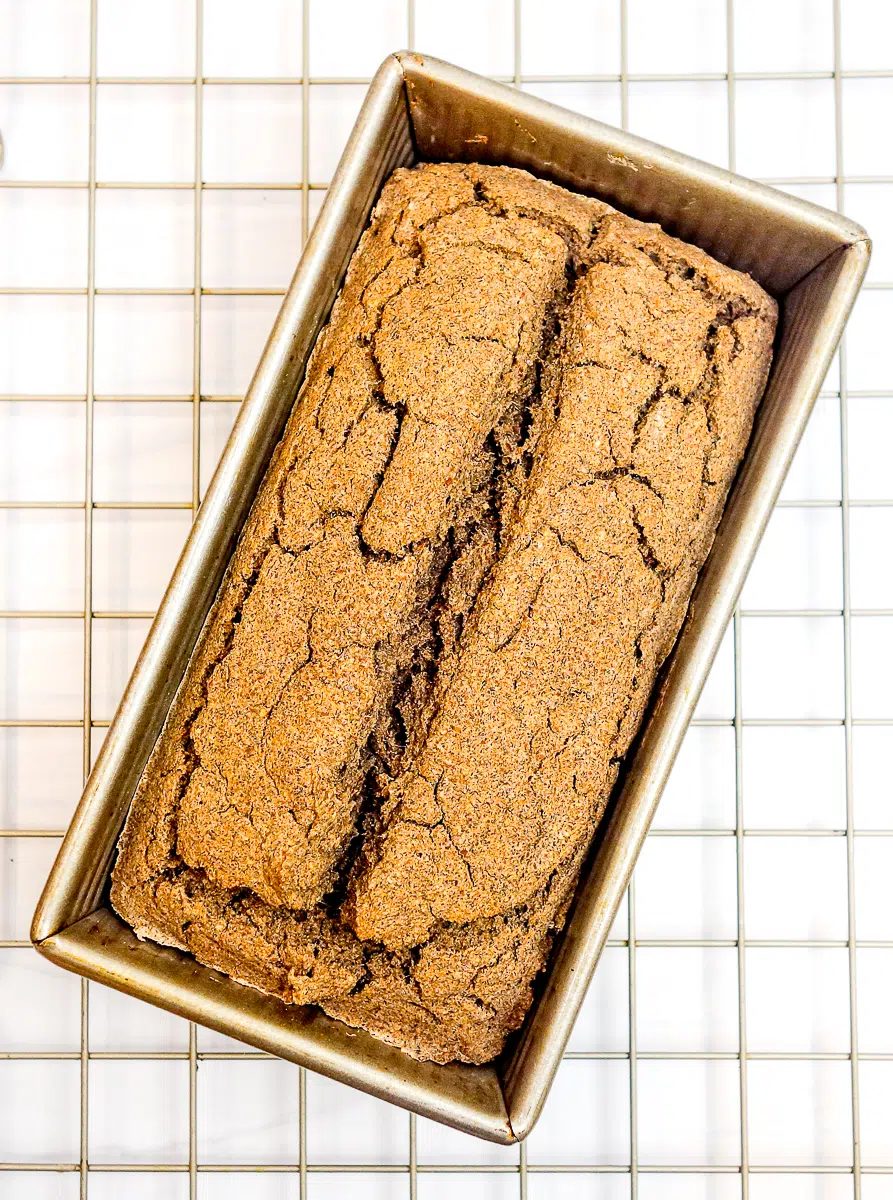
- Bake thoroughly.Bake for 65 to 70 minutes, until the loaf has risen, the surface looks dry, the center slash has opened, and a skewer inserted near the center comes out clean. If the skewer shows wet batter, continue baking and test again. Place the pan on a wire rack and let the loaf cool in the pan for 15 minutes.
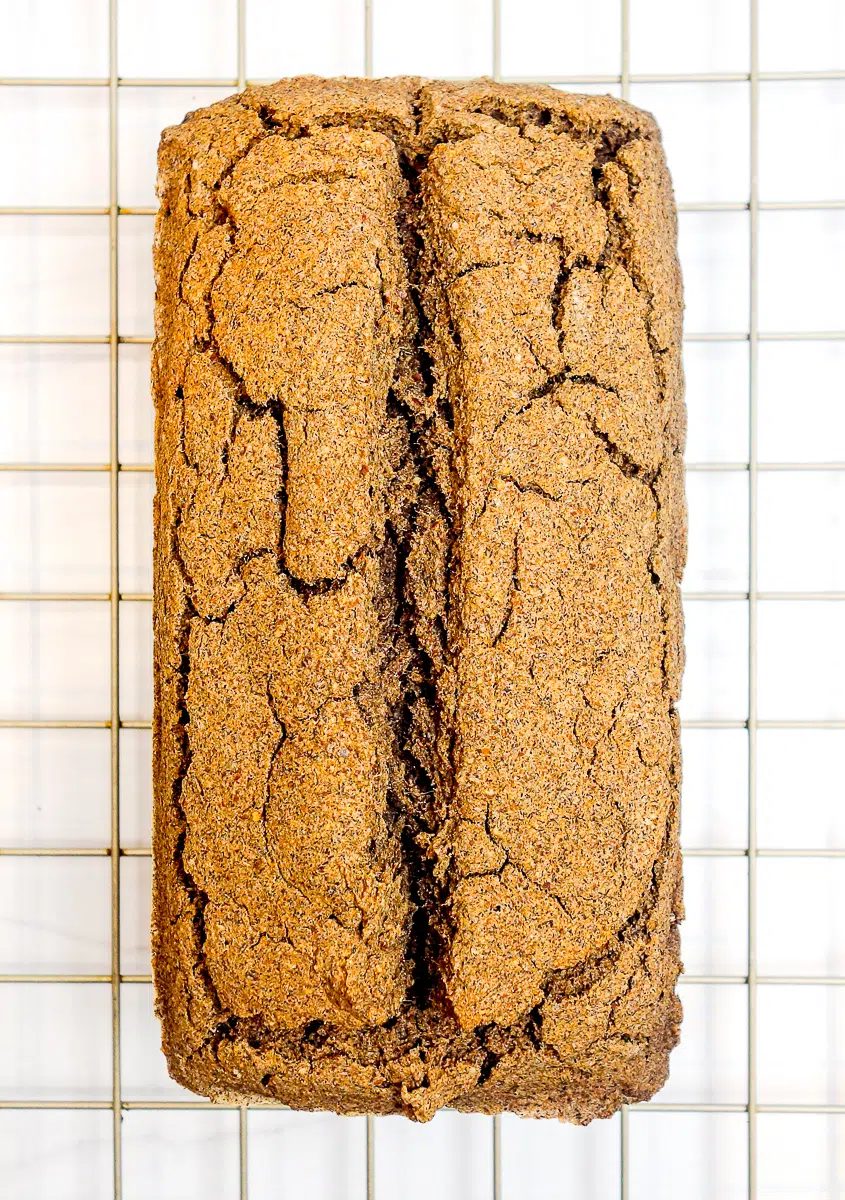
- Cool completely.Lift the loaf from the pan and place it directly on the rack. Let it cool completely before slicing. The crumb continues setting as the loaf cools.
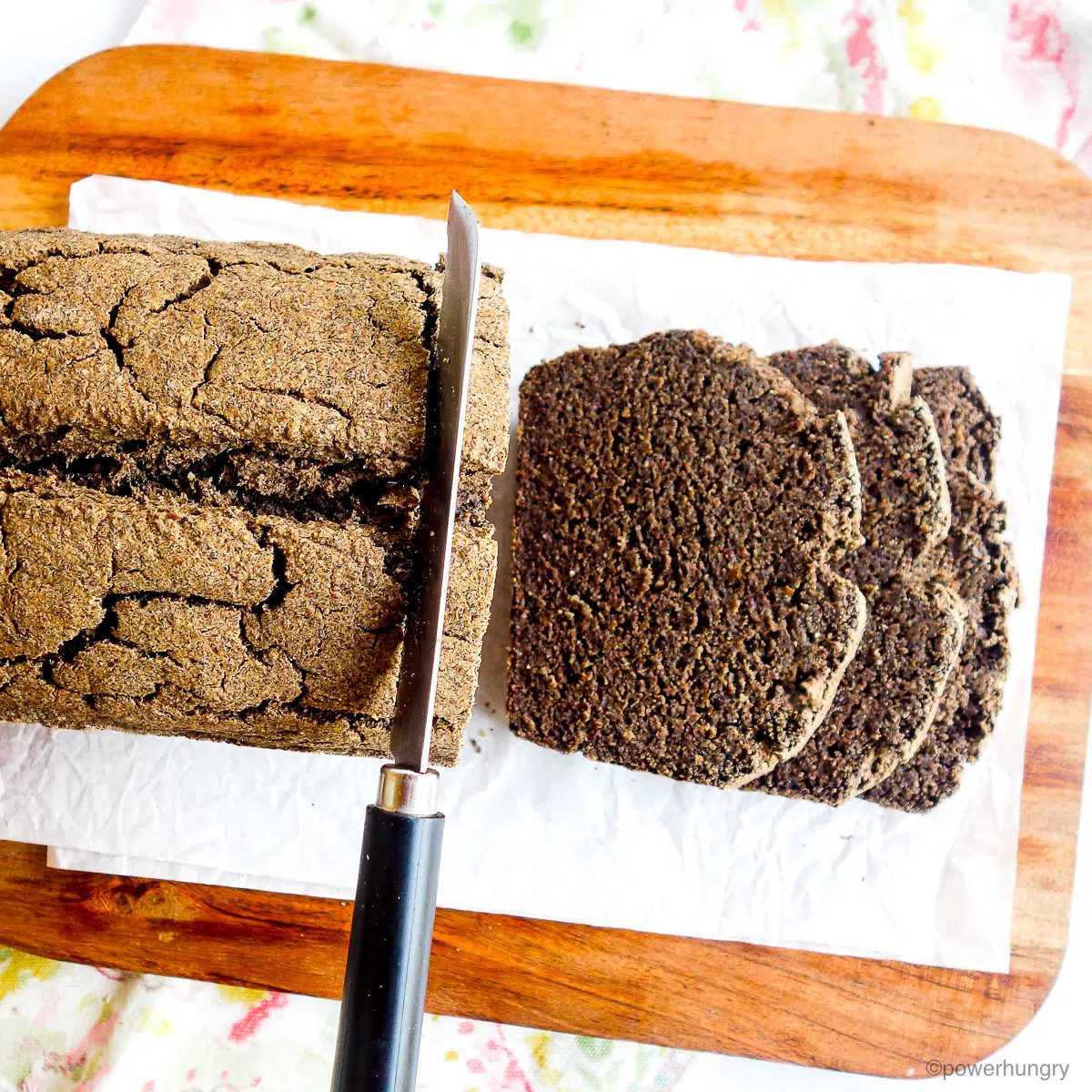
- Chill for the neatest slices.For especially thin, tidy slices, refrigerate the completely cooled loaf until cold before cutting it with a sharp serrated knife.
Taste and Texture
Buckwheat bread has a deep, earthy, nutty flavor reminiscent of robust whole-wheat bread, although it contains no wheat or gluten. Light buckwheat flour produces a milder loaf; dark flour emphasizes its rustic character.
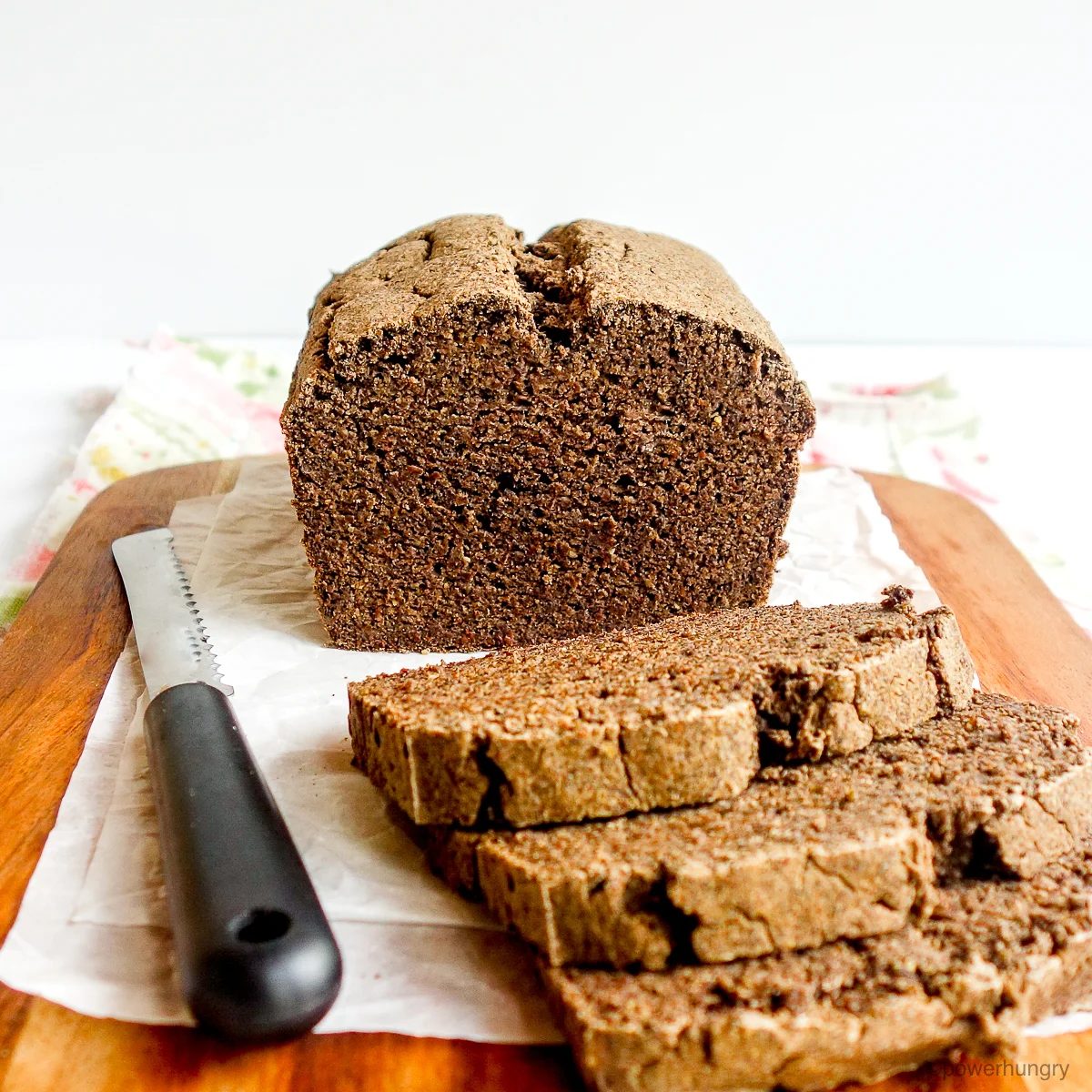
The crumb is firm, close and moist, and the crust edges are crisp-tender. This is a dense, filling loaf rather than an airy yeast bread. Readers who enjoy German and Scandinavian-style whole-grain breads will recognize its substantial texture immediately.
Thin slices are particularly good toasted. Toasting dries the surface slightly, crisps the edges and makes an excellent base for both creamy and juicy toppings.
Serving Suggestions
- Toast thin slices and add avocado, tomato, salt and pepper.
- Spread with almond butter, peanut butter, tahini or sunflower seed butter and top with berries or chopped chocolate.
- Use two chilled, thin slices for a compact, satisfying sandwich.
- Serve toasted alongside soup, chili or a large salad.
- Cut toasted slices into strips for dipping into hummus or another savory spread.
- Turn very thin slices into crisp buckwheat crackers by baking them again at 350°F (180°C) until dry and crisp, an idea shared by a reader who enjoyed the loaf this way.
Storage
Let the loaf cool completely before storing it in an airtight container.
- Cool room temperature:Store for up to 2 days.
- Refrigerator:Store in the fridge for up to 1 week. Chilling also makes the loaf easier to slice thinly.
- Freezer:Freeze for up to 6 months. Freeze the loaf whole or separate individual slices with small pieces of parchment paper so you can remove only what you need.
Thaw frozen slices at room temperature or in the refrigerator, then toast if desired.
Flavor Variations
Keep additions moderate so they do not overwhelm the loaf or interfere with its tested structure.
- Italian herb:Add 1 to 2 tablespoons dried Italian herbs or herbes de Provence with the dry ingredients.
- Garlic and onion:Add 2 to 3 teaspoons garlic powder, onion powder or a combination of the two.
- Cumin or curry:Add 2 to 3 teaspoons ground cumin or curry powder for a warmly savory loaf.
- Cinnamon spice:Add cinnamon, cardamom or nutmeg, plus vanilla if desired, for a breakfast-friendly variation.
- Lightly sweet:Add 3 to 4 tablespoons sweetener at most. If using a liquid sweetener, reduce the water by the same volume to preserve the recipe’s hydration.
- Seeded top:Sprinkle chopped nuts or seeds over the unbaked loaf and press them gently into the surface before baking.
Tips for Success
- Weigh the dry ingredients whenever possible.Buckwheat flour and flaxseed meal can become compacted in a measuring cup. Too much of either makes the batter dry and can produce a heavy loaf.
- If using cups, spoon and level.Gently spoon the flour and flaxseed meal into their cups without packing, then sweep the excess away with a straight edge.
- Use finely ground flaxseed meal.A fine meal absorbs and binds more consistently than a coarse grind.
- Check the baking powder.Stir 1/2 teaspoon baking powder into 1/4 cup boiling water. It should fizz and bubble vigorously at once. Replace it if the reaction is weak or absent.
- Preheat before mixing.The oven should be fully heated when the water goes into the dry ingredients.
- Work promptly.Transfer, smooth, slash and bake the batter immediately so the baking powder does its work in the oven rather than in the bowl.
- Expect a thick batter.It should be spreadable, not freely pourable. Compare it with the process photographs before changing the hydration.
- Make a deep center slash.Cut at least 1/2 inch (1 cm) deep to give the loaf room to expand.
- Bake until the center is done.The surface should look dry and a skewer near the center should come out clean. Add more time if wet batter remains.
- Cool completely.Slicing warm bread can compress the crumb and make a properly baked loaf appear gummy.
- Chill before thin slicing.A cold loaf cuts much more neatly and can be sliced surprisingly thin.
- Toast for a drier texture.The loaf is naturally moist and dense. Toasting thin slices adds crispness without changing the recipe.
Ingredient Substitutions
- Light or dark buckwheat flour:Either works. Light buckwheat flour creates a milder loaf; dark buckwheat flour gives the bread a stronger nutty flavor and darker color.
- Kitchen-made buckwheat flour:Grind whole buckwheat groats into a fine flour in a high-speed blender or clean electric coffee grinder. Use the same metric weight as purchased flour.
- Another gluten-free flour:Do not replace the buckwheat flour with another flour or gluten-free blend. The hydration is specific to buckwheat flour, and another flour would require separate testing.
- Chia seed meal:Finely ground chia seeds can replace the flaxseed meal by equal weight. Do not assume the same volume, because flaxseed and ground chia occupy different amounts of space.
- Psyllium:Psyllium (psyllium husk powder or whole psyllium husks) has not been tested as a replacement for the flaxseed meal in this recipe.
- Salt:Reduce or omit the salt if needed; no replacement is necessary.
- Water.You can up the nutrition by replacing some or all of the water with nondairy milk, such as almond milk, cashew milk or oat milk.
Frequently Asked Questions
Is buckwheat bread gluten-free?Yes. Despite its name, buckwheat is not wheat and is naturally gluten-free. If you need strict gluten-free preparation, use buckwheat flour and baking powder that are labeled or certified gluten-free to minimize the risk of cross-contact.
Does buckwheat bread taste like wheat bread?Buckwheat bread has a deep, nutty flavor reminiscent of robust whole-wheat bread, but it contains no wheat. Light buckwheat flour is milder, while dark buckwheat flour has a stronger earthy flavor.
Why is my buckwheat bread gooey in the middle?The loaf may need more baking time, the flour or flaxseed meal may have been overmeasured, or the oven temperature may be inaccurate. Weigh the dry ingredients when possible, confirm the oven temperature with an oven thermometer, and continue baking until a skewer inserted near the center comes out clean. Cool the loaf completely before slicing; cutting it while warm can make the crumb appear wetter than it will be once set.
Why did my buckwheat bread not rise?First, confirm that you used baking powder rather than baking soda. Baking soda cannot lift this loaf by itself because the recipe contains no acid. The baking powder may also be old or inactive, or the mixed batter may have stood too long before baking. Fully preheat the oven before mixing and place the loaf in the oven promptly.
Why is my batter too dry?The most likely cause is compacted buckwheat flour or flaxseed meal. Use the metric weights in the recipe card for the most consistent result. If measuring by volume, spoon each dry ingredient lightly into its cup and level it without packing. The correctly mixed batter is thick and spreadable rather than pourable.
Can I make buckwheat flour from whole hulled buckwheat groats?Yes. Grind the groats (the buckwheat whole grains) into a fine flour in a high-speed blender for about one minute, or work in batches of no more than about 1/4 cup in a clean electric coffee grinder. A food processor does not grind the hard groats finely or evenly enough for this recipe.
Can I use chia seeds instead of flaxseed meal?Yes. Grind the chia seeds into a fine meal and replace the flaxseed meal by equal weight, not necessarily equal volume. The weight is important because finely ground chia and flaxseed meal occupy different volumes.
Can I replace the buckwheat flour with another flour?I have not tested another direct flour replacement for this particular buckwheat bread recipe . The amount of water is calibrated specifically for buckwheat flour, so another gluten-free flour or blend would require a different formula rather than a one-for-one substitution.
How can I slice the loaf without crumbling it?Let the loaf cool completely (first in the loaf tin, then on the cooling rack), then refrigerate it until cold before cutting it with a sharp serrated knife. Chilling firms the crumb and makes it possible to cut neat, very thin slices.
How should I store buckwheat bread?Cool the loaf completely, then store it in an airtight container for up to 2 days at cool room temperature or 1 week in the refrigerator. Freeze the whole loaf or individual slices for up to 6 months.
This gluten-free buckwheat bread earns its place in the regular baking rotation by being both unusually plain and genuinely useful. The ingredient list is brief, but the loaf is full of character: nutty, hearty, satisfying and equally at home under avocado, almond butter or the contents of a very improvised sandwich. Slice it thin, give it a good toast, and good eating is already underway. Happy baking!
More Gluten-Free Bread Recipes
- 5 Minute Single Slice Protein Bread (24g Protein)
- Buckwheat Flour Carrot Muffins (Vegan, Oil-Free, GF)
- Oil-Free Vegan Buckwheat Pumpkin Bread (GF)
- Vegan Buckwheat Flour Banana Bread (gluten-free)
- 4-Ingredient Buckwheat Flax Chia Bread (Vegan, GF, Oil-free)
- Gluten-Free Buckwheat Sandwich Bread (Oil-free, No yeast)
3-Ingredient Buckwheat Bread
- Prep Time: 5 minutes
- Cook Time: 1 hour
- Servings: 14 slices
Ingredients
- 3 1/4 cups buckwheat flour (light or dark flour)
- 1 1/2 cups flaxseed meal
- 1 tablespoon baking powder (certified GF, as needed)
- 2 1/2 cups water (I use filtered tap water)
- Optional: 3/4 teaspoon salt
Method
- Preheat the oven to 350°F (180°C). Line a 9-by-5-inch (22.5-by-12.5-cm) loaf pan with parchment paper . If the bread does not need to be oil-free, lightly grease or spray any exposed sides of the pan.
- In a large mixing bowl , whisk the buckwheat flour , flaxseed meal , baking powder and optional salt until thoroughly combined.
- Add the water and stir with a wooden spoon or silicone spatula until completely blended into a thick, evenly hydrated batter.
- Immediately spread the batter evenly in the prepared pan and smooth the top. Use a sharp knife to cut a lengthwise slash at least 1/2 inch (1 cm) deep through the center.
- Bake for 65 to 70 minutes, until the loaf has risen, the surface looks dry, the center slash has opened, and a skewer inserted near the center comes out clean.
- Cool the bread in the pan on a wire rack for 15 minutes. Remove it from the pan and cool completely on the rack before slicing.
Notes
Storage: Store the completely cooled loaf in an airtight container for up to 2 days at cool room temperature or 1 week in the refrigerator. Freeze for up to 6 months. Measuring: Use the metric weights in the recipe card whenever possible. If measuring by volume, spoon the buckwheat flour and flaxseed meal lightly into their cups and level without packing. Buckwheat flour : Light or dark buckwheat flour works. To make flour from whole buckwheat groats , grind them finely in a high-speed blender or in small batches in a clean electric coffee grinder. Slicing: For the neatest, thinnest slices, cool the loaf completely and then chill it until cold before cutting with a sharp serrated knife. Texture: This is a firm, moist, close-crumbed loaf rather than an airy yeast bread. Toast thin slices for a crisper, drier texture.