
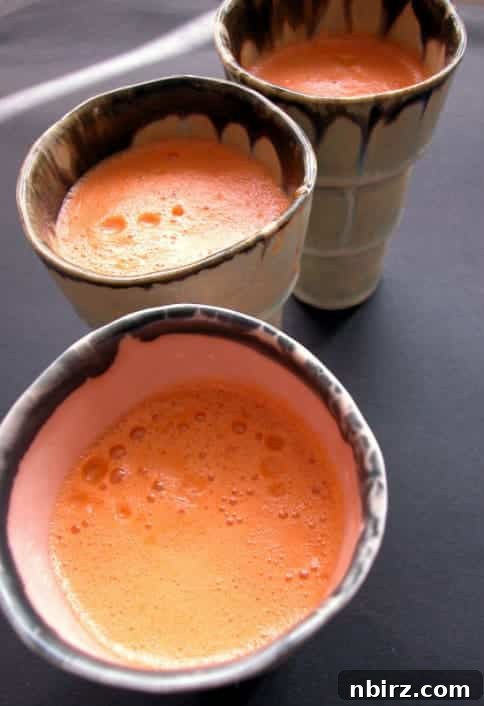
Unlock the Secret to Velvety Smooth Carrot Smoothies: It’s All About Whole Carrots!
There’s an undeniable satisfaction that comes with those “a-ha!” moments in the kitchen – those simple revelations that transform your cooking. For me, such a moment arrived recently, centering around the humble carrot and its role in my morning smoothies. For too long, I had struggled with a common smoothie dilemma, but the solution was surprisingly simple and incredibly effective.
The Carrot Conundrum: Why Juicing Falls Short
Before my breakthrough, I frequently encountered smoothie recipes that called for carrot juice. While seemingly convenient, carrot juice presents several significant drawbacks for the health-conscious and budget-minded home cook. Firstly, it’s often quite expensive to purchase pre-made carrot juice from the store. A single serving can easily cost as much as a whole bag of fresh carrots.
Alternatively, making your own carrot juice at home requires hauling out a dedicated juicer. These appliances are often bulky, take up valuable counter space, and are notoriously difficult to clean. The process of feeding carrots into a juicer, then disassembling and scrubbing all its intricate parts, can be a major deterrent to daily healthy habits.
But beyond the cost and inconvenience, there’s a crucial nutritional compromise: fiber. Carrots are naturally rich in dietary fiber, an essential component for digestive health, satiety, and maintaining stable blood sugar levels. When you juice carrots, the vast majority of this invaluable fiber is stripped away, leaving behind a concentrated sugar liquid. While still containing vitamins, it lacks the holistic nutritional benefits of the whole vegetable.
Embracing the Power of Whole Carrots
In stark contrast to carrot juice, whole carrots are a beacon of practicality and nutrition. They are incredibly affordable, readily available in every grocery store, and boast an impressive nutritional profile, all while keeping their precious fiber intact. They are packed with beta-carotene (which converts to Vitamin A in the body, vital for vision and immune function), Vitamin K, potassium, and various antioxidants. Using whole carrots means you get all the goodness nature intended, without waste.
My desire was to incorporate these nutritional powerhouses directly into my smoothies. The idea of a fiber-rich, naturally sweet, and vibrant orange drink was appealing. However, my initial attempts were met with disappointing results. When simply chopped and added to an average blender, carrots tend to resist liquefaction. Instead of a smooth, creamy texture, I was left with an unpalatable, chunky concoction that felt more like a salad than a refreshing beverage.
While high-powered blenders like a Vitamix might be capable of pulverizing almost anything into a silky smooth liquid, not everyone owns such an expensive appliance. For the majority of us with standard blenders, a different approach was needed to achieve that coveted smooth consistency without investing in commercial-grade equipment or sacrificing essential fiber.
The “A-Ha!” Moment: The Magic of Finely Grated Carrots
The solution, as often happens, presented itself in an unexpected context. I was grating carrots for a batch of moist carrot muffins, using the smallest holes on my box grater to achieve extra-fine shreds. These fine shreds integrate seamlessly into baked goods, contributing moisture and flavor without creating a dense texture. As I worked, a lightbulb went off: why not apply the same principle to my smoothies?
The theory was simple: increasing the surface area of the carrots through fine grating would make them much easier for a standard blender to break down. This pre-processing would allow the blender to work less strenuously, transforming the fibrous carrot shreds into an imperceptible, velvety component of the smoothie.
Transforming Your Smoothie Experience
And so, I put the theory to the test. The results were nothing short of miraculous. My modest blender, which had previously struggled, effortlessly churned out a beautifully smooth, sweet, and utterly delicious carrot concoction. The fine shreds simply vanished, contributing their vibrant color, natural sweetness, and full nutritional bounty without any undesirable texture.
This simple preparation method has revolutionized my smoothie routine. Not only does it yield a superior texture, but it also maintains all the dietary fiber that makes whole carrots so beneficial. Furthermore, cleaning a simple box grater is an absolute breeze compared to the laborious task of scrubbing a complex juicer. It saves time, effort, and ensures you’re getting the most out of your ingredients.
Beyond the texture, adding finely grated carrots offers numerous advantages:
- Gorgeous Color: Carrots impart a beautiful orange hue, making your smoothie visually appealing and stimulating.
- Loads of Nutrition: As discussed, they are packed with vitamins, minerals, and antioxidants.
- Natural Sweetness: Carrots offer a subtle, earthy sweetness that complements fruits beautifully, often reducing the need for added sweeteners.
- Extra Body and Creaminess: The fine fiber helps thicken the smoothie, giving it a more substantial and satisfying feel.
Beyond the Mango: Versatile Carrot Additions
While the Mango-Carrot Smoothie is a fantastic starting point, the beauty of this technique lies in its versatility. Once you’ve mastered the art of grating carrots for your blender, you can add a handful of these fine shreds to almost any smoothie recipe. Experiment with combinations such as:
- Tropical Carrot Boost: Combine grated carrots with pineapple, coconut water, and a touch of ginger for an immune-boosting drink.
- Green & Orange Power: Blend with spinach or kale, apple, and a squeeze of orange for a nutrient-dense, yet sweet, green smoothie.
- Berry Carrot Delight: Mix with mixed berries, a banana, and almond milk for a naturally sweet and antioxidant-rich treat.
- Spiced Carrot Cream: Add a pinch of cinnamon, nutmeg, and a dash of vanilla extract to your carrot smoothie for a comforting flavor profile.
The possibilities are endless, allowing you to easily sneak in extra vegetables and fiber into your diet without even noticing them!
Tips for the Perfect Grated Carrot Smoothie
- Peel Your Carrots (Mostly): While I advocate for keeping peels on many vegetables for added nutrients, for optimal flavor and smoothness in a smoothie, especially if your carrots aren’t super-fresh from a garden or farmer’s market, a quick peel is recommended. This removes any potential bitterness or rough texture from older peels.
- Use Frozen Mango (or other fruit): Frozen fruit is your secret weapon for a thick, frosty smoothie without needing excessive ice, which can dilute flavor. If using fresh mango, you might want to add a few ice cubes for desired consistency.
- Adjust Liquid Gradually: Start with the recommended amount of liquid and add more, a little at a time, until you reach your preferred smoothie consistency. Different blenders and fruit ripeness can affect the needed liquid.
- Sweetener to Taste: Carrots and mango are naturally sweet. Taste your smoothie before adding any sweetener. If desired, natural options like stevia, a date, or a drizzle of maple syrup work well.
Whole Carrot-Mango Smoothie (Made with Whole Carrots, Not Carrot Juice)
By: Camilla
Prep Time: 5 minutes
Total Time: 5 minutes
Servings: 1
Ingredients
- 1 cup frozen mango chunks
- 2 medium carrots, peeled and finely grated
- 1 cup ice water
- 2 tablespoons fresh lime juice
- Sweetener to taste, optional (e.g., 2 packets of Organic Stevia)
Instructions
- Place all of the ingredients in your blender.
- Puree until completely smooth. Serve immediately and enjoy!
Notes
- Carrot Peeling: I strongly advise peeling your carrots for this recipe! While I generally advocate for keeping peels for nutrients, unless your carrots are super-fresh (straight from a garden or farmer’s market), peeling them will result in optimal flavor and a smoother texture in your smoothie.
- Mango Type: The mango does not necessarily need to be frozen, but using frozen mango chunks will produce a thicker, colder, and more satisfying smoothie consistency.
- Nutritional Powerhouse: This humble smoothie is a true nutritional powerhouse! It provides over 267% of your daily Vitamin A, 101% of your Vitamin C requirements, and is high in potassium and Vitamin B6. Furthermore, it is naturally low in added sugar (if no additional sweetener is used) and exceptionally high in beneficial dietary fiber.
Nutrition Information (Approximate per serving)
Calories: 148 kcal
Carbohydrates: 38.2 g
Protein: 1.7 g
Fat: 1 g
Sodium: 54 mg
Fiber: 5.4 g
Sugar: 29.4 g
This simple shift from carrot juice to finely grated whole carrots is a game-changer for anyone looking to boost their smoothie’s nutrition, fiber content, and overall texture, all while saving money and simplifying cleanup. Say goodbye to chunky smoothies and cumbersome juicers, and hello to a new world of velvety, nutrient-packed deliciousness. Happy sipping!