
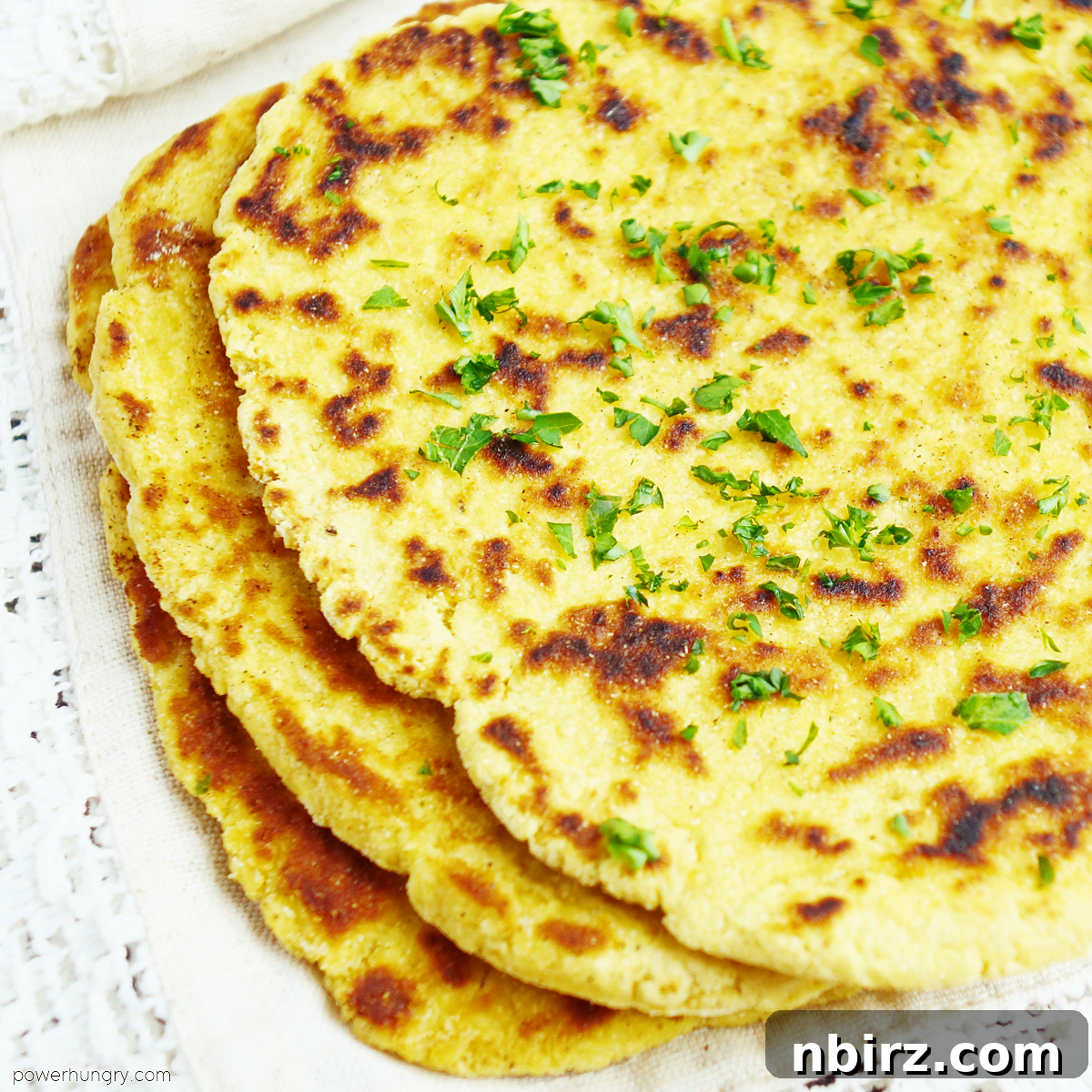
Easy Chickpea Flour Naan: Your Vegan, Gluten-Free Stovetop Flatbread
Are you on the hunt for a versatile, delicious, and healthy flatbread that effortlessly fits into various dietary plans? Your search ends here! This chickpea flour naan recipe is a true culinary gem, providing a delightful and unique twist on traditional naan. It’s meticulously crafted to be completely vegan, grain-free, yeast-free, and gluten-free, ensuring everyone can enjoy this wholesome bread. The best part? You can prepare a fresh batch in mere minutes, right on your stovetop, ready to be served warm with your favorite curries, stews, vibrant salads, or creamy dips for an unforgettable dining experience.
Effortless Homemade Naan: A Stovetop Revolution for Every Kitchen
The thought of baking naan at home might conjure images of complex culinary endeavors, perhaps even requiring a specialized Tandoor oven. However, I’m here to dispel that myth and reveal just how straightforward making naan at home can be! My personal journey into homemade naan began during a time when grocery shopping was challenging, and I quickly realized that a simple hot skillet and your kitchen stovetop are all you truly need to achieve wonderfully authentic and flavorful results. Forget any preconceived notions of difficulty; this recipe is a testament to the fact that traditional tastes and textures are easily attainable in your own kitchen.
I’ve dedicated time to perfecting a quick and easy vegan, grain-free naan version, with chickpea flour as its brilliant base. The outcome is not just utterly scrumptious but also remarkably adaptable to different meals. For those who adore a pungent kick, a simple addition of garlic powder transforms it into an irresistible garlic naan. The entire preparation and cooking process is incredibly minimalist, requiring nothing more than a mixing bowl, a spoon or spatula, and your trusted skillet. This approach makes it my go-to choice for bread – it’s simple, deeply satisfying, and prepared in a flash, perfect for busy weeknights or leisurely weekend meals.
The Remarkable Benefits and Nutritional Value of Chickpea Flour Naan
This chickpea flour naan is much more than just a delicious bread; it’s a nutritional powerhouse designed to meet a wide array of dietary preferences and needs. It serves as a filling and deeply satisfying flatbread, packed with health benefits that make it an outstanding choice for any meal:
- Vegan: Crafted without any animal products, including eggs or dairy, making it perfectly suitable for strict plant-based diets and ethical eating.
- Yeast-Free: An excellent option for those who prefer to avoid yeast or are looking for a quicker bread preparation method that doesn’t involve lengthy fermentation times.
- High Fiber: Each serving of naan generously provides 7 grams of dietary fiber. This not only supports healthy digestion but also contributes significantly to a feeling of fullness and sustained energy.
- High Protein: With a substantial 7 grams of protein per naan, this flatbread is fantastic for boosting satiety and aiding in muscle maintenance and repair.
- Grain-Free: Ideal for individuals following grain-free lifestyles, as it’s made entirely without traditional grains like wheat, oats, or rice.
- Gluten-Free: Naturally free from gluten, making it a safe and delicious option for those with gluten sensitivities, intolerances, or Celiac disease.
- Nut-Free: A reassuringly safe choice for individuals with nut allergies, ensuring that more people can enjoy this flavorful bread without concern.
- Added Sugar-Free: Prepared without any refined or added sugars, maintaining its status as a truly wholesome and health-conscious food option.
With such an impressive list of benefits, it’s clear why this chickpea flour naan is gaining popularity. Ready to harness these advantages and create your own batch of this wonderfully nourishing flatbread? Let’s dive into the ingredients and preparation!
Essential Ingredients for Your Perfect Chickpea Flour Naan
To create this wholesome and flavorful chickpea flour naan, you’ll need a minimal yet carefully selected array of ingredients. My journey in developing this recipe involved several rounds of testing. Early experiments using just chickpea flour, water, and leavening agents often resulted in dry, crumbly, and far-from-ideal flatbreads. It was only through a meticulous selection and combination of key components that I achieved the tender, pliable, and utterly delicious naan you see today. Here’s a detailed look at what you’ll need to ensure your success:
- Nondairy Milk: The choice of milk is flexible; any plain variety you prefer will work perfectly. During my recipe development, hemp milk was a successful choice, but popular options like soy milk, almond milk, or cashew milk are equally suitable. The nondairy milk is crucial for imparting tenderness and a rich depth of flavor to the naan, far superior to using just water.
- Lemon Juice: This essential ingredient is combined with the nondairy milk to form a homemade “buttermilk.” The acidity of the lemon juice reacts with the baking soda, creating a subtle leavening effect and contributing to the naan’s soft texture and distinctive tang. If lemon juice isn’t available, an equal amount of neutral-flavored vinegar, such as apple cider vinegar or white vinegar, makes an excellent substitute.
- Vegetable Oil: A small but important amount of neutral-flavored oil (like canola, grapeseed, or sunflower oil) is incorporated into the dough. This addition is vital for making the naan wonderfully tender and pliable, preventing it from becoming tough or dry.
- Chickpea Flour: The star ingredient and foundation of our vegan, gluten-free naan! Also commonly known as garbanzo bean flour, gram flour, or besan, this finely ground flour derived from dried chickpeas is celebrated for its high protein and fiber content. It lends a distinct, earthy, and nutty flavor profile to the naan, making it exceptionally unique and satisfying.
- Whole Psyllium Husks: This is a critical binder for our grain-free and gluten-free naan, effectively replacing the structural role of eggs and gluten. Psyllium husks absorb liquid to form a gel, which gives the dough the necessary elasticity to be rolled out without tearing and provides a desirable bread-like texture to the finished flatbreads. It is crucial to use *whole* psyllium husks; if you only have psyllium powder, please refer to the FAQ section for important quantity adjustments.
- Baking Powder & Baking Soda: These are the dual leavening agents in the recipe. They work in tandem to create subtle gas bubbles within the dough, providing a gentle lift and contributing to the naan’s characteristic soft internal structure. For those with strict dietary needs, ensure you use certified gluten-free baking powder if necessary.
- Salt: A fundamental flavor enhancer. Salt balances and brings out the inherent flavors of all the other ingredients in the bread. The quantity can always be adjusted to suit your individual taste preferences and health requirements.
- Optional: Garlic Powder (1 and 1/2 teaspoons): For enthusiasts of garlic naan, incorporating garlic powder during the initial dough mixing phase is highly recommended. For a more robust fresh garlic flavor, 2 to 3 small cloves of finely minced fresh garlic can be used as an alternative.
Step-by-Step Guide: How to Craft Your Perfect Chickpea Flour Naan
Creating this delectable stovetop naan is a straightforward and rewarding process. Follow these detailed steps carefully, and you’ll be enjoying warm, homemade flatbread in no time.
Step 1: Activate the Nondairy Buttermilk
In a small bowl or measuring cup, combine your chosen nondairy milk with the lemon juice. Stir gently and allow this mixture to sit undisturbed for precisely 5 minutes. During this brief period, the acidity from the lemon juice will curdle the milk, creating a rich nondairy buttermilk. This activation is a vital initial step, as the buttermilk significantly contributes to the overall flavor and tenderness of your finished naan, yielding a superior texture and taste compared to using plain water or un-curdled milk.
Step 2: Prepare and Mix the Yeast-Free Dough
Embrace the speed of this yeast-free recipe – your dough will come together in just moments, completely bypassing the need for lengthy rising times!
In a medium-sized mixing bowl, thoroughly whisk together all your dry ingredients: the chickpea flour, whole psyllium husks, baking powder, salt, and baking soda. If you are preparing garlic naan, now is the perfect time to incorporate the optional garlic powder, ensuring it’s evenly distributed throughout the dry mixture for consistent flavor.
Next, pour the prepared nondairy buttermilk mixture and the vegetable oil into the bowl with the dry ingredients. Using a sturdy mixing spoon or spatula, mix vigorously until all components are well combined and a thick, cohesive dough forms. Make sure to scrape down the sides of the bowl to integrate any stray bits of flour. Once combined, let the dough rest for a brief 1 to 2 minutes. This short rest is critical for allowing the psyllium husks to fully absorb the liquids, resulting in a dough that is much lighter, springier, and significantly easier to handle and roll.
Step 3: Divide and Master the Dough Portions
Once your dough has rested and achieved its ideal consistency, carefully divide it into 3 equal portions. For exact measurements, a kitchen scale can be used, but a careful visual estimate will work just as well. Take each portion and, using your hands, gently roll it into a smooth, compact ball. Place these dough balls onto a well-floured cutting board or other clean work surface. Be generous with the chickpea flour on your surface; this crucial step will prevent the dough from sticking and ensure a smooth rolling process in the next stage.
Step 4: Roll Out Your Naan Flatbreads with Precision
Take one of the dough balls and place it firmly in the center of your well-floured work surface. Sprinkle a little additional chickpea flour on top of the dough. To start, I recommend gently pressing the dough outwards with your fingers to form a rough oval shape; this makes it easier to roll. Before you introduce the rolling pin, ensure that the area directly beneath the dough is thoroughly coated in flour – this is key to preventing any stubborn sticking.
Now, using a rolling pin, carefully roll the dough into your desired naan shape. A classic wide oval, approximately 7 to 8 inches long and 4 to 5 inches wide, works beautifully. If you prefer a more uniform look, a 6 to 7-inch circle is also a great option. Strive for an even thickness across the entire flatbread for consistent cooking. Once rolled, lightly spritz the top surface of the dough with nonstick cooking spray or gently brush it with a thin layer of additional oil. This preparation step not only helps prevent sticking to the skillet but also encourages a beautiful golden-brown crust during cooking.
Step 5: Cook Your Naan to Golden Perfection on the Stovetop
Heat a medium or large cast-iron skillet (or any other heavy-bottomed, non-stick skillet) over medium-high heat until it is thoroughly hot. You can test the heat by flicking a few drops of water onto the surface – if they sizzle and evaporate immediately, your skillet is ready.
Carefully place one piece of the rolled-out dough, with the sprayed or oiled side facing down, directly onto the hot skillet. Allow it to cook for approximately 1 minute. During this time, observe the top surface of the dough; it will begin to bubble up slightly in a few places. While it won’t puff dramatically like a yeasted naan, these bubbles are a clear indicator of successful cooking. Gently lift a corner of the naan with a spatula to peek underneath – the bottom should have developed beautiful, deep golden-brown spots. Once this happens, use your spatula to flip the naan over to the second side.
Cook the second side for about 1 minute longer, or until it, too, develops appealing deep golden spots. Once both sides are perfectly cooked, transfer the naan to a wire rack or a clean plate. Loosely cover it with a clean dish towel to keep it warm and maintain its pliability while you proceed with cooking the remaining pieces. Remember to monitor and adjust the heat of your skillet as necessary between batches; if it becomes too hot, reduce the heat slightly to prevent any scorching of the naan. Maintaining consistent heat is key to achieving perfectly cooked, evenly browned flatbreads.
Serving Suggestions and The Joy of Chickpea Flour Naan
This chickpea flour naan is truly an experience best enjoyed warm, ideally served straight from the skillet. For an added burst of freshness and vibrant flavor, consider sprinkling your naan with a generous handful of finely chopped cilantro or parsley. A delicate pinch of flaky sea salt can also elevate its taste, highlighting its unique savory notes. The slight crispness on the exterior paired with the tender, satisfying interior creates an absolutely irresistible combination!
While chickpea flour naan offers a denser, more substantial texture compared to traditional yeast-leavened naan – which is renowned for its light, fluffy, and stretchy pliability – this version boasts a distinctive, rich, and nutty flavor profile that is deeply gratifying. Its robust character makes it incredibly versatile, pairing beautifully not only with traditional Indian cuisine but also as an excellent accompaniment to virtually any meal. Imagine it alongside comforting soups, hearty stews, crisp salads, or even as a sturdy dipper for hummus and other spreads. In my home, it’s a much-anticipated addition to almost every dinner, proving its universal appeal!
Frequently Asked Questions (FAQ) About Chickpea Flour Naan
Can I Use a Different Grain-Free or Gluten-Free Flour for This Recipe?
Regrettably, for this specific recipe, substituting chickpea flour with another grain-free or gluten-free flour is not recommended. This recipe has been meticulously developed to specifically utilize the unique properties of chickpea flour, also commonly known as besan or garbanzo bean flour. Its distinct protein structure, starch content, and impressive ability to absorb liquid and effectively bind with psyllium husks are fundamental to achieving the desired texture and delicious flavor of this naan. Other flours, such as almond, coconut, or oat flour, behave very differently in terms of hydration, binding, and elasticity, and would likely yield vastly different, and often unsatisfactory, results. If you are exploring other flatbread or tortilla recipes using different flours, I encourage you to check out the diverse range of other recipes available on my site!
Can I Use Something Other than Whole Psyllium Husks?
The only viable alternative for whole psyllium husks in this recipe is psyllium powder. However, it is critically important to understand that the quantities for substitution are significantly different. This is due to the finer particle size and much higher absorbency of the powder compared to the whole husks. As a general guideline, if you are substituting psyllium powder, you will typically need considerably less. For this specific recipe, if you must use psyllium powder, substitute the 3 tablespoons of whole psyllium husks with 1 tablespoon (approximately 15 grams) of psyllium powder. Please note: I have not personally tested this recipe with psyllium powder, so results may vary slightly. Always consult your specific brand’s recommendations for conversions, as weights can differ. It is also important to highlight that other common gelling agents, such as ground flaxseed meal or chia seeds, do not possess the same unique binding and textural characteristics as psyllium and will unfortunately not work as effective substitutes in this particular naan recipe.
Can Additional Flavors, Besides Garlic, Be Added to the Naan?
Absolutely! While garlic naan is an undeniably popular and delicious choice, this chickpea flour naan offers a fantastic canvas for culinary creativity. Feel completely free to customize your flatbread with an array of different spices and herbs to match your personal preferences or the meal you’re serving. Although not all additions may be strictly traditional for every style of naan, incorporating other flavors can truly elevate your homemade flatbread experience. Consider stirring in dry spices such as earthy cumin, vibrant turmeric, a pinch of chili powder for heat, or smoky paprika for depth. Dried herbs like classic Italian seasoning, aromatic basil, robust rosemary, or fragrant oregano would also make excellent additions. For a savory background, a touch of onion powder or freshly ground black pepper can be incorporated. If you prefer fresh, bright notes, finely chopped fresh herbs such as mint, chives, or dill can be stirred directly into the dough during Step 2. Experiment and discover your own signature flavor combinations!
We hope you thoroughly enjoy making and savoring your homemade, wholesome naan!
Explore More Chickpea Flour Bread Recipes You’ll Love:
If you’ve enjoyed the versatility and deliciousness of this chickpea flour naan, you’ll be excited to discover even more healthy and easy bread recipes that celebrate this incredible flour. Chickpea flour is an invaluable ingredient for vegan, grain-free, and gluten-free baking, and these recipes perfectly showcase its amazing potential:
- Chickpea Flour Sandwich Bread: Grain-Free, Vegan, 5 Ingredients
- Chickpea Flour Beer Bread: 3 Ingredients, Vegan
- Chickpea Flour Soda Bread: Vegan, Grain-Free
- Chickpea Flour Flax Sandwich Bread: Vegan, Grain-Free, Oil-Free
- 2-Ingredient Chickpea Flour Tortillas: Vegan, Grain-Free
- Basic Vegan Chickpea Flour Muffins: Grain-Free, Oil-Free
Chickpea Flour Naan (Vegan, Grain-Free, Easy)
By: Camilla
Summary: This chickpea flour naan is the vegan, grain-free, yeast-free & gluten-free flatbread you’ve been looking for! Make it in minutes on the stovetop.
Prep Time: 10 minutes | Total Time: 10 minutes | Servings: 3 naan (flatbreads)
Rating: 4.86 from 71 votes
Pin Recipe |
Print Recipe
Ingredients
- 1/2 cup nondairy milk (e.g., soy milk, cashew milk, almond milk)
- 1.5 teaspoons lemon juice (or a light-colored vinegar)
- 1 cup chickpea flour
- 3 tablespoons whole psyllium husks (see note for psyllium powder)
- 1.5 teaspoons baking powder (certified GF, as needed)
- 1/4 teaspoon salt
- 1/8 teaspoon baking soda
- Optional: 1.5 teaspoons garlic powder
Optional:
- 2 teaspoons vegetable oil (any variety)
- Nonstick cooking spray or additional oil for brushing
(Units: US Customary – Metric)
Instructions
- In a small bowl or cup, combine the nondairy milk and lemon juice. Let it stand for 5 minutes to curdle, creating a flavorful nondairy buttermilk.
- In a medium mixing bowl, whisk together the chickpea flour, whole psyllium husks, baking powder, salt, and baking soda. If desired, stir in the optional garlic powder at this stage.
- Add the curdled nondairy milk mixture and the vegetable oil to the dry ingredients. Mix thoroughly, scraping down the sides of the bowl, until a cohesive dough forms. Allow the dough to rest for 1 to 2 minutes; this crucial step allows the psyllium to fully absorb the liquid, resulting in a more manageable and springy dough.
- Divide the dough into 3 equal portions. On a well-floured cutting board (using chickpea flour), roll each portion into a ball.
- Place one dough ball in the center of the floured board and sprinkle with a little more chickpea flour. Gently press the dough with your fingers to begin forming an oval shape. Using a rolling pin, roll the dough into a wide oval approximately 7-8 inches long and 4-5 inches wide, or a 6-7 inch circle, ensuring even thickness. Lightly spritz the dough with nonstick cooking spray or brush with a small amount of oil to prevent sticking and aid browning.
- Heat a medium or large cast-iron or heavy non-stick skillet over medium-high heat until hot. Place one rolled dough piece, sprayed/oiled side down, into the skillet. Cook for 1 minute, or until the top begins to bubble slightly and the bottom develops deep golden-brown spots.
- Using a spatula, flip the naan to the other side and cook for approximately 1 minute longer, until that side also has deep golden spots. Transfer the cooked naan to a rack or plate and loosely cover with a clean dish cloth to keep warm.
- Repeat steps 5-7 with the remaining dough portions, adjusting skillet heat as necessary to prevent scorching. Serve warm, optionally garnished with parsley, cilantro, or flaky salt.
Notes
- Chickpea Flour Tip: Feel free to use any variety of chickpea flour, including those labeled besan, garbanzo bean flour, or gram flour.
- Vinegar Tip: If substituting lemon juice with vinegar, choose a neutral-flavored option such as cider vinegar or white vinegar for best results.
- Psyllium Powder Substitution: For optimal texture, whole psyllium husks are recommended. If only psyllium husk powder is available, use 1 tablespoon (approximately 15 grams) of powder in place of 3 tablespoons of whole husks. Please note, this substitution has not been personally tested, so results may vary slightly.
Nutrition Information
(Per 1 large naan serving)
- Calories: 182 kcal
- Carbohydrates: 22.5g
- Protein: 7.2g
- Fat: 7.1g
- Saturated Fat: 3.7g
- Sodium: 543mg
- Fiber: 7g
- Sugar: 3.3g
Like this recipe? We’d love to hear your thoughts! Rate and comment below to share your experience and help other home cooks.