
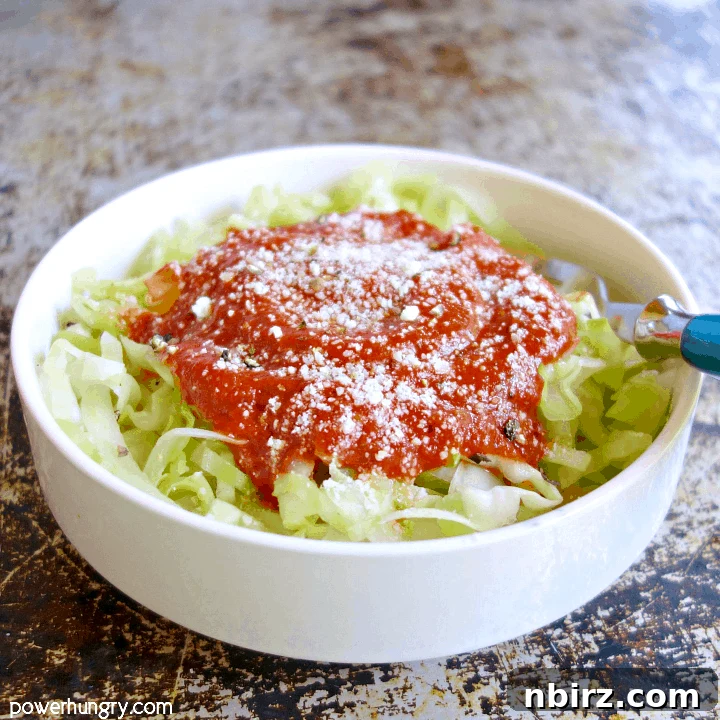
Caboodles: The Ultimate Keto, Vegan, Low-Carb Cabbage Noodles (No Spiralizer Needed!)
Welcome to the world of Caboodles – delightfully simple, steamed cabbage noodles that redefine healthy eating without sacrificing flavor or convenience. These innovative vegetable noodles are not only incredibly easy to prepare but also boast remarkable versatility, making them a perfect addition to virtually any meal. Best of all, they liberate you from the need for a fancy spiralizer, proving that healthy, delicious, and budget-friendly meals are always within reach. Whether you follow a keto, vegan, low-carb, low-calorie, or Paleo diet, Caboodles are your new culinary secret weapon.
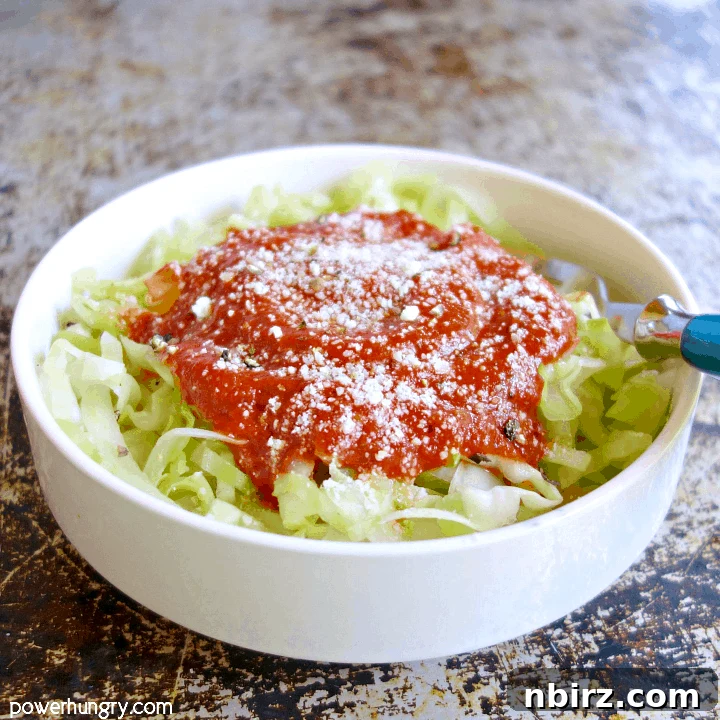
Embrace Frugal & Effortless Vegetable Noodles: No Spiralizer Required!
In the quest for healthier eating, vegetable noodles have emerged as a culinary game-changer. They offer a fantastic, guilt-free alternative to traditional pasta, allowing you to enjoy your favorite saucy dishes with a vibrant, nutrient-packed twist. But let’s be honest, not everyone owns a spiralizer, nor does everyone want the extra clean-up associated with specialized kitchen gadgets.
Enter Caboodles – our ingenious solution for truly simple, accessible, and incredibly frugal vegetable noodles. These steamed cabbage noodles are designed for maximum convenience and minimal fuss, making them a staple for anyone looking to eat well without complexity. Forget the spiralizer; all you need is a knife, a cutting board, and a steamer to unlock a world of delicious possibilities. This straightforward approach not only saves you money on equipment but also significantly reduces prep and clean-up time, leaving you more moments to savor your culinary creations.
When lightly steamed to perfection, Caboodles possess an incredibly neutral flavor profile, making them the most adaptable vegetable noodle you’ll ever encounter. Unlike some vegetable alternatives that carry distinct earthy notes, cabbage noodles gracefully absorb the flavors of any sauce or seasoning they’re paired with. Their texture is equally impressive: a satisfying al dente bite that holds up beautifully in a variety of dishes, from hearty mains to delicate sides. This makes them a chameleon in the kitchen, ready to transform into whatever your palate desires.
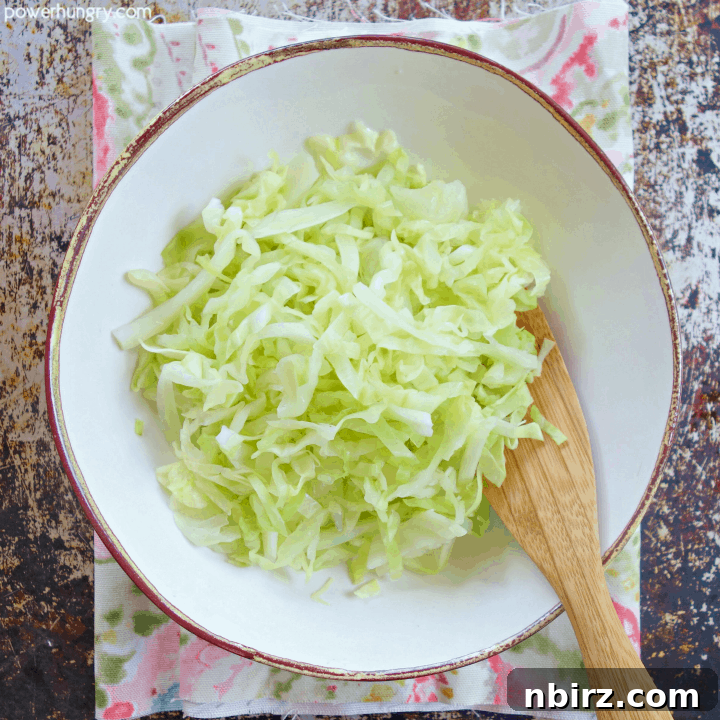
The Undeniable Health Benefits of Caboodles (Steamed Cabbage Noodles)
Beyond their incredible ease and versatility, Caboodles are a nutritional powerhouse, aligning perfectly with a wide array of dietary needs and health goals. This single-ingredient wonder food naturally supports various eating plans, making it an inclusive choice for almost everyone:
- Keto: Extremely low in carbohydrates, Caboodles help maintain ketosis while adding volume and nutrients to your meals.
- Vegan: Naturally plant-based, they are an excellent foundation for any vegan dish.
- Paleo: Unprocessed and whole-food compliant, they fit seamlessly into a Paleo lifestyle.
- Low-Carb: An ideal substitute for high-carb grains, supporting blood sugar management and weight goals.
- Low-Calorie: Generous portions can be enjoyed without a significant calorie impact, perfect for weight management.
- Grain-Free & Gluten-Free: A fantastic option for those with gluten sensitivities or following grain-free diets.
- Sugar-Free: Naturally free from added sugars, promoting healthier eating habits.
- Oil-Free: The steaming method requires no added oils, making them a heart-healthy choice.
But the benefits don’t stop there. Cabbage itself is a nutritional star. It’s brimming with essential vitamins and minerals, including hefty doses of Vitamin C, a powerful antioxidant crucial for immune health, and Vitamin K, vital for blood clotting and bone health. Furthermore, cabbage is an excellent source of dietary fiber, which plays a pivotal role in promoting digestive regularity and gut health. Regular consumption of fiber-rich foods like cabbage can help prevent constipation and support a thriving gut microbiome.
Additionally, cabbage is renowned for its anti-inflammatory properties, thanks to its rich content of sulforaphane and other beneficial compounds. Chronic inflammation is linked to numerous health issues, making anti-inflammatory foods a valuable part of any diet. Incorporating Caboodles into your routine is a delicious and simple way to boost your nutrient intake, support detoxification, and contribute to overall well-being. Truly, more cabbage, please!
Mastering the Art of Making Caboodles
Crafting your own batch of Caboodles is a surprisingly simple process that yields incredibly rewarding results. Follow these straightforward steps to create perfectly tender, al dente cabbage noodles every time. The complete, detailed directions are also available in the recipe card below.
Step 1: Preparing Your Cabbage
Start with a small to medium-sized head of pale green cabbage, typically around 1.5 pounds (680g). Begin by peeling away any tough, bruised, or torn outer leaves. These can be fibrous and less palatable. Once the outer layers are removed, quarter the cabbage lengthwise. This will give you four manageable sections to work with.
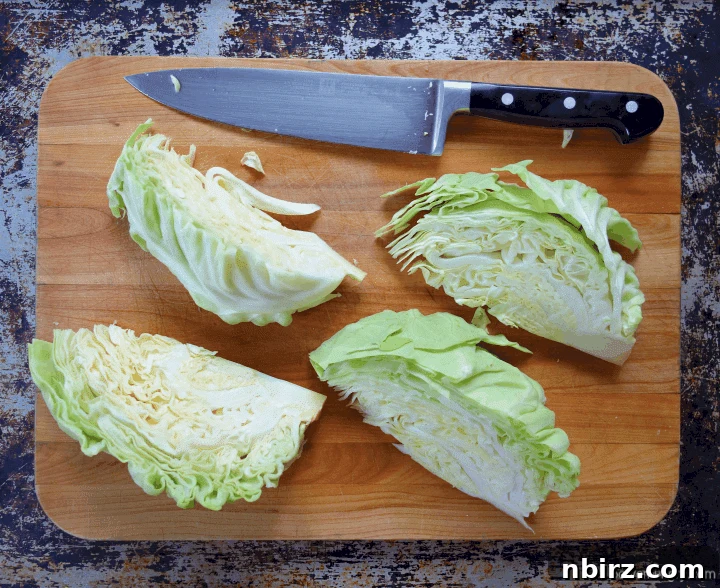
Step 2: Coring the Cabbage Quarters
Lay each cabbage quarter on its side on your cutting board. Carefully cut out the tough, fibrous core from each section. Angle your knife to ensure you remove all the hard, woody bits. The core can be quite dense and less pleasant to eat, so a thorough removal is key to achieving tender noodles. Discard the removed cores.
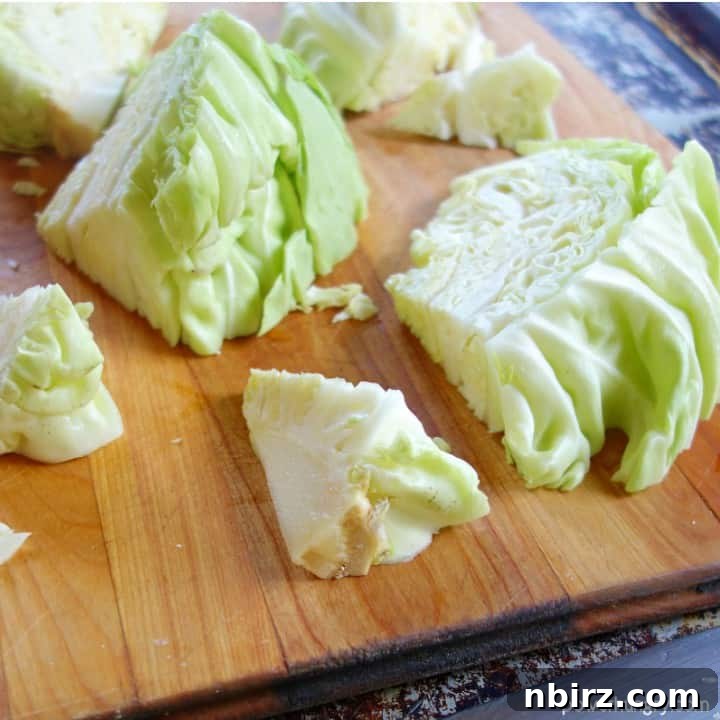
Step 3: Slicing Your Noodles
To create the noodle strips, I find it helpful to separate each cabbage quarter into two distinct sections: the shorter, often whiter inner layers and the longer, pale green outer layers. Stack these sets of layers, gently pressing down to flatten them. Then, with a sharp knife, carefully cut them into thin, lengthwise strips. Aim for a thickness similar to your desired noodle consistency – think fettuccine or linguine. Repeat this process until all cabbage quarters have been transformed into delicate strips. Don’t worry about perfectly uniform shapes or lengths; the slight variations add to their homemade charm and do not affect the taste or texture. Keep all the strips, regardless of their appearance.
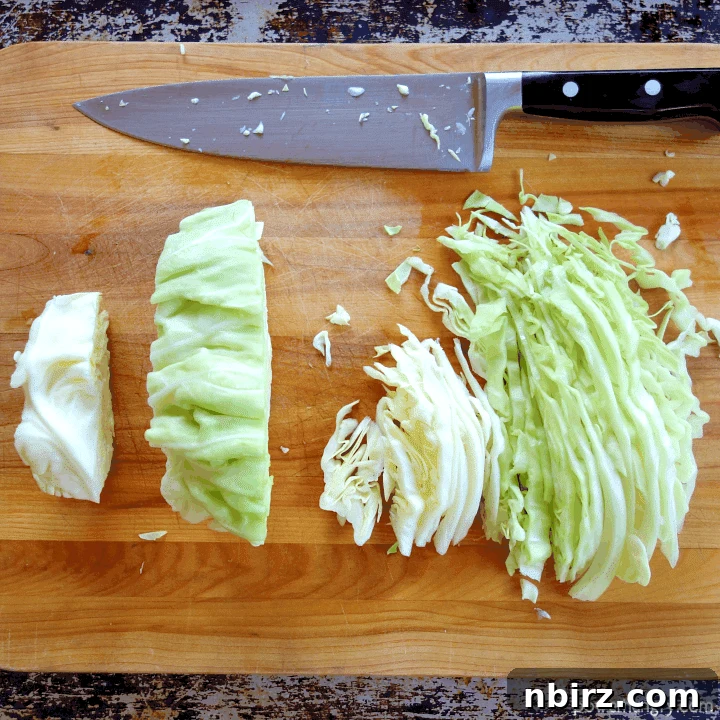
Once all the cabbage is sliced, you’ll have a generous mound of fresh, ready-to-steam “noodles.”
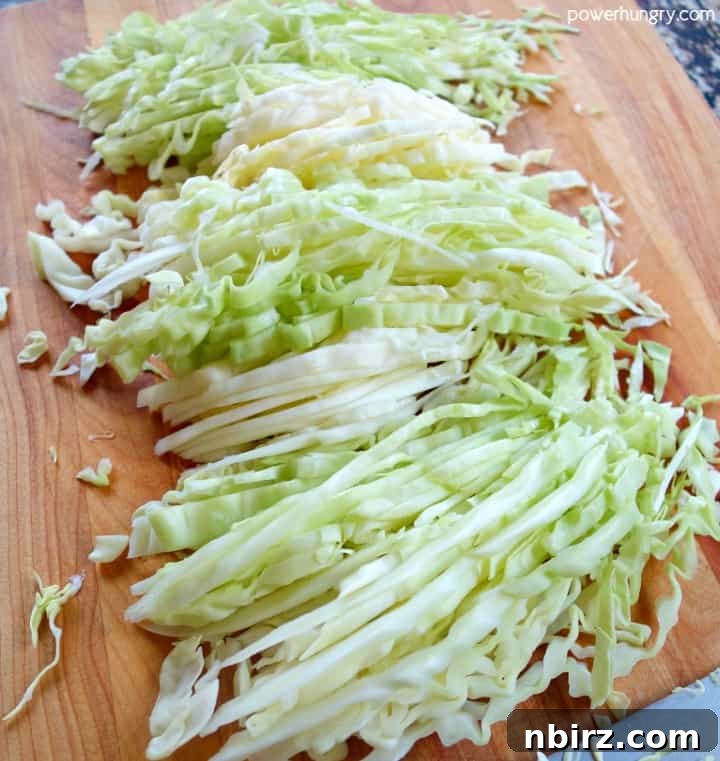
Step 4: Steaming for Perfection
Set up your steaming apparatus. Place a vegetable steamer basket or a metal colander into a large pot. Fill the pot with enough water to come just below the bottom of your steamer basket, ensuring the water does not touch the cabbage when added. Once all the cabbage is sliced and your steamer is ready, bring the water in the pot to a rolling boil.
Carefully add the sliced cabbage into the steamer basket. Cover the pot, but leave a slight crack at one side of the lid. This small opening allows some steam to escape, preventing the cabbage from becoming waterlogged and ensuring a perfectly al dente texture rather than an overly soggy one.

Cook the cabbage for approximately 4 to 8 minutes. The exact cooking time will depend on your desired tenderness and the thickness of your strips. You are aiming for tender but still firm, with a slight bite – that perfect al dente consistency. It’s crucial to stop cooking before the cabbage appears completely wilted and mushy. For even steaming, use tongs to gently move the cabbage around once or twice during the cooking process.

And that, my friends, is truly all there is to making your very own Caboodles! Simple, right?
Serving Suggestions and Culinary Inspiration
The beauty of Caboodles lies in their incredible adaptability. Their mild flavor and satisfying texture make them a perfect canvas for a myriad of culinary creations. Think of them as a versatile base ready to embrace any cuisine or flavor profile you desire:
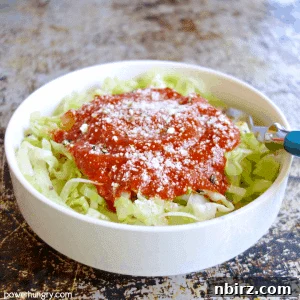
- Italian Delights: Toss them with your favorite marinara sauce, pesto, or a simple garlic and olive oil dressing. They make an excellent low-carb alternative to spaghetti or a fantastic layering element in a deconstructed lasagna.
- Asian Inspired: Stir-fry Caboodles with soy sauce (or tamari for gluten-free), ginger, garlic, and your favorite vegetables and protein for a quick and healthy lo mein-style dish. Add a drizzle of sesame oil for extra flavor.
- Tex-Mex Twist: Use them as the base for a vibrant taco bowl, topped with seasoned ground meat or beans, tomatillos, chiles, avocado, and salsa.
- Greek Medley: Combine with feta cheese, olives, cherry tomatoes, cucumber, and a lemon-herb vinaigrette for a refreshing Greek-inspired salad.
- Fiery Thai Curry: Let them soak up the rich, aromatic flavors of a Thai red or green curry, creating a comforting and wholesome meal.
- Simple Side Dish: For a light and elegant accompaniment, simply drizzle with a good quality olive oil, sprinkle with sea salt and freshly cracked black pepper, and perhaps a squeeze of lemon juice.
- Soup Booster: Add raw or lightly steamed Caboodles to your favorite soups and stews in the last few minutes of cooking for added texture and nutrients.
Whether you’re pairing them with a robust pasta sauce or a light vinaigrette, Caboodles always deliver. They truly are the “kit and caboodle” of healthy eating – a versatile foundation for countless delicious meals. Beyond the deliciousness and convenience, remember the potent nutritional punch they pack, including vitamins C and K, and beneficial fiber that supports overall health. So go ahead, get creative in the kitchen!

Tips for Success & Storage
- Choosing Cabbage: Select a head of cabbage that feels firm and heavy for its size, with tightly packed leaves. Avoid any with significant blemishes or wilting.
- Cutting Uniformity: While perfect uniformity isn’t essential, trying to keep your strips relatively consistent in thickness will ensure even cooking.
- Avoid Overcooking: Overcooked cabbage can become mushy and release too much water. Keep a close eye on it during steaming and remove it as soon as it reaches your desired al dente texture.
- Meal Prep Power: Caboodles are excellent for meal prepping. You can prepare a large batch and store them, ready to be incorporated into various meals throughout the week.
- Storage of Uncooked Caboodles: Once cut into noodles, uncooked cabbage can be stored in an airtight container in the refrigerator for up to 1 week. This makes meal prep even faster!
- Storage of Cooked Caboodles: Steamed Caboodles can be stored in an airtight container in the refrigerator for up to 2 days. For best texture, gently reheat in a pan or microwave, but be careful not to overcook.
Happy cooking, everyone! We hope Caboodles become a beloved, healthy, and easy addition to your weekly menu.
More Easy & Delicious Vegetable Dishes to Try:
- Chickpea Flour Vegetable Frittatas
- Vegan Oat Mushroom Ground Beef
- Easy Vegan Carrot Ginger Soufflé
- Easy Beet Salad with Lemon & Mint (5 ingredients)
- Easy Vegan Carrot Ginger Soufflé (V, GF, Oil-free)
Print Recipe
Caboodles – Steamed Cabbage Noodles (Vegan, Keto, 1-Ingredient)
By: Camilla
Caboodles are easy vegetable “noodles” made from cabbage! Endlessly versatile, they do not require a spiralizer, and are keto, vegan, low-carb, low-calorie and Paleo.
Ingredients
- 1 small head (approx. 1.5 lbs / 680 g) pale green cabbage, loose outer leaves removed
Instructions
- Place a vegetable steamer or metal colander in a large pot. Fill with enough water to come just below the steamer/colander.
- Quarter the cabbage lengthwise. Place quarters on their sides and cut out the cores; discard cores.
- Separate each quarter into two sections (inner white layers and outer green layers). Working with one section at a time, press down and cut lengthwise into thin strips. Repeat until all of the cabbage is cut.
- Bring the water in the pot to a boil. Add the cabbage, cover (leave a slight crack in the cover to allow some steam to escape), and steam for 4 to 8 minutes until Caboodles are tender but not completely wilted.
- Remove cabbage from steamer and enjoy in any way that you would serve noodles.
Notes
Storage: Cut, uncooked Caboodles can be stored in an airtight container in the refrigerator for up to 1 week. Cooked Caboodles can be stored in an airtight container in the refrigerator for up to 2 days.
Nutrition
Calories: 26 kcal |
Carbohydrates: 6.2g |
Protein: 1.6g |
Fat: 0.3g |
Sodium: 20.4mg |
Fiber: 2.6g |
Sugar: 3.6g