

Welcome to the delightful world of cookie baking season! As the air gets crisp and the craving for warm, comforting treats grows, we’re thrilled to introduce a recipe that will not only satisfy your sweet tooth but also cater to a variety of dietary preferences: our incredibly tender and slightly chewy Vegan Cassava Flour Chocolate Chip Cookies. These aren’t just any special diet cookies; they taste remarkably traditional, promising all the nostalgic joy of a classic chocolate chip cookie without any grains, gluten, or nuts. Prepare to be amazed by how easy they are to make, primarily using a harmonious blend of cassava and coconut flour.

Why You’ll Love These Cookies: Unpacking the Benefits
These remarkable chocolate chip cookies are not just a treat for your taste buds; they offer a host of benefits that make them suitable for almost everyone. Whether you have specific dietary requirements or simply prefer wholesome ingredients, these cookies deliver on both flavor and inclusivity.
- Vegan (Egg-Free & Dairy-Free): Crafted without any animal products, these cookies are perfect for plant-based diets, ethical eaters, or those with egg and dairy allergies. We achieve that classic chewy texture and rich flavor using vegan butter and plant-based ingredients.
- Gluten-Free: For individuals avoiding gluten, these cookies are a dream come true. By using cassava and coconut flour, we ensure a genuinely gluten-free experience without compromising on taste or texture, often a challenge in gluten-free baking.
- Grain-Free: Going a step further than gluten-free, these cookies are entirely grain-free. This makes them suitable for paleo diets or anyone looking to reduce their grain intake while still enjoying a beloved dessert.
- Nut-Free: Many alternative flour recipes rely heavily on nut flours. Our recipe is proudly nut-free, making it a safe and delicious option for those with nut allergies, allowing more people to enjoy these delightful cookies without worry.
- Seed-Free: Beyond nuts, these cookies are also seed-free, accommodating even more restrictive dietary needs and ensuring a simple, pure ingredient list.
- Easy to Make: Despite their specialized ingredients, the process for making these cookies is straightforward and beginner-friendly. You don’t need to be an expert baker to achieve perfect results.
Demystifying Cassava Flour: A Gluten-Free Baking Game-Changer
Have you ever experimented with cassava flour? For many, it’s a relatively new addition to the pantry, but it’s quickly gaining popularity in gluten-free and grain-free baking circles. I’ve spent considerable time experimenting with it, and these cookies are a testament to its incredible potential.
Cassava, also widely known as yuca, is a root vegetable, a starchy tuber belonging to the same family as taro, yams, and potatoes. It’s a staple food in many parts of the world, particularly in tropical and subtropical regions. Its versatility in culinary applications is vast, and its transformation into flour has opened up new avenues for inclusive baking.
It’s important to clarify the distinction between cassava flour and tapioca starch, as they are often confused. Both originate from the yuca root, but they are processed differently, resulting in distinct products with unique properties:
- Cassava Flour: This flour is made from the entire yuca root, which is peeled, dried, and then finely ground. It retains more of the root’s dietary fiber and nutritional profile. In terms of texture, it’s typically off-white and more granular, though still fine, somewhat resembling rice flour. This whole-food flour is excellent for providing structure and body to baked goods.
- Tapioca Starch (or Tapioca Flour): This is the refined starch extracted from the yuca root. The process involves washing, pulping, and then extracting only the starchy liquid, which is then dried. The result is a bright white, very fine, and chalky powder, similar to cornstarch. Tapioca starch acts primarily as a thickener or binder, lending chewiness and crispness, but lacks the body and structure of whole cassava flour.
Understanding this difference is crucial for successful baking. Substituting one for the other will yield vastly different, and likely undesirable, results in recipes. Always double-check which product your recipe calls for!

Can Cassava Flour Be a 1:1 Replacement for All-Purpose Flour? A Word of Caution
Based on extensive testing, I must strongly caution against the common claim found on some websites and product packaging that cassava flour can be substituted 1:1 for wheat-based all-purpose flour. It cannot. While incredibly versatile, cassava flour possesses unique characteristics that differ significantly from wheat flour. When used on its own in recipes designed for wheat flour, it often develops a stretchy, somewhat gooey, and overly dense quality that can lead to disappointing results. Its high starch content absorbs a lot of liquid, which means direct substitution without adjusting other ingredients, especially liquids, can throw a recipe completely off balance.
However, this doesn’t diminish its brilliance! I’ve discovered that cassava flour truly shines when expertly combined with other flours. This strategic blending allows it to mimic the desirable qualities of all-purpose flour, creating a texture and crumb that is strikingly similar to traditional baked goods. This discovery is incredibly exciting for the world of gluten-free and grain-free baking!
The Perfect Partnership: Combining Cassava Flour & Coconut Flour for Exceptional Baking
The secret to the success of these chocolate chip cookies lies in the harmonious blend of cassava flour and coconut flour. This duo creates a magical synergy, where each flour contributes its best qualities to achieve an optimal outcome.
- Cassava Flour: Provides body, structure, and a slight chewiness, preventing the cookies from being too crumbly. Its fine texture helps create a smooth dough.
- Coconut Flour: Known for its high fiber content and incredible absorbency, coconut flour adds a delicate softness and richness to the cookies. It also contributes to the appealing chewiness while helping to balance the density that cassava flour might otherwise impart on its own.
This specific combination is what allows these vegan chocolate chip cookies to achieve a remarkably similar texture to classic soft-bake cookies made with conventional all-purpose flour and eggs. It’s a testament to thoughtful ingredient pairing, transforming specialized flours into a universally appealing treat.
Essential Ingredients for Your Vegan Cassava Flour Chocolate Chip Cookies
The exact quantities for each ingredient are provided in the detailed recipe card at the end of this post. You can easily toggle between US Customary (volume) and Metric (weights) for your preferred measurement system.
Crafting these delightful cookies requires a few key ingredients, each playing a vital role in achieving their incredible flavor and texture. Let’s take a closer look at what you’ll need:
- Cassava Flour: As discussed, this is the star of our grain-free and gluten-free base. Its unique properties are essential for the cookie’s structure and chew.
- Coconut Flour: The perfect companion to cassava flour, adding softness, fiber, and balancing the texture beautifully.
- Coconut Sugar: This unrefined sugar lends a wonderful caramel-like flavor and a deeper color to the cookies, much like brown sugar would. Alternatives are discussed in the FAQ section.
- Vegan Butter (or Coconut Oil): For rich flavor and tender crumb. Ensure you use stick-style vegan butter for best results, as tub spreads have too much water. Melted coconut oil is also an excellent substitute.
- Vanilla Extract: A crucial flavor enhancer that elevates the chocolate chip cookie experience. Use a good quality pure vanilla extract.
- Baking Soda: Our leavening agent, responsible for the perfect rise and spread, contributing to the soft texture.
- Salt: A pinch of fine sea salt balances the sweetness and enhances all the other flavors in the cookie. Don’t skip it!
- Miniature Semisweet Chocolate Chips: While regular chips work, miniature chips ensure maximum chocolate distribution in every bite, creating a delightful molten pool of chocolate throughout the cookie. Feel free to use your favorite vegan chocolate chips.
Step-by-Step Guide: How to Make Vegan Cassava Flour Chocolate Chip Cookies
Beyond being utterly delicious and accommodating to various diets, these cookies are surprisingly simple to whip up. Follow these easy steps to bake a batch of homemade goodness!
Step One: Preheat Oven & Prepare Baking Sheet
Begin by preheating your oven to 350°F (180°C). While the oven heats up, prepare a large baking sheet by lining it with parchment paper. This prevents sticking and makes for easy cleanup.
Step Two: Whisk the Dry Ingredients
In a small bowl, combine the cassava flour, coconut flour, baking soda, and salt. Whisk them together thoroughly until all ingredients are evenly distributed. This step ensures that the leavening agent and salt are spread throughout the dough for uniform baking.

Step Three: Whisk the Wet Ingredients
In a separate, medium-sized bowl, whisk together the melted vegan butter (or coconut oil), coconut sugar (or your chosen granular sugar), and vanilla extract. Mix well until the sugar begins to dissolve and the mixture is smooth and well combined.
Step Four: Combine the Wet and Dry Ingredients
Pour the dry flour mixture into the bowl with the wet ingredients. Stir gently using a spoon or spatula until just combined. Be careful not to overmix the dough. Once the flour is incorporated, stir in the miniature semisweet chocolate chips. Using mini chips ensures a perfect distribution of chocolate throughout each cookie, guaranteeing a chocolatey bite every time! You’ll notice the dough will look remarkably similar to traditional chocolate chip cookie dough. It might thicken slightly within 30-60 seconds, which is completely normal.

Step Five: Scoop & Flatten Dough
An important characteristic of this cassava-coconut flour combination is that the dough does not spread much on its own during baking, unlike traditional cookie doughs. Therefore, a little manual intervention is needed!
Using a small cookie scoop or a tablespoon, scoop rounded mounds of dough onto your prepared baking sheet, spacing them about 2 inches (5 cm) apart. Then, gently use your fingertips to flatten each dough mound into a round cookie shape, approximately 2 inches (5 cm) in diameter and about 1/4-inch thick. For an extra touch, you can press a few additional mini chocolate chips onto the top of each flattened cookie for a picture-perfect finish.

Step Six: Bake the Cookies
Place the baking sheet in your preheated 350°F (180°C) oven and bake for 9 to 10 minutes, or until the edges are beautifully golden brown and the centers are set. Keep a close eye on them, as baking times can vary slightly depending on your oven. Once baked, remove the cookies from the oven and let them cool on the baking sheet for a crucial 10 minutes. This allows them to set up properly and prevents them from breaking when transferred. After 10 minutes, carefully transfer them to a cooling rack to cool completely.

And that’s it! You’ve just created a batch of incredibly delicious, dietary-friendly chocolate chip cookies that everyone will adore.
Storage Solutions: Keeping Your Cookies Fresh
These vegan cassava flour chocolate chip cookies are so good, they rarely last long! However, if you happen to have any leftovers, proper storage will keep them fresh and delicious for future enjoyment.
- Room Temperature: Store the cooled cookies in an airtight container at cool room temperature for up to 3 days. Ensure they are completely cool before storing to prevent condensation, which can make them soggy.
- Refrigerator: For longer storage, place the cookies in an airtight container and refrigerate them for up to 2 weeks. Reheating them slightly in a microwave or oven can bring back some of their fresh-baked tenderness.
- Freezer: These cookies freeze beautifully! Arrange cooled cookies in a single layer on a baking sheet and freeze until solid. Then, transfer them to a freezer-safe bag or airtight container, separated by parchment paper, for up to 6 months. Thaw at room temperature or warm briefly in the oven.
Frequently Asked Questions (FAQ)
We understand that baking with alternative flours can sometimes raise questions. Here are answers to some common inquiries to help you achieve perfect results every time.
- What is the Best Way to Measure Cassava Flour and Coconut Flour?
I cannot stress this enough: I strongly recommend that you weigh the flours (cassava and coconut) using a kitchen scale rather than relying on dry measuring cups. Both flours are exceptionally light and powdery, making it incredibly easy to compact and overload measuring cups. Over-measuring can lead to a dough that is too dry and results in crumbly, stiff cookies. Precision with these flours is key for the tender texture we’re aiming for. - How should I measure the flour if I only have measuring cups?
If using measuring cups is your only option, then it is vital to measure the flours very lightly. Spoon the flour into the measuring cup and then level it off with a straight edge, without packing it down. Cassava flour is particularly tricky; even when measured lightly, the weight for 1/4 cup often differs from what’s typically listed on bags. For this specific recipe, aim to fill your 3/4 cup measurement so that it appears slightly less than full, ensuring a lighter measure. - What Vegan Butter Do You Recommend?
In my recipe testing, I’ve had excellent results with Earth Balance soy-free buttery sticks and Miyoko’s Kitchen Cultured Vegan Butter. If you opt for vegan margarine, it is crucial to use the stick format, not the softer margarine spreads found in tubs. Tub-style spreads have a significantly higher water content, which will drastically alter the dough consistency and the final texture of your cookies, potentially making them too thin or greasy. - Can I Substitute Other Sugars for Coconut Sugar?
Yes, you can! An equal amount of regular brown sugar can be used in place of coconut sugar. This will yield a similar caramel note and chewy texture. If you choose to use regular granulated sugar, be aware that your cookies will likely be paler in color, crisper in texture, and will lack the deeper caramel notes that coconut sugar provides. - Can I Substitute Tapioca Flour (Starch) for Cassava Flour?
No, absolutely not. As discussed earlier, while both products come from the cassava plant, they are entirely different in their composition and baking properties. Using tapioca starch instead of cassava flour will lead to a very different, likely undesirable, texture and consistency in your cookies. Stick to cassava flour for this recipe. - Can I use coconut oil instead of vegan butter?
Yes, an equal amount of coconut oil, melted and then cooled slightly (so it’s liquid but not hot), can be used as a direct 1:1 substitute for vegan butter. - Why aren’t my cookies spreading?
These cookies are intentionally designed not to spread much, which is why we flatten them before baking. If they are not spreading *at all* (beyond their flattened shape), it could be due to: 1) too much flour (reiterate importance of weighing), 2) using a tub-style vegan margarine with high water content, or 3) the oven temperature being too low. Ensure your oven is accurately calibrated. - Can I make the cookie dough ahead of time?
Yes! The cookie dough can be prepared and stored in an airtight container in the refrigerator for up to 3-4 days. When ready to bake, allow the dough to sit at room temperature for about 10-15 minutes to soften slightly before scooping and shaping.
Happy baking, and enjoy these wonderfully accommodating and delicious cookies!
More Gluten-Free & Vegan Chocolate Chip Cookies to Love:
If you’ve enjoyed these cassava flour cookies and are looking for more dietary-friendly chocolate chip cookie options, explore some of our other fantastic recipes:
- Chickpea Flour Chocolate Chip Cookies
- Quinoa Flour Chocolate Chip Cookies {oil-free}
- Almond Flour Chocolate Chip Cookies {keto option}
- Healthy Chocolate Chip Skillet Cookie (made with oats}
- Soft Coconut Flour Chocolate Chip Cookies
- Keto & Vegan Chocolate Chip Cookies
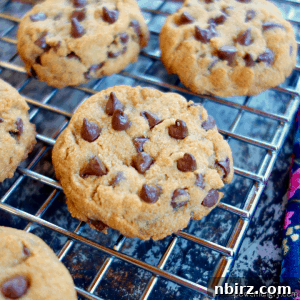
Vegan Cassava Flour Chocolate Chip Cookies {Gluten-Free, Grain-Free, Nut-Free}
By: Camilla
Tender and slightly chewy vegan chocolate chip cookies that taste 100% traditional, yet are grain-free, gluten-free & nut-free! Easy-to-make, they are made with cassava flour & coconut flour.
Cook Time: 10 minutes
Total Time: 15 minutes
Servings: 22 cookies
Ingredients
- 3/4 cup cassava flour (see note about measuring)
- 1/4 cup coconut flour (see note about measuring)
- 1/2 teaspoon baking soda
- 1/4 teaspoon fine sea salt
- 4 oz vegan butter (1 stick, not tub-style spread. See notes for options), or melted coconut oil
- 1/2 cup coconut sugar (see notes for options)
- 1 teaspoon vanilla extract
- 1/3 cup miniature semi-sweet chocolate chips, or more, as desired
Instructions
- Preheat oven to 350°F (180°C). Line a large baking sheet with parchment paper.
- In a small bowl, whisk together the cassava flour, coconut flour, baking soda and salt until well combined.
- In a medium bowl, stir together the melted vegan butter (or coconut oil), coconut sugar and vanilla extract.
- Add the flour mixture to the wet ingredients, stirring until just combined. Then, stir in the miniature semi-sweet chocolate chips (the mixture will thicken in 30 to 60 seconds).
- Using a small cookie scoop or tablespoon, scoop the dough into rounded mounds onto the prepared baking sheet (space about 2 inches/5 cm apart). Using fingertips, flatten and shape the dough into a small circle (about 2 inches/5 cm in diameter). If desired, press a few additional mini chips on top for appearance.
- Bake for 9 to 10 minutes until the cookies are golden brown around the edges. Remove from the oven. Cool cookies on the sheet for 10 minutes before carefully transferring them to a cooling rack to cool completely.
- Repeat with any remaining cookie dough.
Notes
- Storage: Store the cooled cookies in an airtight container at cool room temperature for 3 days, in the refrigerator for 2 weeks, or in the freezer for up to 6 months.
- Flour Measurement Tip: I strongly recommend (URGE!) that you weigh the flours (cassava and coconut) rather than use dry measures. Both are very light and powdery, so it is very easy to overload the measuring cups, which can lead to dry, crumbly cookies. If using measuring cups, very lightly spoon in the flours to measure. Cassava flour is especially tricky; for example, the weight for 1/4 cup of cassava flour (as given on many bags) is actually slightly less than 1/4 cup, even when you measure lightly. For this recipe, fill the cup measurements so that you have slightly less than 3/4 cup.
- Vegan Butter Tip: I used Earth Balance soy-free buttery sticks in my recipe testing. If using the vegan margarine option, be sure to use sticks, not margarine spread (in tubs). The latter has a higher water content than the former and will significantly alter the recipe.
- Vegan Butter Alternative: An equal amount of coconut oil, melted and cooled, can be used in place of the vegan butter.
- Sugar Options: An equal amount of brown sugar can be used in place of the coconut sugar. Regular granulated sugar can also be used, but it will result in pale-colored, crisper, and less caramel-y cookies.
- Flour Type Tip: Be sure to use cassava flour, not tapioca starch, in the recipe, as they are different products. Using one in place of the other will lead to very different results.
Nutrition
Calories: 93 kcal |
Carbohydrates: 11 g |
Protein: 0.4 g |
Fat: 5.2 g |
Saturated Fat: 1.7 g |
Sodium: 88.9 mg |
Fiber: 0.7 g |
Sugar: 6.3 g
We hope you enjoy baking and savoring these fantastic vegan cassava flour chocolate chip cookies! They’re a testament to how delicious and accessible special dietary baking can be. Don’t forget to rate and comment below if you love this recipe – your feedback is always appreciated!