
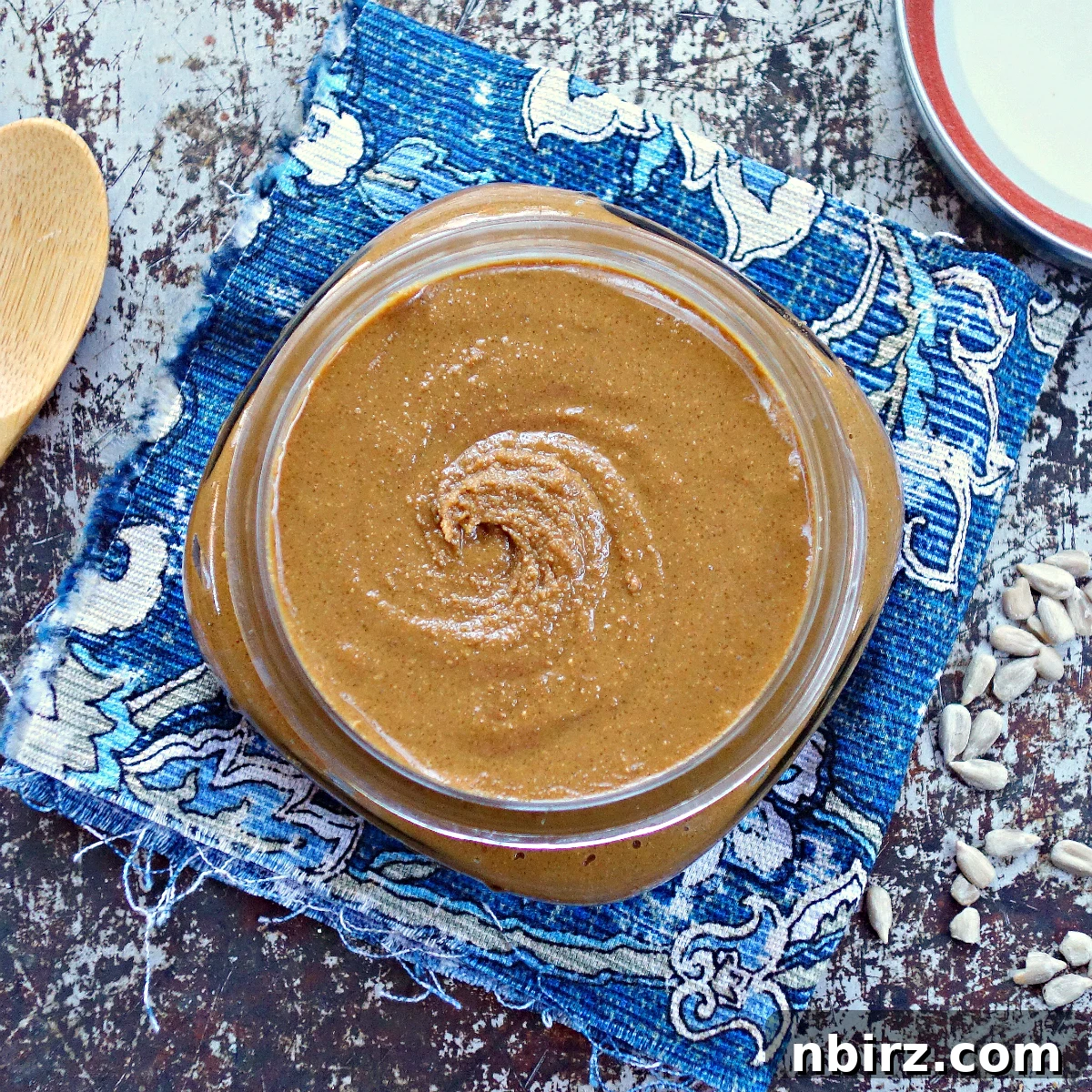
Crafting your own sunflower seed butter at home offers a delightful and incredibly nutritious alternative to traditional peanut butter. This comprehensive guide will walk you through the simple process of making it with no added oil, minimal expense, and very little effort. Plus, we’ve included a fantastic keto-friendly option to suit various dietary needs.
DIY Sunflower Seed Butter: The Perfect Peanut Butter Alternative
This dedication goes out to my wonderful sister, Rebecca. You know who you are, sis, and I love you dearly.
For Rebecca, life with a peanut allergy meant a constant battle for understanding and safety. Growing up, she frequently encountered well-meaning but misinformed adults who would dismiss her allergy as “not serious” or serve her dishes with “just a tiny bit” of peanuts. These repeated experiences, unfortunately, left her feeling vulnerable and unheard, profoundly shaping her into the strong, outspoken advocate she is today. It taught her the vital importance of self-advocacy when it comes to health and dietary needs.
Fast forward a few decades, and thankfully, the landscape for food allergies has dramatically improved. Public awareness, understanding, and acceptance have skyrocketed, leading to a proliferation of allergy-friendly products. These innovations have made safe eating easier and more delicious for millions. However, the convenience often comes with a hefty price tag. Until these specialized staples become as affordable as their “regular” counterparts, mastering simple, homemade alternatives is not just a smart choice, but an empowering one.
Among the myriad of allergy-friendly options, homemade sunflower seed butter stands out as a personal and family favorite. It’s not just a substitute for peanut butter; in many ways, it’s a superior spread. Its rich, nutty flavor, combined with a creamy texture, makes it utterly irresistible – you’ll find yourself wanting to eat it straight off the spoon! Best of all, crafting it yourself allows you to control the ingredients, avoid unwanted additives, and enjoy a fresh batch for a mere fraction of the cost of store-bought varieties.
Why Make Your Own Sunflower Seed Butter?
Beyond the cost savings and allergy considerations, there are several compelling reasons to embrace the DIY approach for sunflower seed butter:
- Ingredient Control: Many commercial brands add excessive oils, sugars, and preservatives. When you make it yourself, you dictate every ingredient, ensuring a pure and wholesome product. This recipe, for example, requires no added oil!
- Superior Freshness & Flavor: Freshly made nut or seed butter has an unparalleled vibrancy in flavor and aroma that pre-packaged versions simply can’t match. Roasting the seeds just before grinding enhances their natural nutty notes.
- Nutritional Boost: Sunflower seeds are a powerhouse of nutrition, packed with healthy fats, protein, fiber, Vitamin E, magnesium, selenium, and B vitamins. Making your own ensures you reap these benefits without unnecessary fillers.
- Dietary Customization: Whether you’re keto, vegan, or simply watching your sugar intake, making your own spread allows for easy adjustments to fit your specific dietary requirements.
Essential Ingredients for Homemade Sunflower Seed Butter
The beauty of this recipe lies in its simplicity and minimal ingredient list. You’ll be amazed at what you can create with just a few pantry staples.
- Raw Sunflower Seed Kernels: These are the star of our show! Ensure they are hulled. You can certainly use pre-roasted seeds to save a step, but roasting them fresh at home amplifies their flavor significantly.
- Coconut Sugar: This provides a subtle sweetness and a touch of caramel-like depth. For those following a keto diet or looking for other options, please refer to the notes in the recipe card for suitable alternatives or how to omit it entirely.
- Salt: A pinch of salt is crucial. It balances the sweetness and enhances the overall nutty flavor of the sunflower seeds. Fine sea salt is recommended for even distribution.
Step-by-Step Guide: How to Make Sunflower Seed Butter
Creating this creamy, dreamy spread involves two primary stages, both of which are straightforward and incredibly rewarding:
- Roasting the sunflower seeds: This step is vital for developing rich flavor and aiding in the grinding process.
- Grinding the sunflower seeds: This is where the magic happens, transforming the roasted seeds into a smooth, luscious butter.
The roasting process takes about 20 minutes of mostly unattended time. The grinding takes slightly less time, typically 10 to 15 minutes, but requires a bit more active participation and patience as you pause to scrape down the sides of your appliance. Don’t worry, no prior nut or seed grinding expertise is required!
Step One: Perfectly Roasting Your Sunflower Seeds
(If you’re using already roasted sunflower seed kernels, you can skip this step and proceed directly to grinding!)
Roasting is not just about cooking the seeds; it’s about unlocking their full flavor potential and releasing their natural oils, which significantly contributes to the final texture of your butter. Here’s how to do it right:
- Preheat your oven to 350°F (175°C).
- Spread 3 cups of raw, hulled sunflower seeds in a single, even layer on a large, rimmed baking sheet. It’s important to give them space. Try to keep the seeds about half an inch away from the very edges of the pan, as these areas tend to heat up faster and can cause the seeds to over-brown quickly.
- Roast for the initial 10 minutes. At this point, carefully open the oven and use a spatula to stir the seeds thoroughly. This ensures they brown evenly on all sides.
- Return the baking sheet to the oven and continue roasting for another 8 minutes, or until the seeds achieve a beautiful golden-brown color and fill your kitchen with a wonderfully fragrant, nutty aroma.
A Critical Tip: Pay close attention during these final minutes of roasting. Sunflower seeds can go from perfectly golden to burnt very rapidly if left unchecked. A momentary distraction could lead to a batch of bitter, unusable seeds – a mistake I’ve made more than once myself!
Once roasted to perfection, immediately transfer the hot seeds from the baking sheet into the bowl of your food processor or high-speed blender. This quick transfer prevents them from continuing to cook and potentially burning on the hot pan. It is absolutely crucial that you allow the seeds to cool completely before proceeding to the grinding stage. Warm seeds can lead to a less smooth butter and put undue strain on your appliance.
Step Two: The Grinding Transformation
Once your roasted sunflower seeds are completely cool to the touch, it’s time to begin the exciting grinding process! This is where you’ll witness a remarkable transformation as the seeds evolve through various stages.
- Coarse Flour: Start by processing the cooled seeds. Initially, they will break down into a coarse, crumbly flour. Run the machine for about 30-60 seconds. Stop your food processor or blender and use a spatula to scrape down the sides of the container, pushing all the flour back towards the blades.
- Clumping Stage: Continue processing. The flour will then begin to clump together, forming a sticky, dense mass. This usually takes another 1-2 minutes. Again, stop and scrape down the sides thoroughly to ensure everything gets evenly processed.
- Thick, Rough Butter: As you keep processing, the mixture will gradually transform into a thick, rough seed butter. It might start to ball up and cling to the blade or form a large, firm mass. This is a good sign! Stop and scrape down the sides once more, breaking up any large clumps.
Step Three: Achieving Silky Smoothness and Flavor Perfection
You’re almost there! This final stage is where patience truly pays off. Continue to process the mixture, intermittently stopping to scrape down the bowl every couple of minutes. You’ll notice the texture gradually shift from a stiff, somewhat dry-looking blob to a beautifully smooth, glistening, and even drippy seed butter. The continuous processing generates friction, which helps the natural oils within the sunflower seeds to further break down and release, resulting in that wonderfully creamy, dreamy consistency we’re aiming for.
This last phase typically takes about 4 to 5 minutes of continuous processing after the initial clumping stages. Trust the process; it will happen, and it is absolutely worth every moment of the wait!
Once your sunflower seed butter has reached its desired smooth texture, it’s time to add your chosen sweetener and salt. Add the coconut sugar and salt as directed in the recipe card. Remember, you have various options for sweeteners, and you can even choose to omit sugar entirely for a naturally savory spread.
One batch of this recipe typically yields about 2 cups of exquisite homemade sunflower seed butter.
How to Store Your DIY Sunflower Seed Butter
Proper storage is key to maintaining the freshness and extending the shelf life of your homemade spread. Transfer the finished sunflower seed butter into clean jars or other airtight containers. Store these in the refrigerator, where your butter will stay fresh and delicious for up to 2 months. In my experience, however, it rarely lasts that long – it’s simply too tempting!
Keto and Other Dietary Options
This recipe is incredibly versatile and easily adaptable to various dietary preferences:
- Keto-Friendly: To make your sunflower seed butter 100% keto, simply omit the coconut sugar or replace it with your preferred keto-friendly liquid or granular sweetener (e.g., erythritol, stevia, monk fruit sweetener). This allows you to enjoy a rich, satisfying spread that fits perfectly into a low-carb lifestyle.
- Sugar-Free: If you prefer a completely unsweetened butter, simply leave out any sweeteners. The natural nutty flavor of the roasted sunflower seeds is delicious on its own.
- Vegan & Gluten-Free: As written, this recipe is naturally vegan and gluten-free, making it a fantastic option for those with these dietary requirements.
- Other Sweeteners: Feel free to experiment with other natural sweeteners like brown sugar, organic cane sugar, maple syrup, honey (if not vegan), or agave nectar. Adjust the amount to your personal taste.
Ways to Enjoy Your Homemade Sunflower Seed Butter
Now that you’ve mastered the art of making sunflower seed butter, the possibilities for enjoying it are endless!
- Classic Spreads: On toast, crackers, apple slices, or celery sticks.
- Breakfast Boost: Swirl into oatmeal, yogurt, or blend into smoothies for added protein and healthy fats.
- Baking: Substitute it for peanut butter in many recipes! For a delicious starting point, try it in my Vegan Sunflower Seed Chocolate Chip Cookies. They’re not only incredibly tasty but also flourless and oil-free!
- Savory Applications: Use it in salad dressings, stir-fry sauces, or as a base for savory dips. Its robust flavor stands up well in savory dishes.
- Snack Time: Simply enjoy a spoonful straight from the jar – it’s that good!
Happy blending, and enjoy your delicious, homemade creation!
Related Recipes and Resources:
If you enjoyed making this recipe, be sure to explore these other wholesome and easy DIY spreads and flours:
- 1-Ingredient Pepita Butter {vegan, keto}
- DIY Almond Butter {1 ingredient, so easy}
- DIY Sunflower Seed Flour (nut-free, keto)
- DIY Coconut Butter {vegan, keto, paleo, 2 ingredients}
- Vegan Keto Sunflower Seed Bread {nut-free, grain-free, oil-free}
DIY Sunflower Seed Butter (Oil-Free, Keto Option)
By: Camilla
Sunflower seed butter is a delicious and nutritious alternative to peanut butter. Learn how to make it with no added oil, little money, and minimal effort! Make it keto with one easy step.
Prep Time: 5 minutes
Cook Time: 18 minutes (Roasting)
Processing Time: 10-15 minutes
Total Time: Approx. 33-38 minutes (plus cooling time)
Yields: 2 cups (16 fl ounces)
Ingredients
- 3 cups (372 g) raw sunflower seed kernels (hulled sunflower seeds)
- 3 tablespoons (36 g) coconut sugar (see notes for options)
- 1/2 teaspoon fine sea salt
Instructions
- Preheat the oven to 350°F (175°C).
- Spread the sunflower seed kernels in an even layer on a large, rimmed baking sheet (avoid placing seeds too close to the edges of the pan).
- Bake for 10 minutes; then open the oven and stir the kernels to ensure even browning. Continue baking for another 8 minutes, or until the seeds are golden brown and fragrant. Watch closely during the final minutes to prevent over-cooking.
- Immediately transfer the roasted kernels to the bowl of a food processor or high-speed blender to halt the cooking process. Allow them to cool completely.
- Process the cooled seeds until they resemble a coarse flour. Stop and scrape down the container, then continue processing until the mixture begins to clump together. Stop and scrape again. Process further until the mixture starts to pull together into a very rough-looking “butter.” Stop and scrape one last time.
- Continue processing for an additional 4 to 5 minutes, stopping and scraping occasionally, until the natural oils fully release from the seeds and the mixture transforms into a very smooth and creamy consistency. Patience is key here, but the smooth result is worth it!
- Once smooth, add the coconut sugar and salt; process until well combined. Taste the butter and adjust the sweetener and salt to your personal preference.
- Scrape the finished sunflower seed butter into jars or other tightly covered containers. Store in the refrigerator for optimal freshness.
Notes
Sugar Options: You can substitute coconut sugar with almost any sweetener you prefer, such as brown sugar, organic cane sugar, maple syrup, honey (if not vegan), or agave nectar. Adjust the amount to your liking, or omit the sweetener entirely for a savory butter.
Keto Option: For a keto-friendly spread, simply omit the coconut sugar or replace it with an equal amount of liquid or granular keto-approved sweetener (e.g., erythritol, stevia). Keto Macros (per 2 tablespoons, unsweetened): Carbs (3.8 g), Net Carbs (1.5 g), Sugars (0.8 g), Calories (128)
Nutrition Information (Approximate)
Serving: 2 tablespoons (30 mL)
Calories: 137 kcal
Carbohydrates: 6.1 g
Protein: 3.8 g
Fat: 11.3 g
Saturated Fat: 1.5 g
Sodium: 72.7 mg
Fiber: 2.3 g
Sugar: 3.1 g
Like this recipe? We’d love to hear your thoughts! Rate and comment below!