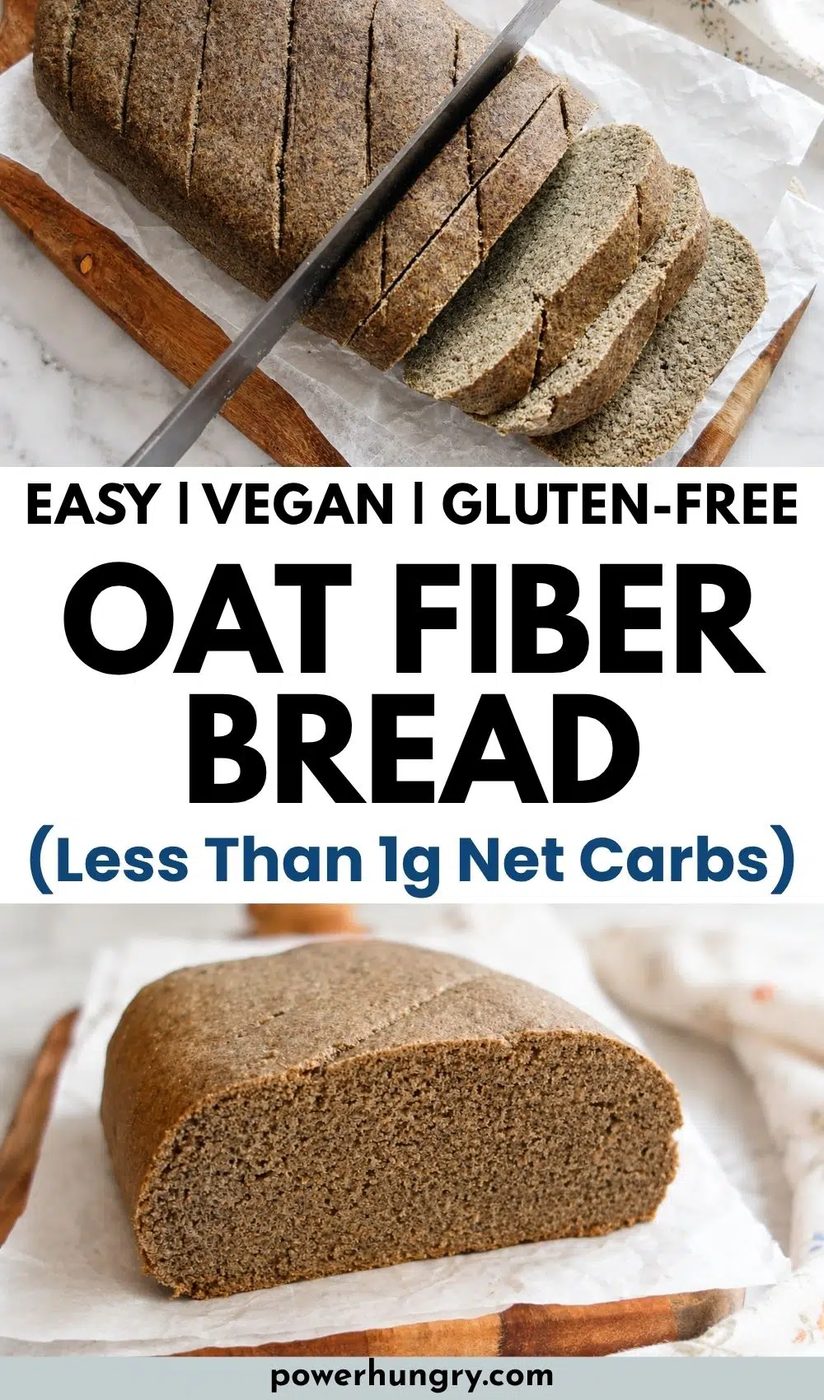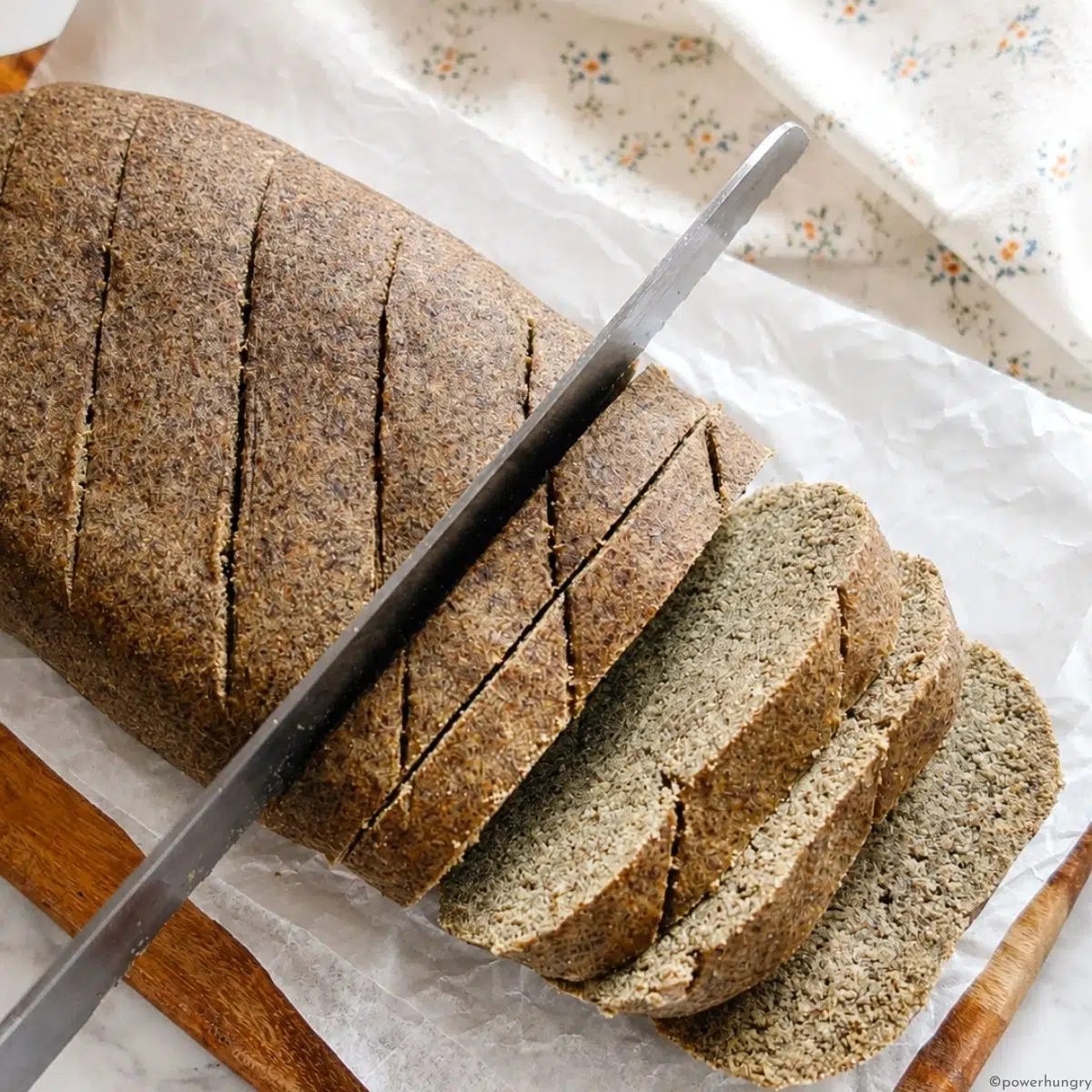
Straightforward vegan oat fiber bread is egg-free, gluten-free, yeast-free, and made in one bowl. The hearty loaf has a fine, sturdy crumb, toasts beautifully, and contains less than 1 gram of estimated net carbohydrates per slice.
Oat fiber bread has a reputation for requiring eggs. Not one egg, either, but a small convention of them. The resulting loaf may be low in carbohydrates, but its flavor and texture often announce the eggs (omelet bread!) before anything else.
I knew oat fiber could do more. I first began experimenting with it when developing my13 Calorie Oat Fiber Tortillas, an egg-free recipe that revealed just how useful this unusual ingredient can be. Ever since, I have wanted to return to the bag and keep experimenting.
The time has come, and I am thrilled with the result: an straightforward, one-bowl vegan oat fiber bread made without eggs, dairy, yeast, sugar, or flour blends.
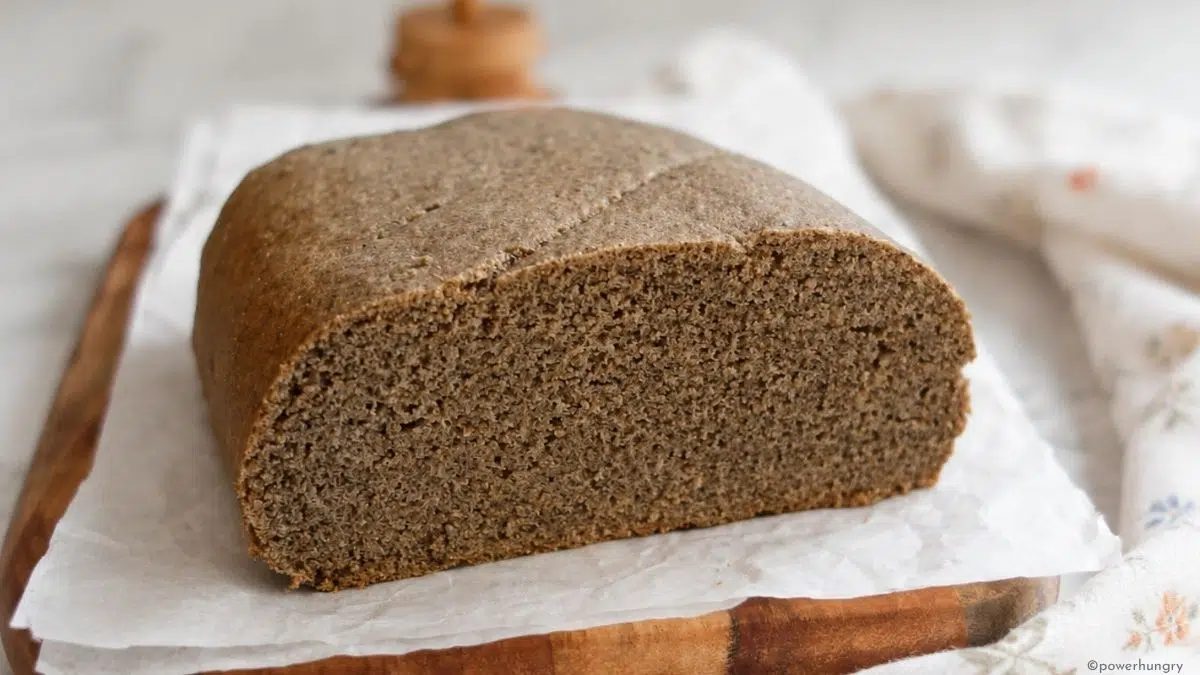
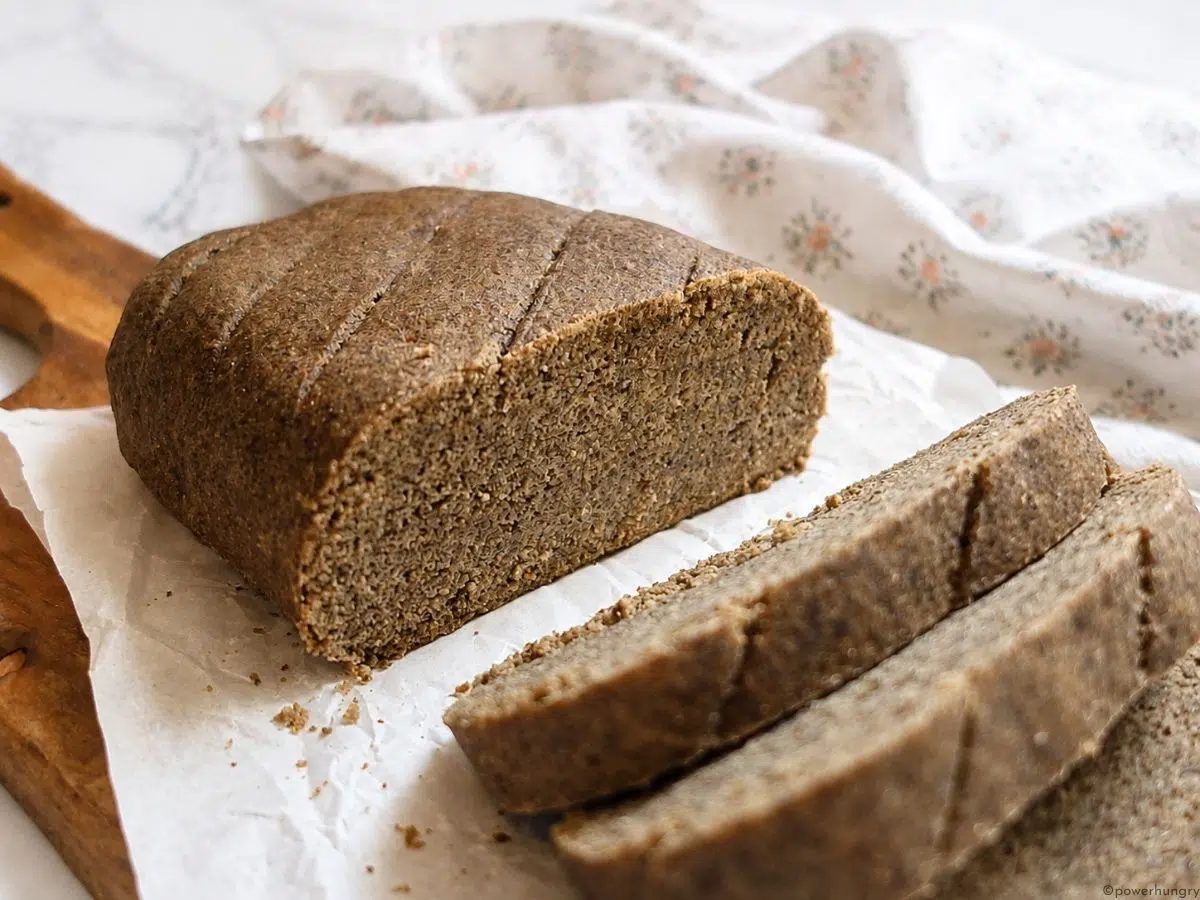
It is not an imitation of light, fluffy wheat bread, nor does it try to be. The loaf is robust, hearty, and deeply satisfying, with the character of a dark German-style bread and a much finer crumb. Flaxseed meal gives it a pleasantly nutty flavor, while oat fiber and psyllium create slices that are firm, sturdy, and surprisingly delicate.
Reliable of all, the bread tastes like bread rather than eggs. Each slice contains an estimated0.5 to 0.7 grams of net carbohydrates, based on a 14-slice loaf and standard ingredient-label data. Exact nutrition will vary by brand, but “less than 1 gram net carbs per slice” is a fair description for this satisfying bread.
What Is Oat Fiber?
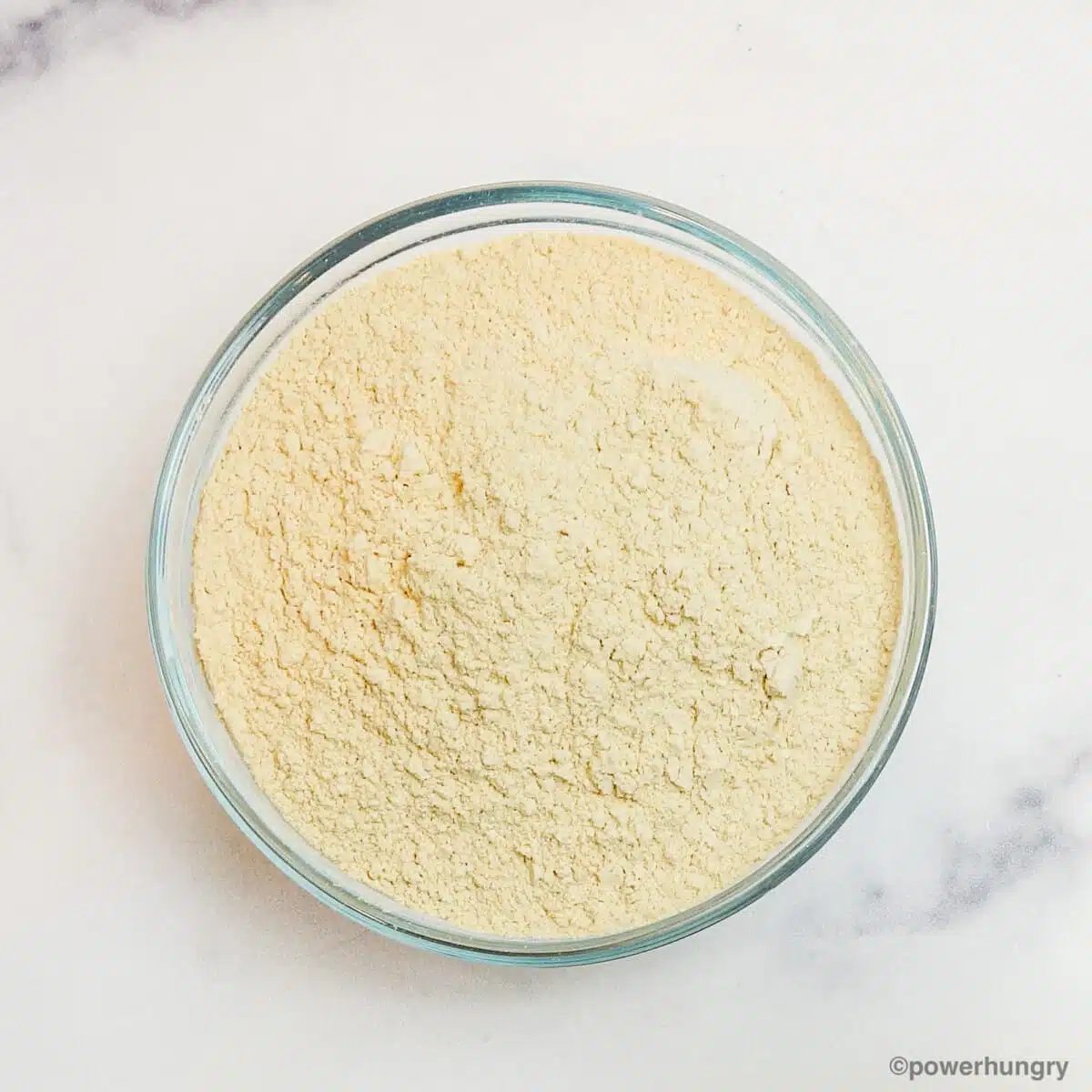
Oat fiberis a finely milled insoluble fiber made from the hull of the oat, the protective outer coating surrounding the oat grain. Its appearance is similar to very fine flour, but it is not oat flour and the two ingredients are not interchangeable.
Because oat fiber is almost entirely insoluble fiber, it contributes very few digestible carbohydrates or calories. In baking, it can add bulk, absorb moisture, provide structure, and increase fiber without behaving like a conventional grain flour.
Oat fiber has become especially popular in low-carbohydrate and ketogenic baking. Many bread recipes pair it with several eggs for structure. Here, finely ground flaxseed meal and psyllium husks perform that work instead, producing a vegan loaf without an eggy taste or texture.
Choose oat fiber that is very finely milled. Coarse oat fiber absorbs liquid differently and may produce inconsistent results. If you need the bread to be gluten-free, select an oat fiber specifically labeled or certified gluten-free to reduce the risk of cross-contact during processing.
Why You’ll Love This Recipe
- Vegan:No eggs or dairy are needed.
- Gluten-free:Use certified gluten-free oat fiber and baking powder as needed.
- Less than 1 gram net carbs per slice:The estimated amount is approximately 0.5 to 0.7 grams per slice when the loaf is cut into 14 slices.
- No eggy flavor:It tastes like hearty bread, not an omelet in loaf form.
- One-bowl preparation:After grinding the flaxseed, all of the dough comes together in a single bowl.
- No yeast:There is no kneading, proofing, or rising time.
- No added sugar:The loaf is naturally savory and neutral.
- Very high in fiber:Oat fiber, flaxseed meal, and psyllium all contribute substantial dietary fiber.
- Sweet or savory:Toast it for breakfast, turn it into an open-faced sandwich, or serve it alongside soup and salad.
Ingredients for Vegan Oat Fiber Bread
Note that the complete instructions are also in the recipe card below.
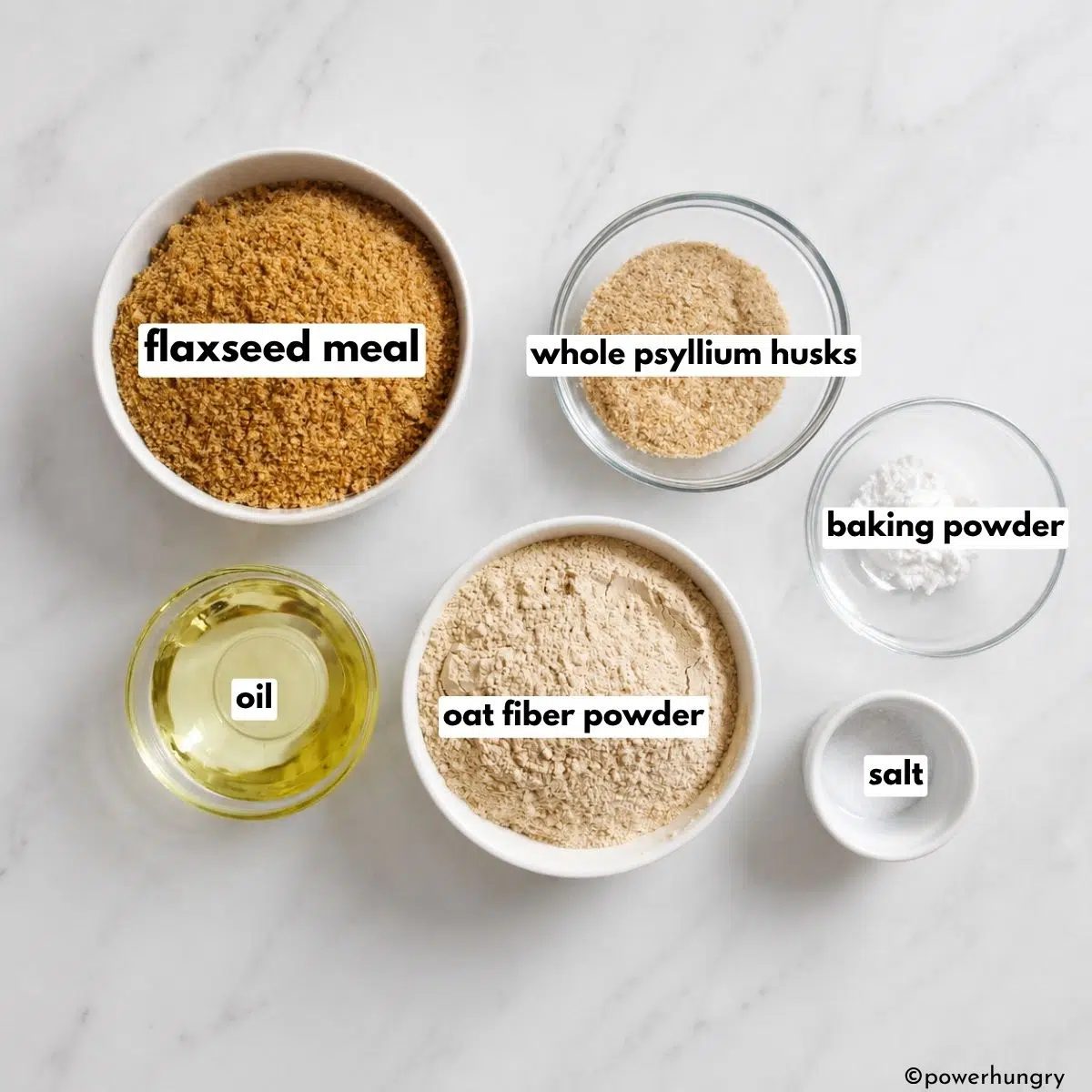
- Flaxseed meal or whole flaxseeds:Grind the flaxseed into a very fine flour before mixing the dough. I use golden flaxseed for its lighter color and mild flavor, but dark flaxseed works equally well and produces a darker loaf with a slightly more pronounced flavor. Fresh flaxseed should smell mild and nutty, never fishy or paint-like.
- Oat fiber powder:Oat fiber provides most of the loaf’s bulk and fiber. It must be very finely milled and cannot be replaced with oat flour.
- Whole psyllium husks:Psyllium binds the dough, retains moisture, and gives the egg-free slices strength and flexibility. Psyllium powder can be used by equal weight, not equal volume.
- Baking powder:Baking powder provides the loaf’s modest lift. Use a certified gluten-free brand if necessary.
- Fine salt:Salt sharpens the bread’s flavor. The amount can be reduced or omitted to suit your dietary needs.
- Vegetable oil:Oil is essential for a tender, pleasant crumb in the absence of eggs. I use avocado oil, but another neutral or mild-tasting oil works well.
- Very warm water:Warm water hydrates the oat fiber, flaxseed, and psyllium and activates the baking powder. I use unfiltered tap water.
How to Make Vegan Oat Fiber Bread
Note that the complete instructions are also in the recipe card below.
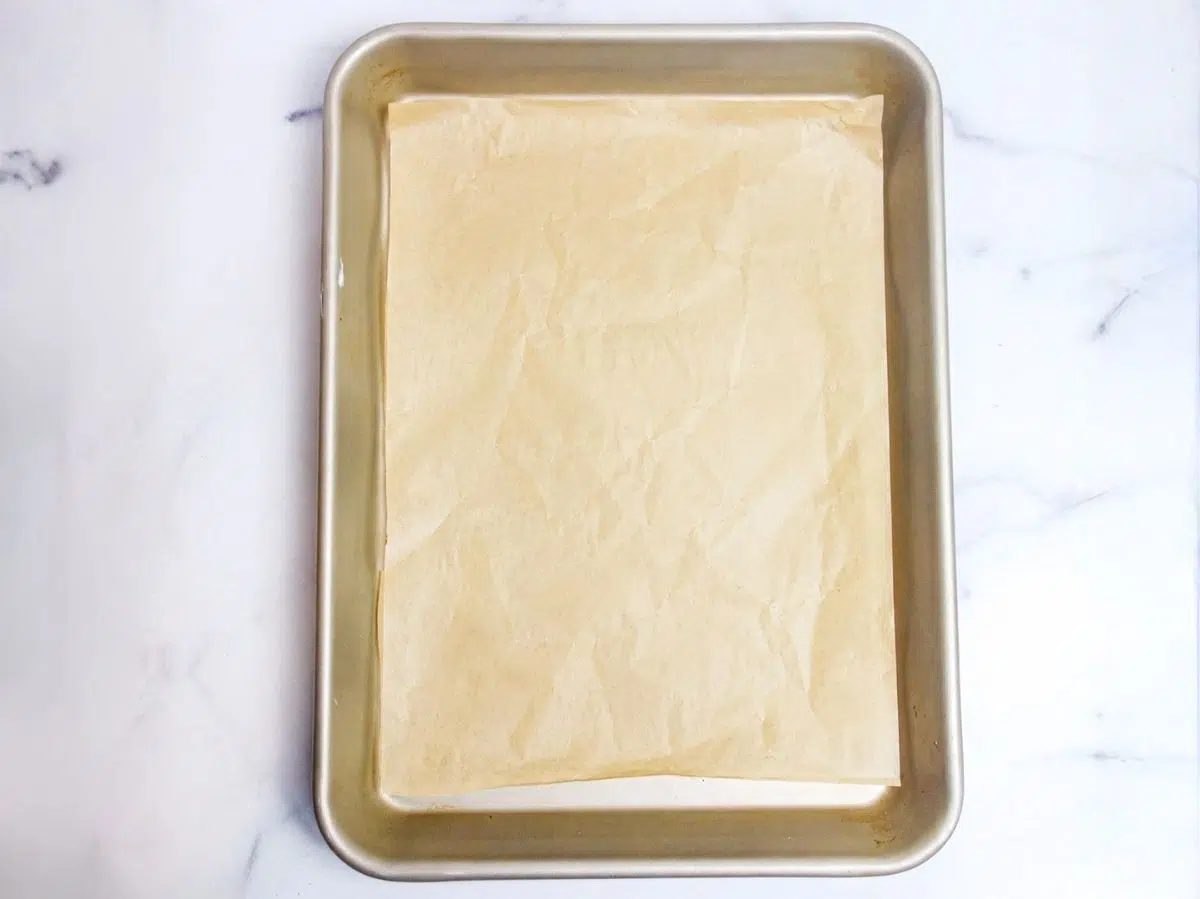
- Prepare the Oven and Baking Sheet. Preheat the oven to 350°F (180°C). Line a large baking sheet with parchment paper. Avoid the convection setting if possible. Steady radiant heat helps the center bake evenly and reduces the chance of a large air pocket developing beneath the crust.
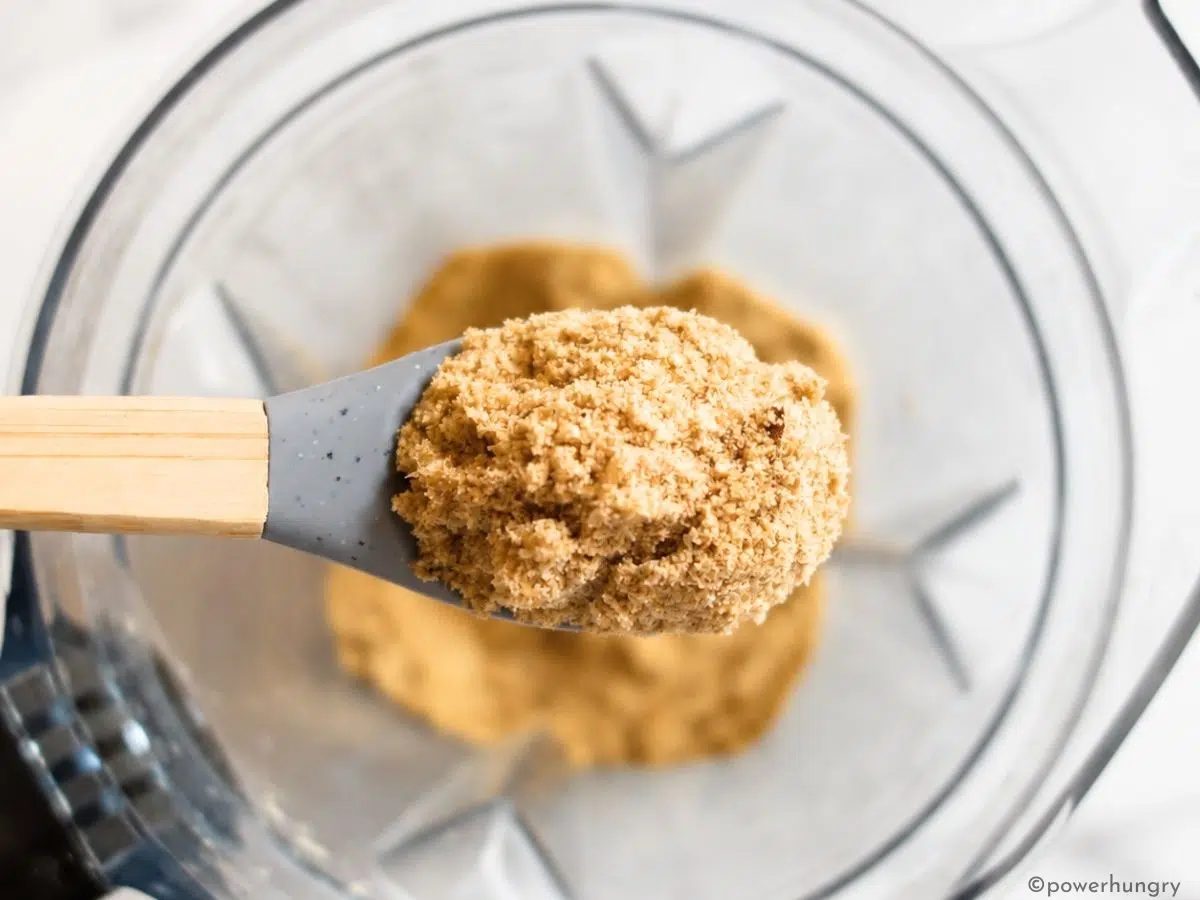
- Grind the Flaxseed.Place the flaxseed meal or whole flaxseeds in a high-speed blender or another blender. Grind until very fine and flour-like. Even packaged flaxseed meal benefits from this extra step. Finely ground flaxseed produces a more cohesive dough and a finer, more delicate crumb.
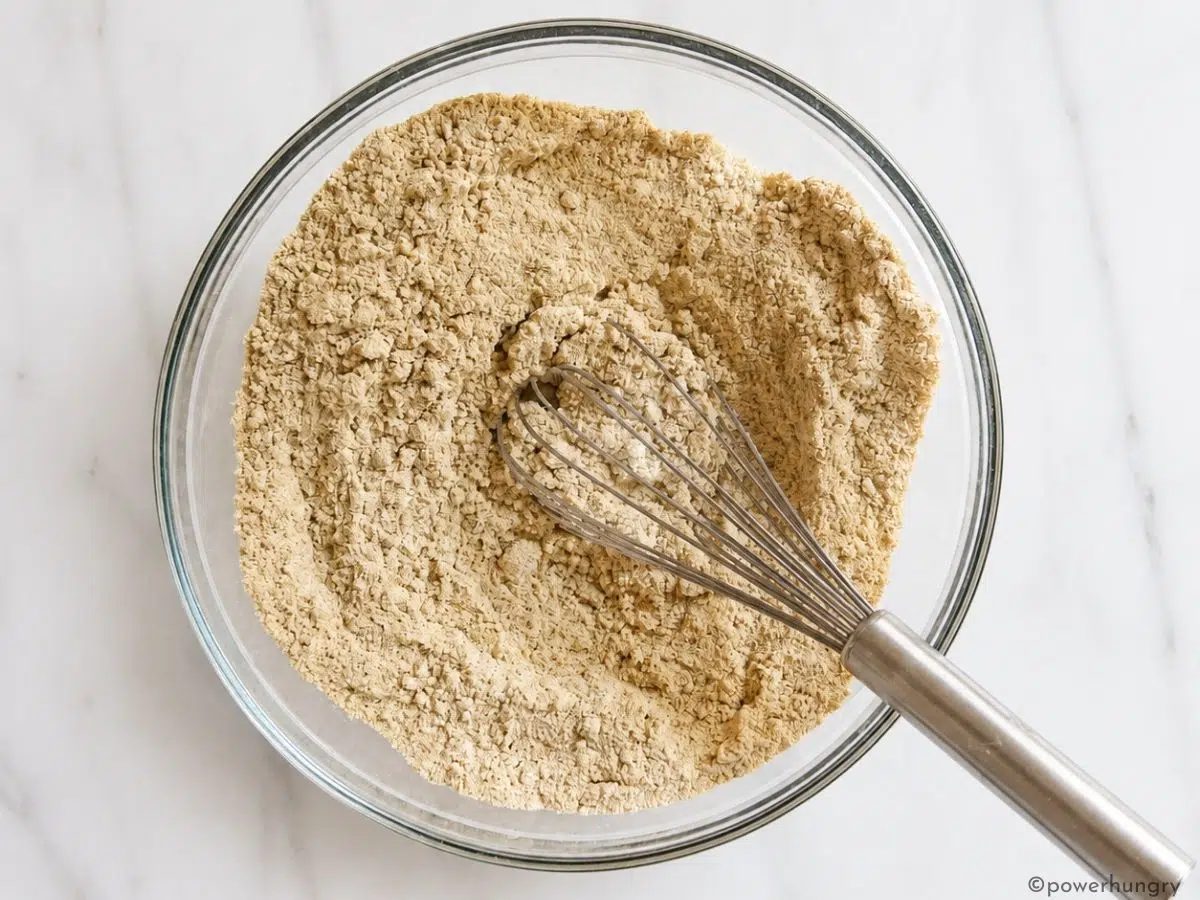
- Whisk the Dry Ingredients. In a large mixing bowl, thoroughly whisk the flaxseed flour, oat fiber powder, whole psyllium husks, baking powder, and salt. Break up any small clumps so the psyllium and baking powder are distributed evenly.
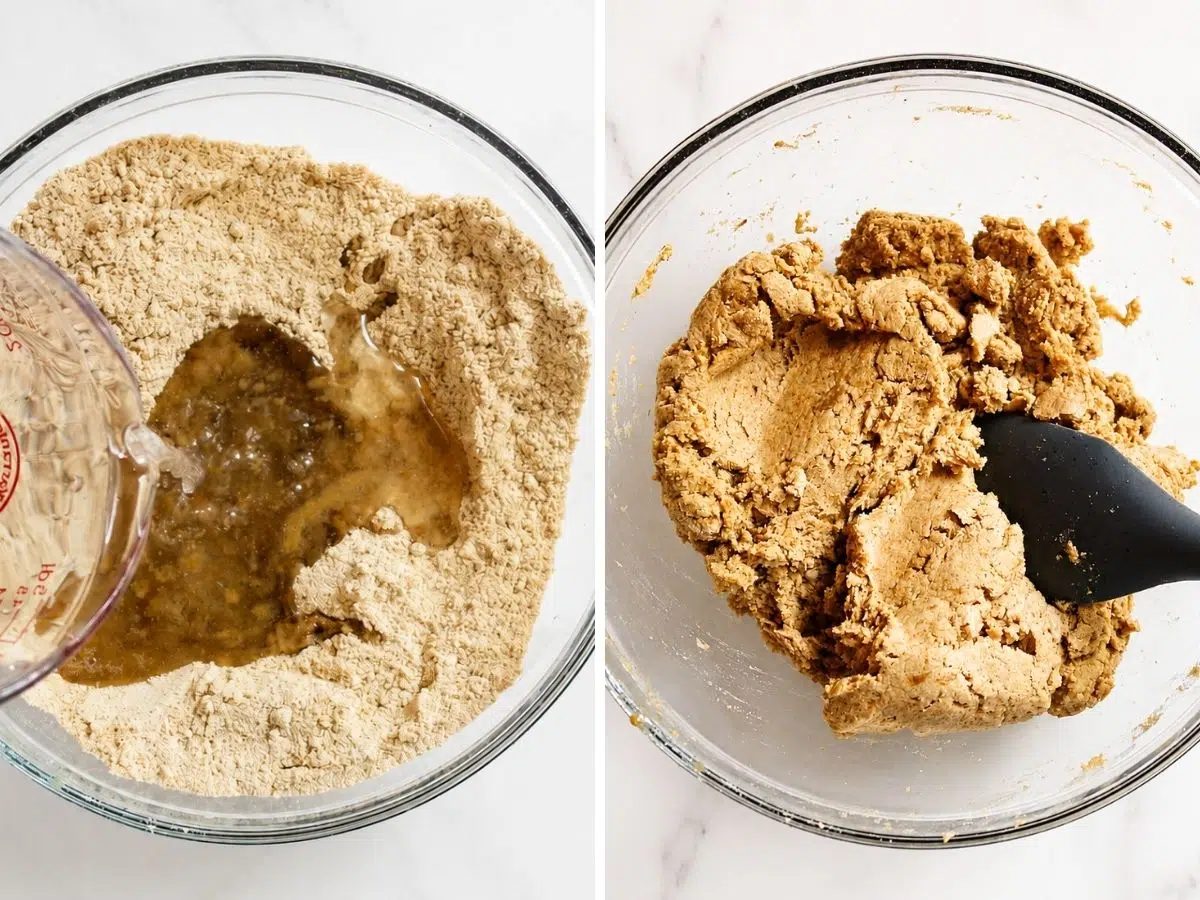
- Add the Wet Ingredients.Add the very warm water and oil. Stir until completely combined. The mixture will appear dry at first. Keep stirring, then use your hands if necessary to bring the dough together. Do not add more water beyond a teaspoon or two, if absolutely necessary. Excess water can create a large bubble beneath the top crust that rises in the oven and collapses as the loaf cools.
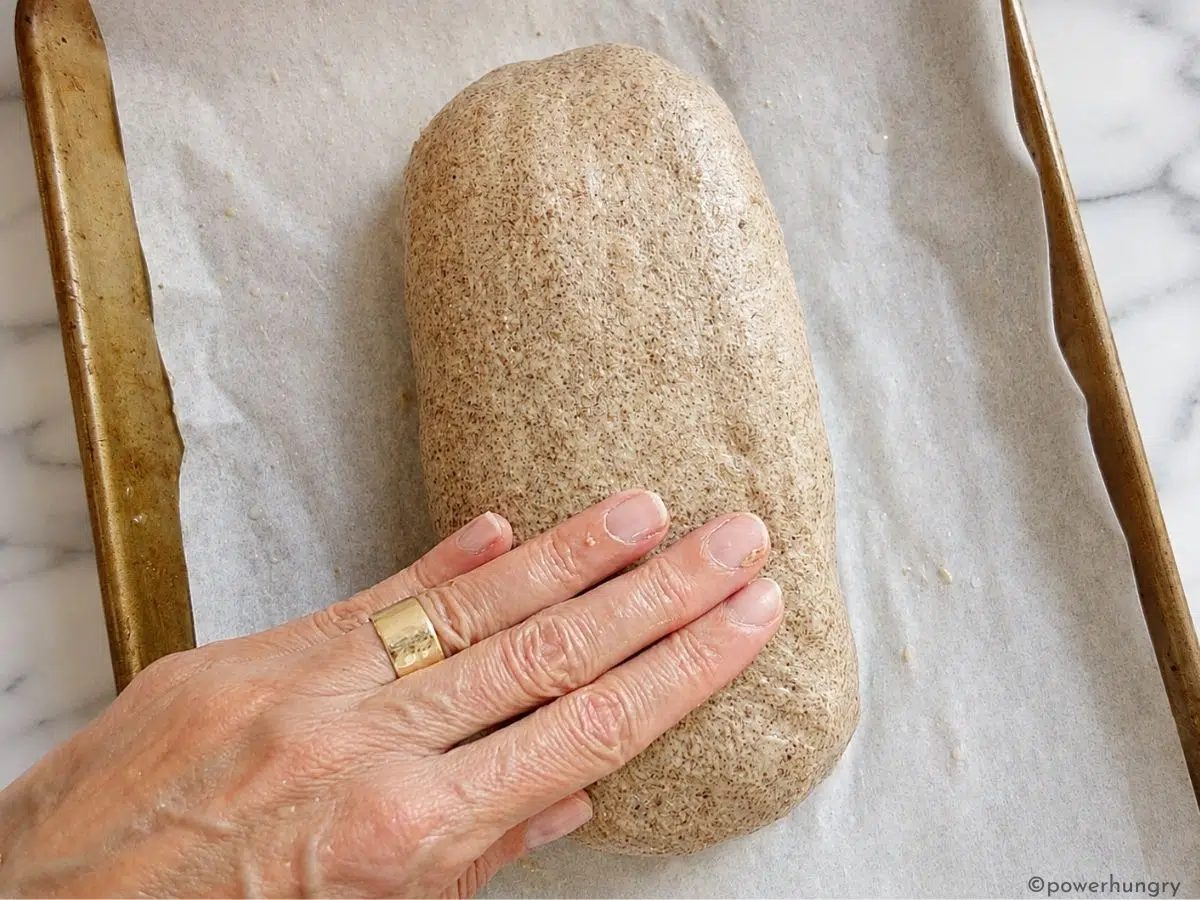
- Shape the Loaf.Dampen your hands with water. Gather the dough into a ball and transfer it to the prepared baking sheet. Press and shape the dough into a smooth, flat loaf measuring approximately 8 by 4 by 1 inch (20 by 10 by 2.5 cm). Rewet your hands as needed to smooth the surface without adding water to the dough itself.
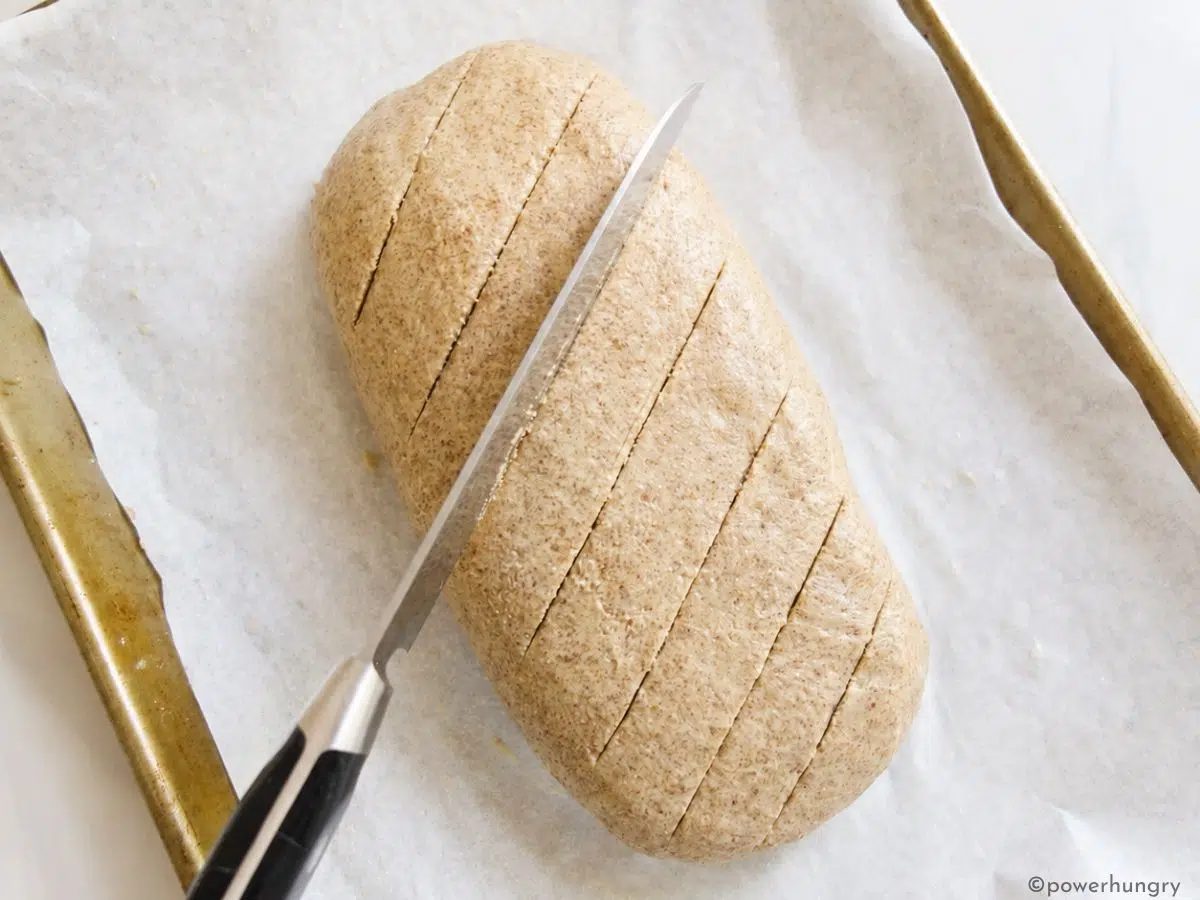
- Slash the Top. Use a sharp knife to cut shallow slashes across the loaf at 1-inch (2.5-cm) intervals. Make each slash about 1/4 inch (6 mm) deep. The cuts are functional as well as decorative: they give steam a controlled route out of the loaf and help the center bake evenly.
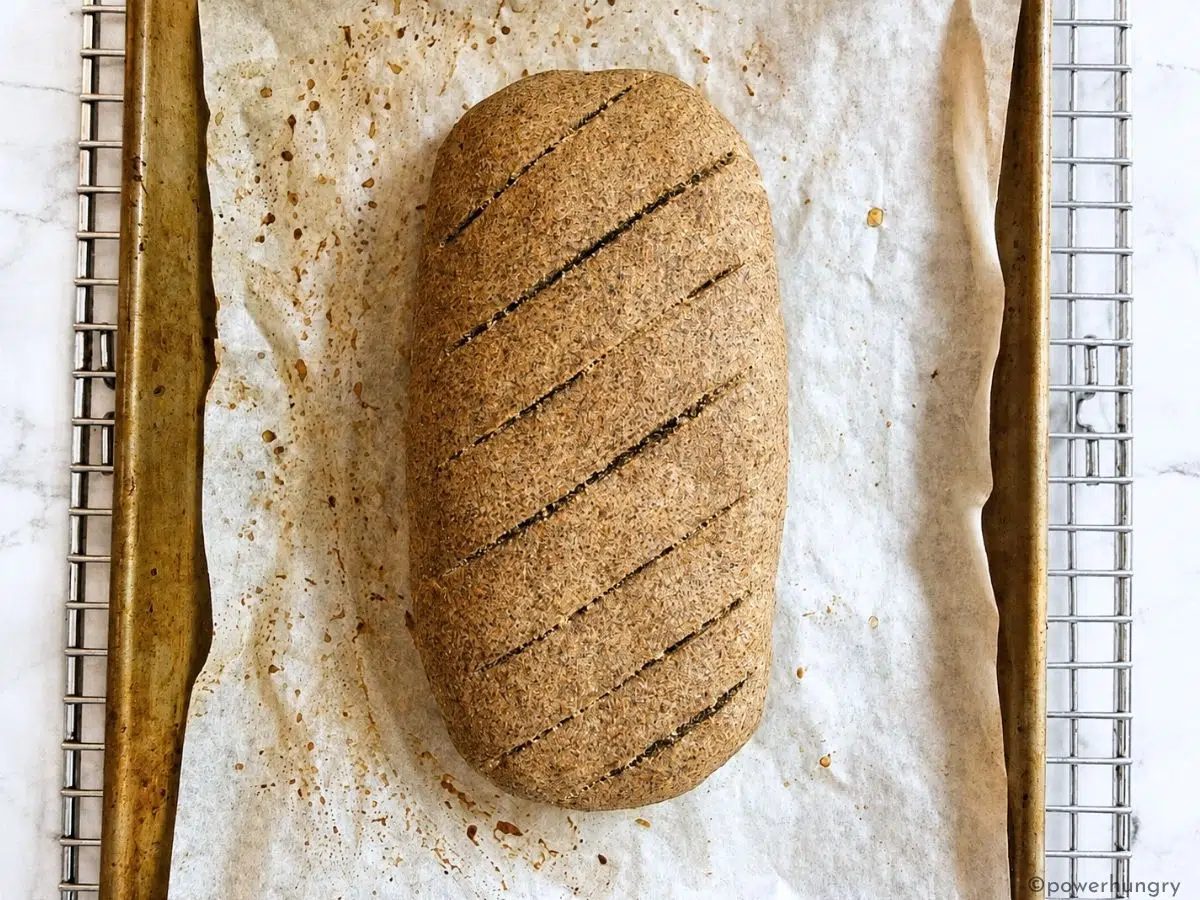
- Bake. Bake for 60 to 65 minutes, until the surface looks dry and a toothpick inserted near the center comes out with only a few moist crumbs attached.
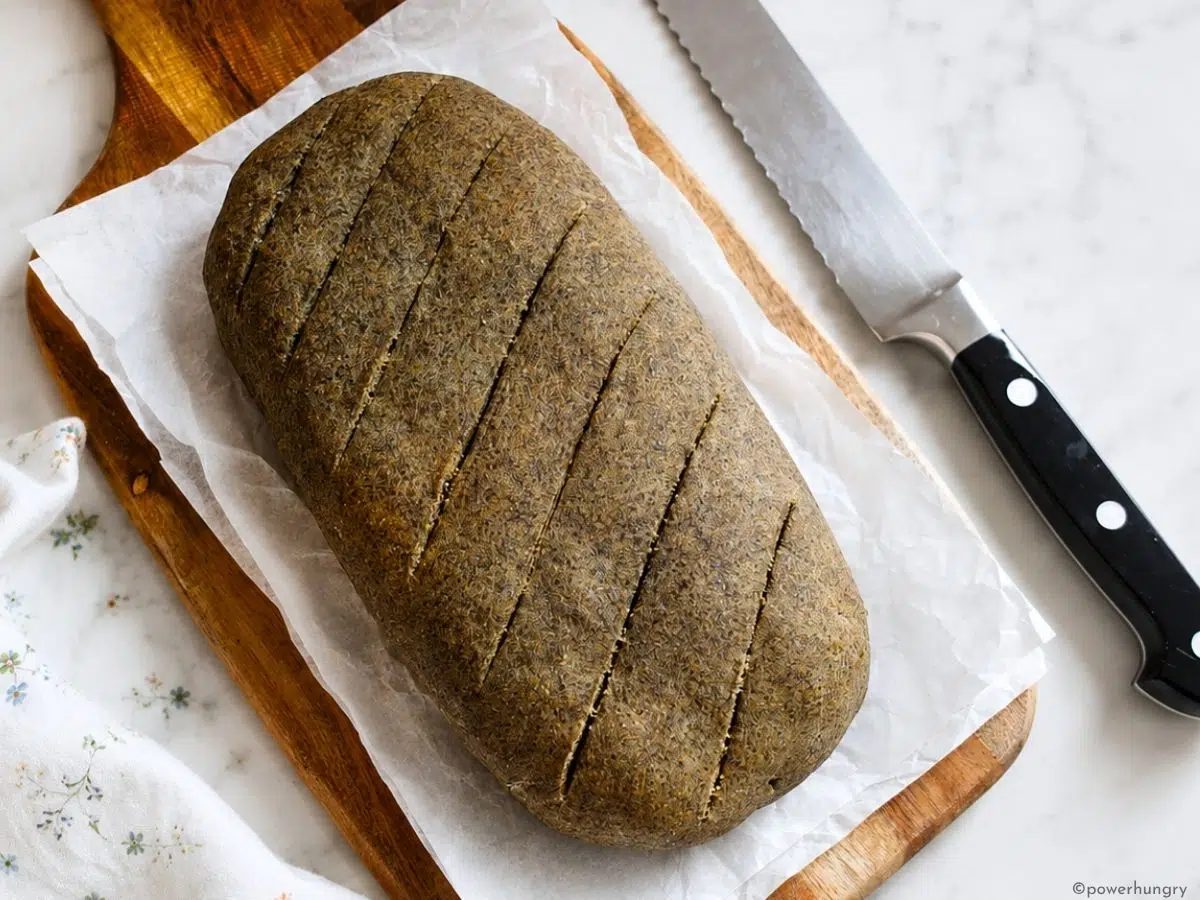
- Cool Completely.Use the parchment paper to transfer the loaf to a cooling rack. Let it cool completely before slicing. Note that the cooling period is part of the recipe. The crumb continues to set as the loaf cools, so cutting it while warm can make the interior seem wetter and more fragile than it will be once fully cooled.
Taste and Texture
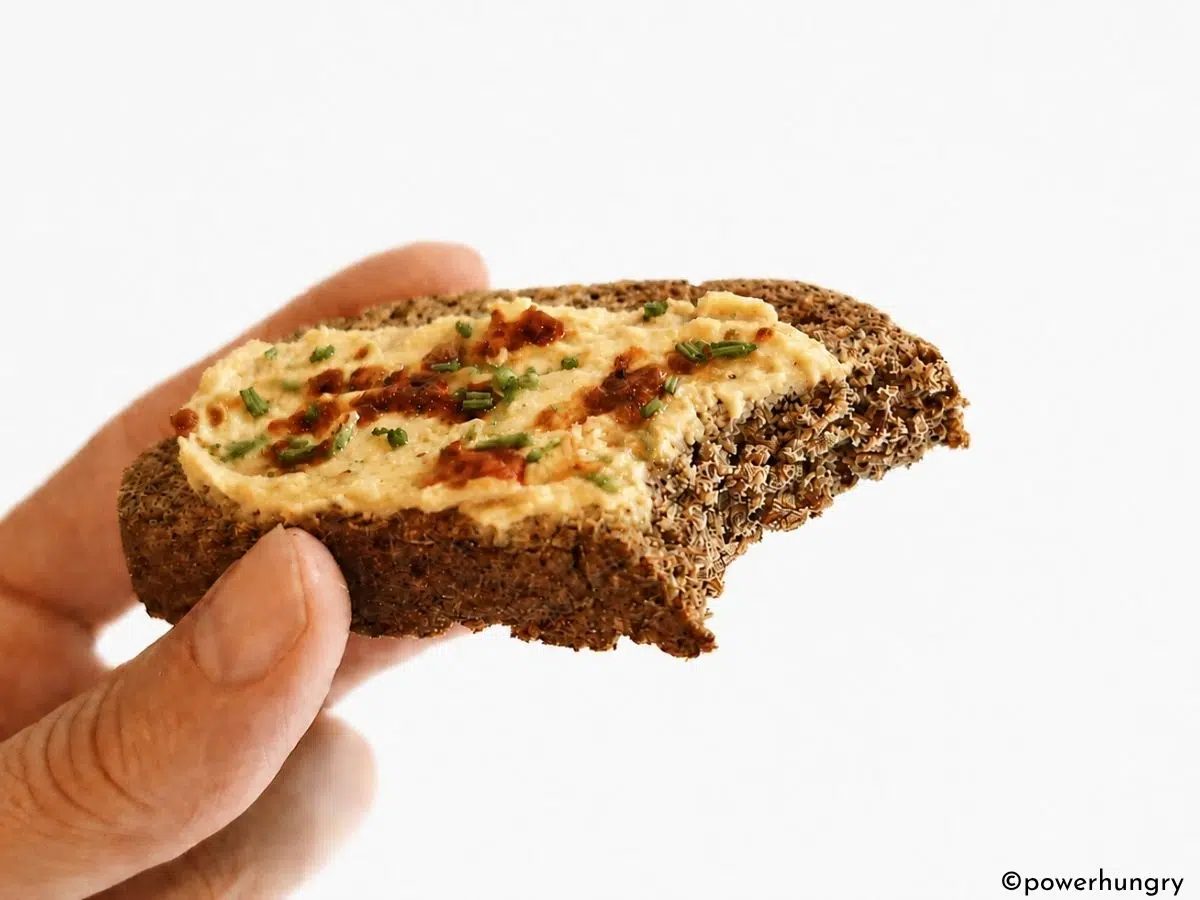
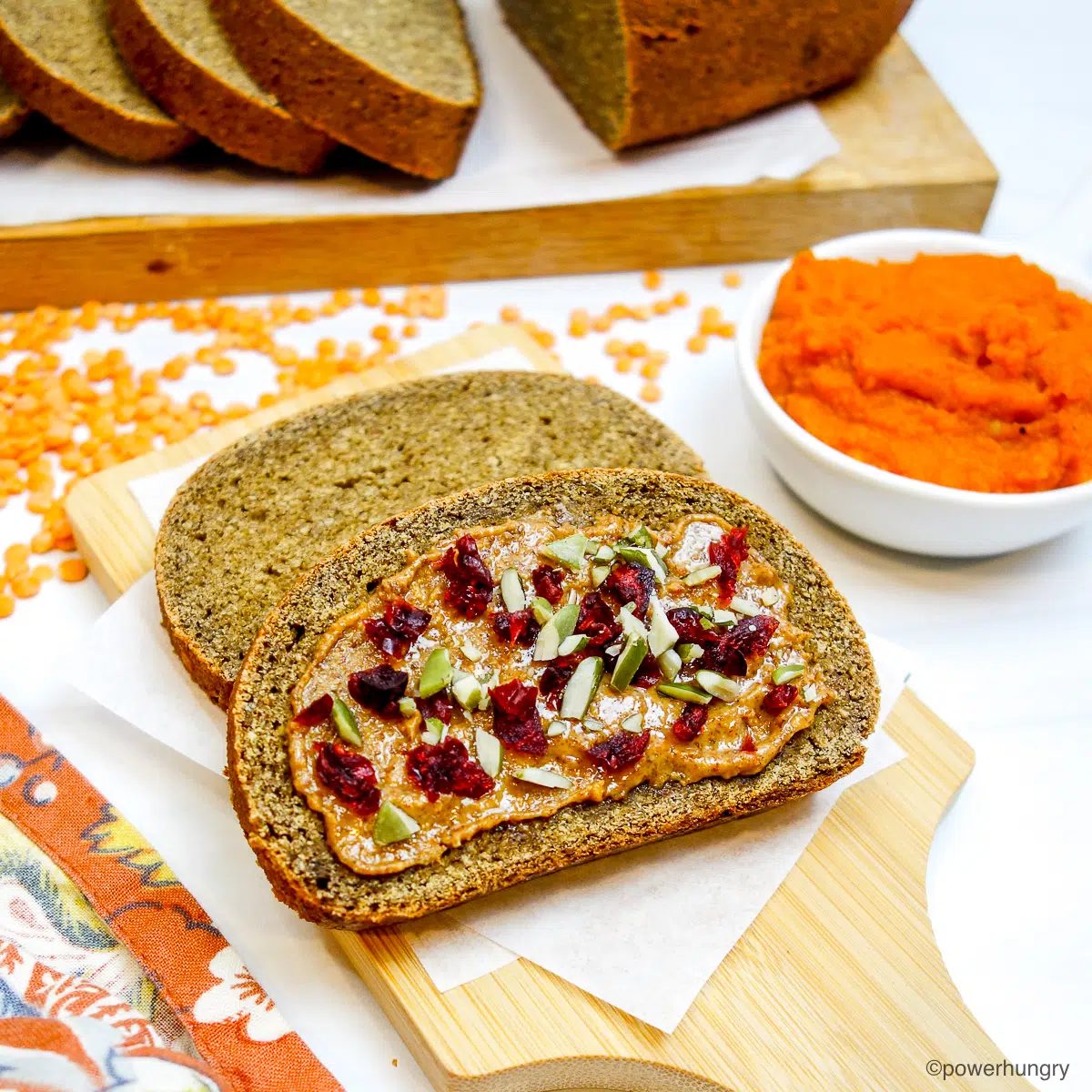
The flavor is mild, nutty, and reminiscent of whole-wheat bread, largely because of the flaxseed meal. It is neutral enough for almond butter and jam, yet savory enough for hummus, avocado, vegetables, or a bowl of soup.
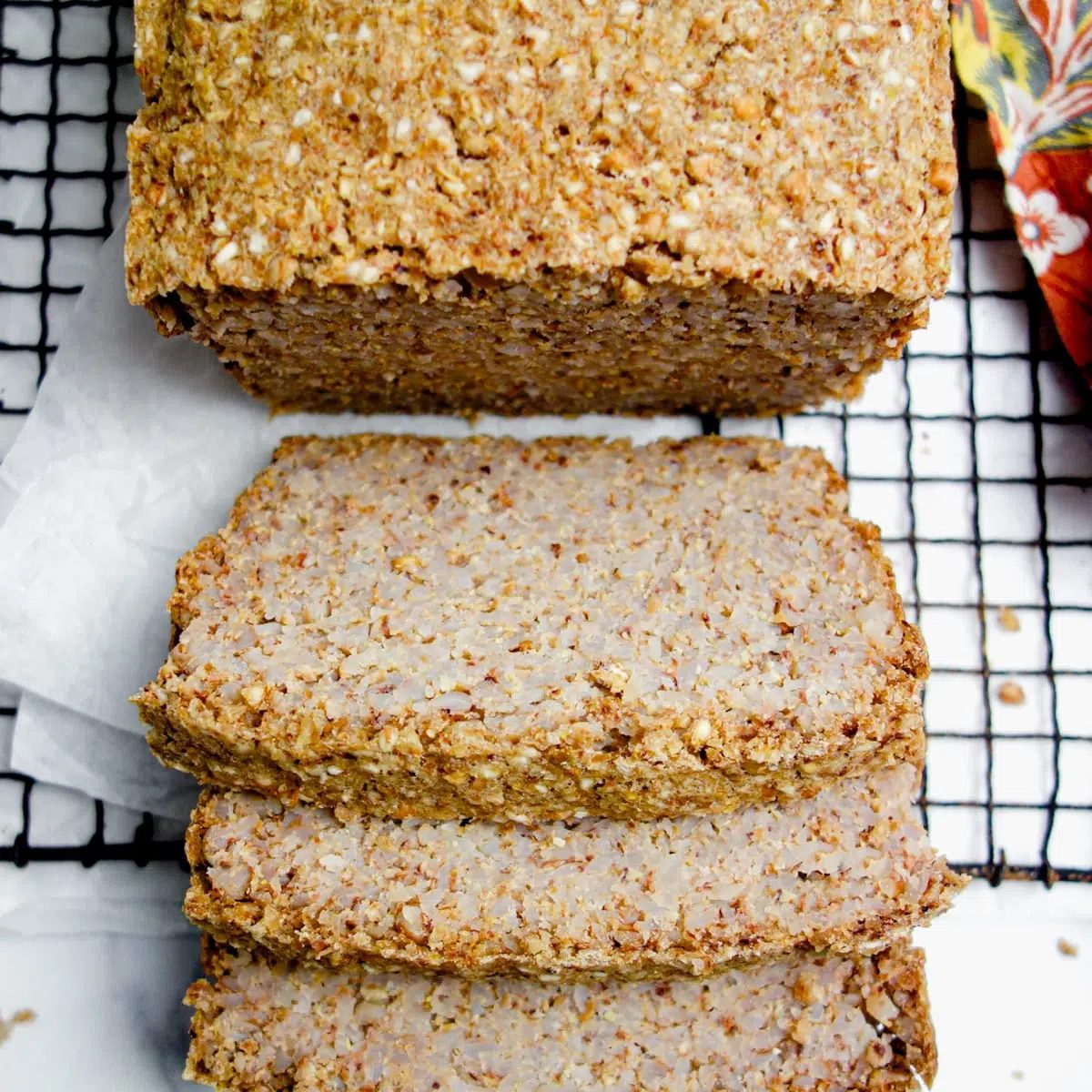
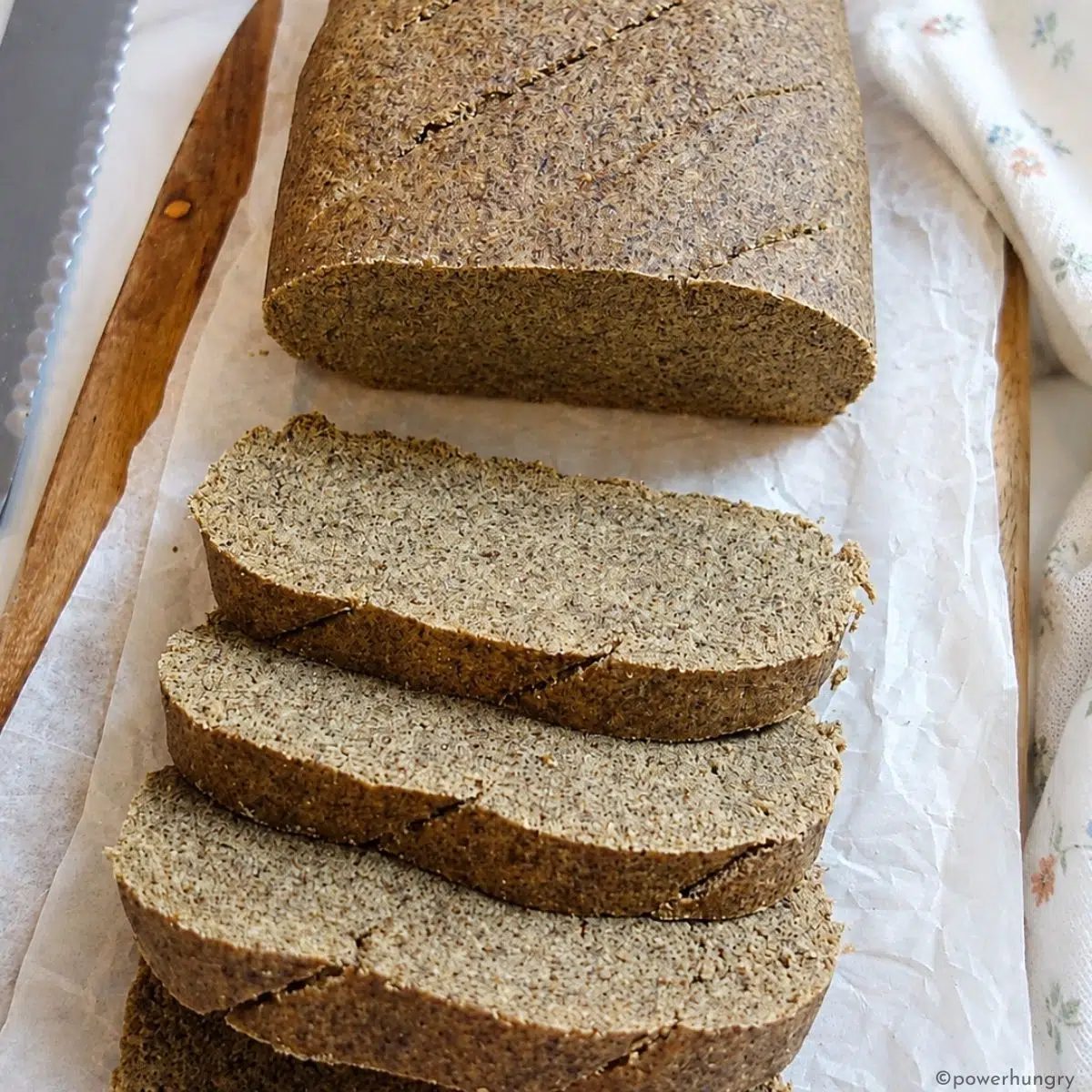
The crumb is dense but delicate, almost cake-like in its fineness. It does not crumble apart when sliced; aside from a few perfectly normal crumbs, each piece remains firm and solid. The slices are sturdy enough for toppings and toast exceptionally well.
Because this is a compact, filling loaf, I particularly like it for open-faced sandwiches. For a conventional two-slice sandwich, cut the bread relatively thin.
Serving Suggestions
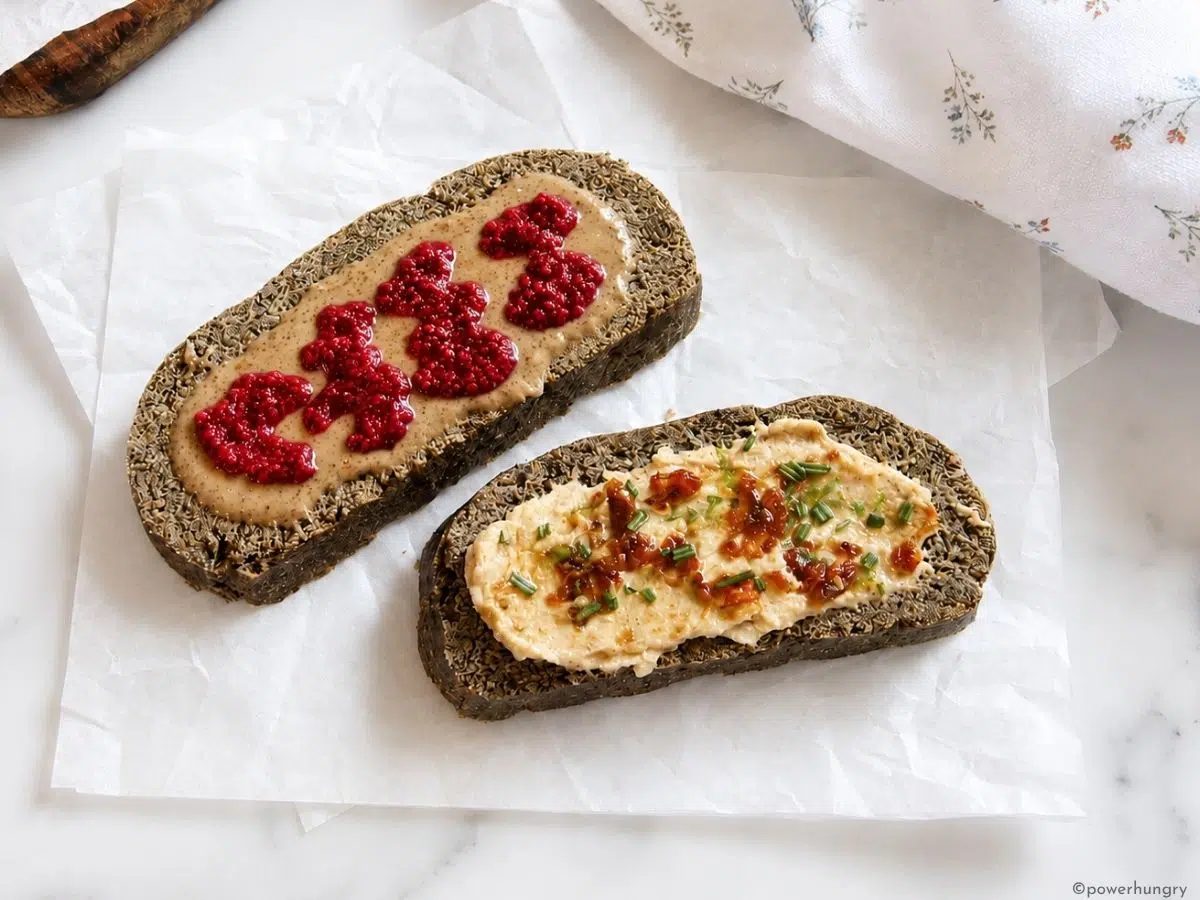
- Toast and spread with almond butter and chia raspberry jam.
- Top with hummus, chopped sun-dried tomatoes, and chives.
- Add mashed avocado, flaky salt, and black pepper.
- Serve alongside soups, stews, salads, or vegan chili.
- Make an open-faced sandwich with white bean spread, cucumber, tomato, or roasted vegetables.
- Cut thin slices for a two-slice sandwich.
- Toast until crisp and serve with vegan cheese or a savory dip.
Storage
Cool the bread completely before storing it. Trapped warmth creates condensation, which can make the surface damp.
- Room temperature:Store in an airtight container for up to 2 days.
- Refrigerator:Refrigerate in an airtight container for up to 1 week. Toasting restores the reliable texture after chilling.
- Freezer:Slice the loaf, separate the slices with parchment paper, and freeze in an airtight container for up to 3 months. Toast individual slices directly from frozen or thaw them at room temperature.
Flavor Variations
- Caraway loaf:Add 1 to 2 teaspoons of caraway seeds for a rye-bread character.
- Herb bread:Add 1 teaspoon of dried rosemary, thyme, Italian seasoning, or herbes de Provence.
- Garlic and onion:Add 1/2 teaspoon each garlic powder and onion powder.
- Everything bread:Sprinkle everything-bagel seasoning over the shaped loaf before baking. Check the seasoning’s salt level before adding the full amount of salt to the dough.
- Warm spice bread:Add 1 teaspoon cinnamon and a small pinch of nutmeg for a breakfast-friendly loaf. The bread will remain unsweetened unless you add a sweet topping.
Tips for Success
Do not add extra waterThe dough looks dry when you begin stirring. Keep mixing and use your hands to bring it together. Add no more than a teaspoon or two of extra water if absolutely necessary. Too much water can produce a large bubble beneath the crust that rises during baking and collapses afterward.
Do not omit the oilFat is necessary for a tender, pleasant crumb in this egg-free loaf. A water-only version is dry, hard, and unpleasant. See the substitution notes if you would like to experiment with a runny nut or seed butter.
Make the slashes on topThe shallow cuts allow steam to escape in a controlled way and help the center of the loaf bake evenly.
Weigh the dry ingredientsOat fiber is straightforward to compress or overfill in a measuring cup. A kitchen scale provides the most reliable results. If you must use cups, spoon the oat fiber into the cup very lightly and level it without packing.
Avoid convection if possibleStrong circulating heat can encourage a bubble to develop beneath the surface. Use a standard radiant oven setting when available. If convection cannot be disabled, consider baking the loaf inside a covered Dutch oven, covered cast-iron skillet, or bread cloche.
Bake promptly after shapingBaking powder begins reacting as soon as it is moistened. Preheat the oven before mixing the dough, then shape, slash, and bake the loaf without a long delay.
Cool the loaf completelyThe crumb continues to set as the bread cools. Slicing too soon can make the interior appear wet or fragile.
Ingredient Substitutions
Can I replace the oat fiber?No tested 1:1 substitute exists for the oat fiber in this recipe. Oat flour is a completely different ingredient and will not work as a replacement.
Can I use psyllium husk powder?Yes. Replace the whole psyllium husks with an equal weight of psyllium powder: 20 grams. This is approximately 4 teaspoons of powder, compared with roughly 4 tablespoons of whole husks. Do not substitute by equal volume.
Can I replace the flaxseed meal?I have not tested a flaxseed replacement. An equal weight of finely ground chia seeds, or chia flour, is the most plausible option, but expect the flavor, color, water absorption, and texture to change.
Can I use a different oil?Yes. Use the same amount of another mild vegetable oil. Avocado oil is my preference, but light olive oil, grapeseed oil, sunflower oil, or another neutral oil should work.
Can I replace the oil with nut or seed butter?I have not tested this variation, but a very runny almond butter, sunflower seed butter, tahini, peanut butter, or pumpkin seed butter may work. Combine the butter with hot or boiling water before adding it to the dry ingredients. You may need one or two additional teaspoons of water because nut and seed butters contain solids.
Frequently Asked Questions
Is oat fiber the same as oat flour?No. Oat fiber is made from the protective outer hull of the oat and consists primarily of insoluble fiber. Oat flour is made by grinding the oat grain itself. They have different nutritional profiles and behave very differently in baking. Oat flour will not work in this recipe.
Do I have to grind the flaxseed meal?Yes, for the finest and most cohesive crumb. The loaf will still bake if you use coarsely ground flaxseed meal, but the finished texture will be noticeably rougher. Finely ground flaxseeds produces a better texture and rise.
Can I omit the oil?I do not recommend it. Testing showed that a version made without oil was very dry and hard. A runny nut or seed butter may be a possible substitute, but that variation has not been tested.
Can I use dark flaxseed instead of golden flaxseed?Yes. Dark flaxseed works perfectly, although it will make the loaf darker and may give it a slightly stronger, nuttier flavor.
Why did a large bubble form beneath the crust?The most likely causes are excess water or strong convection heat. Measure the water precisely, resist adding more while mixing, and use a non-convection oven setting whenever possible.
Why must the bread cool before slicing?The crumb continues to firm and set after baking. Cutting the loaf while warm can compress the slices and make the center appear gummy or underbaked.
Is oat fiber gluten-free?Pure oat fiber does not contain gluten, but cross-contact can occur during growing, processing, or packaging. Choose oat fiber specifically labeled or certified gluten-free if gluten is a concern.
Does each slice really have less than 1 gram of net carbohydrates?Based on 14 slices and standard nutrition data for the listed ingredients, each slice contains an estimated 0.5 to 0.7 grams of net carbohydrates. Net carbohydrates are calculated by subtracting dietary fiber from total carbohydrates. Values vary among brands, so treat the number as an estimate rather than a laboratory measurement.
Vegan Oat Fiber Bread
- Prep Time: 15 minutes
- Cook Time: 1 hour
- Total Time: 1 hour
- Servings: 14 Slices (from 1 loaf)
Ingredients
- 1 1/2 cups flaxseed meal (or flaxseed seeds)
- 3/4 cup oat fiber (not oat flour)
- 1/4 cup psyllium husk (see notes for using psyllium powder )
- 2 1/2 teaspoons baking powder (certified gluten-free, as needed)
- 1/2 teaspoon salt (can be adjusted or omitted)
- 1/3 cup avocado oil (or any oil of choice)
- 1 cup very warm water
Method
- Preheat the oven to 350°F (180°C). Line a large baking sheet with parchment paper . Avoid the convection setting if possible. Steady radiant heat helps the center bake evenly and reduces the chance of a large air pocket developing beneath the crust.
- Place the flaxseed meal or whole flaxseeds in a high-speed blender or another blender. Grind until very fine and flour-like.
- In a large mixing bowl , thoroughly whisk the flaxseed flour, oat fiber powder, whole psyllium husks , baking powder , and salt. Break up any small clumps so the psyllium and baking powder are distributed evenly.
- Add the very warm water and oil. Stir until completely combined. The mixture will appear dry at first. Keep stirring, then use your hands if necessary to bring the dough together. Do not add more water beyond a teaspoon or two, if absolutely necessary. Excess water can create a large bubble beneath the top crust that rises in the oven and collapses as the loaf cools.
- Dampen your hands with water. Gather the dough into a ball and transfer it to the prepared baking sheet . Press and shape the dough into a smooth, flat loaf measuring approximately 8 by 4 by 1 inch (20 by 10 by 2.5 cm). Rewet your hands as needed to smooth the surface without adding water to the dough itself.
- Use a sharp knife to cut shallow slashes across the loaf at 1-inch (2.5-cm) intervals. Make each slash about 1/4 inch (6 mm) deep. The cuts are functional as well as decorative: they give steam a controlled route out of the loaf and help the center bake evenly.
- Bake for 60 to 65 minutes, until the surface looks dry and a toothpick inserted near the center comes out with only a few moist crumbs attached.
- Use the parchment paper to transfer the loaf to a cooling rack . Let it cool completely before slicing. Note that this cooling period is part of the recipe. The crumb continues to set as the loaf cools, so cutting it while warm can make the interior seem wetter and more fragile than it will be once fully cooled.
Notes
Storage: Cool the bread completely before storing it. Trapped warmth creates condensation, which can make the surface damp. Room temperature: Store in an airtight container for up to 2 days. Refrigerator: Refrigerate in an airtight container for up to 1 week. Toasting restores the reliable texture after chilling. Freezer: Slice the loaf, separate the slices with parchment paper , and freeze in an airtight container for up to 3 months. Toast individual slices directly from frozen or thaw them at room temperature. Ingredient Substitutions Whole Psyllium Husks : Replace the whole psyllium husks with an equal weight of psyllium powder: 20 grams. This is approximately 4 teaspoons of powder, compared with roughly 4 tablespoons of whole husks. Do not substitute by equal volume. Avocado Oil : Use the same amount of another mild vegetable oil. Avocado oil is my preference for this bread, but light olive oil , grapeseed oil, sunflower oil, or another neutral oil should work.