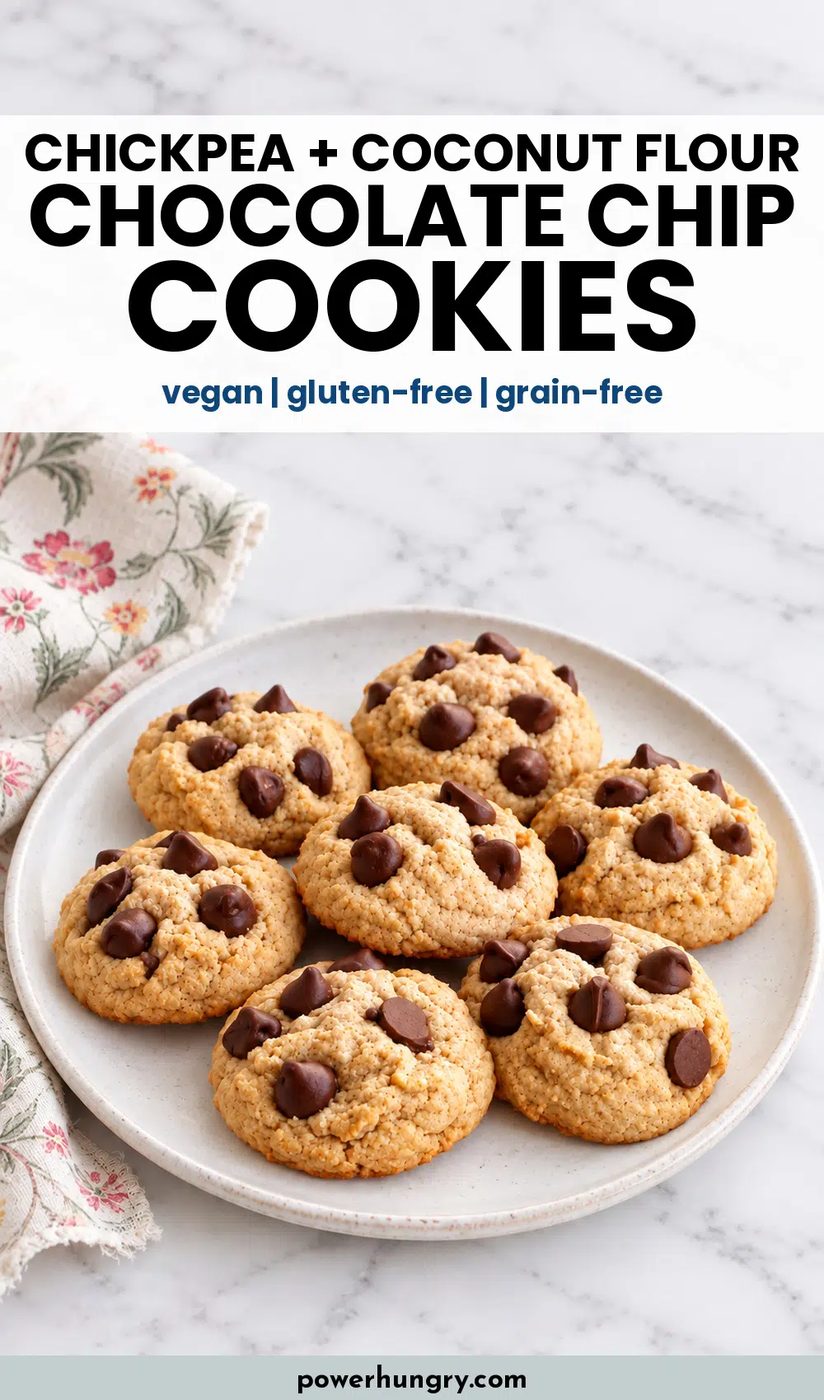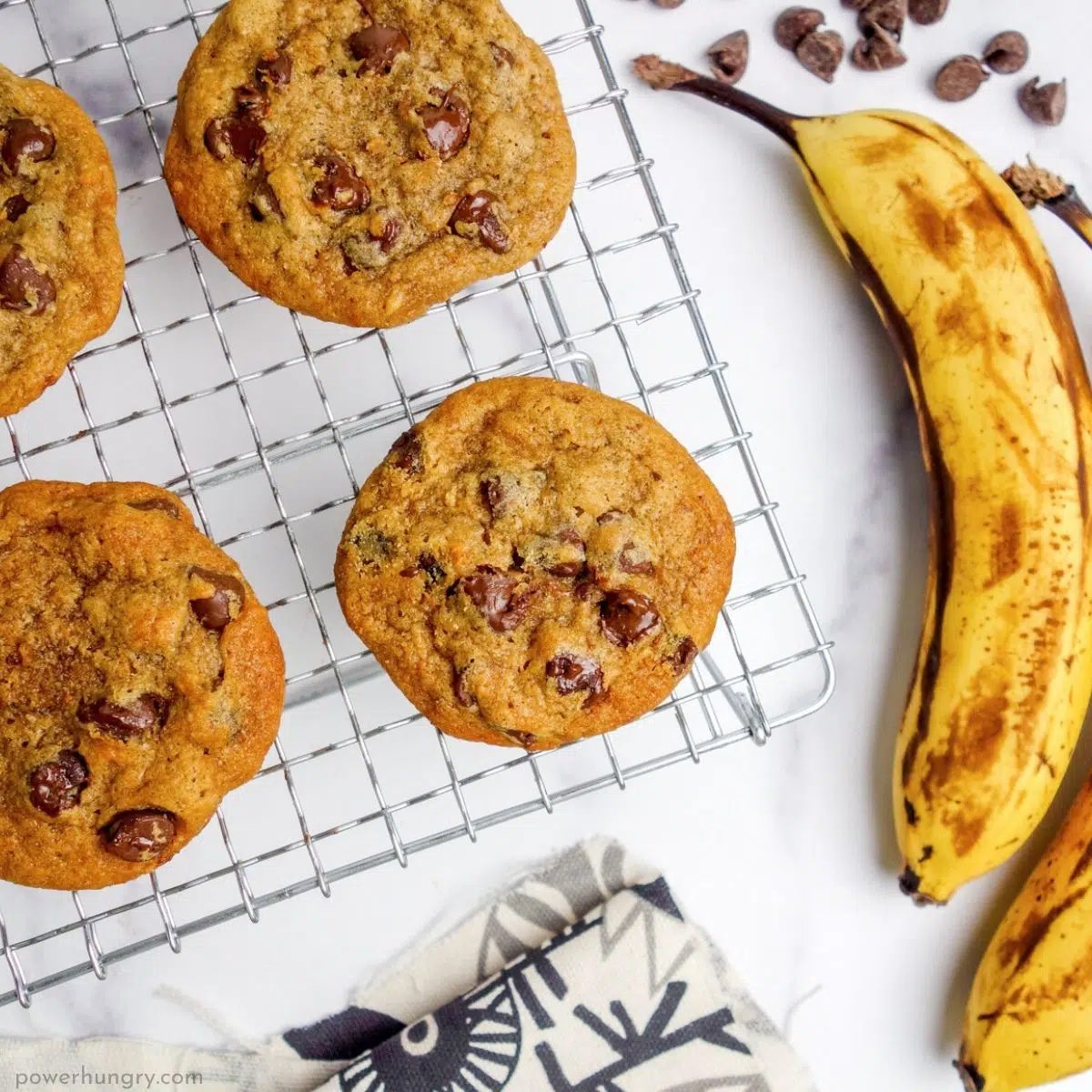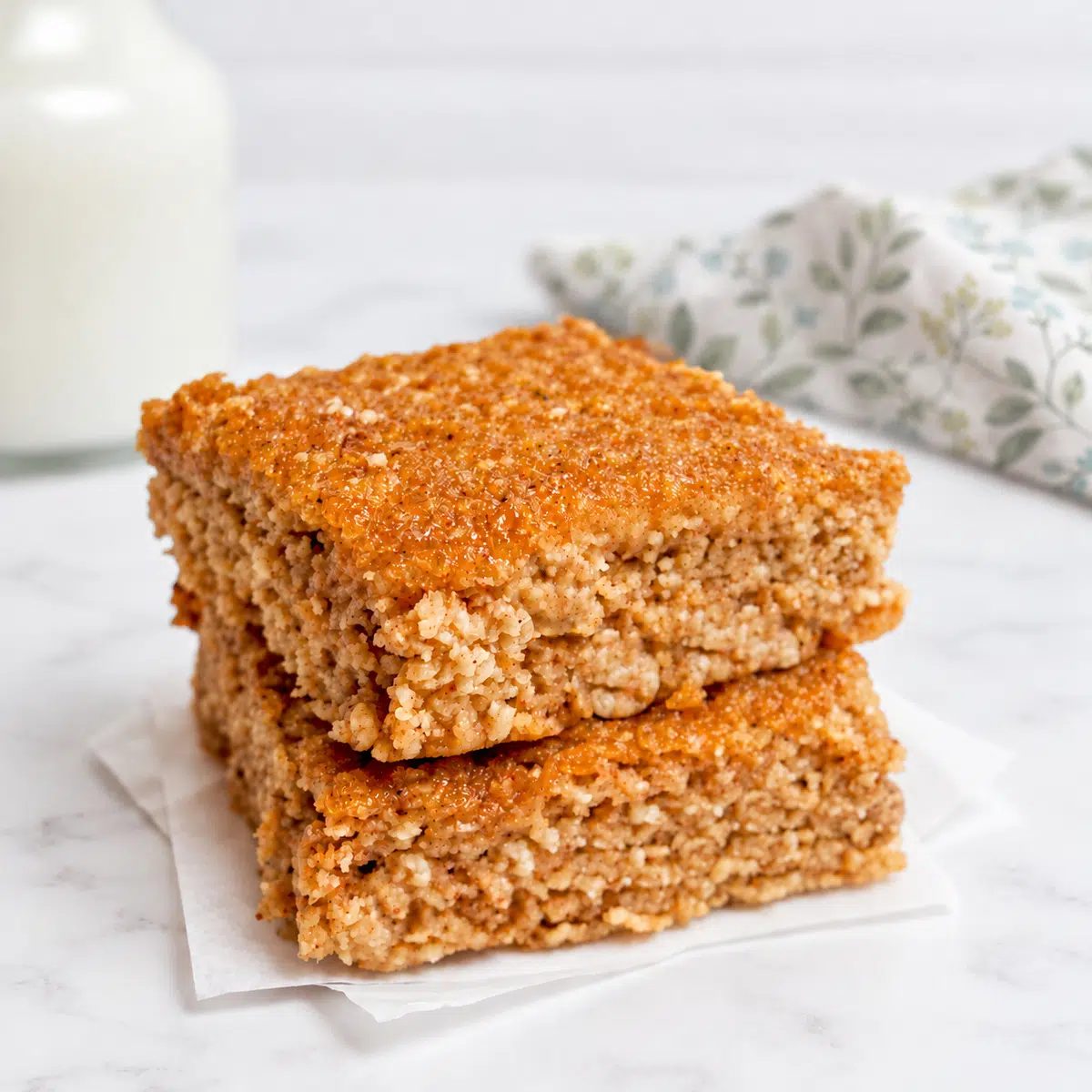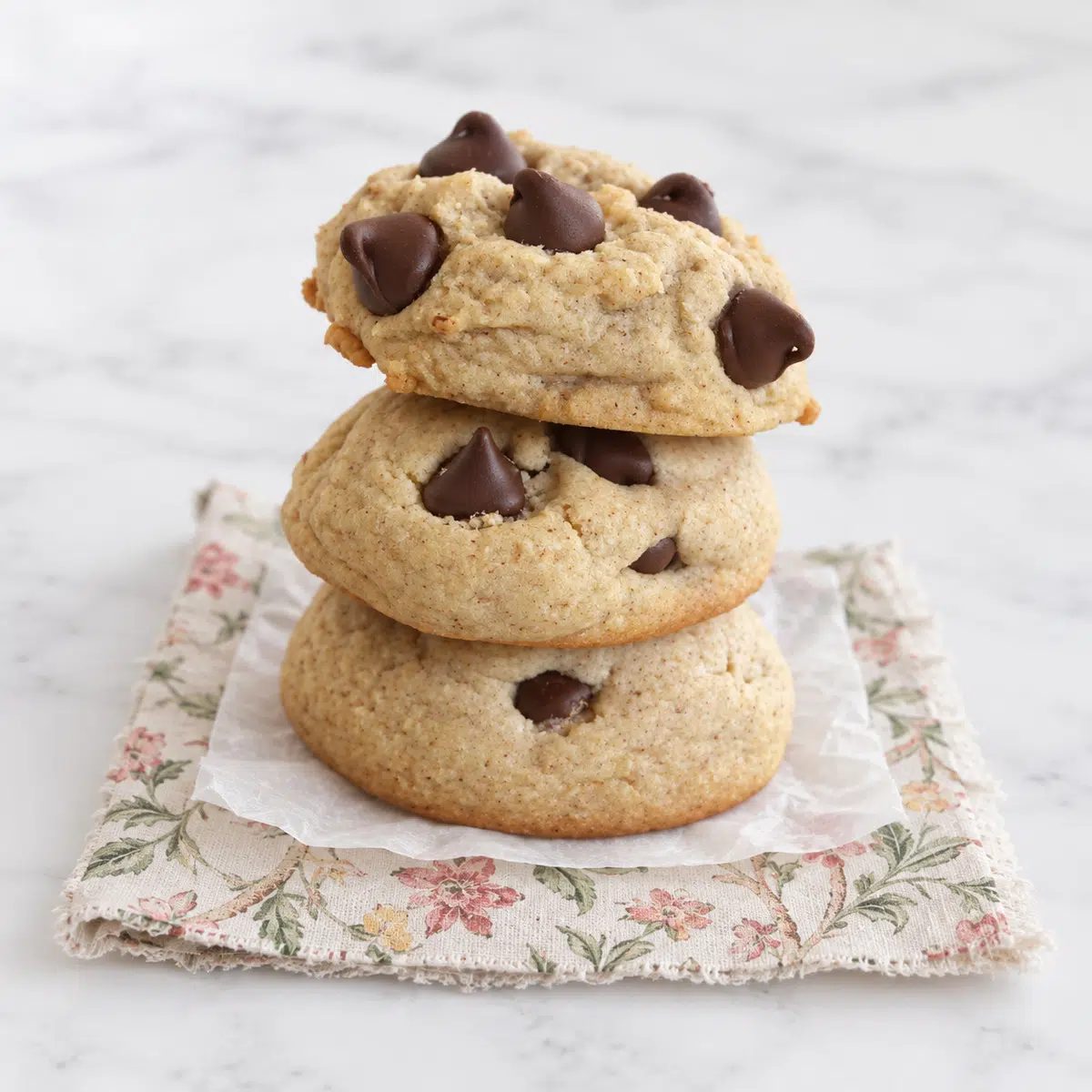
Soft coconut and chickpea flour chocolate chip cookies with lightly crisp golden edges and plenty of melty chocolate. Chickpea flour and water replace the eggs in this straightforward vegan, gluten-free and grain-free recipe.
Introduction
Chocolate chip cookies made with coconut flour usually rely on several eggs for structure. I wanted a version that was completely egg-free, so I turned to one of my go-to hardworking ingredients: chickpea flour.
Whisked with warm water, chickpea flour forms the sturdy binder that coconut flour needs. The combination creates soft, lightly cakey cookies with golden edges and a pleasantly plump, domed shape. Coconut oil supplies the richness, while vanilla and plenty of chocolate keep the flavor squarely in classic cookie territory.
I originally developed the recipe for a friend who could not eat gluten or many grains. My husband and son loved the cookies, too, and they quickly became a go-to recipe in our house. Readers have continued making them for years, including first-time coconut flour bakers and families managing multiple food allergies.
The dough comes together in minutes, but one brief pause makes all the difference: it looks loose immediately after mixing, then thickens into a light, fluffy, scoopable dough as the coconut flour absorbs the liquid.
Why You’ll Love This Recipe
- Vegan, egg-free and dairy-free
- Gluten-free and grain-free
- Distinctive two-flour formula with no flax egg
- Soft, lightly cakey centers and golden edges
- Quick dough with no chilling required
- Naturally forms neat, plump little cookies
- Freezer-friendly for longer storage
How Coconut Flour and Chickpea Flour Work Together
Coconut flour is exceptionally absorbent. It requires much more liquid and binding power than almond flour, cassava flour, or a gluten-free all-purpose blend, which is why it cannot be exchanged measure-for-measure with other flours.
Chickpea flour does a different job here. When whisked with warm water, it creates an egg-free binder strong enough to hold the coconut flour dough together. The combination produces the recipe’s characteristic soft, cakey texture and domed shape without flaxseed meal, starch, or commercial egg replacer.
Ingredients
The exact amounts of each ingredient are indicated in the recipe card at the end of the post.Toggle betweenUS Customary(volume) andMetric(weights) for preferred measurement option.
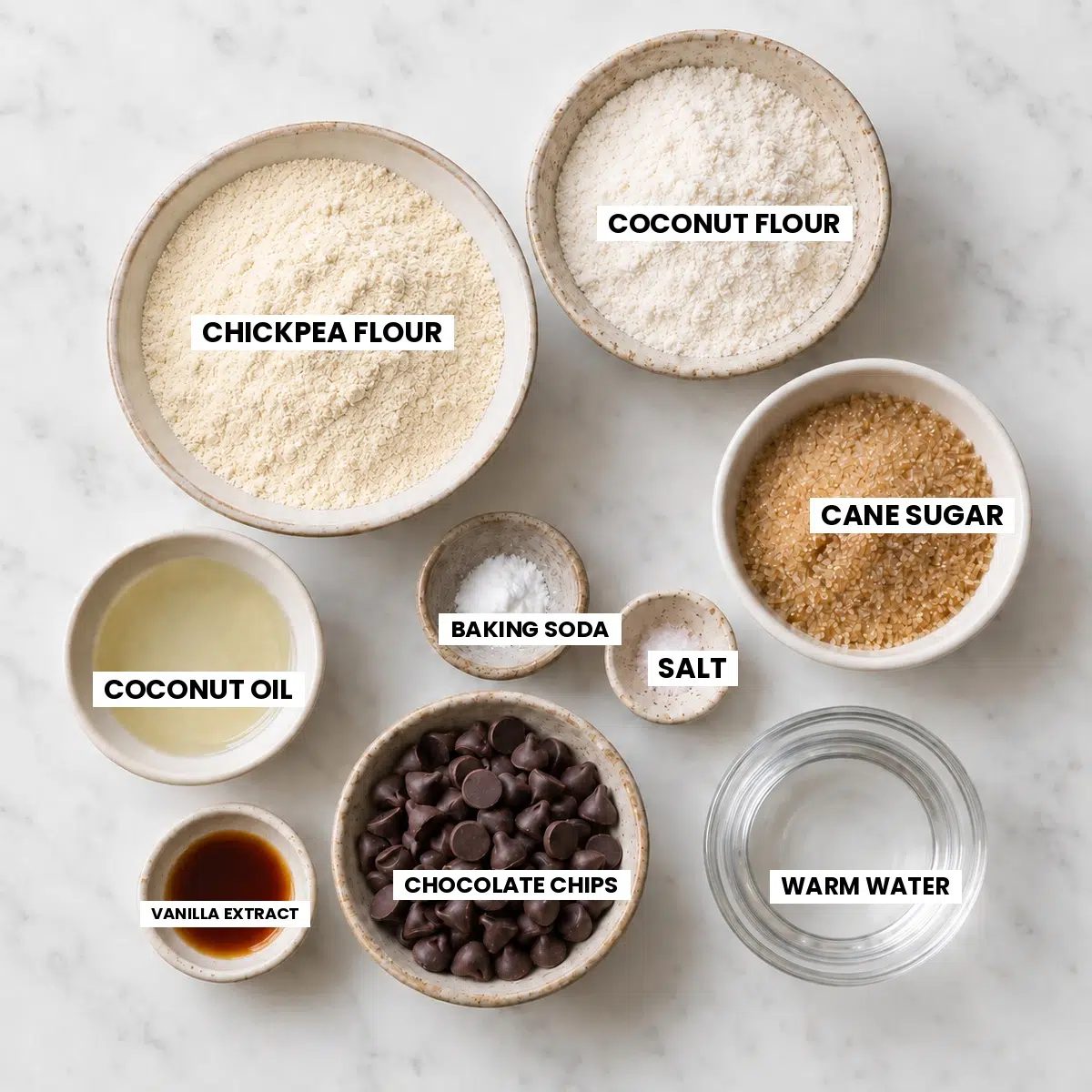
- Warm water:Hydrates the chickpea flour and creates the liquid portion of the egg-free binder.
- Chickpea flour:Whisked with water, it replaces the eggs and gives the delicate coconut flour dough structure. Do not substitute flaxseed meal; it does not work in this formula.
- Coconut flour:Creates the light, soft texture and subtle coconut flavor. Weighing it is strongly recommended because even a small excess can make the cookies dry.
- Natural cane sugar:Sweetens the dough and supports browning. Coconut sugar, brown sugar, or granulated sugar can be used in equal amounts.
- Baking soda:Provides a small amount of lift and helps the edges brown.
- Salt:Balances the sweetness and chocolate.
- Virgin coconut oil:Gives the cookies richness and helps create golden edges. Melt it, then let it cool slightly before mixing.
- Vanilla extract:Adds classic chocolate chip cookie flavor.
- Semisweet chocolate chips or chunks:Use vegan chocolate and certified gluten-free chocolate as needed.
How to Make Coconut & Chickpea Flour Chocolate Chip Cookies
Note that the complete instructions are also in the recipe card below.
- Prepare the oven and pan.Preheat the oven to 350°F (180°C). Line a baking sheet with parchment paper.
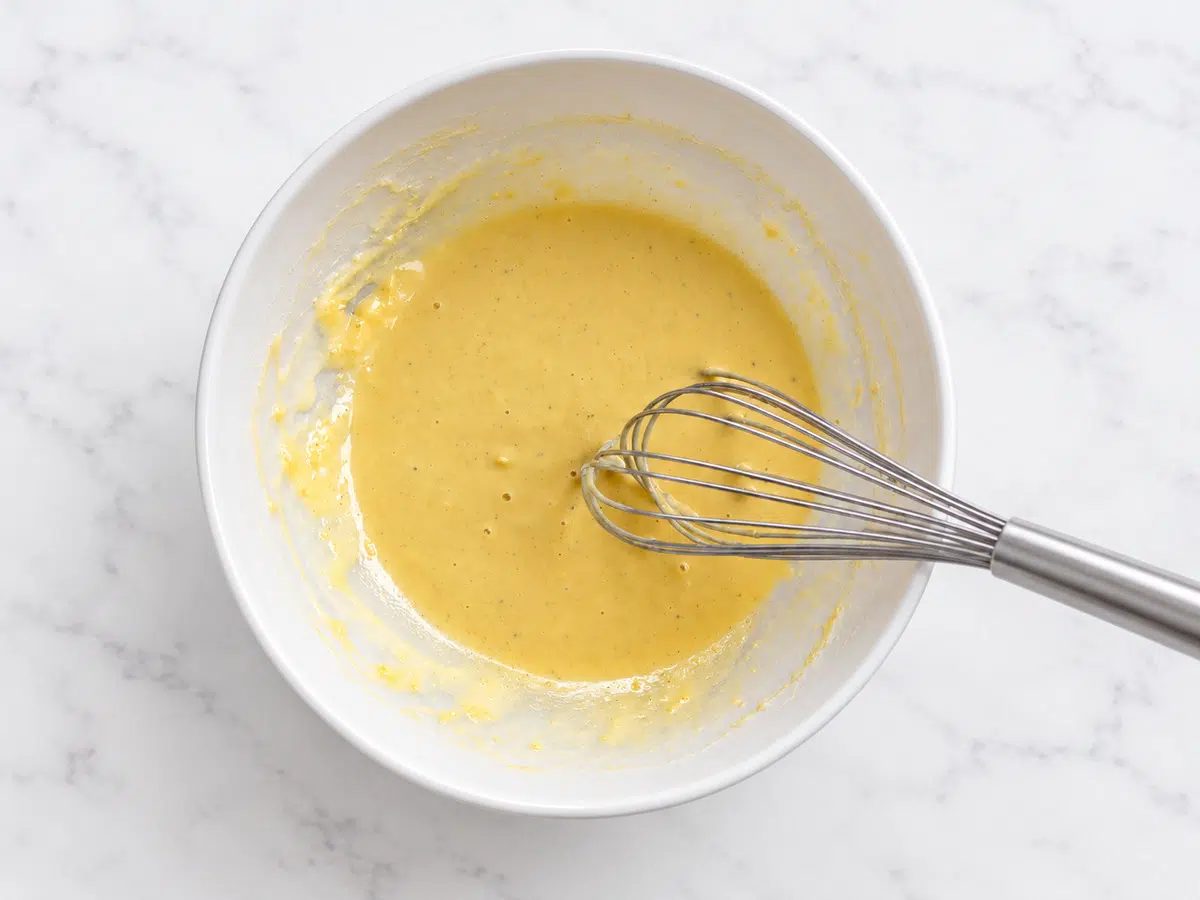
- Make the chickpea flour binder.Whisk the warm water and chickpea flour until completely smooth.
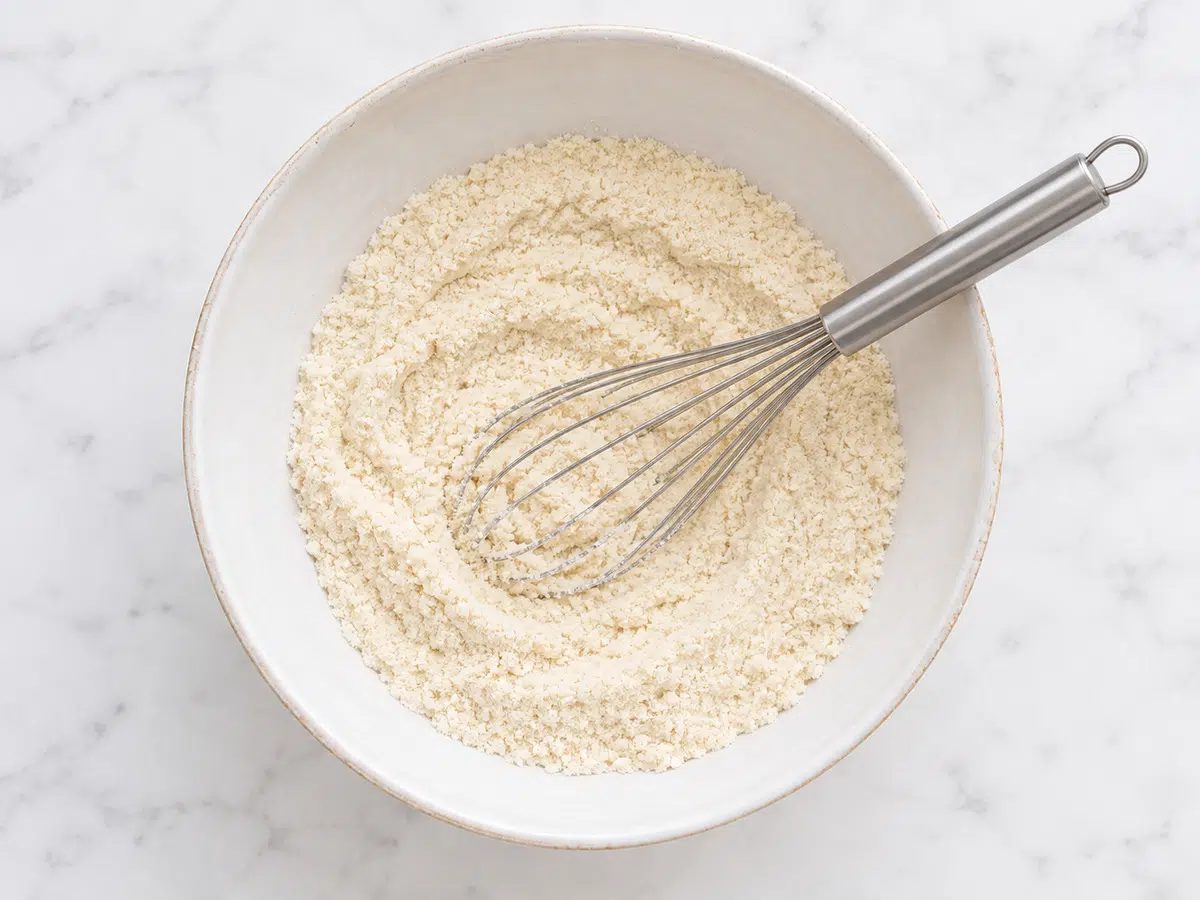
- Combine the dry ingredients.In a medium bowl, whisk the coconut flour, sugar, baking soda, and salt, breaking up every lump in the coconut flour.
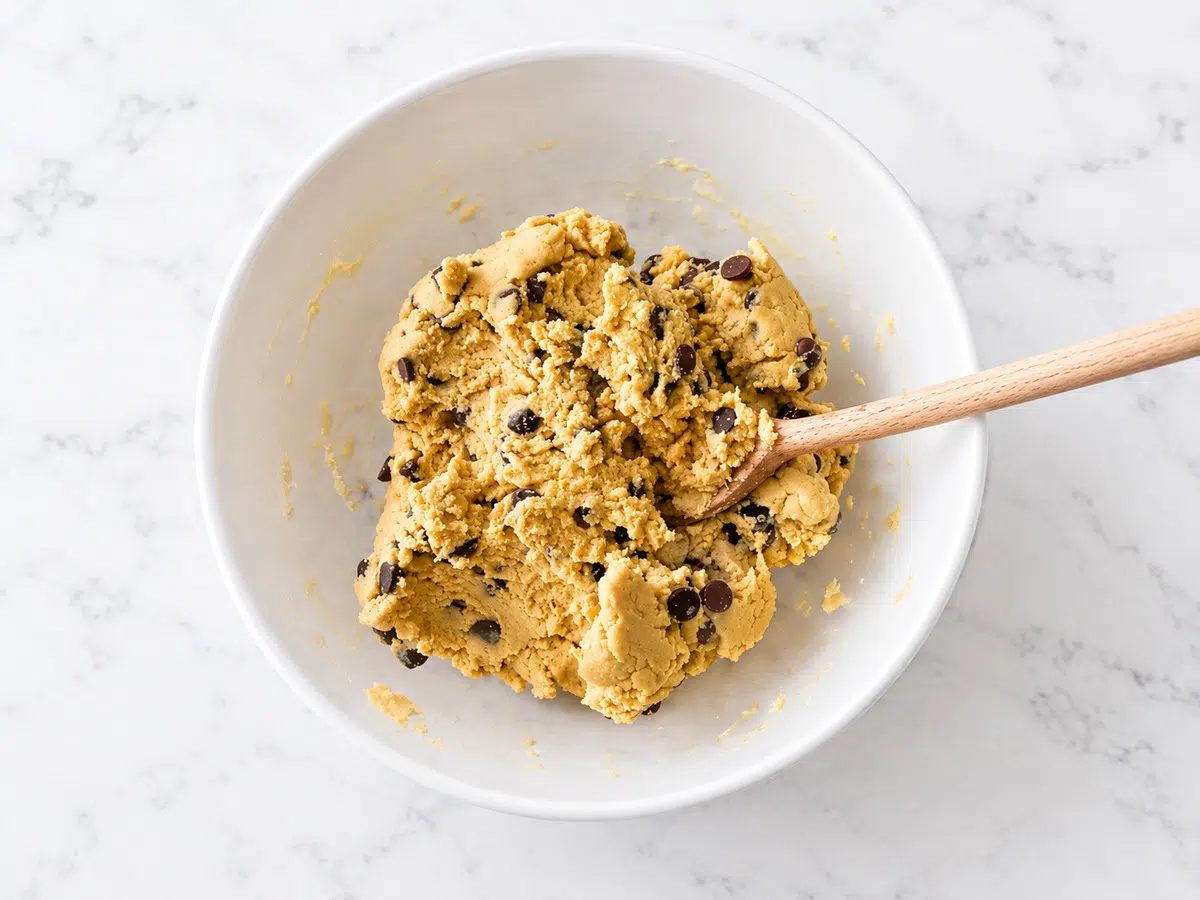
- Finish the dough.Add the wet ingredients (chickpea flour mixture, melted coconut oil, and vanilla). Stir until very well blended, then fold in the chocolate chips. The dough will look loose at first. Leave the dough to stand for 1 to 2 minutes.
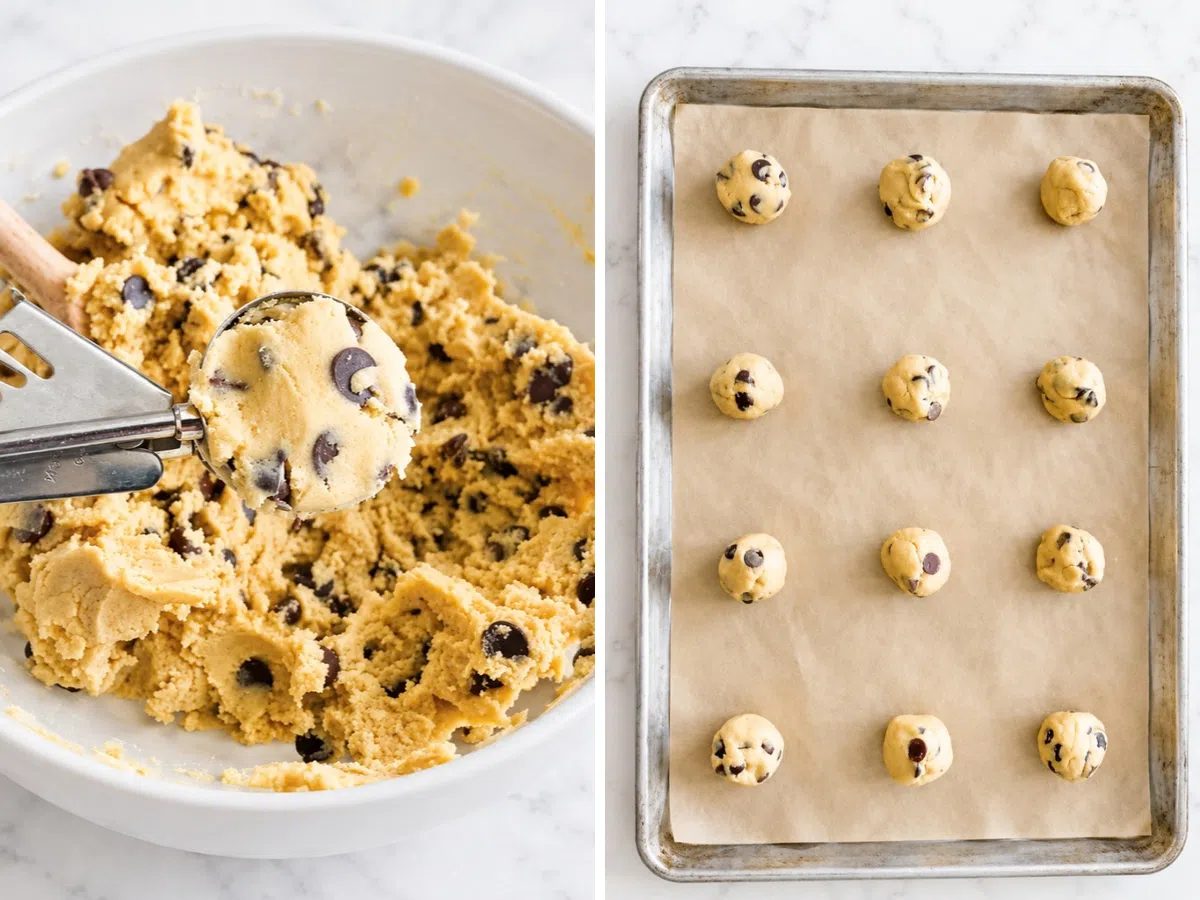
- Portion the cookies.Scoop the dough onto the prepared baking sheet with a small cookie scoop, spacing the portions about 2 inches apart. The cookies spread only slightly, so their scooped shape will remain visible.
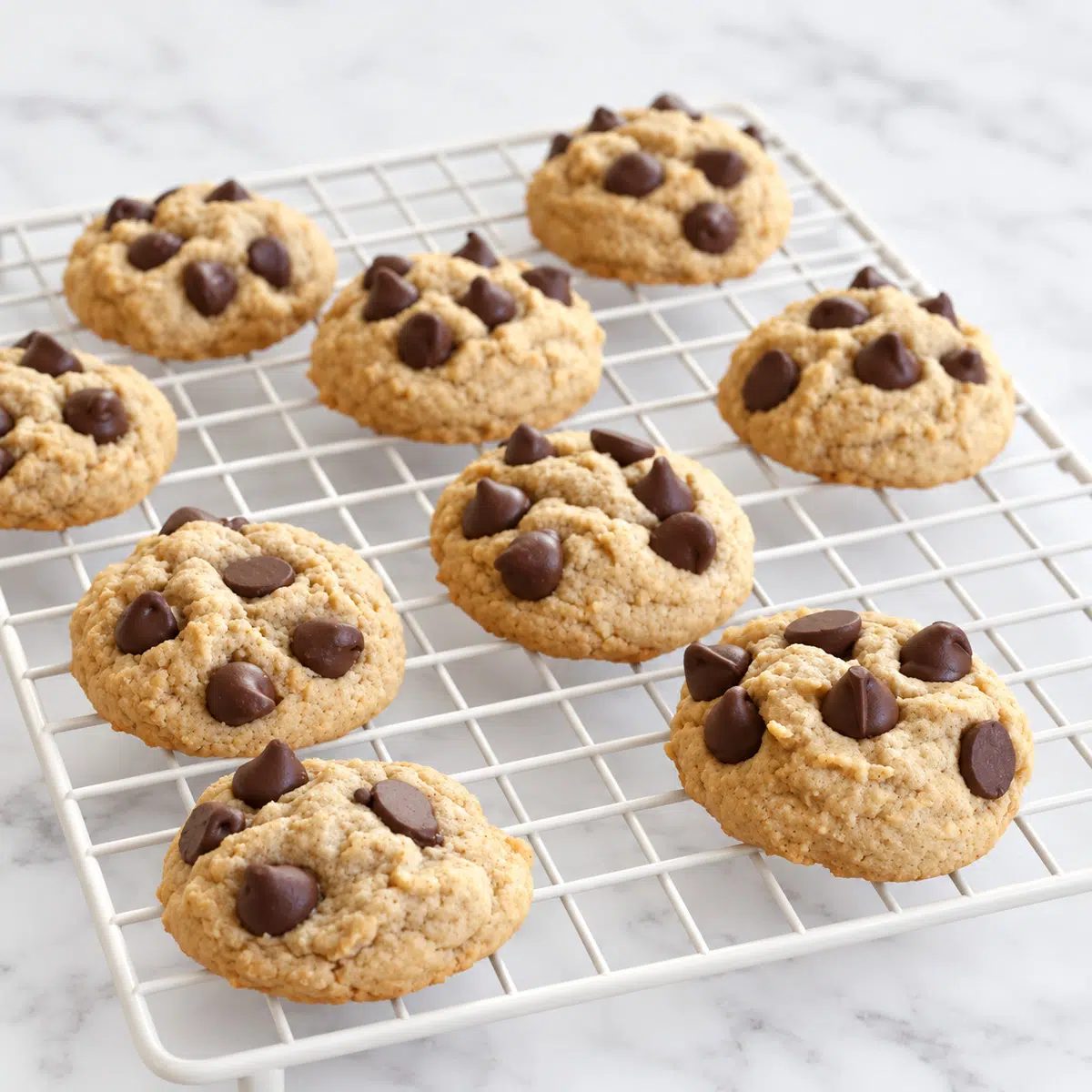
- Bake.Bake for 11 to 14 minutes, until the tops look firm and slightly dry and the edges are golden brown.Cool.Transfer the cookies to a wire rack and cool for at least 5 minutes. Enjoy them warm or let them cool completely.
Taste and Texture
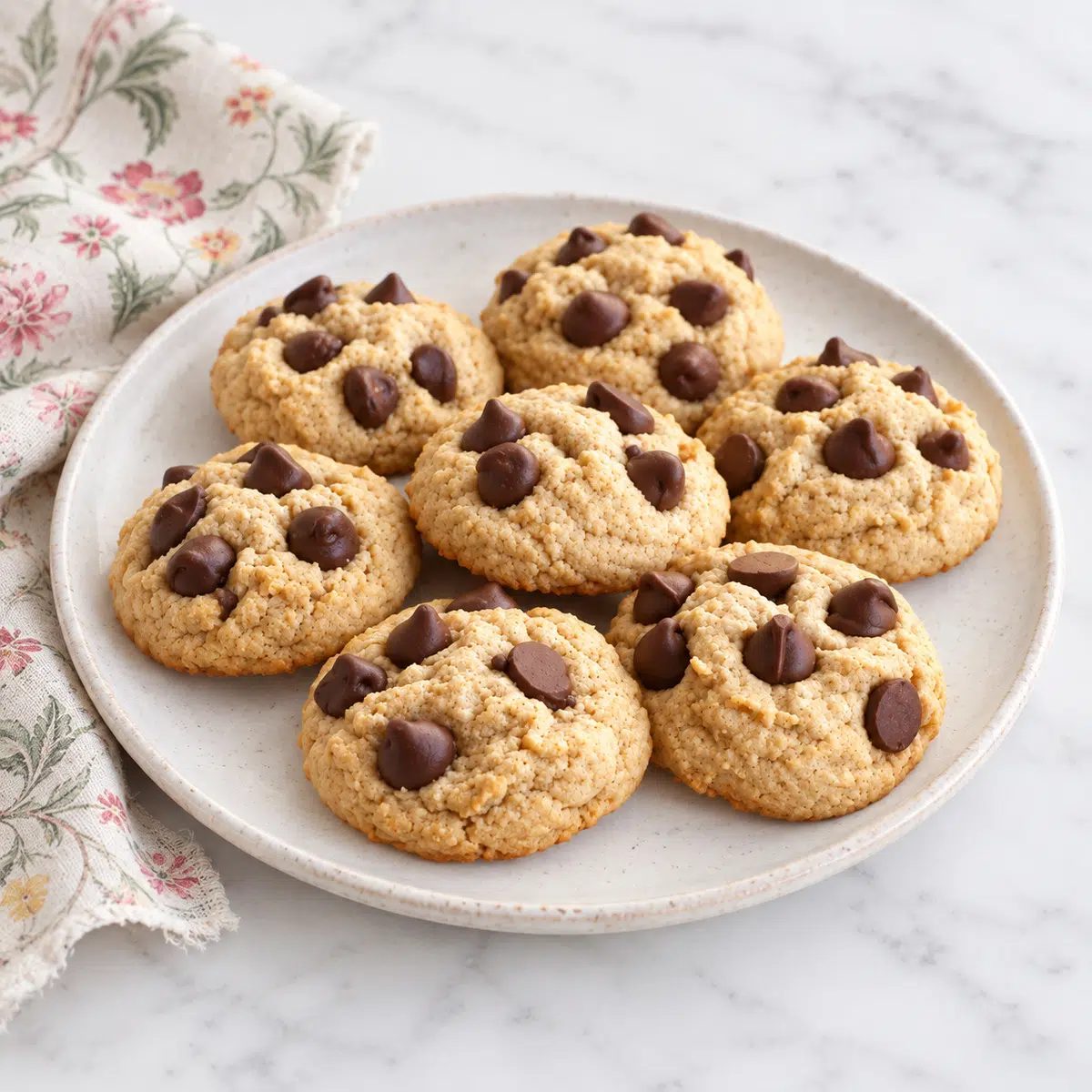
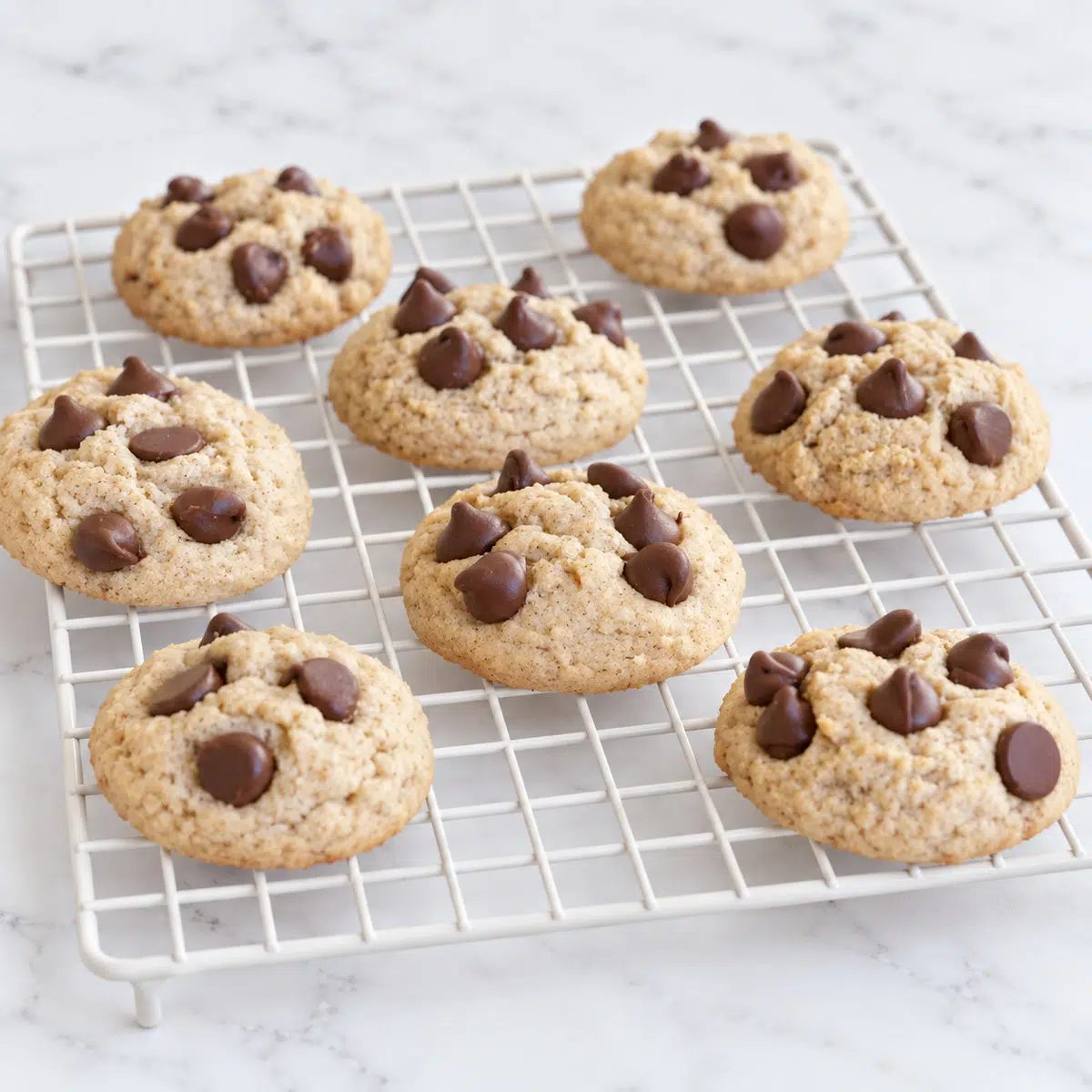
The cookies are soft, tender, and lightly cakey, with golden, crispy edges when freshly baked. They remain plump rather than spreading into thin rounds. Coconut flour adds a faint natural sweetness and subtle coconut note, while vanilla and semisweet chocolate provide the familiar chocolate chip cookie flavor.
Storage
Cool the cookies completely before placing them in an airtight container. Store them in the refrigerator rather than at room temperature; extended room-temperature storage makes them very soft. They can be carried unrefrigerated for a lunch or outing. For longer storage, freeze the cookies in an airtight container for up to 6 months. Thaw in the refrigerator or at room temperature, and warm briefly in the microwave if desired.
Flavor Variations
- Toasted pecan:Add cooled toasted pecans along with the chocolate chips.
- Other toasted nuts:Hazelnuts or macadamia nuts also pair well with the coconut and chocolate.
- Chocolate chunks:Replace the chips with chopped semisweet chocolate for larger pockets of melted chocolate.
- Dried apricot:One reader successfully replaced the chocolate chips with chopped dried apricots.
Serving Suggestions
Serve the cookies slightly warm while the chocolate is still soft, with coffee, tea, or a cold glass of nondairy milk. Their compact, domed shape also makes them straightforward to tuck into lunch boxes; they can be transported for the day even though longer storage is reliable in the refrigerator.
Tips for Success
Weigh the coconut flourCoconut flour is extremely absorbent, and a small measuring difference can make the cookies dry. A kitchen scale gives you the most consistent result. If measuring by cups, fluff the flour, spoon it lightly into the cup, and level without packing.
Whisk the chickpea flour mixture until completely smoothBreak up every chickpea flour lump before adding the mixture to the dough. The smooth binder distributes more evenly and gives the cookies consistent structure.
Let the mixed dough stand before scoopingThe dough looks loose immediately after mixing. Give it 1 to 2 minutes so the coconut flour can absorb the liquid and transform the mixture into a fluffy, scoopable dough.
Use a small cookie scoopThe cookies spread only slightly, so a scoop produces even portions and their characteristic plump, rounded shape.
Ingredient Substitutions
OiloptionsReplace the coconut oil with another neutral oil, such as avocado oil, light olive oil, or melted vegan butter (stick style, not tub spread). You may be able to swap in a runny seed butter or nut butter (e.g., peanut butter, almond butter or tahini), but I have not tested it.
Sugar optionsReplace the natural cane sugar with an equal amount of coconut sugar, brown sugar, or granulated sugar. Coconut sugar will produce a darker cookie with a deeper caramel flavor. Or use maple syrup; add to the chickpea flour mixture and reduce the water by 2 tablespoons.
Chocolate optionsUse semisweet chocolate chips, miniature chips, or chopped chocolate. Choose vegan and certified gluten-free chocolate when those dietary requirements apply.
Paleo egg optionFor a non-vegan Paleo version, omit the warm water and chickpea flour and use three large eggs in their place. Use Paleo-compatible chocolate as needed.
Frequently Asked Questions
Why use both coconut flour and chickpea flour?The flours perform different jobs. Coconut flour gives the cookies their soft, light texture, while chickpea flour and water create the egg-free binder that holds the dough together.
Can I replace the chickpea flour with flax eggs?No. Flax eggs do not work as a replacement for the chickpea flour mixture in this recipe.
Can I replace the coconut flour with another flour?No. Coconut flour has a uniquely high absorption rate and cannot be replaced measure-for-measure with almond flour, cassava flour, oat flour, or a gluten-free all-purpose blend.
Why does the dough look loose at first?Coconut flour needs a minute or two to absorb the liquid. After the short rest, the mixture will become thick, fluffy, and straightforward to scoop.
Why do the cookies stay domed?The coconut flour dough spreads much less than conventional wheat-flour cookie dough. The cookies retain much of their scooped shape as they bake.
Can I freeze coconut and chickpea flour chocolate chip cookies?Yes. Cool the cookies completely, place them in an airtight container, and freeze for up to 6 months. Thaw them in the refrigerator or at room temperature.
Coconut-Chickpea Flour Chocolate Chip Cookies
- Prep Time: 8 minutes
- Cook Time: 14 minutes
- Total Time: 22 minutes
- Servings: 16 cookies
Ingredients
- 1 cup warm water (I use filtered tap water)
- 1/3 cup chickpea flour
- 1/2 cup coconut flour weighed for accuracy or measured with a light hand
- 1/3 cup natural cane sugar (see notes for options
- 1/4 teaspoon baking soda
- 1/4 teaspoon salt
- 1/3 cup virgin coconut oil melted and cooled slightly
- 1 teaspoon vanilla extract
- 1/2 cup semisweet chocolate chips or chunks vegan and certified gluten-free as needed
Method
- Prepare the oven and pan. Preheat the oven to 350°F (180°C). Line a baking sheet with parchment paper .
- Make the chickpea flour binder. Whisk the warm water and chickpea flour until completely smooth.
- Mix the dry ingredients. In a medium bowl , whisk the coconut flour , sugar, baking soda , and salt, breaking up all lumps in the coconut flour .
- Finish the dough. Add the chickpea flour mixture, melted coconut oil , and vanilla, stirring until very well blended. Stir in the chocolate chips. Let the initially loose dough stand for 1 to 2 minutes, until it thickens into a fluffy dough.
- Portion the cookies. Using a small cookie scoop, scoop the dough onto the prepared baking sheet , spacing the portions about 2 inches apart.
- Bake. Bake for 11 to 14 minutes, until the tops appear firm and slightly dry and the edges are golden brown.
- Cool. T ransfer the cookies to a wire rack and cool for at least 5 minutes. Serve warm or cool completely.
Notes
Storage: Cool the cookies completely and store them in an airtight container in the refrigerator. They can be transported unrefrigerated for a lunch or outing, but longer room-temperature storage makes them very soft. Freeze in an airtight container for up to 6 months. Thaw in the refrigerator or at room temperature. Substitutions: Replace the natural cane sugar with an equal amount of coconut sugar , brown sugar, or granulated sugar. For a non-vegan Paleo version, omit the warm water and chickpea flour and use three large eggs. Variations: Add cooled toasted pecans, hazelnuts, or macadamia nuts. Semisweet chips can be replaced with miniature chips or chopped chocolate.