Learn how to roast whole canned tomatoes. They become deeply flavorful, lightly caramelized and wonderfully jammy after a slow roast in the oven. Made with only three ingredients, they are an straightforward year-round alternative to fresh roasted tomatoes—and the reserved juices can be turned into a rich roasted tomato sauce.
Introduction
By late winter, I begin craving good tomatoes with unreasonable intensity. The tomatoes at the market are often still pale, cottony and flavorless, with many weeks to go before the first truly satisfying summer ones appear. My solution is plain: I roast whole canned tomatoes.
I learned this trick from my maternal grandmother, Gran. She was sophisticated, beautiful, a bit snooty—especially when she considered someone “cheeky”—and lots of fun. She also adored tomatoes. My grandparents’ late-summer visits conveniently coincided with my mother’s bumper crop, and Gran happily ate the tomatoes with little more than salt, pepper and perhaps a scattering of herbs.
Gran also roasted and broiled tomatoes to concentrate their flavor. During the long Winnipeg winters, when fresh tomatoes were out of the question, she used canned whole tomatoes instead. It was a clever, practical habit she continued after moving to sunny Southern California, and it remains one of my go-to ways to satisfy a tomato craving at any time of year.
Roasting transforms canned tomatoes. Their excess moisture cooks away, their natural sweetness intensifies and their edges become lightly caramelized. Eat them warm from the pan, toss them with pasta or grains, or chill them for salads and sandwiches. If you save the juice from the cans, you can also blend the roasted tomatoes into an straightforward, deeply flavored sauce.
Why You’ll Love This Recipe
- Only three ingredients.All you need are whole canned tomatoes, olive oil and black pepper.
- Excellent year-round flavor.Roasting delivers concentrated tomato flavor even when fresh tomatoes are out of season.
- Plain and economical.Canned tomatoes are affordable, pantry-friendly and require very little preparation.
- Exceptionally versatile.Serve the tomatoes warm, chilled or blended into sauce.
- Naturally vegan and gluten-free.The basic recipe contains no dairy, eggs or gluten-containing ingredients.
- Nothing goes to waste.The reserved tomato juice is useful for sauce, soup and other recipes.
Ingredients
The exact amounts of each ingredient are indicated in the recipe card at the end of the post.Toggle betweenUS Customary(volume) andMetric(weights) for preferred measurement option.
- Whole canned tomatoes packed in juice:Choose whole peeled tomatoes rather than diced, crushed or puréed tomatoes. Their larger size allows them to roast and caramelize without drying out too quickly. Tomatoes packed in juice are ideal because the reserved juice can be used for sauce or soup.
- Olive oil:Helps the tomatoes brown, keeps their surfaces supple and carries their rich roasted flavor.
- Freshly ground black pepper:Adds gentle warmth and savoriness without competing with the tomatoes.
How to Roast Canned Tomatoes
Note that the complete instructions are also in the recipe card below.
- Preheat the oven.Heat the oven to 375°F (190°C)
- Drain and halve the tomatoes.Drain the tomatoes over a bowl, reserving all of the juice. Cut each tomato in half lengthwise, then gently squeeze most of the loose juice and pulp into the bowl.
- Season the tomatoes.Arrange the tomato halves in a single layer in a large roasting pan or on a large rimmed baking sheet. Drizzle with the olive oil, season with black pepper and gently toss to coat.
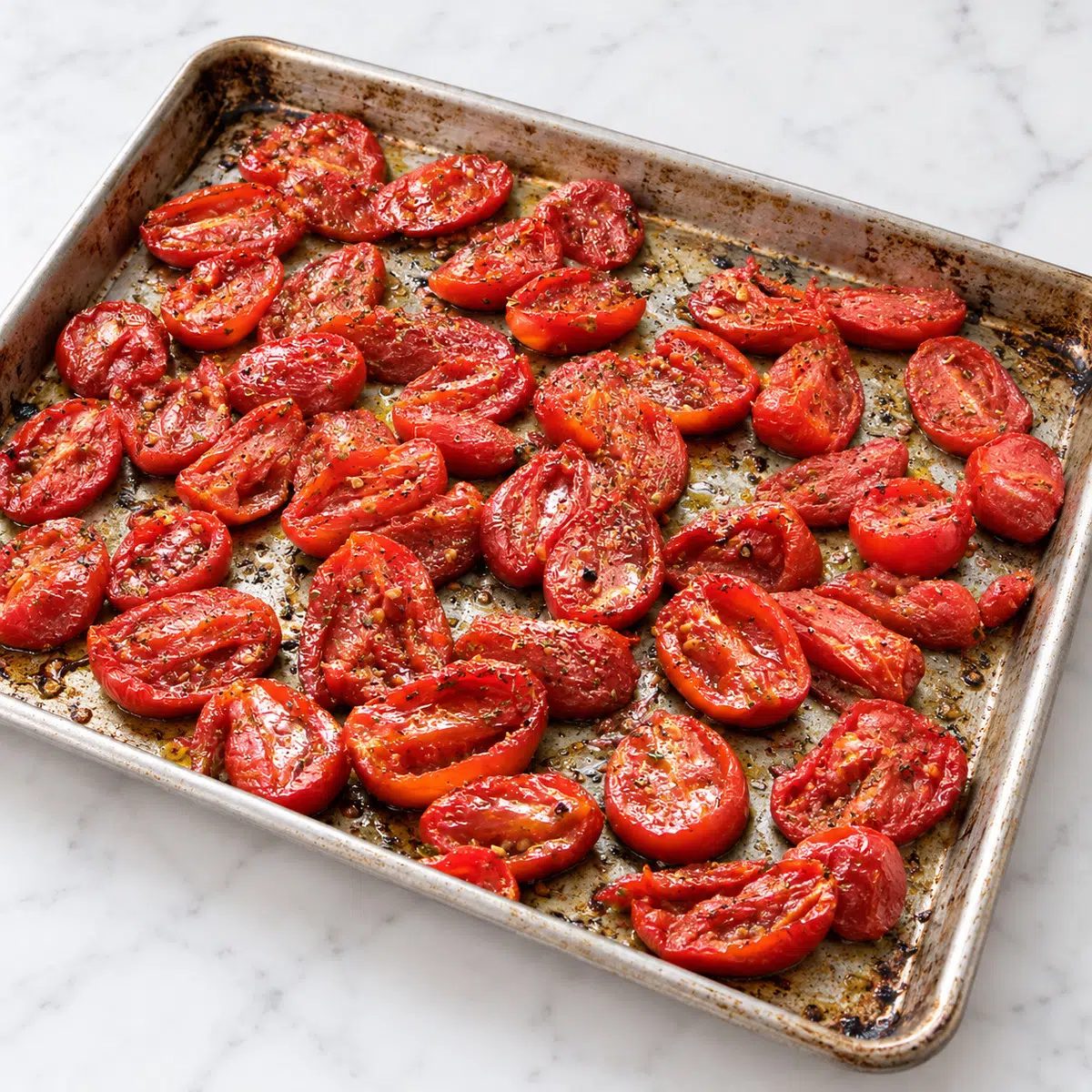
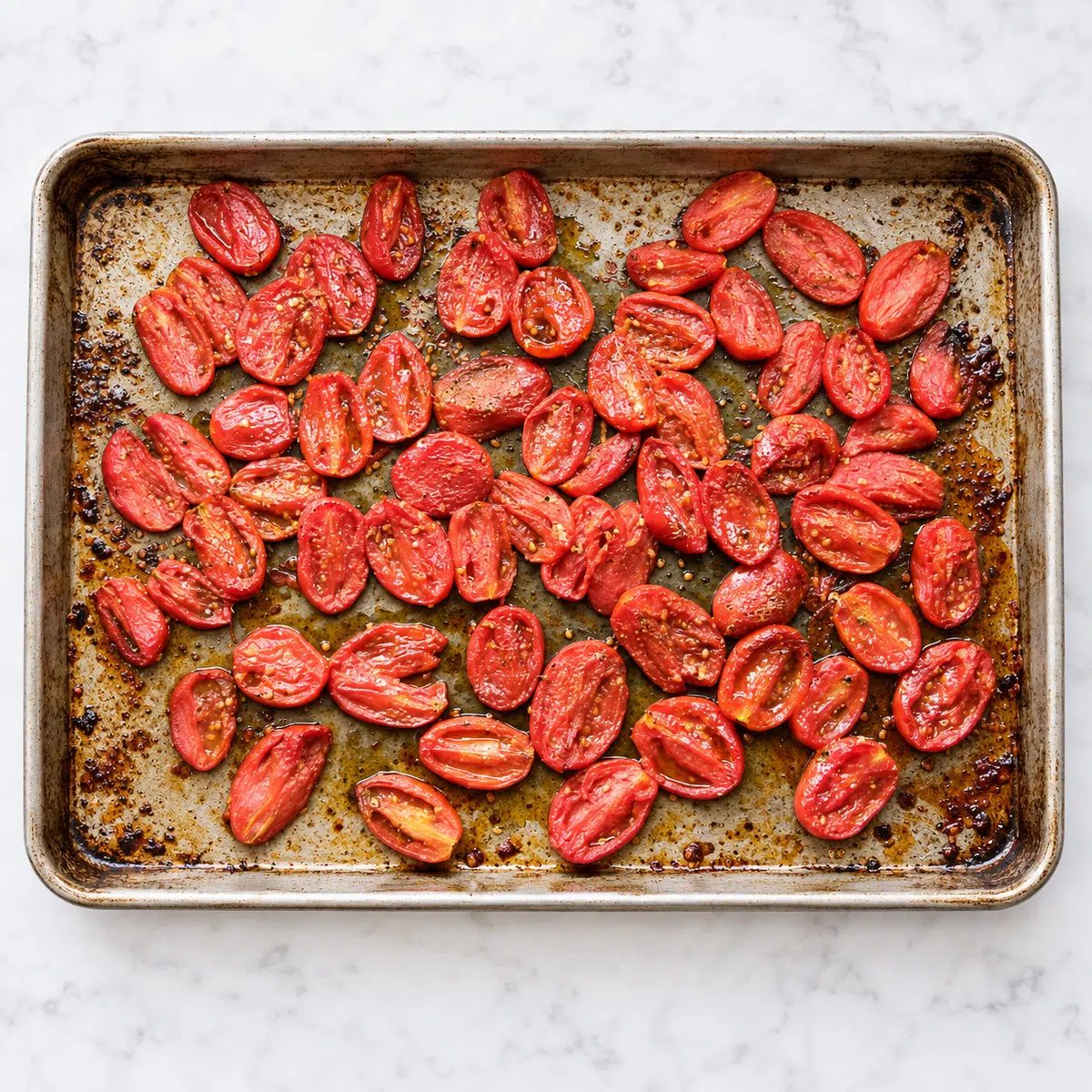
- Roast until concentrated.Roast for 45 to 55 minutes, until the tomatoes are deep scarlet, their moisture has reduced and the edges are lightly caramelized.
- Serve or store.Serve immediately, or transfer the tomatoes and any pan juices or oil to a bowl. Cool, cover and refrigerate for later use.
Taste and Texture
Roasting concentrates the tomatoes’ sweetness and savory flavor while softening their acidity. The tomatoes become tender and juicy with slightly chewy, caramelized edges. They are not dry like sun-dried tomatoes; they remain plump, soft and pleasantly jammy.
Storage
Let the roasted tomatoes cool, then transfer them with any oil or juices from the pan to an airtight container. Refrigerate for up to 4 days.
Roasted tomato sauce can be refrigerated for up to 4 days or frozen for up to 3 months. The unused reserved tomato juice can also be refrigerated for up to 4 days or frozen for up to 3 months.
Flavor Variations
- Italian herbs:Sprinkle the tomatoes with a small amount of dried oregano, basil or thyme before roasting.
- Garlic:Add a few lightly crushed garlic cloves to the pan for a deeper savory flavor.
- Red pepper:Add a pinch of crushed red pepper flakes for gentle heat.
- Smoky tomatoes:Add a small amount of smoked paprika along with the black pepper.
Serving Suggestions
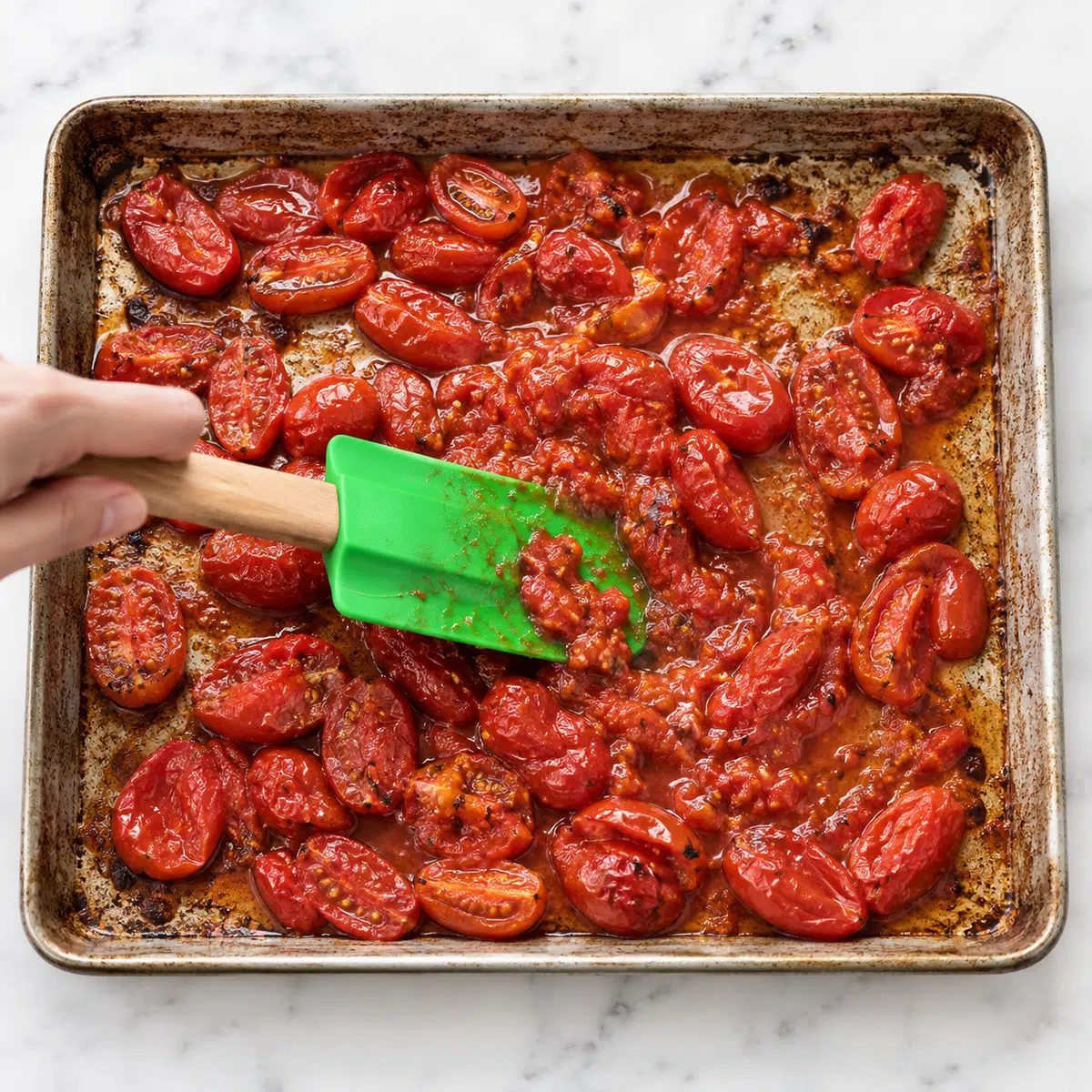
- Coarsely mash, breaking tomatoes into chunks, and serve mixed into pasta, quinoa, brown rice or millet.
- Spoon them over thick slices of toasted bread and finish with vegan Parmesan or plant-based feta.
- Add chilled roasted tomatoes to salads, sandwiches and wraps.
- Serve them alongside tofu scramble, bean dishes or savory grain bowls.
- Blend them with the reserved juices to make roasted tomato sauce.
- Add broth and a splash of nondairy cream to the sauce for a quick roasted tomato soup.
- Use as a topping for pizza or flatbreads.
Make Straightforward Roasted Tomato Sauce
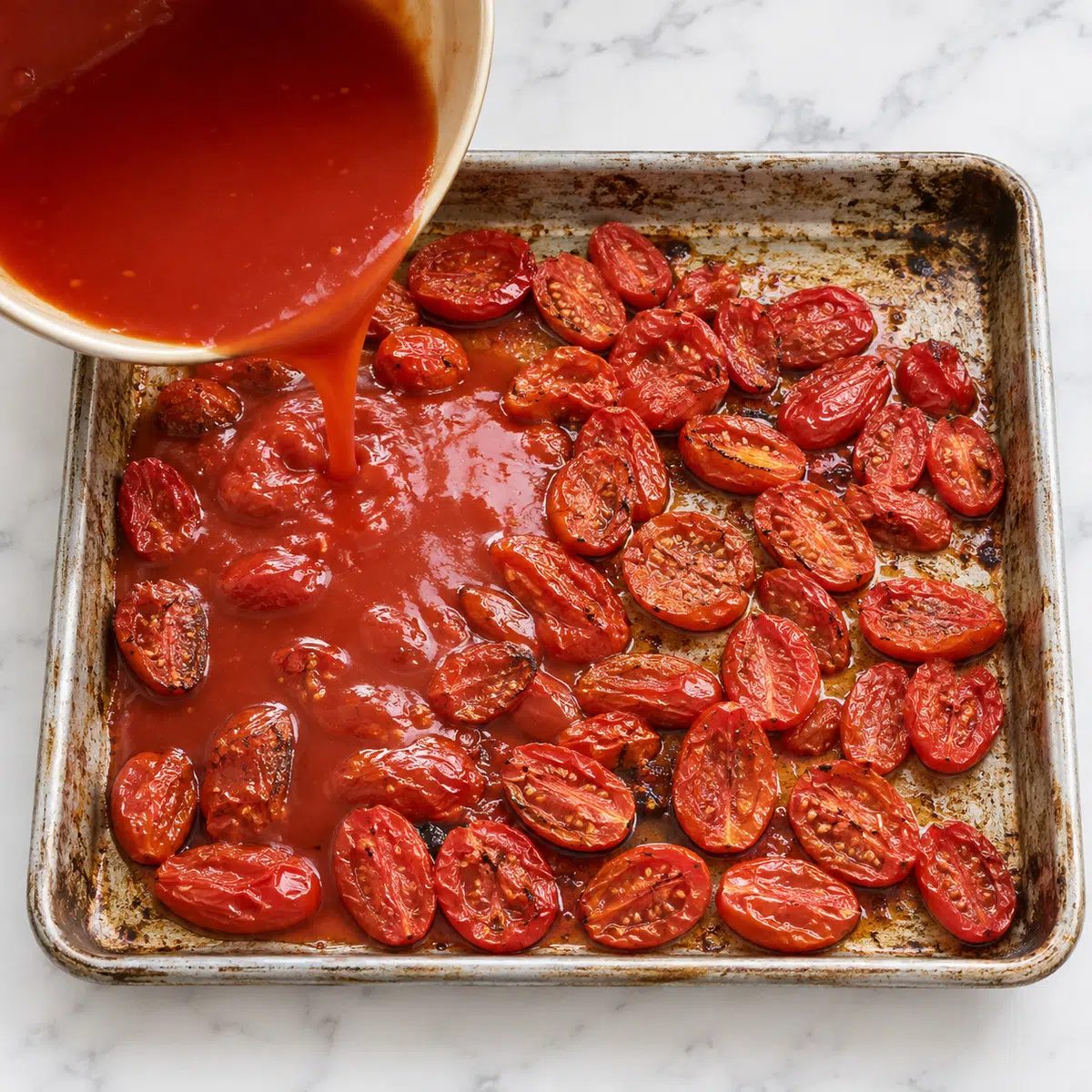
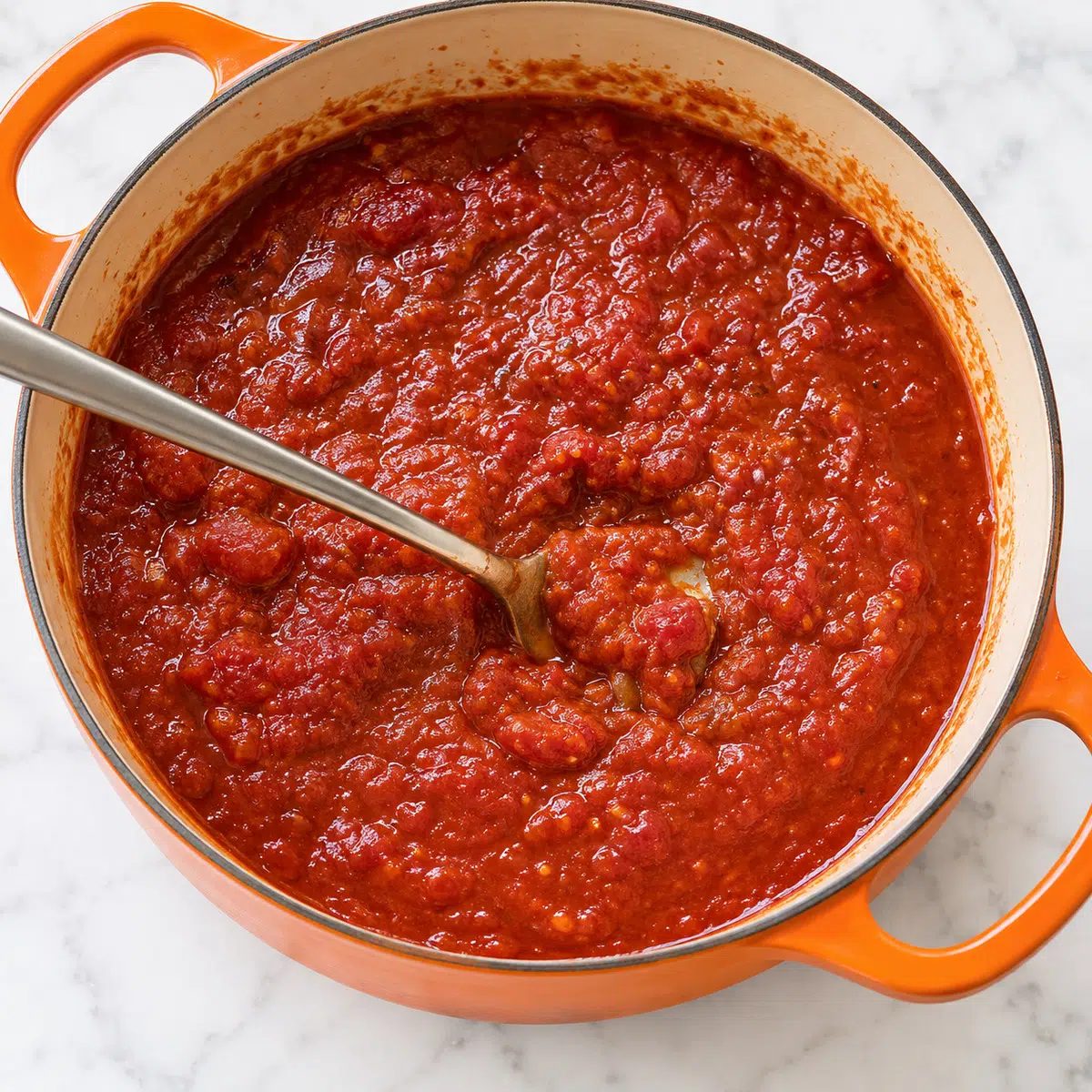
Roast the tomatoes in a deep roasting pan according to the instructions. As soon as the pan comes out of the oven, carefully add the reserved tomato juice and stir, scraping up the flavorful browned bits from the bottom. Purée with an immersion blender until the sauce reaches your preferred consistency.
Tips for Success
Drain the tomatoes thoroughlyToo much liquid in the pan will steam the tomatoes instead of roasting them. Drain them well and gently squeeze out the loose juice and pulp before placing them in the pan.
Keep the tomatoes in a single layerGive the tomato halves enough room for moisture to evaporate. Crowding or stacking them will slow browning and produce a wetter result.
Use their color as your doneness cueThe tomatoes are ready when they have deepened to a rich scarlet and look concentrated and jammy, with some lightly browned edges. The exact roasting time will vary with the size and moisture level of the tomatoes.
Choose a roasting pan when making sauceA deeper roasting pan is the safer choice if you plan to add the reserved tomato juice after roasting. A standard rimmed baking sheet is too shallow for that step.
Ingredient Substitutions
Can I use a any brand of canned tomatoes?Yes. However, it is reliable to use a good-quality option, with whole peeled tomatoes packed in juice. Because brands vary in size, firmness and moisture, begin checking the tomatoes at the early end of the roasting range.
Can I use diced or crushed tomatoes?I recommend whole tomatoes for this recipe. Diced tomatoes are small enough to dry out before developing the same tender, jammy texture, while crushed tomatoes cannot be roasted as individual pieces.
Can I omit the olive oil?I have not tested an oil-free version. The oil promotes browning and helps prevent sticking, so omitting it will change the texture and may make the tomatoes more likely to adhere to the pan.
Can I omit the black pepper?Yes. The pepper is included for flavor and can be reduced or omitted without affecting how the tomatoes roast.
Frequently Asked Questions
Why roast canned tomatoes instead of fresh tomatoes?Good canned tomatoes are picked and preserved when ripe, making them a dependable choice when fresh tomatoes are out of season. Roasting reduces their moisture and concentrates their sweetness and savory tomato flavor.
Do I need to save the juice from the cans?You do not need the juice if you plan to serve the tomatoes whole, but it is worth saving. Use it to make the roasted tomato sauce described below, or add it to soups, stews and other tomato-based sauces.
How do I turn the roasted tomatoes into sauce?Roast the tomatoes in a deep roasting pan. As soon as the pan comes out of the oven, carefully add the reserved tomato juice and stir, scraping up the flavorful browned bits from the bottom. Purée with an immersion blender until the sauce reaches your preferred consistency.
Can I double the recipe?Yes, but divide the tomatoes between two sheet pans or rimmed baking trays so they remain in a single layer. Crowding them into one pan will trap moisture and prevent them from roasting evenly.
How long do roasted canned tomatoes keep?Cool the tomatoes and refrigerate them with their pan juices or oil in an airtight container for up to 4 days.
Roasted Canned Tomatoes
- Prep Time: 10 minutes
- Cook Time: 55 minutes
- Total Time: 1 hour
- Servings: 6 servings
Ingredients
- 2 28 oz/794g cans whole tomatoes packed in juice (do not discard canning liquid)
- 2 tablespoons olive oil (or oil of choice)
- freshly ground black pepper
Method
- Preheat the oven. Preheat the oven to 375°F (190°C).
- Drain and halve the tomatoes. Drain the tomatoes over a bowl, reserving the juice. Cut the tomatoes in half lengthwise, then gently squeeze most of the loose juice and pulp into the bowl of reserved juice.
- Season the tomatoes. Place the tomato halves in a single layer in a large roasting pan or on a large rimmed baking sheet . Drizzle with the olive oil , season with black pepper and gently toss to coat.
- Roast the tomatoes. Roast for 45 to 55 minutes, until the tomatoes are deep scarlet, concentrated and lightly caramelized around the edges.
- Serve or store. Serve immediately as a side dish or toss with hot pasta or grains. Alternatively, transfer the tomatoes and any pan juices or oil to a bowl. Cool, cover and refrigerate for up to 4 days.
Notes
Make roasted tomato sauce: Prepare the tomatoes in a deep roasting pan rather than a baking sheet . Immediately after removing the pan from the oven, carefully add the reserved tomato juice. Stir with a wooden spoon, scraping up the browned bits from the bottom of the pan. Purée with an immersion blender. Use immediately, or cool and refrigerate for up to 4 days or freeze for up to 3 months. Save the reserved juice: If you are not making sauce, refrigerate the reserved juice for up to 4 days or freeze it for up to 3 months. Add it to soups, stews or tomato-based sauces.