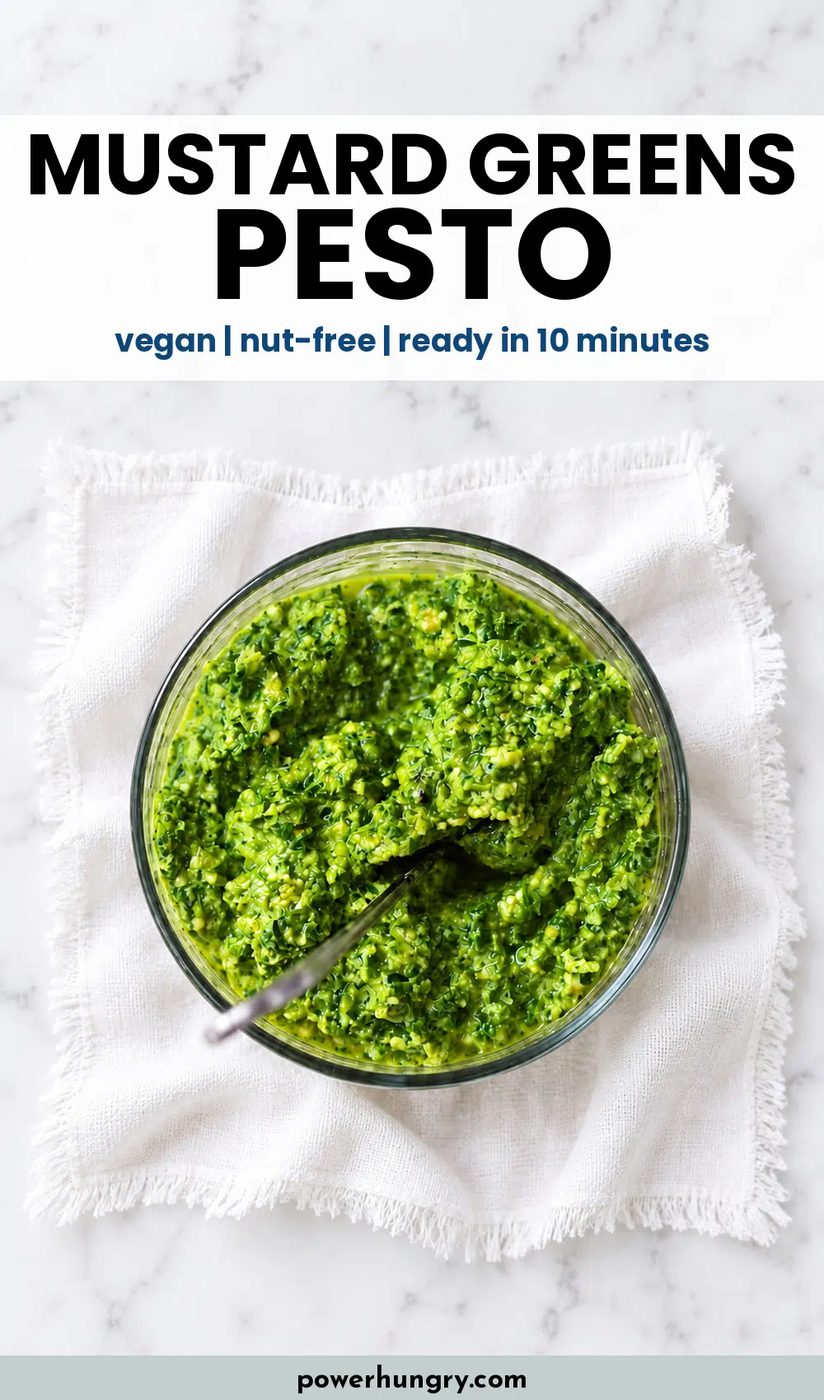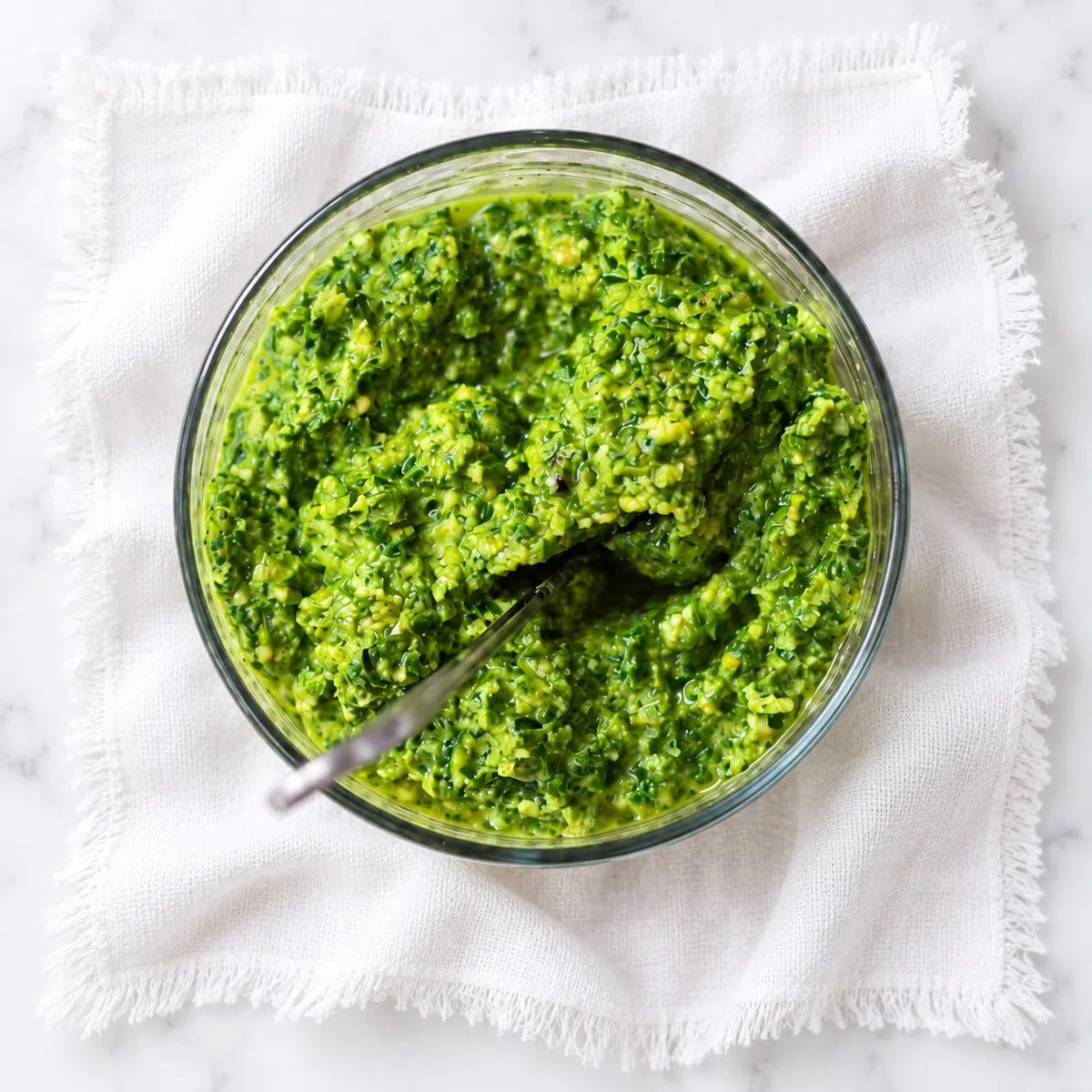
Bold, peppery mustard greens pesto comes together in 10 minutes with green pumpkin seeds, fresh lemon, garlic and olive oil—no Parmesan or nutritional yeast needed. The straightforward vegan, nut-free pesto is satisfying tossed with pasta or served as a lively spread, dip or sauce.
Introduction
Mustard greens make one of the boldest, most interesting pestos in my repertoire. Their natural pepperiness is balanced by rich green pumpkin seeds, fruity olive oil and both the zest and juice of a fresh lemon. The result is bright, savory and pleasantly assertive—exactly the kind of sauce that can wake up a plain bowl of pasta or roasted vegetables.
I originally created this vivid green pesto after running a marathon, when I was thinking about satisfying ways to eat more dark leafy greens and pumpkin seeds. Years later, the reason to keep making it is much simpler: it tastes fantastic, takes only 10 minutes and gives a large bunch of mustard greens a very happy purpose.
Unlike traditional basil pesto recipes, this version contains no Parmesan and uses pumpkin seeds in place of pine nuts. No nutritional yeast is needed, either. The original pumpkin-seed version is naturally vegan and nut-free, with a full, creamy texture and plenty of flavor from a short list of everyday ingredients.
Why You’ll Love This Recipe
- Ready in 10 minutes:The food processor does nearly all the work.
- Bold, fresh flavor:Peppery greens, garlic and lemon keep the pesto lively rather than heavy.
- Vegan and nut-free:Pumpkin seeds give the sauce richness and body without cheese or nuts.
- No nutritional yeast:Lemon, garlic, mustard greens and seeds provide plenty of bold, savory flavor on their own.
- Exceptionally versatile:Use it with pasta, grain bowls, roasted vegetables, sandwiches, wraps or crackers.
- A practical use for mustard greens:One large bunch turns into a vivid sauce that can be portioned and frozen. Great if you get mustard greens in your CSA basket!
Ingredients
The exact amounts of each ingredient are indicated in the recipe card at the end of the post.Toggle betweenUS Customary(volume) andMetric(weights) for preferred measurement option.
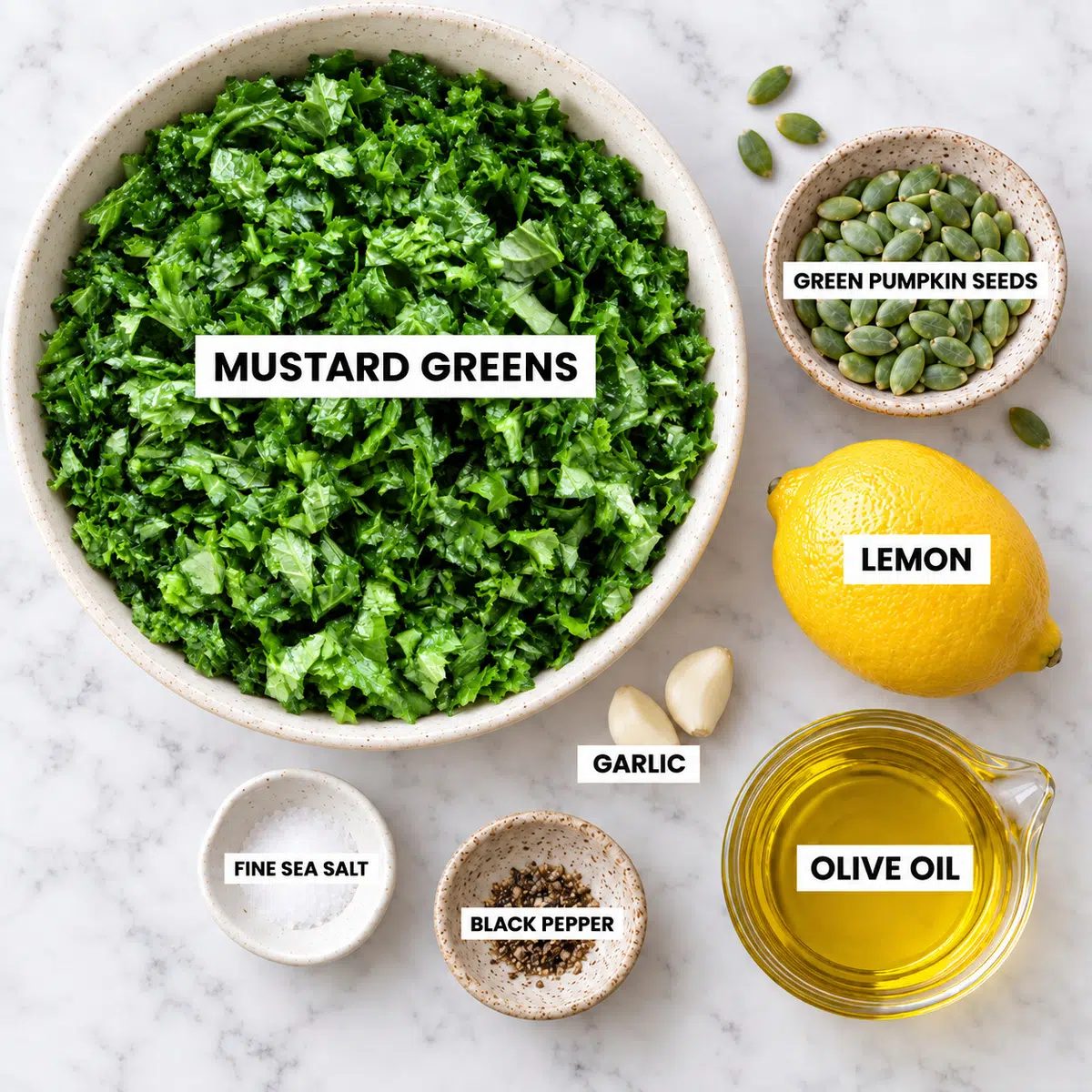
- Fresh lemon:Both the lemon zest and fresh lemon juice are used, giving the pesto a brighter and more layered citrus flavor.
- Mustard greens:Remove the tough stem ends and coarsely chop the leaves before measuring or adding them to the processor. Their peppery bite is the defining flavor of the pesto.
- Pumpkin seeds:Use green, hulled pumpkin seeds, also known as pepitas. They add richness, body and a mild earthy flavor. Do not use pumpkin seeds still enclosed in their white shells. Hemp hearts, sunflower seed kernels, almonds, pecans, pine nuts or walnuts can be used instead; see the substitution notes below.
- Garlic:Two garlic cloves add savory depth without overwhelming the greens. One one clove garlic for milder garlic flavor.
- Fine sea salt:Start with the recipe amount, then adjust after blending.
- Freshly cracked black pepper:Reinforces the natural pepperiness of the mustard greens.
- Extra virgin olive oil:Creates the smooth, spoonable consistency and rounds out the stronger flavors.
How to Make Mustard Greens Pesto
- Prepare the lemon.Finely grate 2 teaspoons of zest from the lemon. Halve the lemon and squeeze out 1 and 1/2 tablespoons of juice.
- Chop the greens and pumpkin seeds.Add the mustard greens, pumpkin seeds and garlic to a large food processor. Pulse until the mixture is finely chopped.
- Add the seasonings.Add the lemon zest, lemon juice, salt and black pepper to the processor.
- Stream in the oil.With the motor running, slowly pour in the olive oil. Stop once or twice to scrape down the sides of the bowl, then continue processing until the pesto is cohesive and spoonable.
- Taste and serve.Taste and adjust the salt or lemon juice if needed. Serve with pasta or use as a spread, dip or finishing sauce.
Taste and Texture
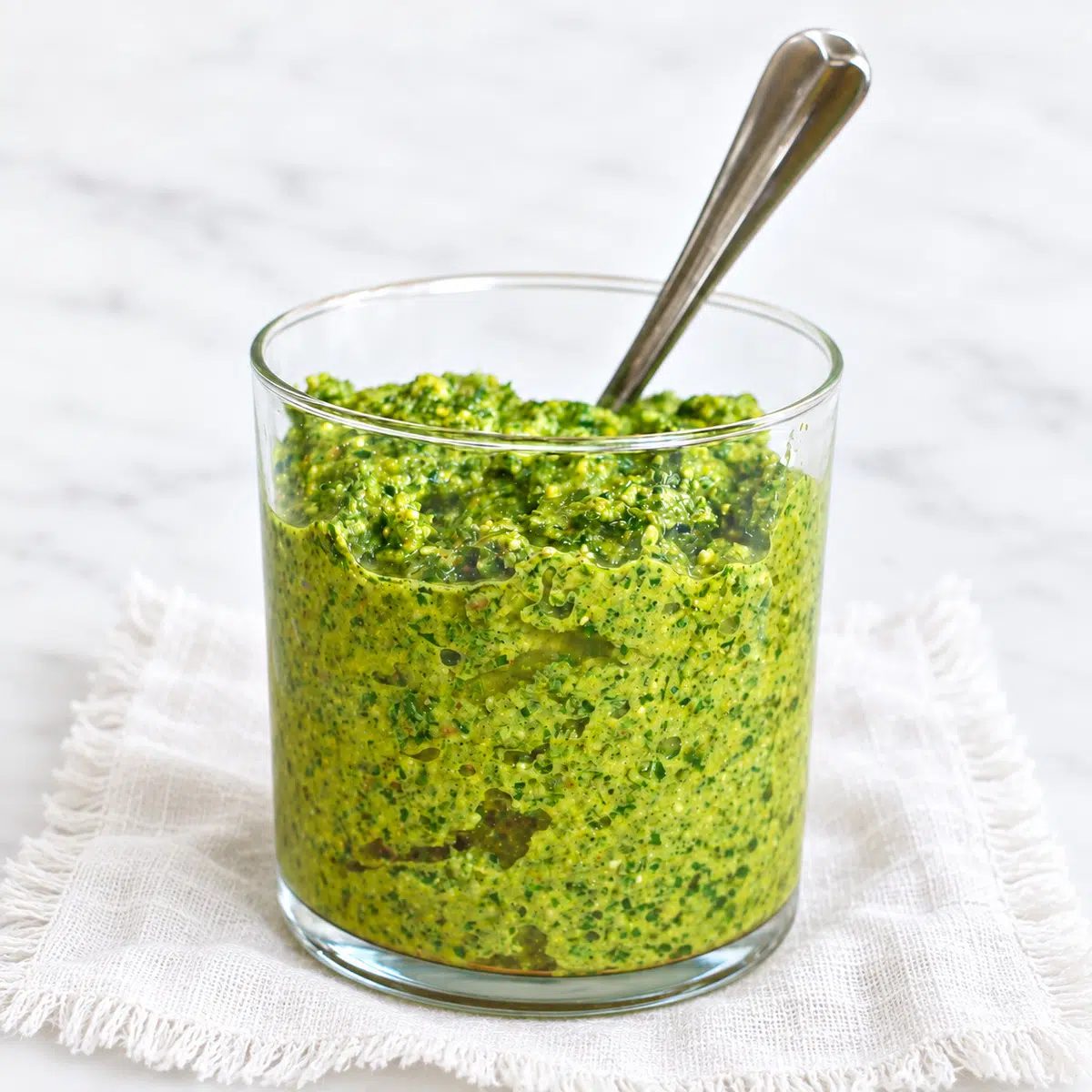
Mustard greens give the pesto a fresh, peppery bite, while lemon adds a clean citrus lift. Pumpkin seeds and olive oil soften the sharper edges and make the sauce rich and creamy without dairy. The finished texture is thick and spoonable, with a little rustic texture from the finely chopped greens and seeds.
Storage
Transfer the pesto to an airtight container and refrigerate promptly. For a more conservative food-safety window than the original one-month note, use refrigerated pesto within 4 days. For longer storage, freeze it in small airtight containers or an ice-cube tray for up to 6 months; once solid, transfer the cubes to a freezer-safe container. Thaw overnight in the refrigerator and stir before serving.
Serving Suggestions
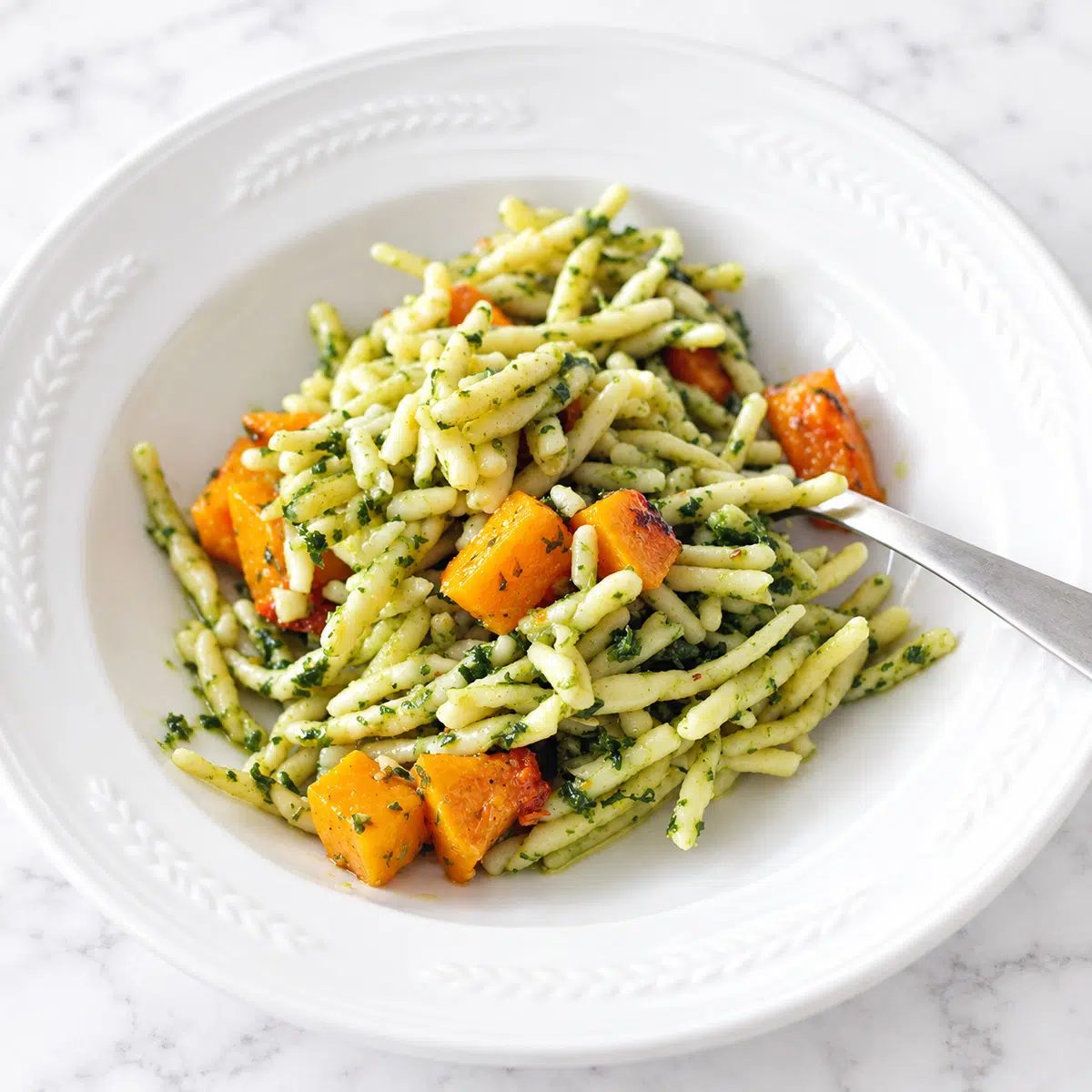
- Mix this versatile sauce into hot pasta, adding a splash of pasta cooking water to loosen the pesto and help it coat the noodles.
- Spoon over roasted sweet potatoes, butternut squash, carrots or cauliflower.
- Spread on sandwiches, wraps, crostini or toast.
- Swirl into white bean soup, lentil soup or a bowl of cooked grains.
- Serve as a dip with crackers and crisp vegetables.
- Thin with a little water and lemon juice for a bold dressing or grain-bowl sauce.
Flavor Variations
Use a mustard greens and kale blendReplace half of the mustard greens with stemmed kale for a slightly milder pesto that still retains the distinctive peppery character of mustard greens.
Add fresh herbsReplace a small portion of the mustard greens with fresh basil or flat-leaf parsley for a softer herbal note. Keep most of the mustard greens so the recipe retains its character.
Make it more lemonyAfter blending, add extra lemon juice a teaspoon at a time. Taste between additions so the pesto stays bright without becoming thin or sharply acidic.
Tips for Success
Remove the toughest stemsTrim away the thick stem ends before coarsely chopping the mustard greens. Tender upper stems are fine, but large, fibrous pieces can keep the pesto from blending evenly.
Pulse before adding the oilFinely chop the greens, pumpkin seeds and garlic together first. Once the solid ingredients are evenly processed, the olive oil can bind them into a more consistent pesto.
Pour in the oil slowlyStream in the olive oil with the food processor running and scrape down the bowl as needed. This helps the pesto become cohesive without leaving large pieces around the edges.
Season after blendingMustard greens vary in intensity from bunch to bunch. Taste the finished pesto, then add more salt or lemon juice in small increments if it needs greater balance.
Ingredient Substitutions
Can I substitute kale for the mustard greens?Yes, although the flavor and texture will change. Replace the mustard greens with an equal volume of stemmed, coarsely chopped kale. Baby kale produces the mildest, softest pesto. Lacinato kale has a tender texture and earthy flavor, while curly kale makes a slightly more textured pesto and may need additional processing. I have not tested the recipe with an all-kale substitution, so taste after blending and adjust the lemon and salt as needed.
How can I soften the flavor of mature kale?For a gentler flavor, blanch stemmed kale briefly in boiling water, cool it immediately in ice water and squeeze it exceptionally dry before processing. This is an optional, untested variation; excess water will dilute the pesto.
What can I substitute for the pumpkin seeds?Replace the 1/2 cup pumpkin seeds with an equal amount of hemp hearts, sunflower seed kernels, almonds, pecans, pine nuts or walnuts. Hemp hearts produce the softest, creamiest texture. Sunflower kernels keep the pesto nut-free and have a mild, earthy flavor. Pine nuts create a more traditional, buttery pesto, while almonds, pecans and walnuts produce a heartier texture and their own distinctive flavors. Use plain, unsalted seeds or nuts so that you can control the seasoning. Almonds blend most easily when sliced or slivered. Pesto made with almonds, pecans, pine nuts or walnuts is not nut-free.
Can I use bottled lemon juice?Fresh lemon is strongly recommended because the recipe uses both zest and juice. Bottled juice cannot replace the fragrant citrus flavor supplied by the zest.
Frequently Asked Questions
Is mustard greens pesto very spicy?It is peppery rather than chile-hot. The intensity depends on the bunch of greens, while pumpkin seeds, olive oil and lemon help balance their natural bite.
Do the mustard greens need to be cooked first?No. The greens go into the food processor raw, which preserves their bright, peppery character and keeps the recipe quick.
I do not follow a vegan diet. Can I add Parmesan cheese?Yes! You can add 1/4 cup to 1/2 cup of finely grated Parmesan cheese, Pecorino cheese or Romano cheese. If you wish to add plant-based cheese flavor, consider adding 1 to 2 tablespoons of nutritional yeast, or 2 to 3 tablespoons of myVegan Parmesan Cheese.
Do I need to toast the pumpkin seeds?No. The recipe adds the pumpkin seeds directly to the food processor and does not call for toasting. If you want to toast the seeds, tough, you can!
Does this pesto contain nutritional yeast?No. The pesto gets its bold, savory flavor from mustard greens, pumpkin seeds, garlic, lemon and olive oil. It contains no Parmesan and no nutritional yeast.
How do I use the pesto with pasta?Toss the pesto with hot cooked pasta, adding pasta cooking water a tablespoon at a time until it coats the noodles. Roasted sweet potatoes or butternut squash make especially good additions.
Can I freeze mustard greens pesto?Yes. Freeze it in small airtight containers or in an ice-cube tray for straightforward portions. Once the cubes are solid, transfer them to a freezer-safe container and use within 6 months. Thaw in the refrigerator and stir before serving.
Mustard Greens Pesto (Nut-Free, Vegan)
- Prep Time: 10 minutes
- Total Time: 10 minutes
- Servings: 16 servings (2 tablespoon serving)
Ingredients
- 1 medium lemon
- 1 large bunch mustard greens ends trimmed off, then coarsely chopped
- 1/2 cup green pumpkin seeds ( pepitas ), see notes for alternatives
- 2 cloves garlic peeled
- 1/4 teaspoon fine sea salt more or less to taste
- 1/4 teaspoon freshly cracked black pepper
- 2/3 cup extra-virgin olive oil or avocado oil
Method
- Prepare the lemon. Finely grate 2 teaspoons zest from the lemon. Cut the lemon in half and squeeze out 1 and 1/2 tablespoons juice.
- Process the greens. Add the mustard greens, pumpkin seeds and garlic to a large food processor . Pulse until finely chopped.
- Add the seasonings. Add the lemon zest, lemon juice, salt and black pepper.
- Add the oil. With the motor running, slowly pour in the olive oil , stopping once or twice to scrape down the sides of the bowl. Continue processing until the pesto is cohesive and spoonable.
- Serve. Taste and adjust the seasoning as needed. Serve with pasta or use as a spread, dip or finishing sauce.
Notes
Storage: Transfer the pesto to an airtight container and refrigerate promptly for up to 4 days. For longer storage, freeze in small airtight containers or an ice-cube tray for up to 6 months. Thaw overnight in the refrigerator and stir before serving. Kale substitution: Replace the mustard greens with an equal volume of stemmed, coarsely chopped kale. Baby kale gives the mildest result; Lacinato kale is tender and earthy; curly kale produces a slightly more textured pesto. I have not tested the recipe with all kale, so taste and adjust the lemon and salt after blending. Pumpkin seed substitutions: Replace the 1/2 cup pumpkin seeds with 1/2 cup hemp hearts , sunflower seed kernels , almonds, pecans, pine nuts or walnuts. Use plain, unsalted seeds or nuts. Hemp hearts make the smoothest pesto; sunflower kernels keep it nut-free; pine nuts are buttery and traditional; almonds, pecans and walnuts produce a heartier texture and more distinctive flavor. Sliced or slivered almonds process more easily than whole almonds. Pesto made with almonds, pecans, pine nuts or walnuts is not nut-free.