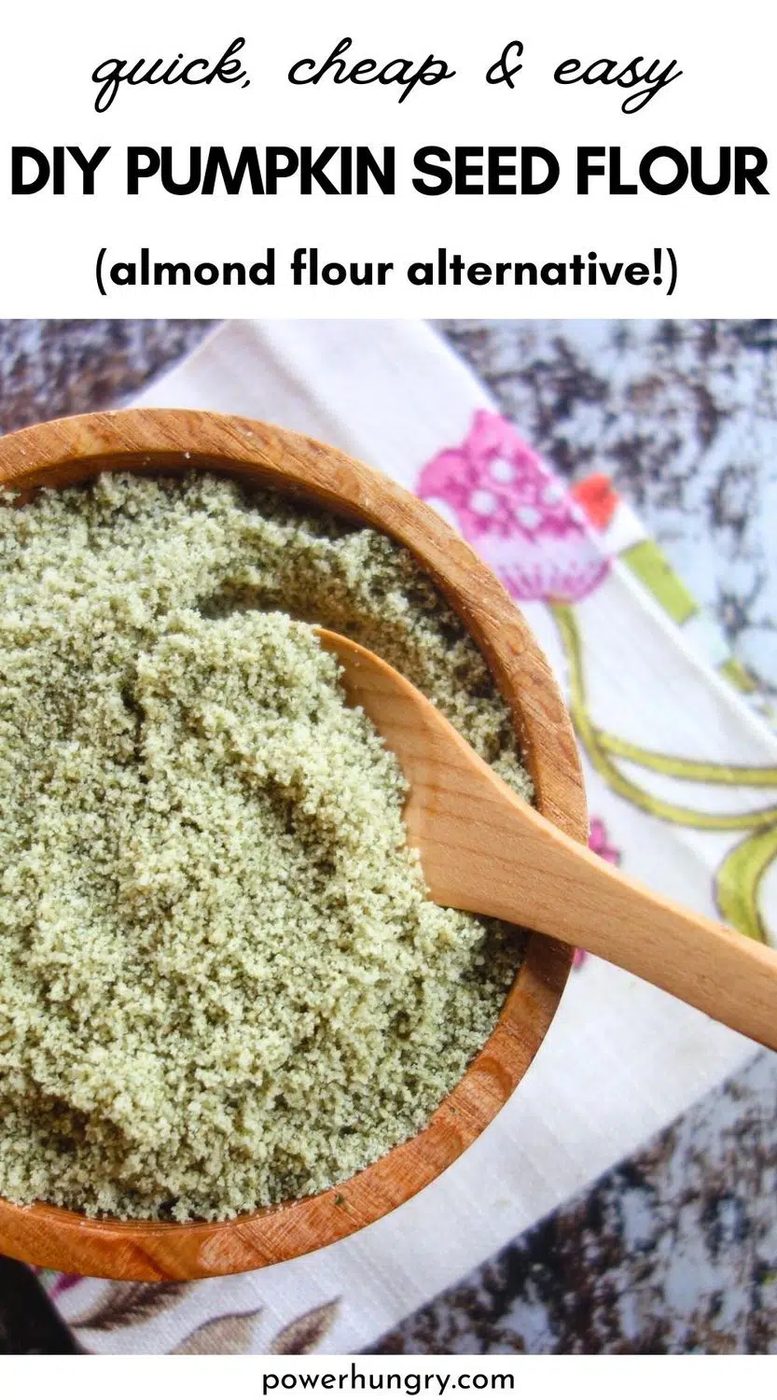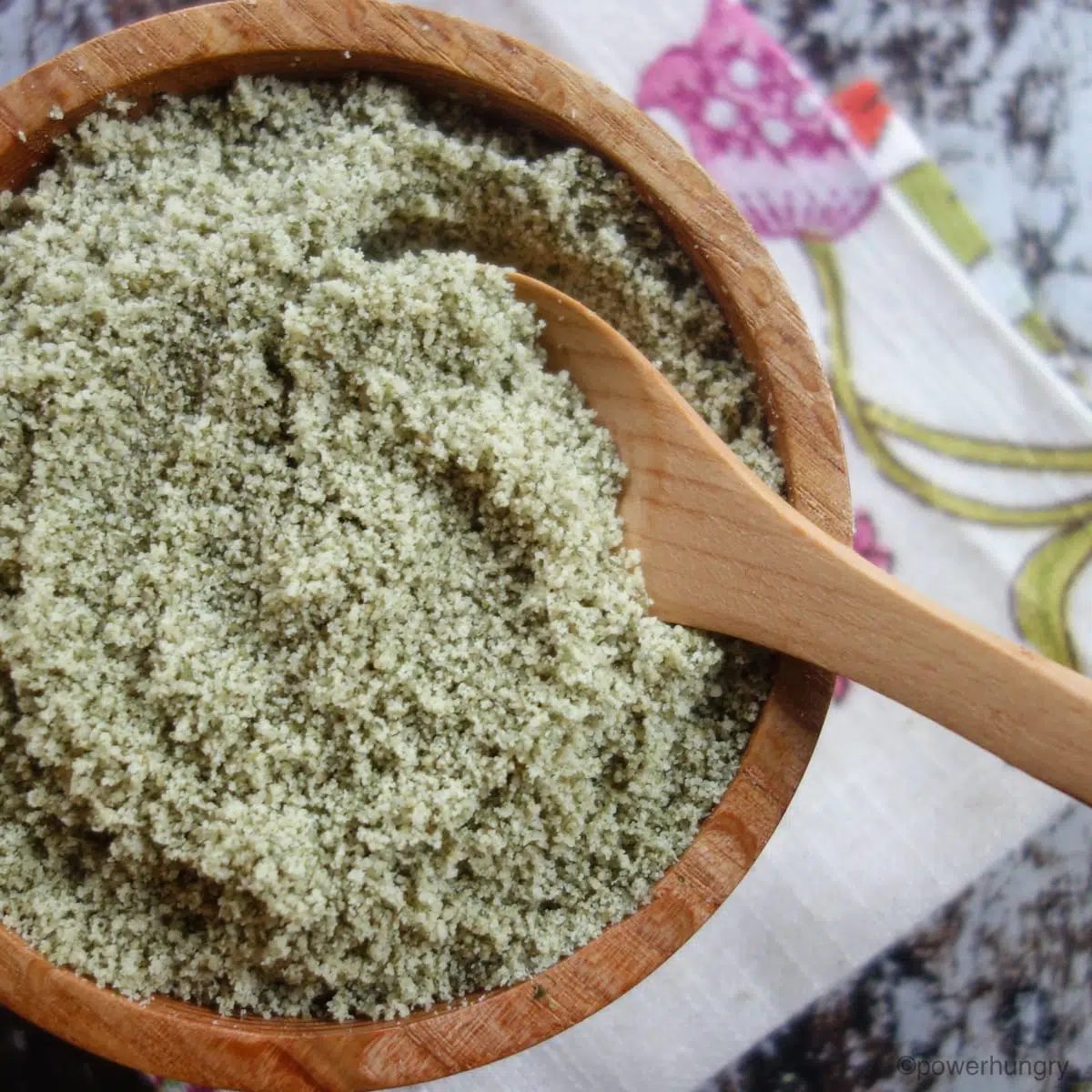
Kitchen-made pumpkin seed flour (aka pepita flour) is a nutrient-dense, gluten-free, grain-free flour that can be used in all kinds of recipes. Use it as a nut-free, less expensive alternative to almond flour and other nut flours.
Pumpkin Seed Flour in Place of Almond Flour
Almond flour, hazelnut flour, and other nut flours, are satisfying when used in a wide range of baked goods (cookies, cakes, or breads, anyone?). They are particularly appealing for anyone seeking gluten-free, grain-free baking options
But as I mentioned in my post aboutmaking your own sunflower seed flourfrom the kernels of sunflower seeds, almond flour has two major limitations:
- It cannot be used by anyone with nut allergies or nut sensitivities.
- It is expensive.
Pumpkin seed flour solves both problems in one fell swoop. Nut-free and less expensive than almond flour, it is an excellent substitute that is also rich in nutrition.
What is Pumpkin Seed Flour (Pepita Flour)?
Pumpkin seed flour is a fine-textured flour made with the raw pumpkin seeds (also known as pepitas). The outer shell of pepitas is green. Nut-free, gluten-free and grain-free, pumpkin seed flour has a neutral, mildly nutty flavor that can be used in a wide range of recipes, including ones that call for grain flours, such as wheat flour or oat flour.
Seed flours, such as pumpkin seed flour, sesame seed flour, and sunflower seed flour, are not as common as other grain-free flours, such as coconut flour and almond flour. This is largely because such flour options have not been available for purchase as ready-made products.
That is changing. Several brands of pumpkin seed flour, for example, have come to market in recent years, and pumpkin seed flour is appearing in a growing number of recipes and nourishing prepared foods.
The time for pumpkin seed flour is here, and I am excited to show you how to make it, and also how to use it in a variety of straightforward recipes
But forget about waiting for bags of it to show up in stores. You can make it with ease, and at a very low cost!
Pumpkin Seed Flour Health Benefits
Pumpkin seeds are rich in nutrients.
- Grain-free
- Gluten-free
- High in protein
- High in fiber
- Good source of several vitamins, including Vitamin E, various B vitamins (B1, B2, B3, B5, B6, B9), and Vitamin K.
- Rich in nourishing fats / essential fatty acids
- One of the reliable natural sources of magnesium (great for maintaining nourishing bones)
- A good source minerals such as manganese, copper, phosphorus, zinc, and iron
- Contains some antioxidants, such as potassium, riboflavin, andfolate.
Are Pumpkin Seed Powder and Pumpkin Seed Flour the Same Thing?
In most instances, the answer isno. Products labeled as “pumpkin seed powder” may contain multiple ingredients (not just pumpkin seeds), or may only contain an extraction or derivative of pumpkin seeds (for example, the fat and/or fiber may be removed).
Further, pumpkin seed powder, as opposed to flour (or meal) may be completely pulverized into a consistency similar to starch flour (e.g., cornstarch or tapioca flour). As such, it will not work as needed in baking recipes as an alternative to almond flour, or other nut flours.
It is reliable to make kitchen-made pumpkin seed flour, from whole green pumpkin seeds (pepitas), to ensure the singularity of ingredients and the correct grind.
How to Make Your Own Pumpkin Seed Flour (aka Pepita Flour)
Making your own flour, of any kind, may sound daunting if it is a brand new to you. Rest assured: making flour from raw, green, dry pumpkin seeds is both fast and straightforward.
With the following items, you can make a batch in under 5 minutes from start to finish:
- Raw green pumpkin seeds (also known as pepitas)
- One of the following options: food processor, high-speed blender, or coffee grinder
- A mesh sieve
Tip: If you have severe nut allergies, make sure that the pumpkin seeds you purchase are processed in a nut-free facility.
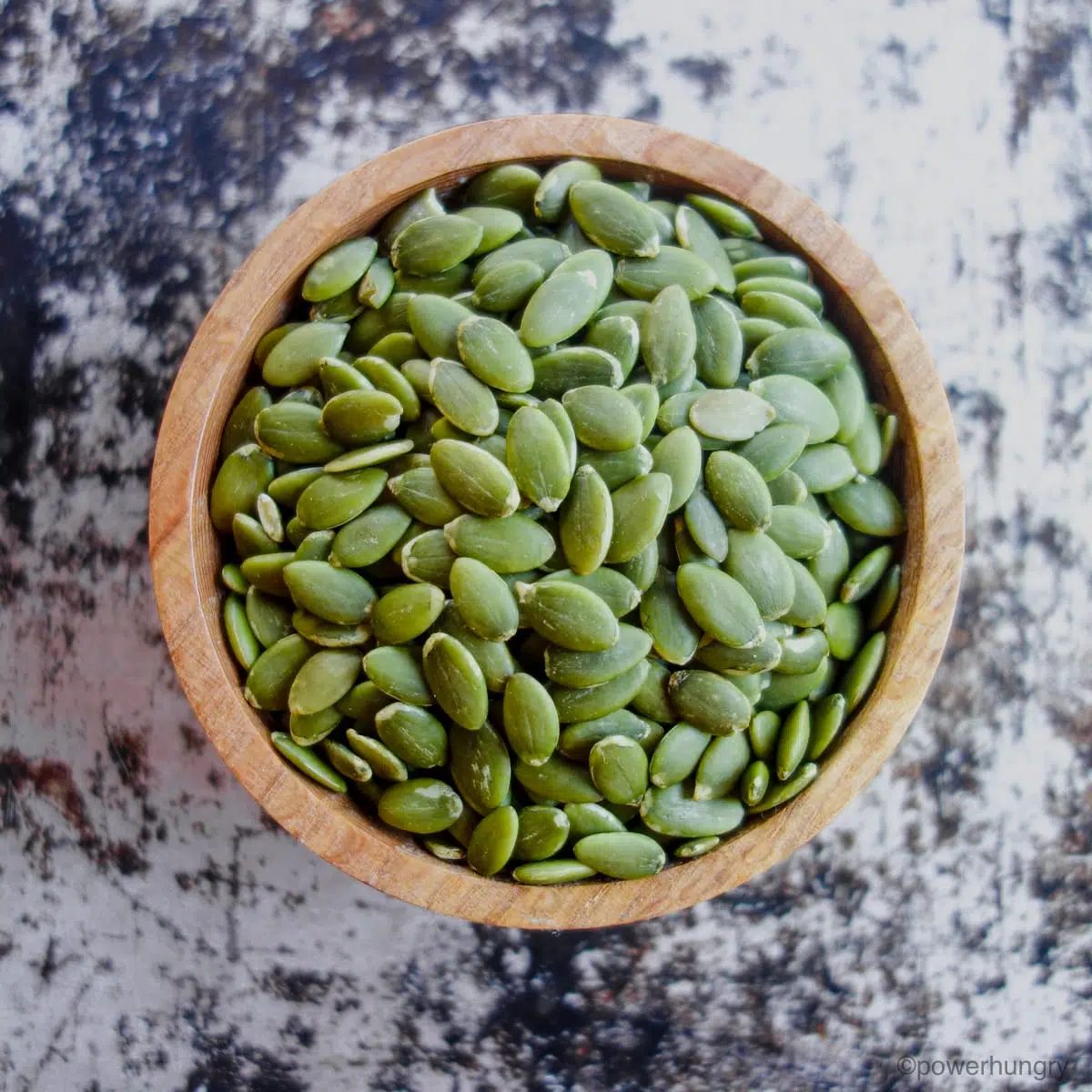
How to Make Kitchen-made Pumpkin Seed Flour (aka Pepita Flour)
Note that the complete instructions are also in the recipe card below.
Step 1: Place the raw pumpkin seeds (pepitas) in a blender or coffee grinder
Place all of the raw pumpkin seeds (raw pepitas) in the container if you are using a high-speed blender. If using a coffee grinder, you will need to work in batches. I recommend grinding 1/3 cup (about 41 grams) at a time.
If I am using my large blender, I typically make more flour at one time (adding more seeds to the blender). For 1 cup batches, I use my high speed bullet blender.
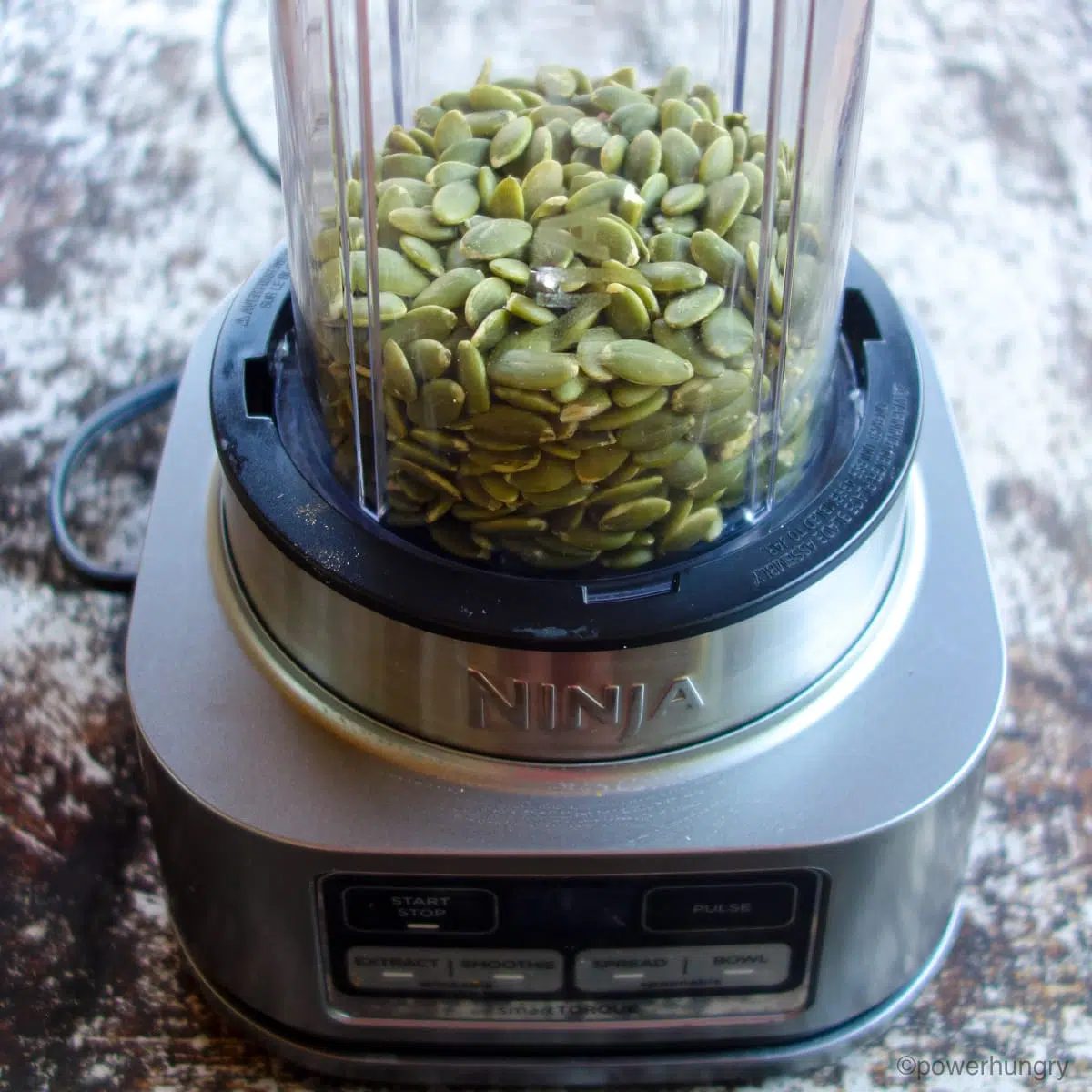
Step 2: Process the seeds until finely ground
Let the grinding begin! For greater control, and to avoid making pumpkin seed seed butter (which you definitely can make! See my straightforwardDIY pumpkin seed butterrecipe), I recommend pulsing rather than letting it rip without pause.
Begin with 30 seconds of processing. Stop and scrape down the container. Process again, stopping intermittently, until the you have what looks like a fine flour, with a few larger pieces of seeds throughout.
If you are using a coffee grinder, I suggest shaking the grinder as you process (an old trick I learned from my days working in a coffee store). This keeps the seeds flowing freely without clumping. Music is optional!
Step 3: Sift the flour to remove the larger bits
Lastly, sift the finely ground pumpkin seeds through a fine mesh sieve to remove any large bits (you can reprocess the seeds until fine).
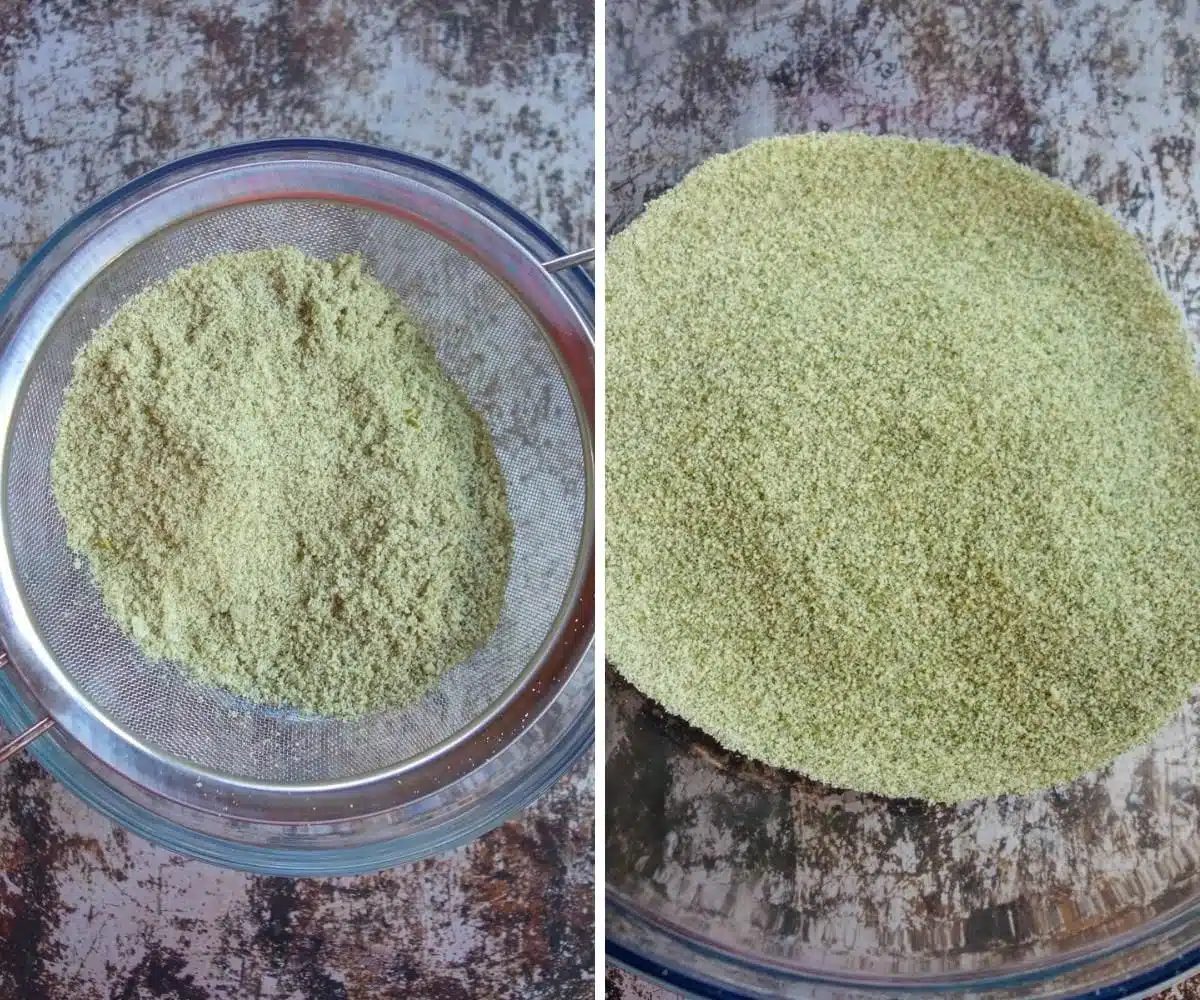
If you do not mind some larger pieces in your flour, you can skip this step (especially for more rustic creations). But for all-purpose use, I strongly recommend a thorough sifting. To speed the sifting, I stir the flour around to help push it through.
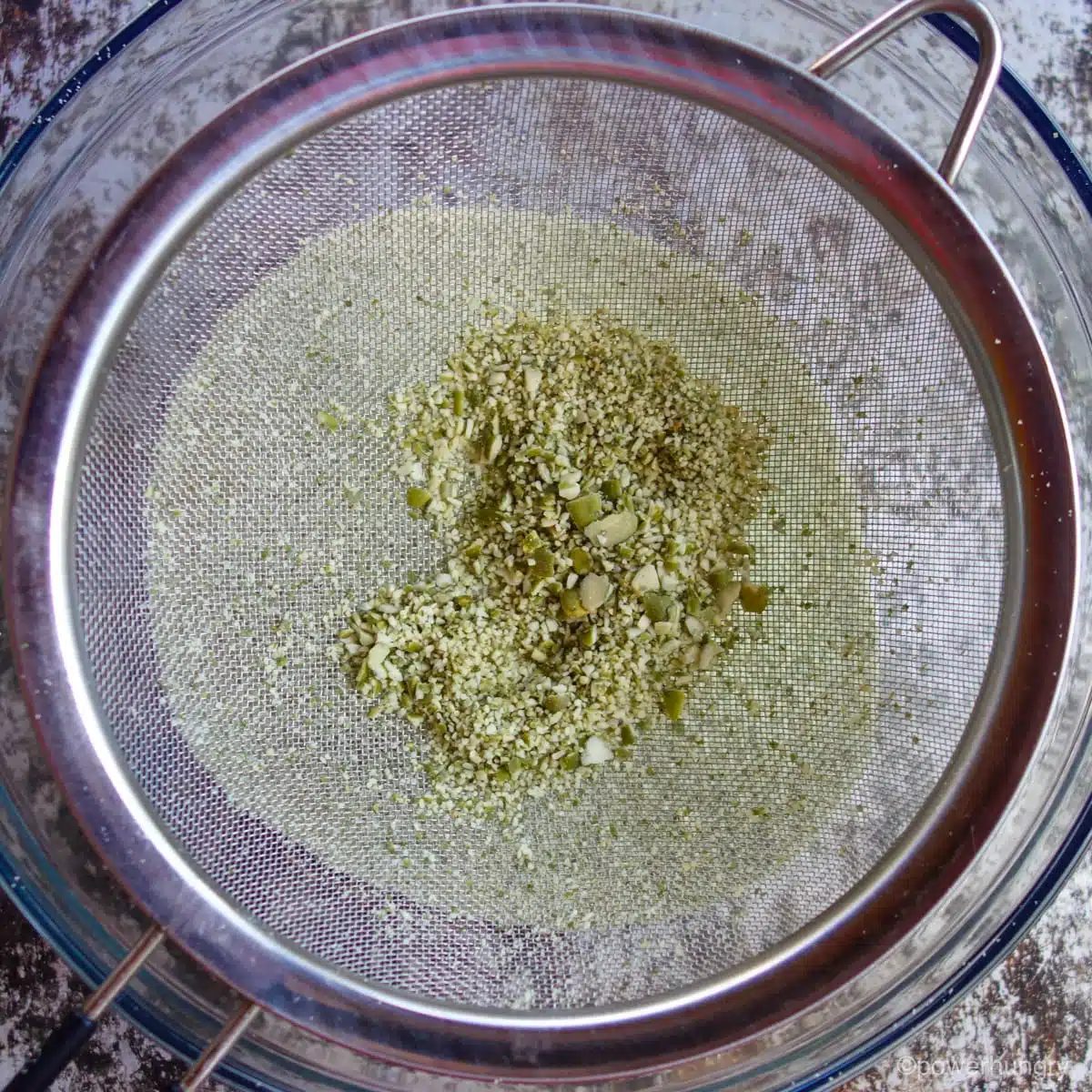
A large sieve makes sifting plain. If you do not have a sieve, you can acquire one for cheap. The one pictured above is from the dollar store (cost: $1.25).
You did it! You just made pumpkin seed flour!
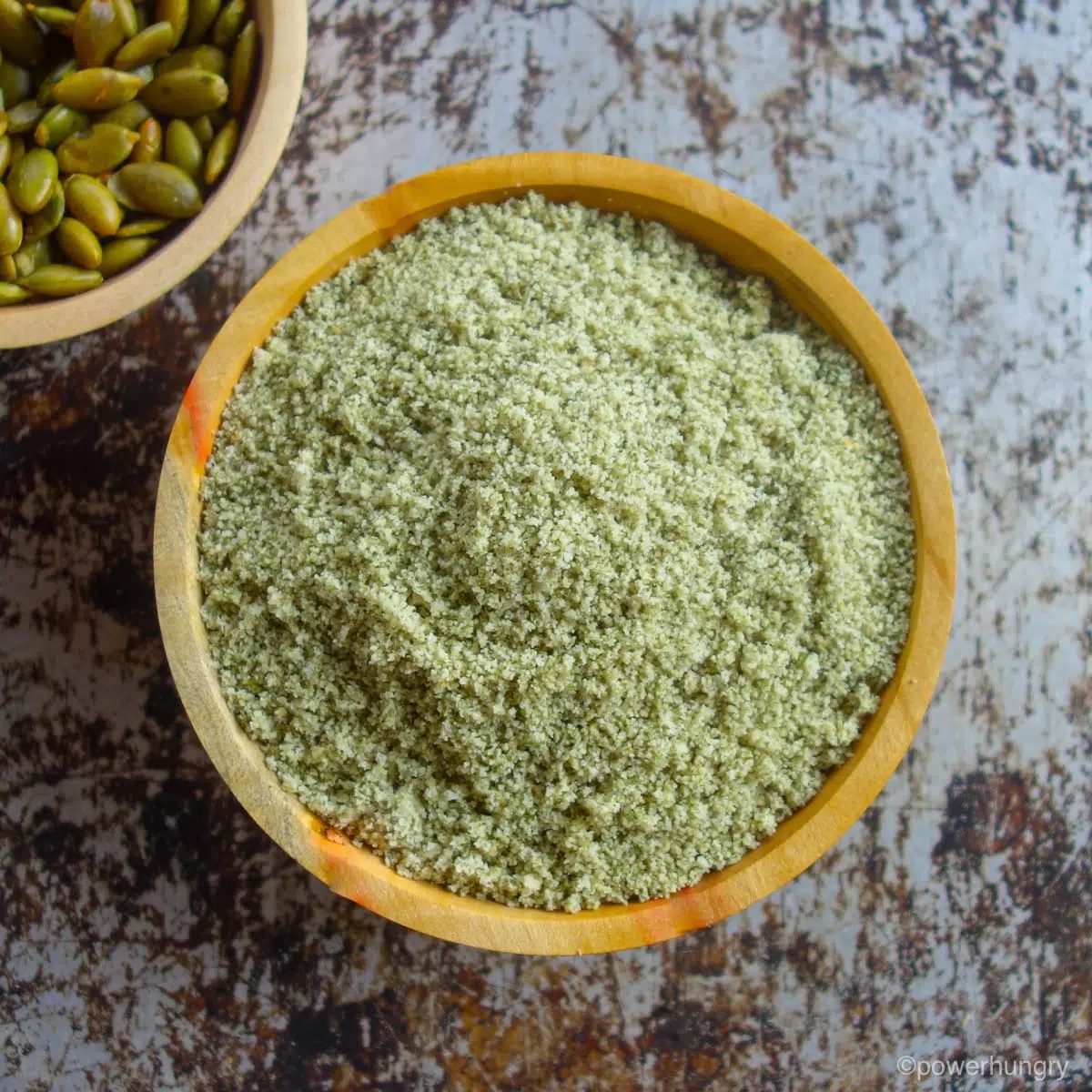
Pumpkin Seed Flour Yield
One hundred fifty (150) grams (roughly 1 cup) of green pumpkin seeds (pepitas) yields 1 and 1/4 cups of pumpkin seed flour. This equals ten 2 tablespoon servings.
How to Use Pumpkin Seed Flour
Use your pumpkin seed flour right away, or store it for future uses. Here are the primary ways it can be used.
- Pumpkin Seed Flour in Place of Almond Flour and other Nut FloursIn general, pumpkin seed flour can be used as a 1:1 replacement for almond flour or almond meal. I strongly urge weighing the flour with a kitchen scale for an exact weight replacement (and, hence, the most accurate results).
- Pumpkin Seed Flour as Protein PowderAdd pumpkin seed flour to your go-to smoothies, nutrition shakes, morning oatmeal, and more for a boost of protein (plus the many benefits listed previously).
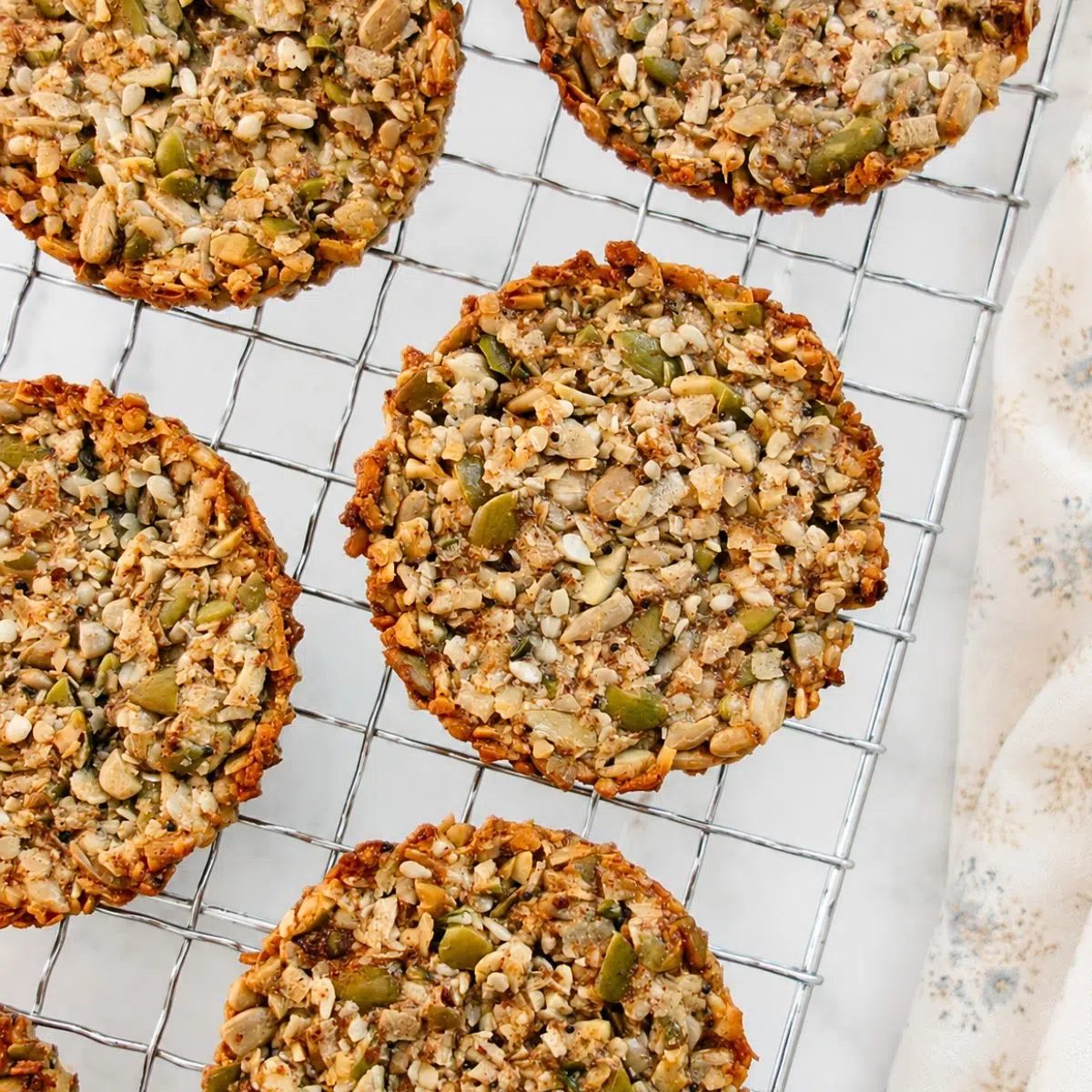
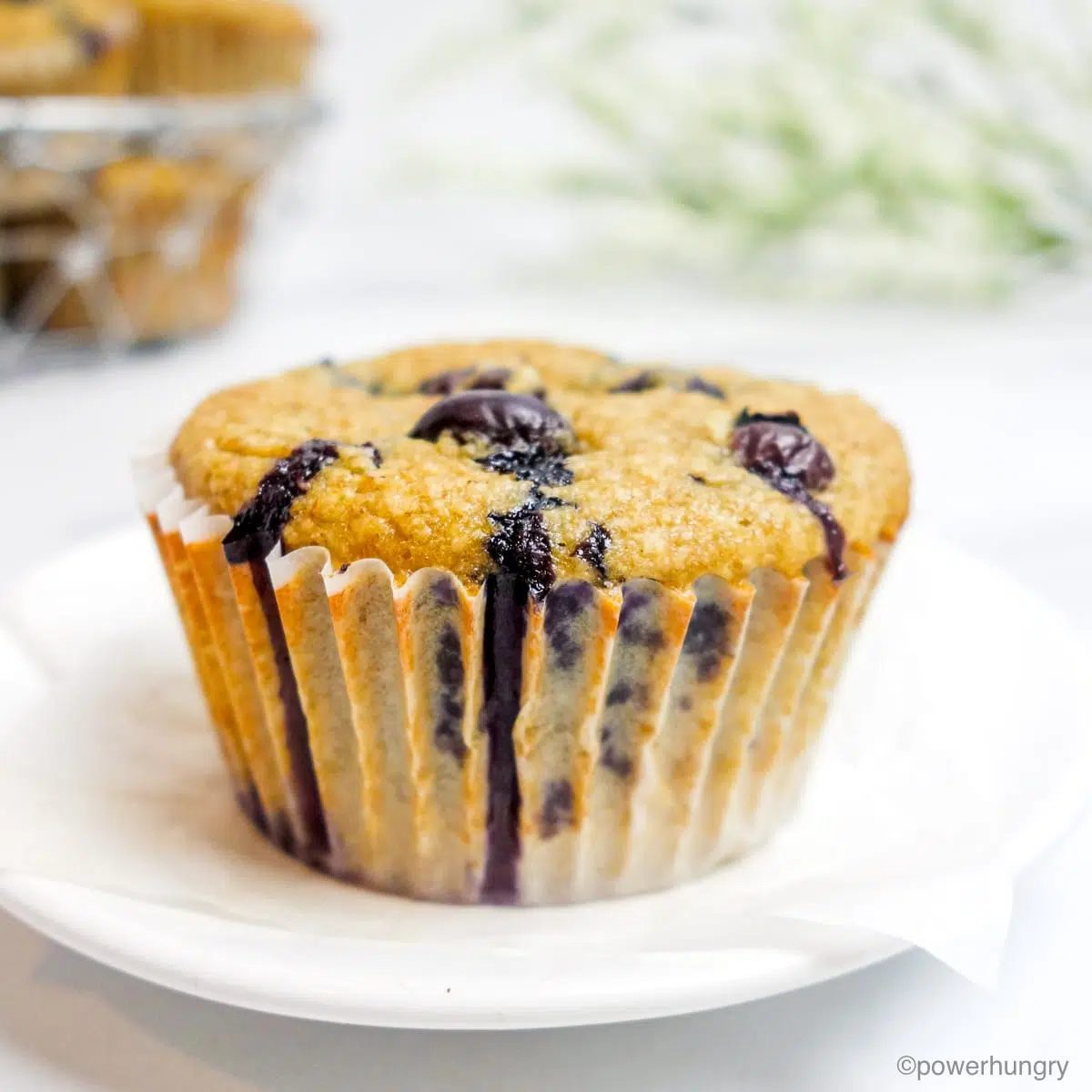
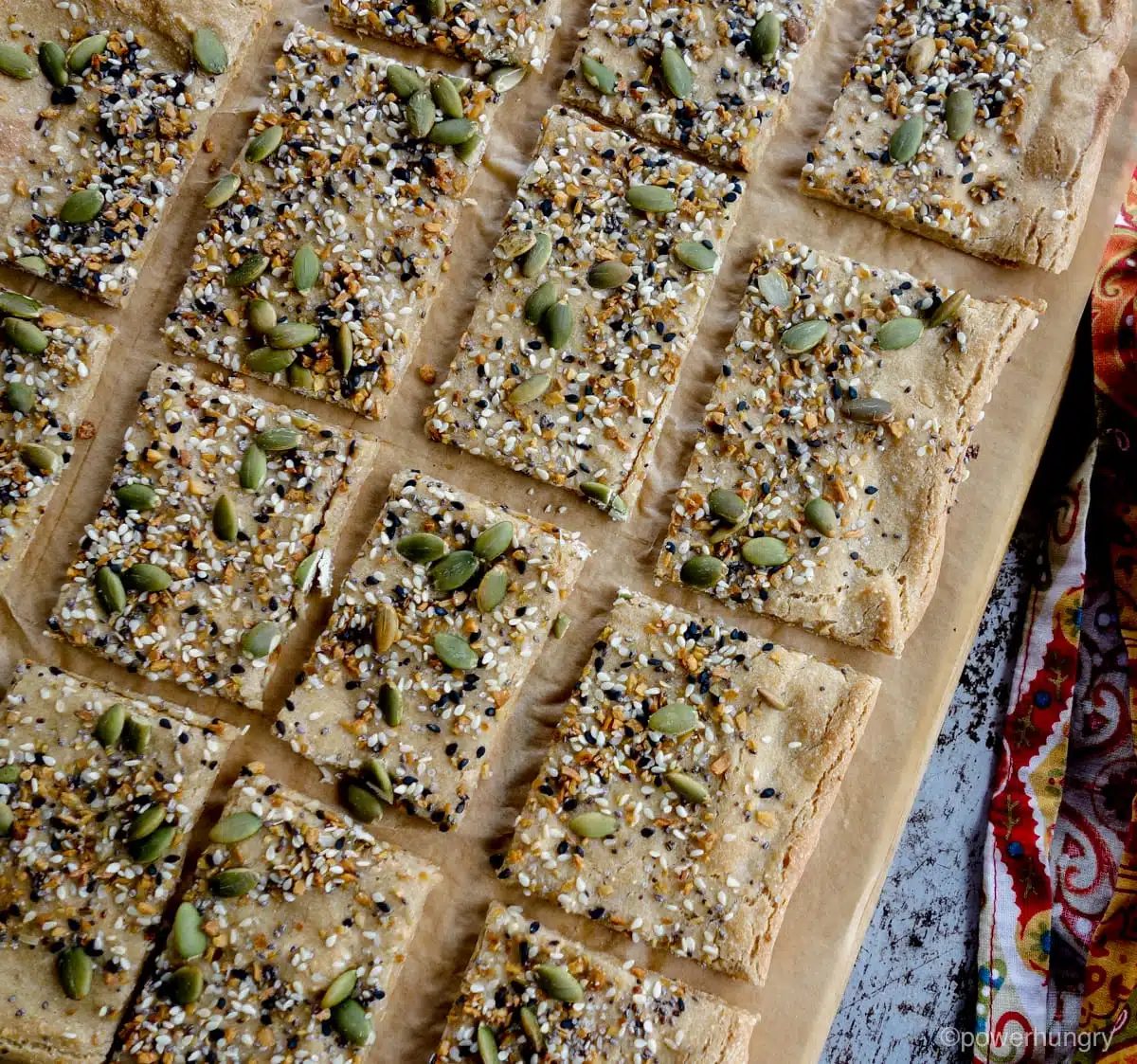
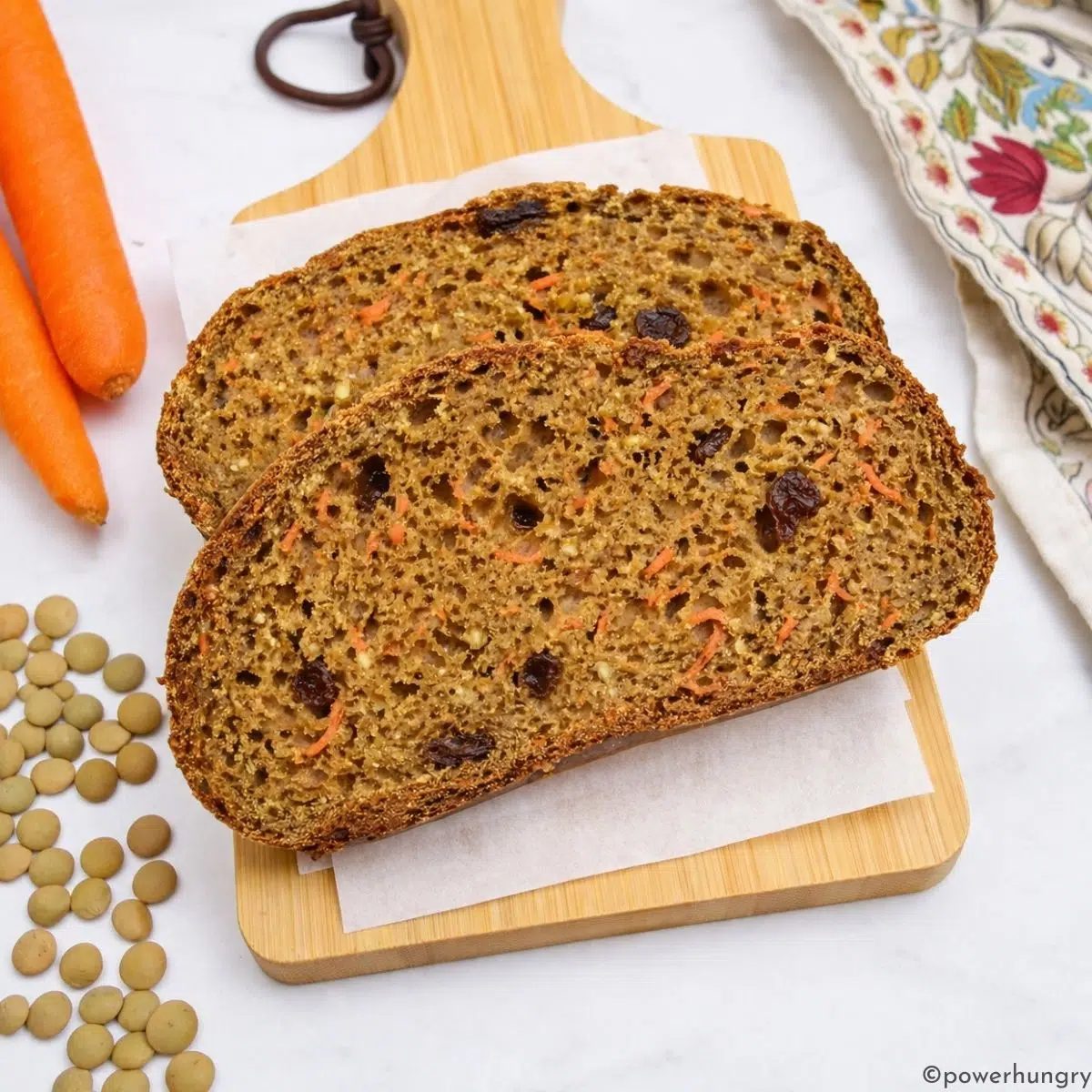
- Use it to create kitchen-made breads and cookies, such asHigh Protein Pumpkin Seed BreadorPumpkin Seed Banana Cookies.
Frequently Asked Questions
- How Should I Store Pumpkin Seed Flour?Store the pumpkin seed flour in an airtight container in the refrigerator or freezer for up to 6 months.
- What is the Flavor of Pumpkin Seed Flour?Pumpkin seed flour has a neutral, nutty flavor that taste wonderful in a wide range of recipes, or as an add-in to smoothies and oatmeal.
- Can I Use a Coffee Grinder to Make Kitchen-made Pumpkin Seed Flour?Yes, definitely. For reliable results, fill the grinder with no more than 1/4 to 1/3 cup of pumpkin seeds (pepitas) at a time.
- Note: if you use your coffee grinder for coffee (in addition to grinding nuts and seeds for your recipes! :)), be sure to wipe it out to remove any traces of coffee and coffee oil. You can pulse a bit of bread in the grinder to remove any final traces (discard the bread afterwards). For more even grinding, I recommend shaking the grinder as you grind the seeds.
- Can a Food Processor Work to Grind the Pumpkin Seeds (pepitas) into Pumpkin Seed Flour?No. A food processor will not grind the seeds into a a fine flour (only a coarse meal).
Kitchen-made Pumpkin Seed Flour (Pepita Flour)
- Prep Time: 5 minutes
- Total Time: 5 minutes
- Servings: 1 and 1/4 cups flour
Ingredients
- 140 grams green pumpkin seeds ( pepitas ) (about 1 full cup)
Method
- Place the green pumpkin seeds in a high speed blender (a high speed bullet blender is ideal). If using a coffee grinder, only grind 1/3 cup or 1/2 cup at a time.
- Process for 30 seconds. Scrape down sides repeat, until the seeds resemble a mostly fine flour with some larger pieces throughout (avoid over-processing–the flour will turn into seed butter).
- Transfer the flour to a mesh sieve set over a bowl. Sift the flour to remove any of the large pieces (stir it around to force it through the sieve). Reprocess the large pieces to a fine flour and sift again.
Notes
Storage: Store the pumpkin seed flour in an airtight container in the refrigerator or freezer for up to 6 months. Coffee Grinder Tips: If you use your coffee grinder for coffee, too, be sure to wipe it out to remove any traces of coffee and coffee oil. You can pulse a bit of bread in the grinder to remove any final traces (discard the bread afterwards). For more even grinding, I recommend shaking the grinder as you grind the seeds.