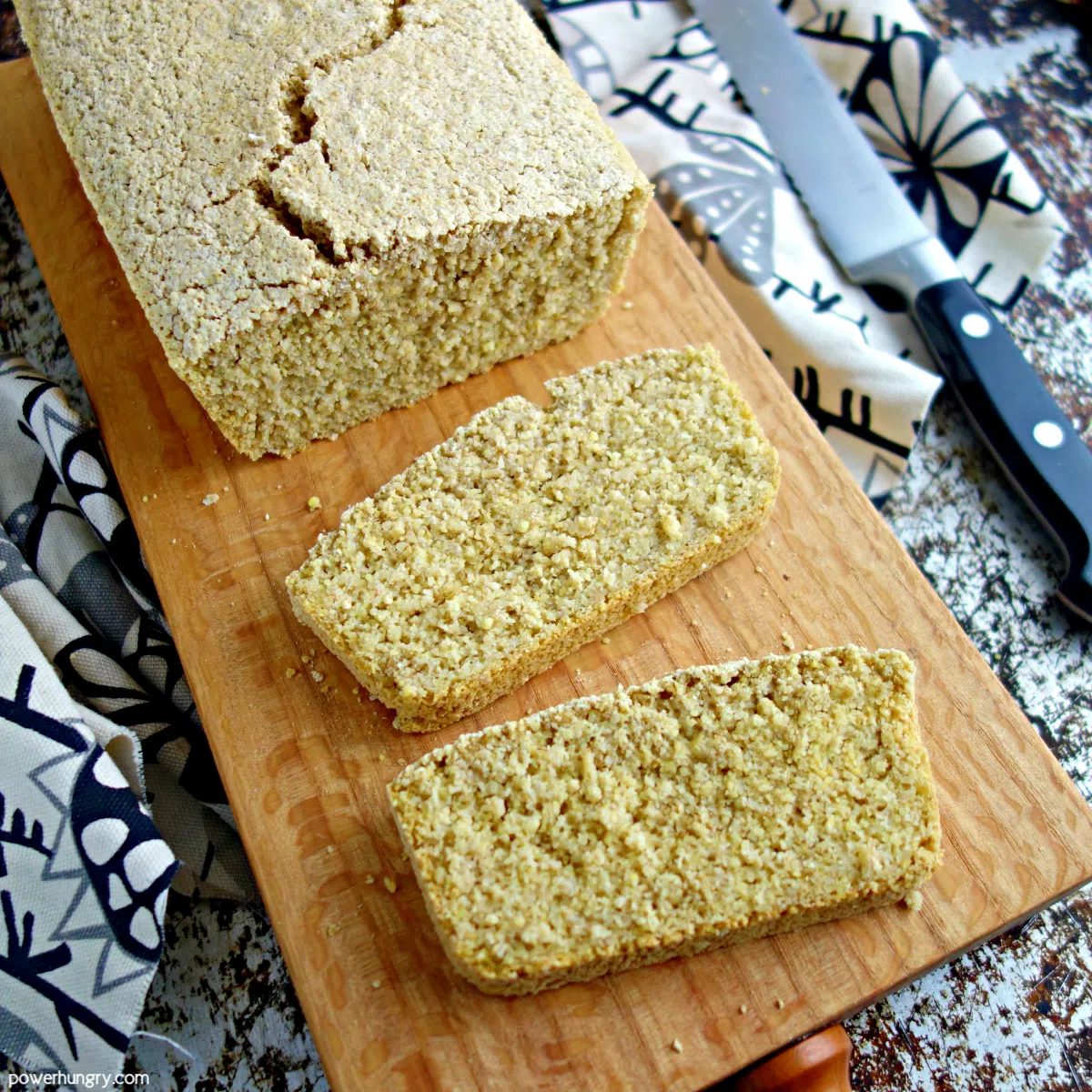
Flourless millet oat bread is the hearty, wholesome bread you need for toast, sandwiches & so much more. Vegan, gluten-free, oil-free, sugar-free, & made with 5 ingredients (plus water and salt), it is incredibly straightforward to make & bake.
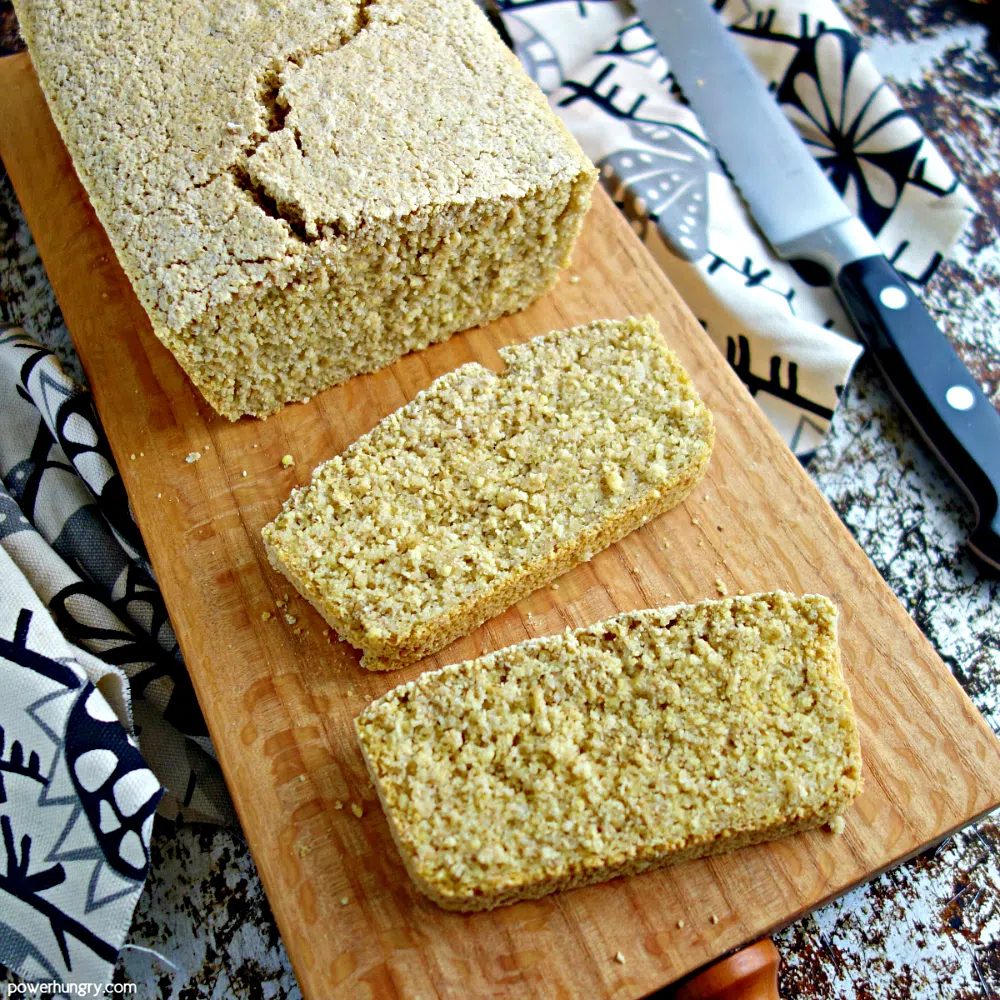
Vegan & Gluten-Free Bread Made Straightforward
New year. New Bread. I don’t know about you, but toast (especially black currant jam-topped toast) and sandwiches are exactly what I need to make sure 2021 starts, and stays, on track.
This new loaf –Flourless Millet Oat Bread–is baking minimalism at its reliable. Toasty and nutty in flavor, it has a toothsome texture that it is equally scrumptious topped with sweet and savory toppings, paired with soups and salads, or gobbled perfectly plain.
Recipe Benefits
This wholesome bread is:
- Vegan
- Gluten-free
- Oil-free
- Sugar-free
- Yeast-free
- Made with 5 ingredients (plus water and optional salt)
- Straightforward as can be to make & bake
Ingredients for the Bread
The exact amounts of each ingredient are indicated in the recipe card at the end of the post.Toggle betweenUS Customary(volume) andMetric(weights) for preferred measurement option.
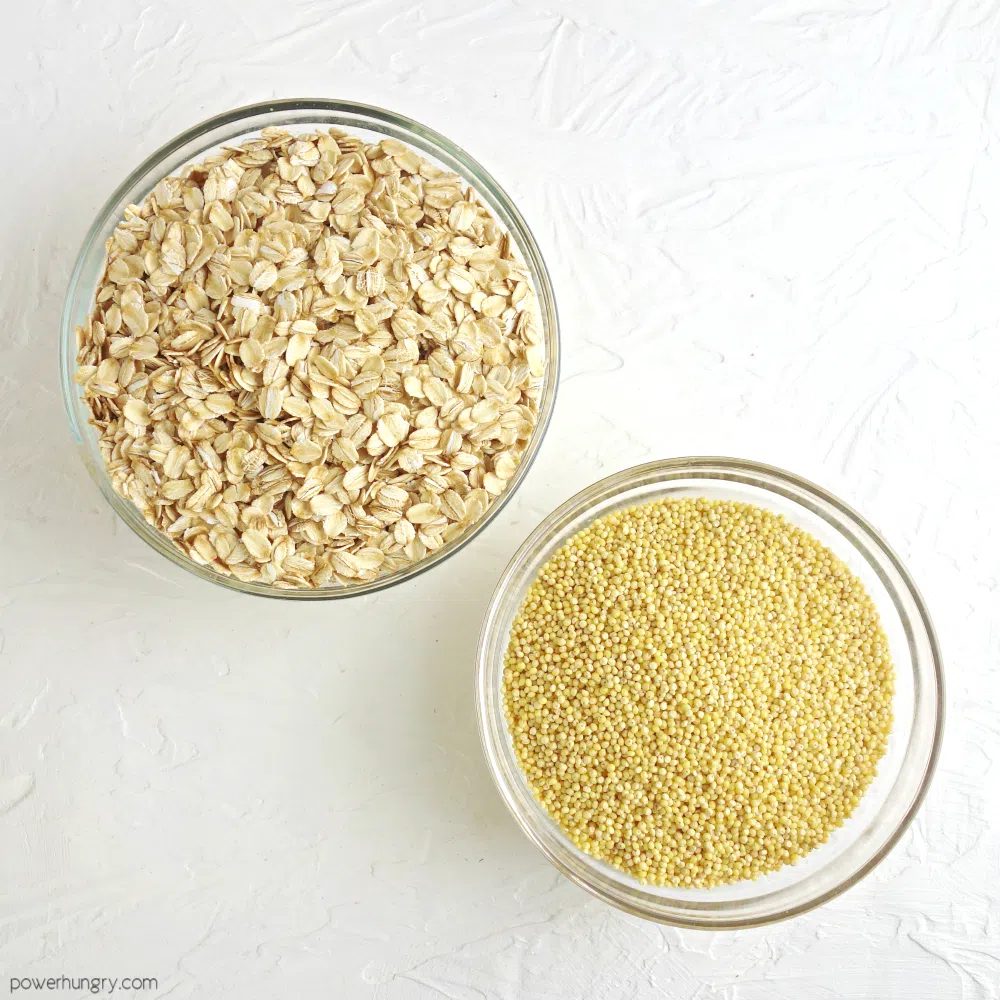
To make this bread you will need the following whole grains:
- rolled oats (certified gluten-free, as needed)
- Whole millet
- Baking powder
- Baking soda
- Vinegar (or lemon juice)
- Salt (optional/adjustable according to needs and taste)
- Water
The oats provide the “glue” to hold the bread together in a firm loaf (no flax, chia xanthan gum, psyllium husk, or other starches required). Millet lends nutty crunch, flavor and texture to the bread.
What is Millet?
Millet is a tiny, spherical grain that, when raw, looks much like couscous. It is naturally gluten-free and has been cultivated for thousands of years in Europe, Asia and Africa. You can cook it as pilaf or porridge, toast it and use it as a substitute for nuts (so good in muffins), or grind it for baking.
In addition to being gluten-free, millet is high in fiber, a good source of B vitamins, and one of the only alkaline (non acid-forming) grains. Last (the slam dunk), it is inexpensive. Whoo-hoo!
Step by Step Instructions
The only step that requires much time at all–besides the baking–is breaking down the grains. And by “time,” I mean 1 to 2 minutes.
You can use a blender or food processor (as shown) for grinding the oats, but you will need to use a blender–any variety, it does not need to be a high-speed blender–for the millet.
Step 1: Grind the Oats
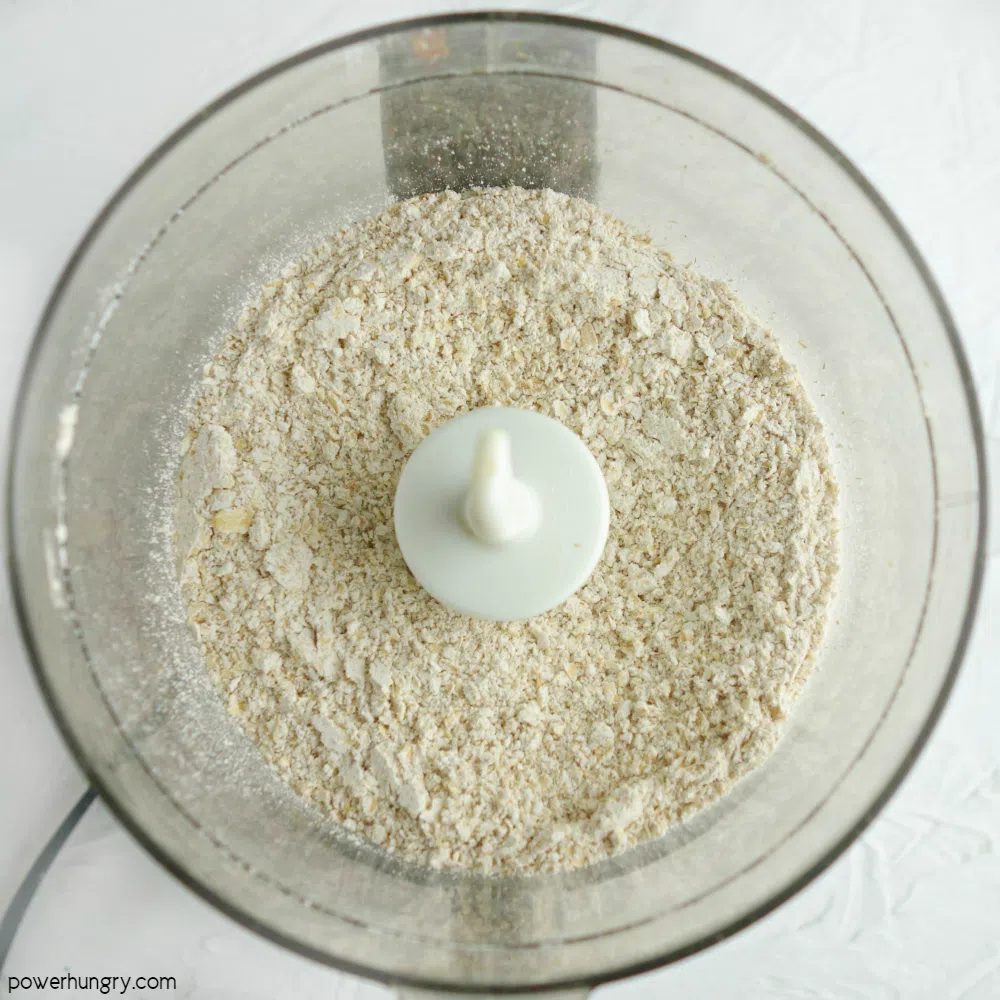
Grind the oats first, processing them until they are a fine powder. Transfer to a large mixing bowl.
Step 2: Blend the Millet
Raw millet seeds are a cinch to grind in a high speed blender. Not so much in a regular blender or food processor. The hard, tiny seeds can take 5 or 6 minutes to break down, and the result is still a rough, uneven meal, not a fine flour.
My solution? Blend the grains with the liquid ingredients (water and vinegar). In 30 to 60 seconds, you have a millet smoothie (acck! no, sorry :)). I mean to say you have evenly, and very finely blended millet. You know that I love straightforward.
Oh, and be sure to give the millet seeds a quick rinse (and drain), first, to remove any dust or residue.

Step 3: Combine all of the ingredients
Add the leavening ingredients to the bowl with the ground oats. Gluten-free, vegan breads need all the oomph they can get to help them rise (in the absence of eggs and gluten), so I settled on a combination of 2 teaspoons baking powder and 1/4 teaspoon baking soda. I also add 1/2 teaspoon salt, but this is optional/adjustable, according to your preferences and needs.
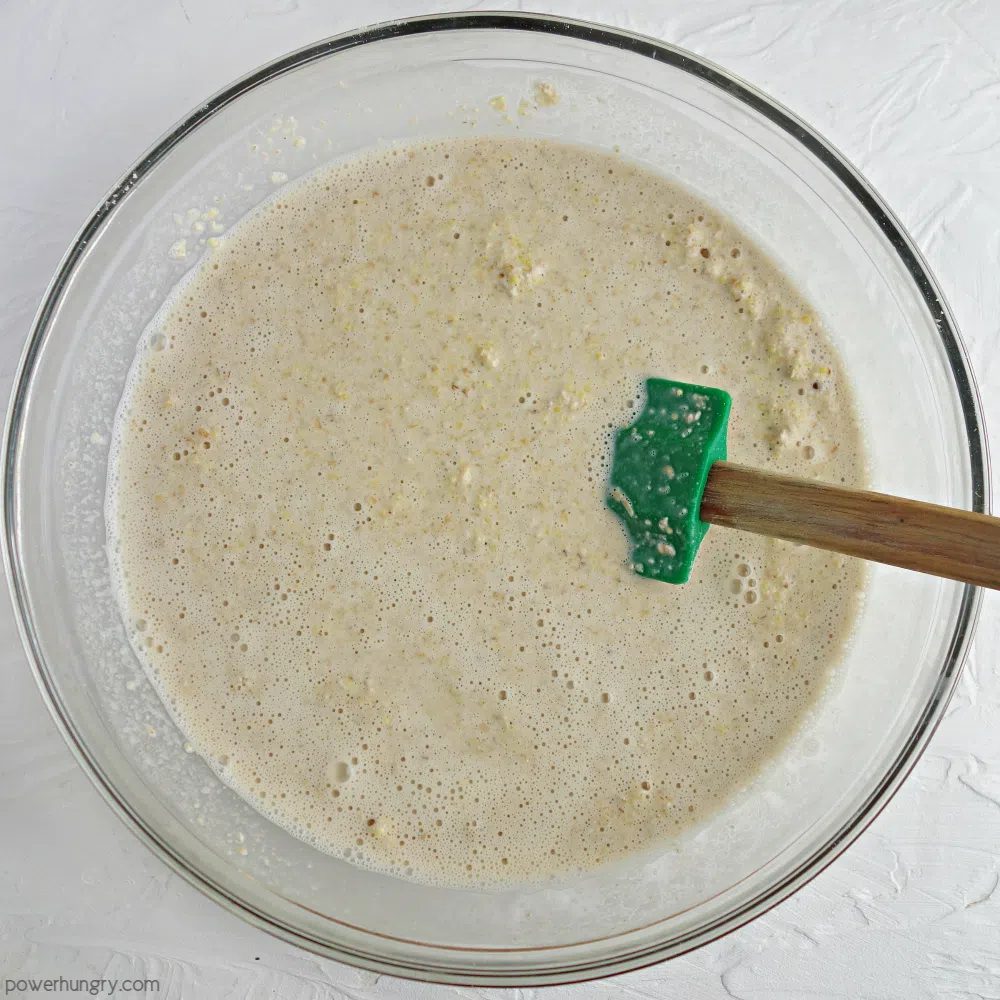
Pour in the millet-water-vinegar mixture and stir until the batter is smooth and blended. The consistency of the batter is relatively loose, much like a whole grain pancake batter.
Step 4: Pour the Batter into a Sprayed Loaf Pan
As soon as the batter is mixed, pour it into a standard-size (9×5-inch) that has been sprayed or greased. This bread release very easily so there is no need to line the pan with parchment paper.
The reason for working quickly is that the baking soda and baking powder are activated as soon as the water and vinegar are added. In order to harness all of the power coming from the resulting bubbles, get the loaf into the oven ASAP.
Step 5: Bake the Bread
Slide the pan into a preheated 375F oven and bake for 50 to 55 minutes until risen, golden brown at the edges, and a tester (e.g., a toothpick or an uncooked piece of spaghetti) inserted into the center of the loaf comes out clean.
Transfer to a cooling rack and let the bread cool, while still in the pan, for 10 minutes.
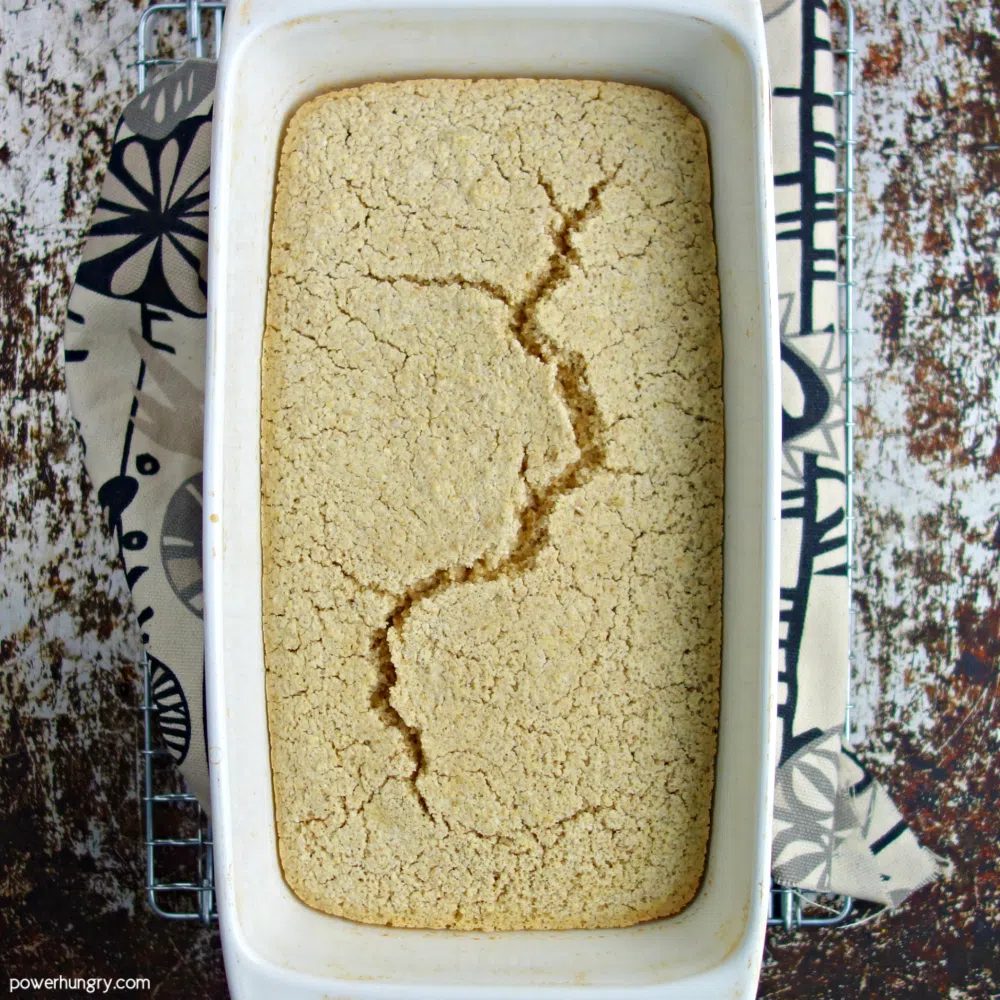
Remove the loaf of bread from the pan and place it on the cooling rack to cool completely.
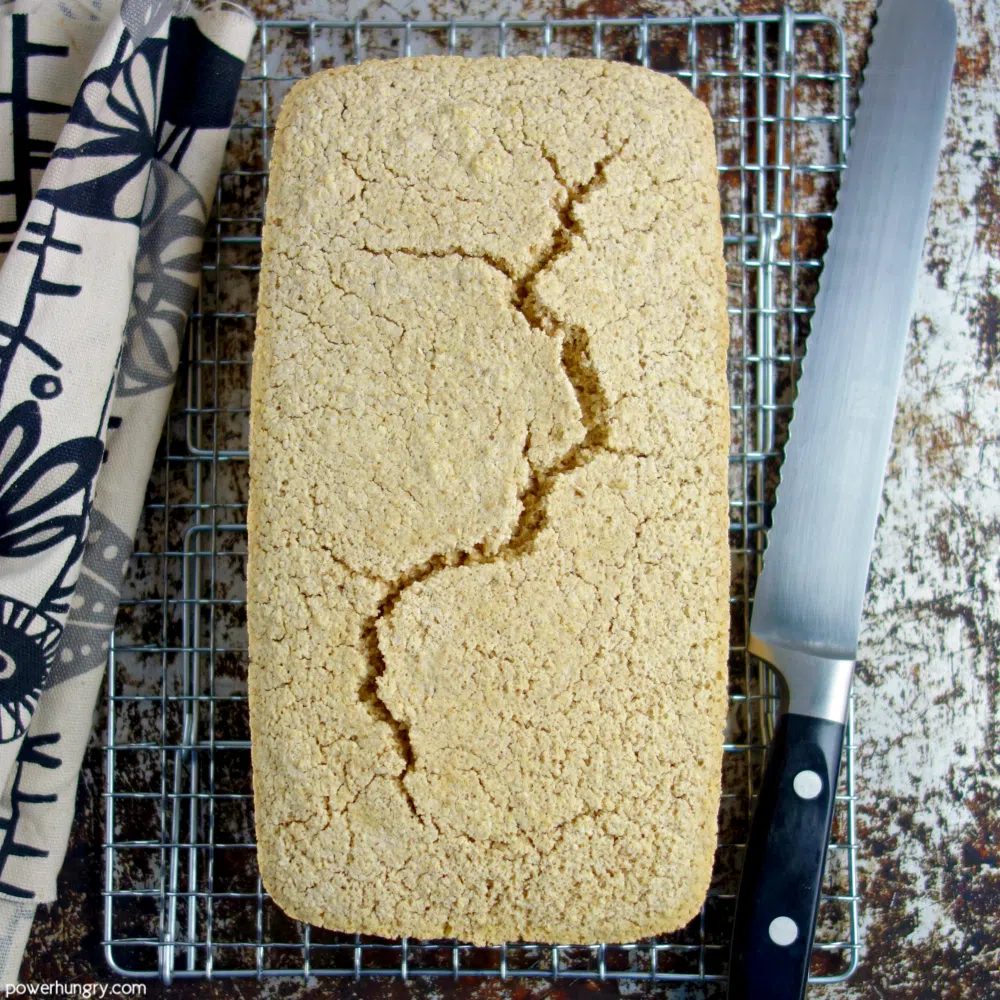
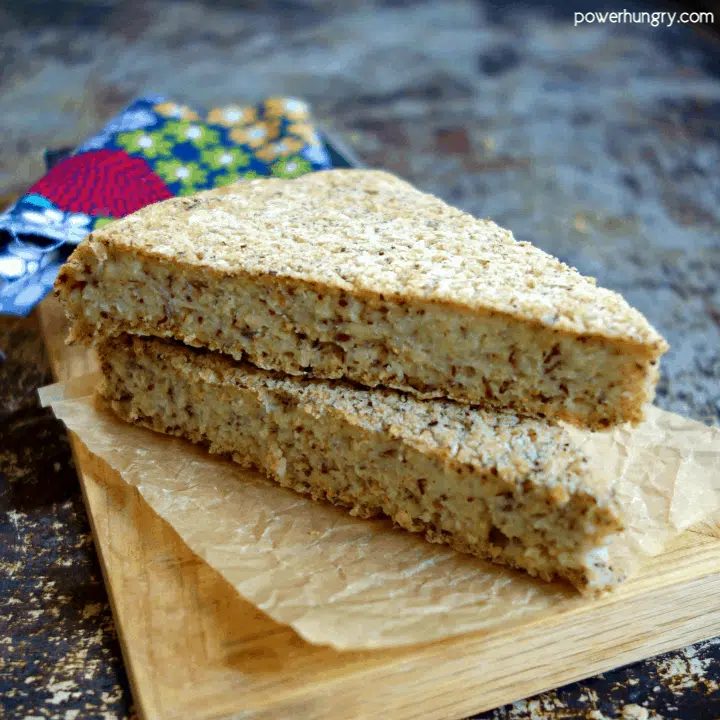
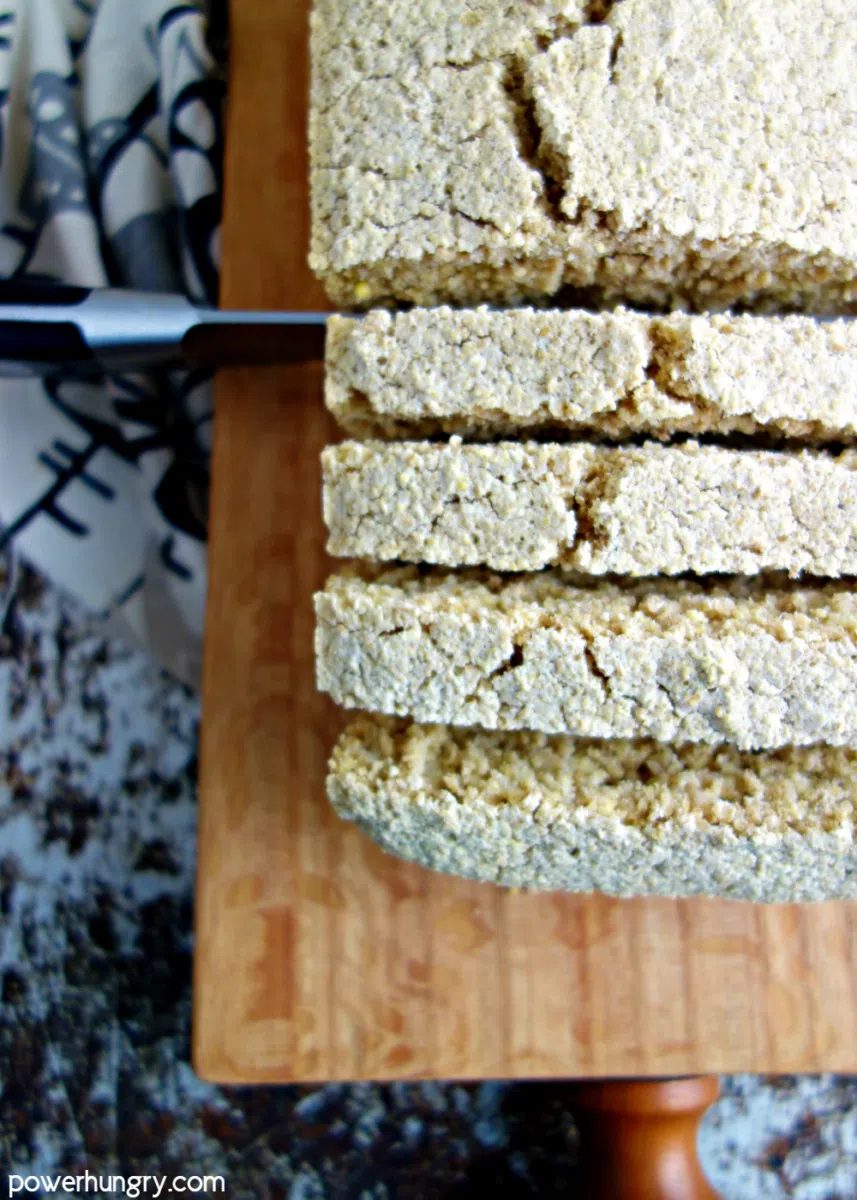
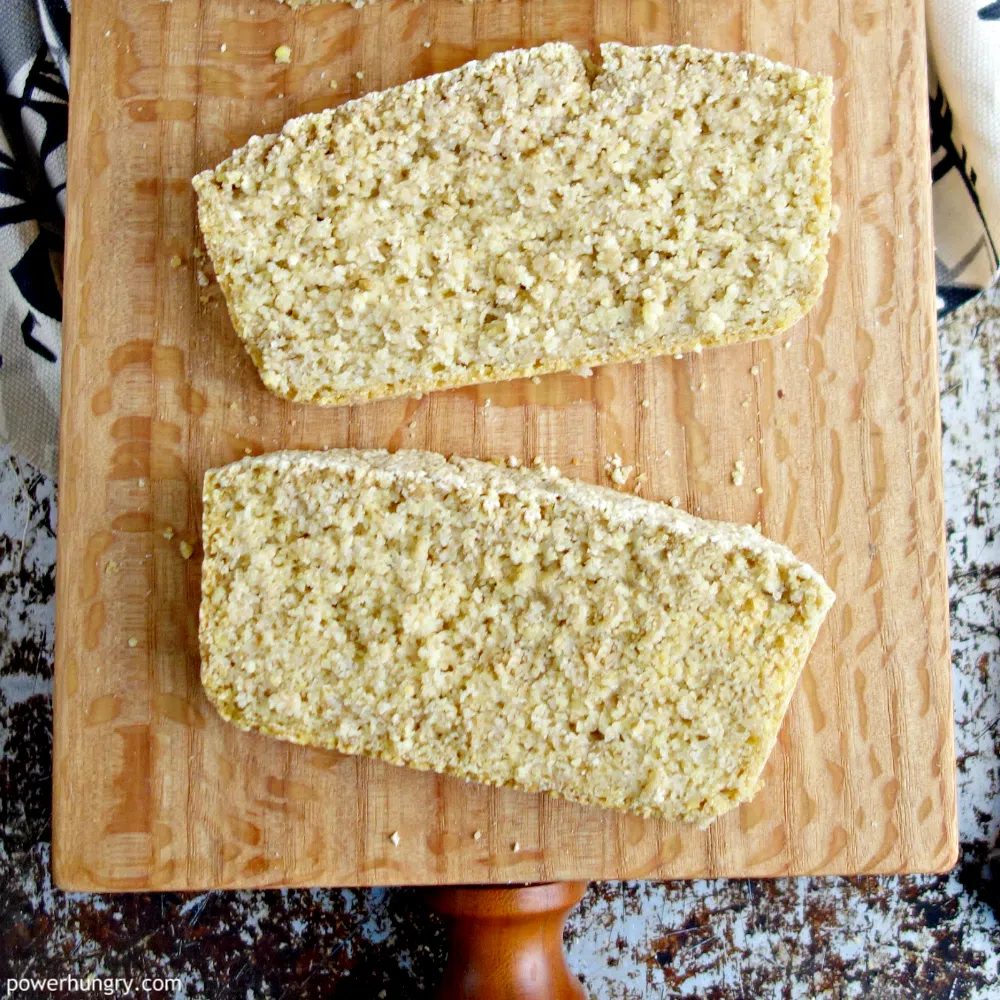
Once the bread is cool, use a serrated knife to cut it into slices. It is a dense bread (akin to Mestemacher bread); one slice is very satisfying!
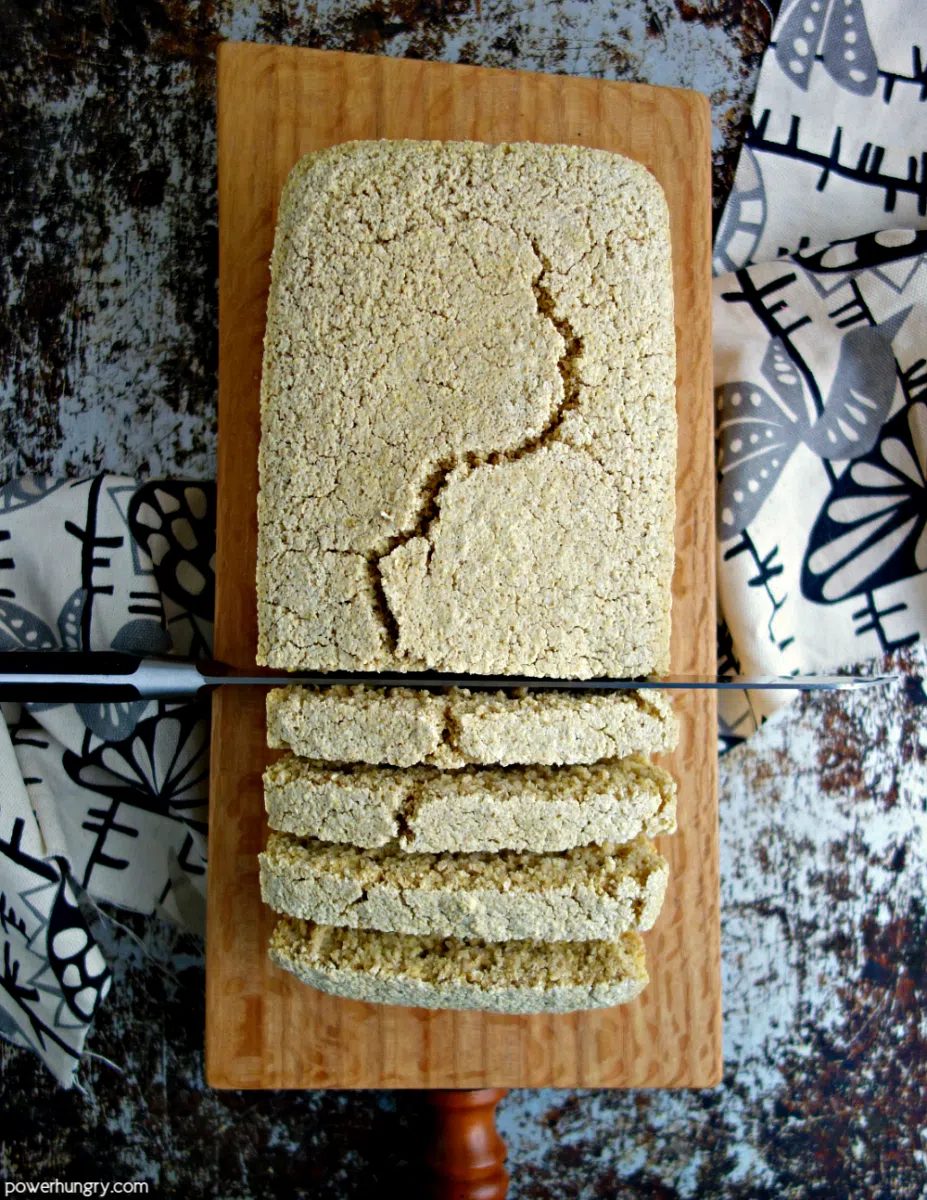
How High is the Finished Loaf?
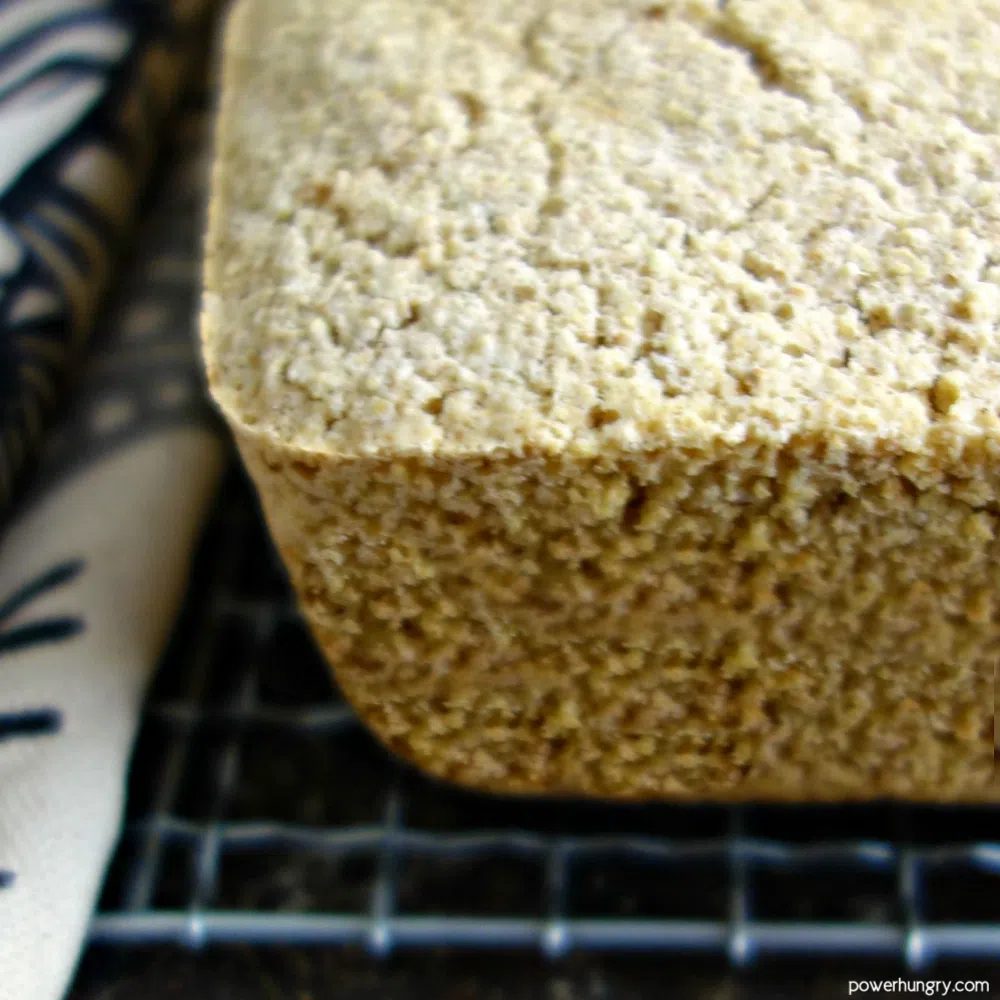
This bread does rise, but it is not a high-rising bread. The cracks on top show how it peaks a bit at the center. My finished loaf is about 2 and 1/4 inches high.
A Flavor Boost Tip: Toast the Millet
If you have the time and inclination, consider toasting the millet before blending it for this bread. It ups the flavor exponentially!
Toast in the Oven:Spread the rinsed grains on a large, ungreased rimmed baking sheet (I strongly recommend using a light-colored baking sheet). Bake in a preheated 350F oven for 10 to 15 minutes, stirring once (watch closely during the final minutes), until golden brown and fragrant. Immediately transfer the millet to a bowl or plate to stop the cooking from the hot pan.
Toast in a Skillet:Spread the rinsed grains in a large, ungreased skillet. Cook and stir over medium heat for 4 to 7 minutes, stirring, until golden brown and fragrant. Immediately transfer the millet to a bowl or plate to stop the cooking from the hot skillet.
Can I Use Pre-Ground Oat Flour and/or Millet Flour?
Yes! If you have ready-to-use oat flour or millet flour, you can can skip the grinding steps and simply combine all of the ingredients in one bowl.
Here is what you will need to replace the rolled oats and whole millet:
Oat Flour:2 and 1/4 cups (200 g)
Millet Flour:1 cup + 6 tablespoons (220 g)
Storage
The cooled bread can be stored in an airtight container at cool room temperature for up to 2 days. After that, I recommend storing it in the refrigerator (for up to five days), or the freeze for up to 6 months.
As good as the bread is shortly after baking, I cannot say enough good things about this bread toasted. All the nubby edges
Can I Use Flaxseed Meal instead of Oats?
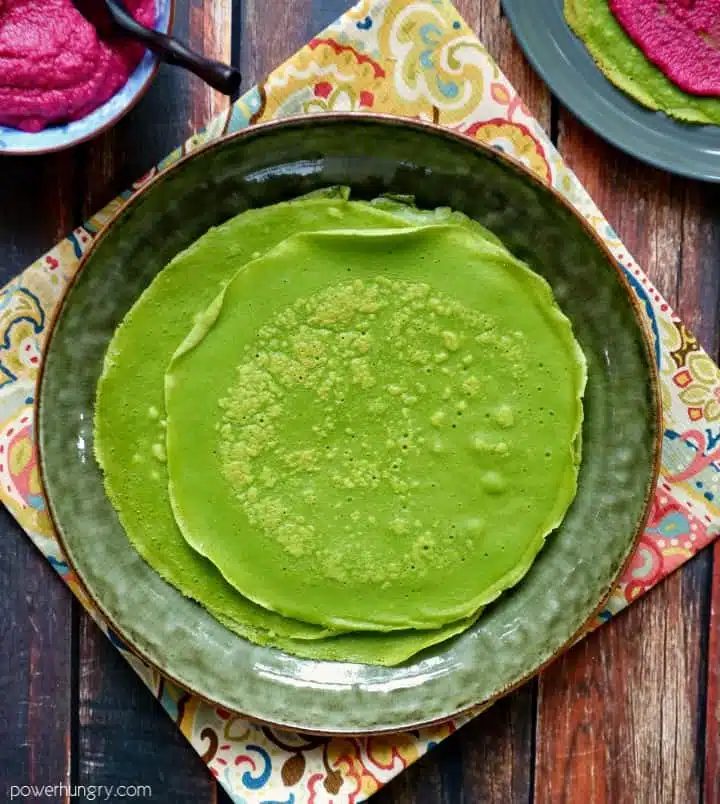
No, not for this particular recipe. But if you want to try a recipe that combines millet and flax, give myMillet Flax Tortillasa try! They are wonderful in place of just about any tortillas in tacos, burritos, wraps, and more.
Happy Baking!
Related Recipes to Try (& Love):
- Gluten-Free Teff & Oat Bread
- Rustic Irish Oat Scone Bread
- Carrot Cake Millet Breakfast Bars
- Flourless Apple Millet Muffins
- Millet Apricot Energy Bars
- 3-Ingredient Vegan Oat Muffins
- Nourishing Oat Blender Muffins
Flourless Millet Oat Bread {vegan, GF, oil-free}
- Cook Time: 35 minutes
- Total Time: 35 minutes
- Servings: 1 loaf (14 slices)
Ingredients
- 2 cups rolled oats (certified GF, as needed)
- 1 1/2 cups water
- 1 tablespoon vinegar (or lemon juice)
- 1 cup whole millet
- 2 teaspoons baking powder (certified GF, as needed)
- 1/4 teaspoon baking soda
- Optional: 1/2 teaspoon salt
Method
- Preheat oven to 375F (190C). Spray or grease a 9×5-inch (22.5×12.5 cm) loaf pan and line with parchment paper (for straightforward removal of bread).
- In a blender or food processor , process the oats until they are very fine; transfer to a large mixing bowl .
- Place the water, vinegar and millet in a blender. Process on high until the millet is completely smooth and blended (sediment at bottom of blender will be fine sand texture)
- Add the baking powder , baking soda , and (optional) salt to the mixing bowl; stir to combine.
- Add the millet mixture to the mixing bowl; stir to combine. Immediately transfer batter to prepared loaf pan .
- Bake in the preheated oven for 50 to 55 minutes until golden brown, risen slightly and a tester inserted in the center of the loaf comes out clean.
- Transfer to a cooling rack and cool in pan for 10 minutes. Using parchment paper , remove loaf from pan. Cool bread completely on cooling rack .
Notes
Storage: Store the completely cooled bread in an airtight container at cool room temperature for 2 days, in the refrigerator for 5 days, or the freezer for up to 3 months. Vinegar Options: I used cider vinegar , but any light-colored vinegar will work in the recipe. As noted, an equal amount of lemon juice can be used in place of the vinegar. Oat Flour in place of Oats: You can skip the grinding step and use 2 and 1/4 cups (200 g) of oat flour. Millet Flour in place of Millet : You can skip the grinding step and use 1 cup + 6 tablespoons (220 g) millet flour .