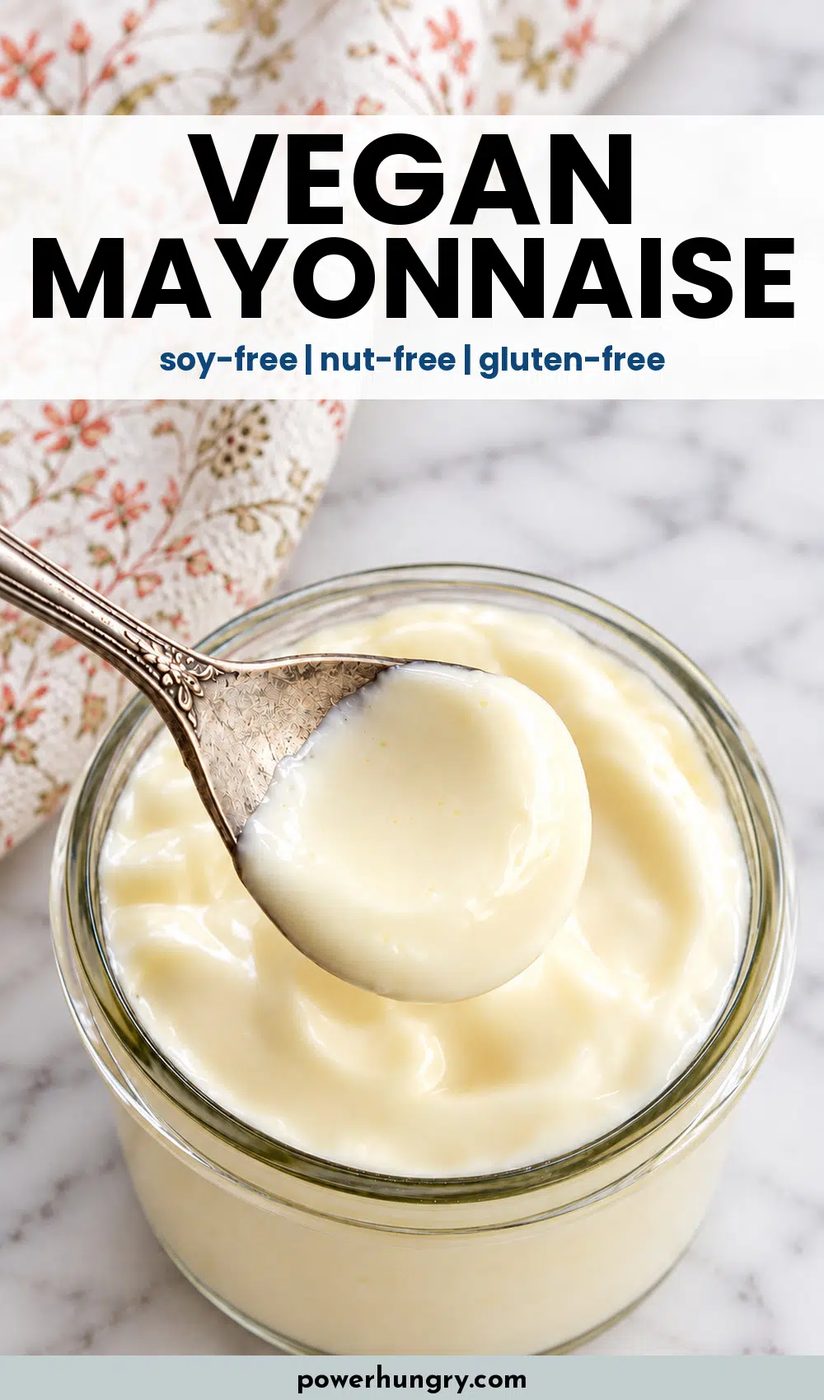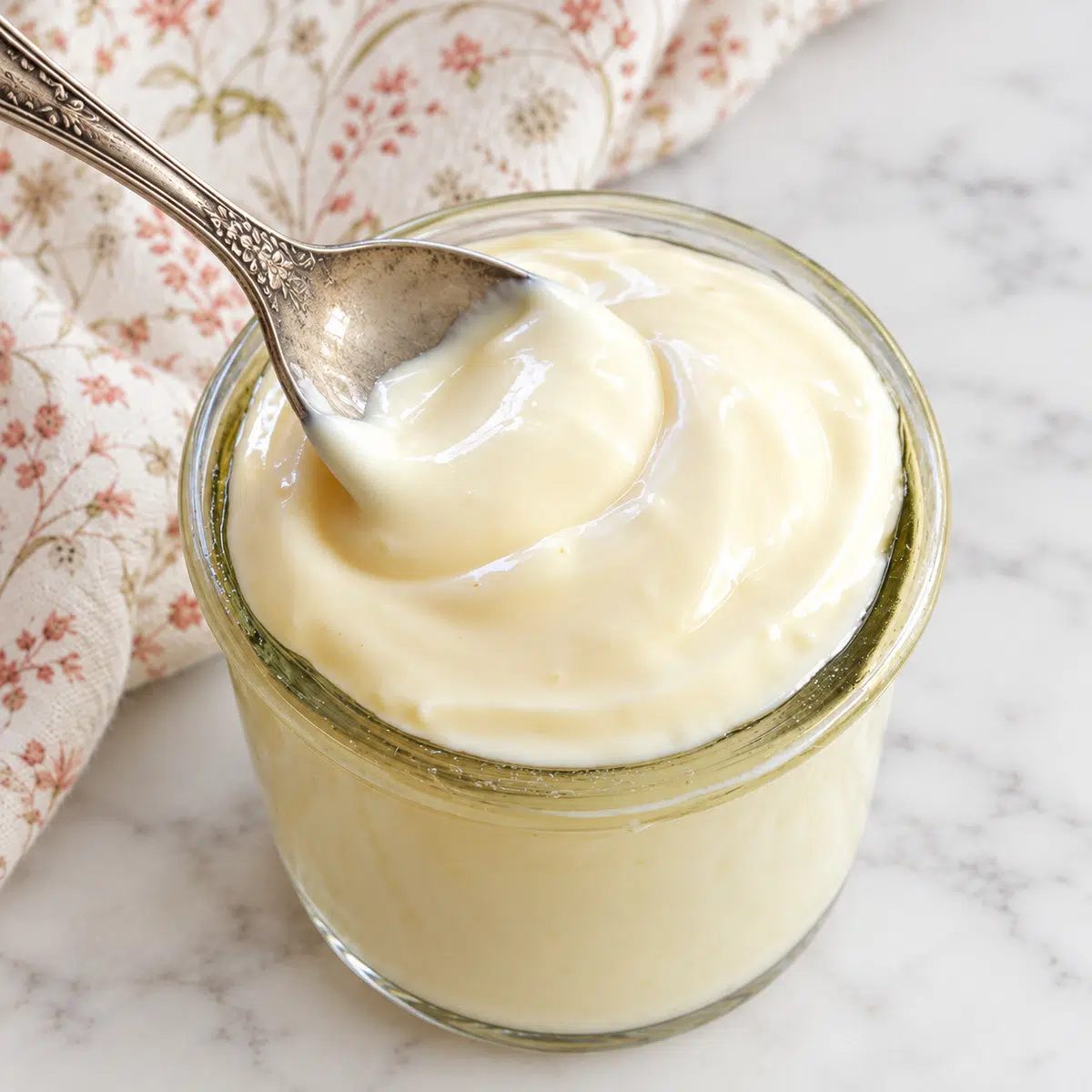
Rich, velvety kitchen-made mayonnaise is well within reach—even without eggs, soy, or cashews. My straightforward chickpea flour mayonnaise blends into a light, creamy spread with a bright lemony tang, ready for sandwiches, potato salad, and all your go-to dips. It is vegan, gluten-free, grain-free, and nut-free, too.
Introduction
Kitchen-made mayonnaise has a way of making an ordinary sandwich feel like something special. I have never been much of a fan of the jarred kind—I avoided it like the plague as a child—but a luscious kitchen-made version? That is another matter entirely.
I wanted that same rich, creamy spread without eggs, soy, or cashews. Chickpea flour turned out to be the answer. If you are looking for a vegan mayonnaise recipe with no soy, a small saucepan and a blender are all you need to get started.
The trick is to cook chickpea flour with water until thick, then chill it until cold and solid. Blended with oil, lemon juice, and Dijon mustard, that humble mixture becomes a pale, velvety mayonnaise. It can look decidedly unpromising at the start of blending; keep going, scraping down the sides as needed, and watch it come together.
I love that the basic straightforward recipe is so useful on its own, yet straightforward to turn into a garlicky aioli or an extra-lemony spread. A jar in the refrigerator gives you plenty of possibilities for sandwiches, vegetables, and creamy salads.
Why You’ll Love This Recipe
- Vegan, egg-free, and dairy-free:Cooked chickpea flour creates the creamy base without eggs or dairy.
- Soy-free and nut-free:No silken tofu, soy milk, or cashews required; choose a soy-free oil and suitable mustard.
- Gluten-free and grain-free:Made without wheat or other grain flours. Choose chickpea flour and condiments labeled gluten-free when needed.
- Rich and velvety:A smooth, light texture with the tang you want in kitchen-made mayonnaise.
- Frugal pantry ingredients:Chickpea flour makes an inexpensive base for a generous batch.
- Straightforward to customize:Keep it classic, or make the garlic aioli and lemon variations below.
Ingredients
The exact amounts of each ingredient are indicated in the recipe card at the end of the post.Toggle betweenUS Customary(volume) andMetric(weights) for preferred measurement option.
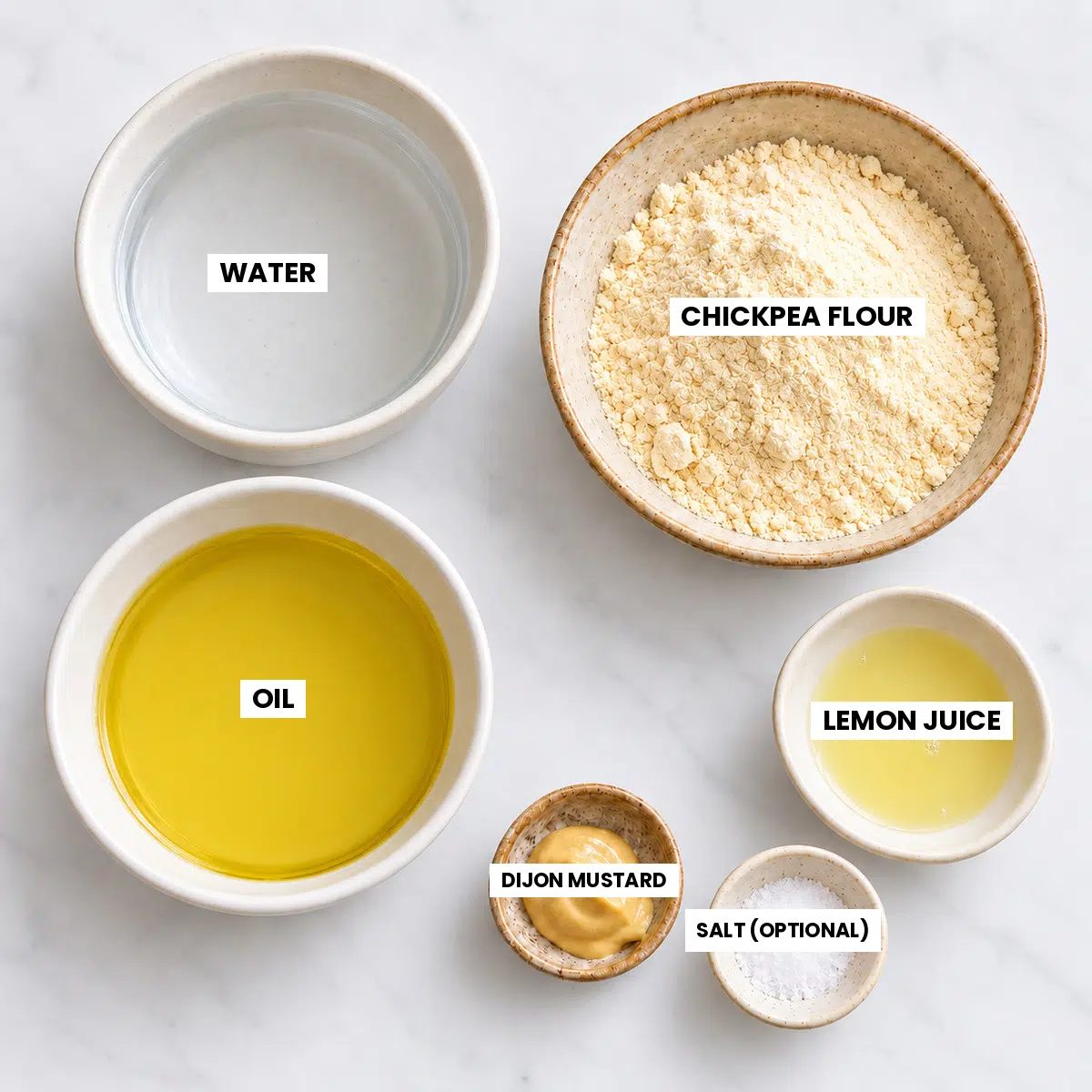
- Chickpea flour:The key ingredient. Cooking it with water produces the firm base that blends into the mayonnaise. Use plain chickpea flour, also called garbanzo bean flour, gram flour or ceci flour.
- Water:For cooking the chickpea flour into a thick mixture.
- Neutral-flavored vegetable oil:Gives the mayonnaise richness. I suggest safflower oil, mild avocado oil, or a mild olive oil. Strong olive oil will give the finished mayonnaise a pronounced olive flavor. For a soy-free recipe, avoid soybean oil and blends that contain it.
- Fresh lemon juice:Adds a bright, tangy flavor.
- Dijon mustard:Adds savory depth and a little sharpness. Choose a vegan Dijon mustard; check its ingredients and allergen information to suit your needs.
- Fine sea salt:Optional and adjustable. Start with the amount in the recipe card, then taste before adding more.
- Cayenne pepper:An optional pinch adds a little warmth.
How to Make Vegan Mayonnaise with No Soy
Note that the complete instructions are also in the recipe card below.
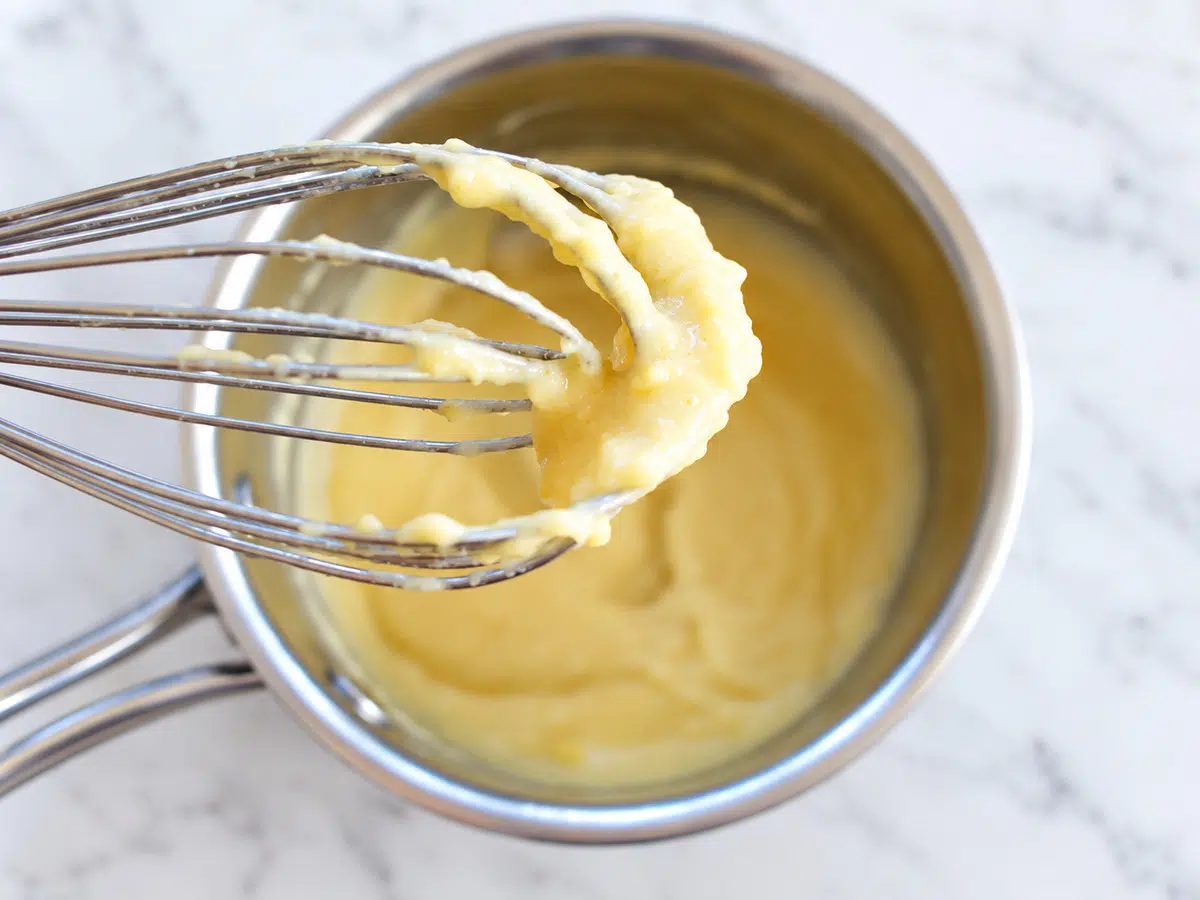
- Cook the chickpea flour.Bring the water to a boil in a medium saucepan over medium-high heat. Whisk the chickpea flour into the boiling hot water & cook for 1 minute, whisking constantly. Reduce the heat to medium-low and continue cooking and whisking for 4 to 5 minutes, until the mixture is very thick and clings to the whisk.
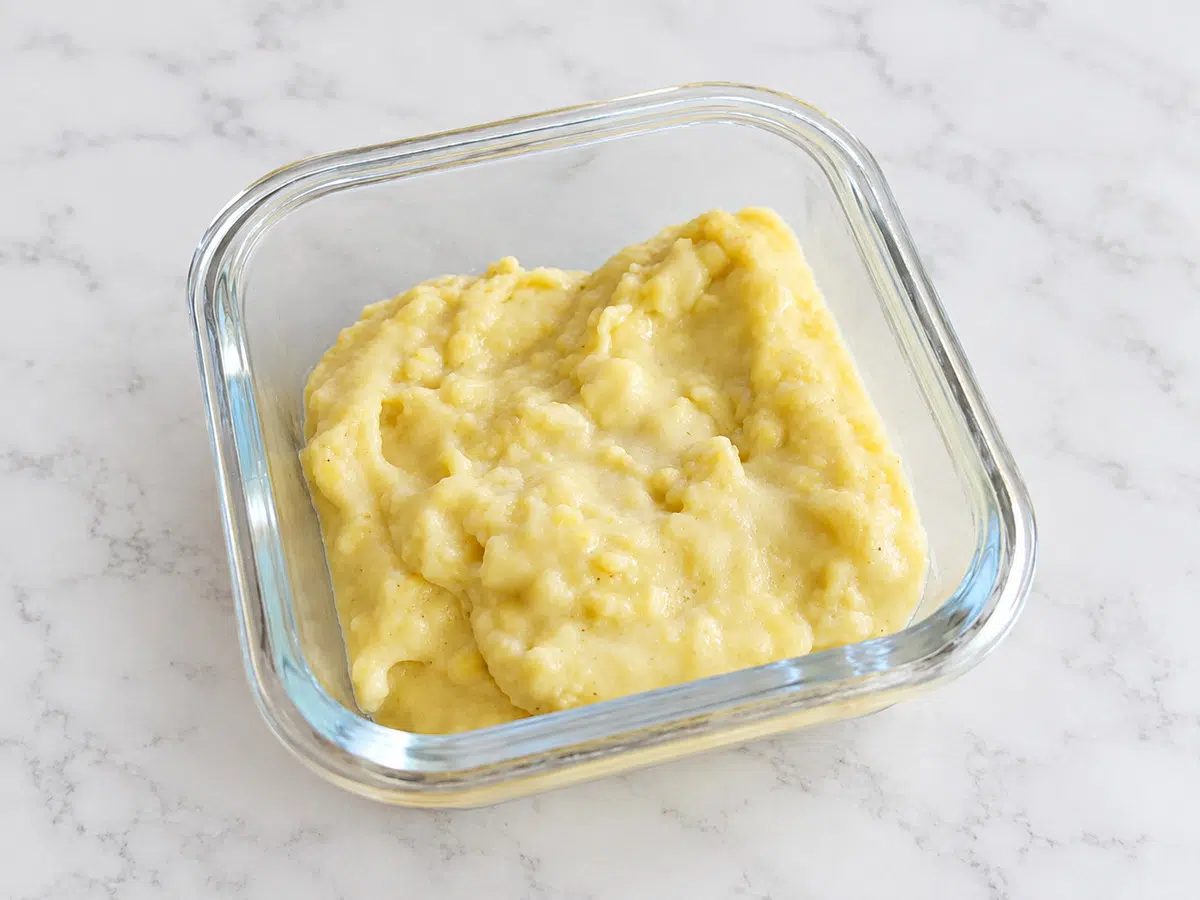
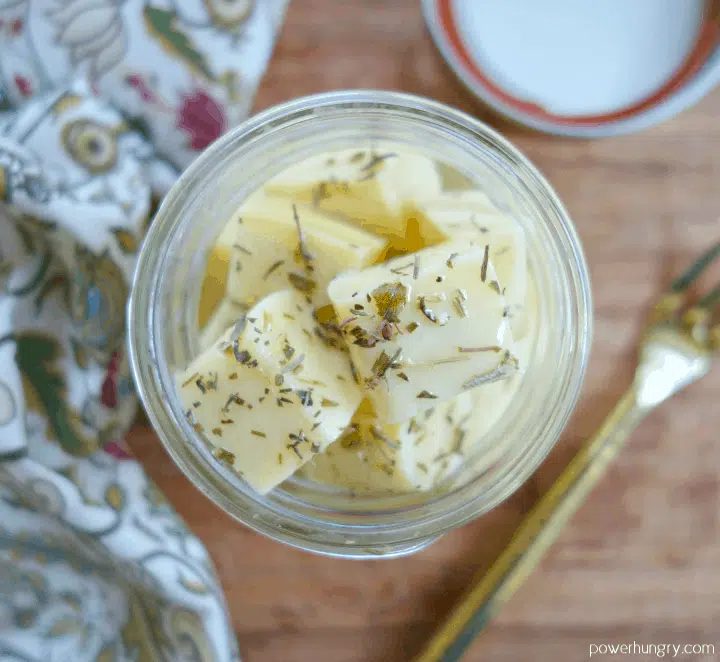
- Chill the base.Scrape the mixture into a glass bowl or container, cover, and refrigerate until very cold and solid. Do not skip this step—the mixture should be firm enough to break into pieces.
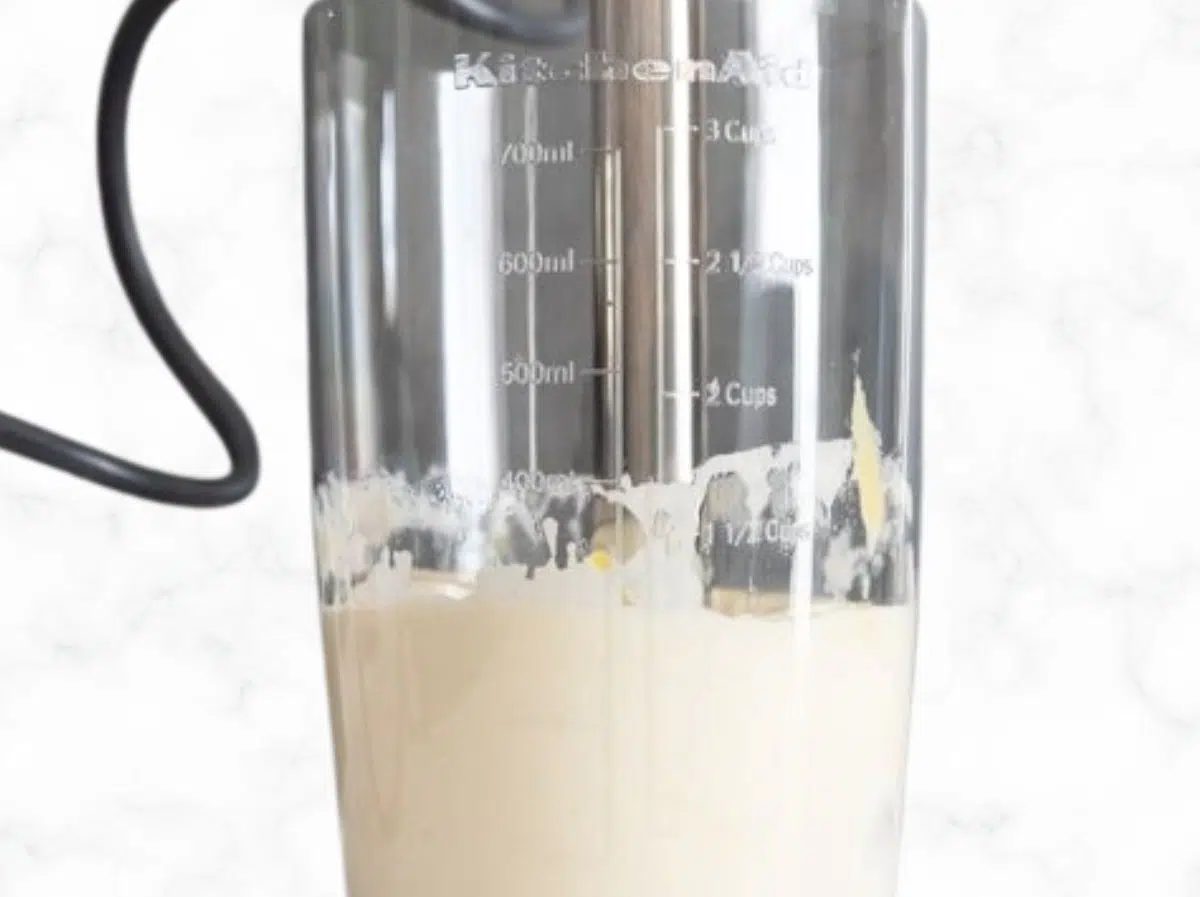
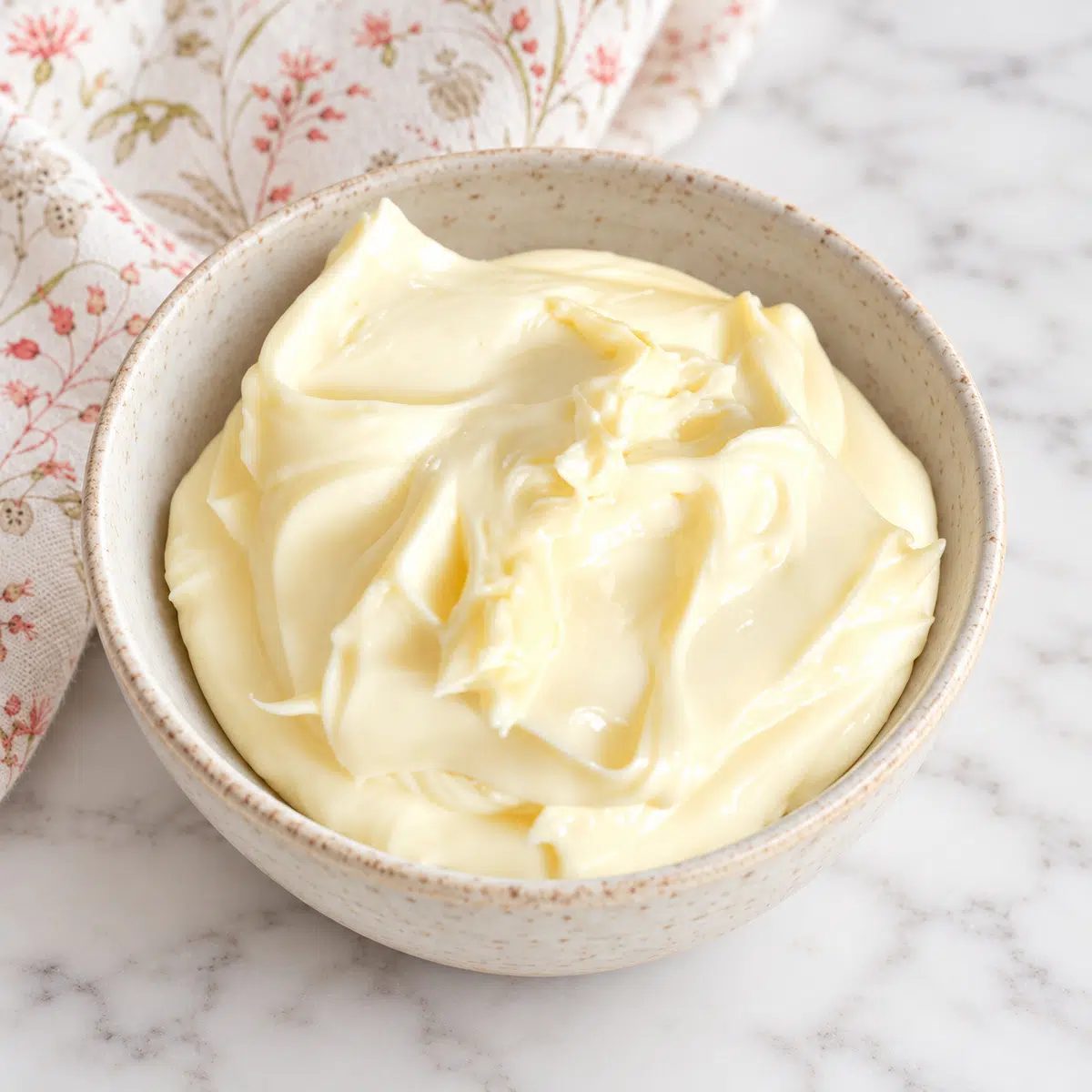
- Blend until creamy.Break up the cold chickpea mixture and add it to a blender with the oil, lemon juice, mustard, optional salt, and optional cayenne. Blend for at least 3 to 4 minutes, stopping to scrape down the sides as needed, until light, fluffy, smooth, and pale in color.
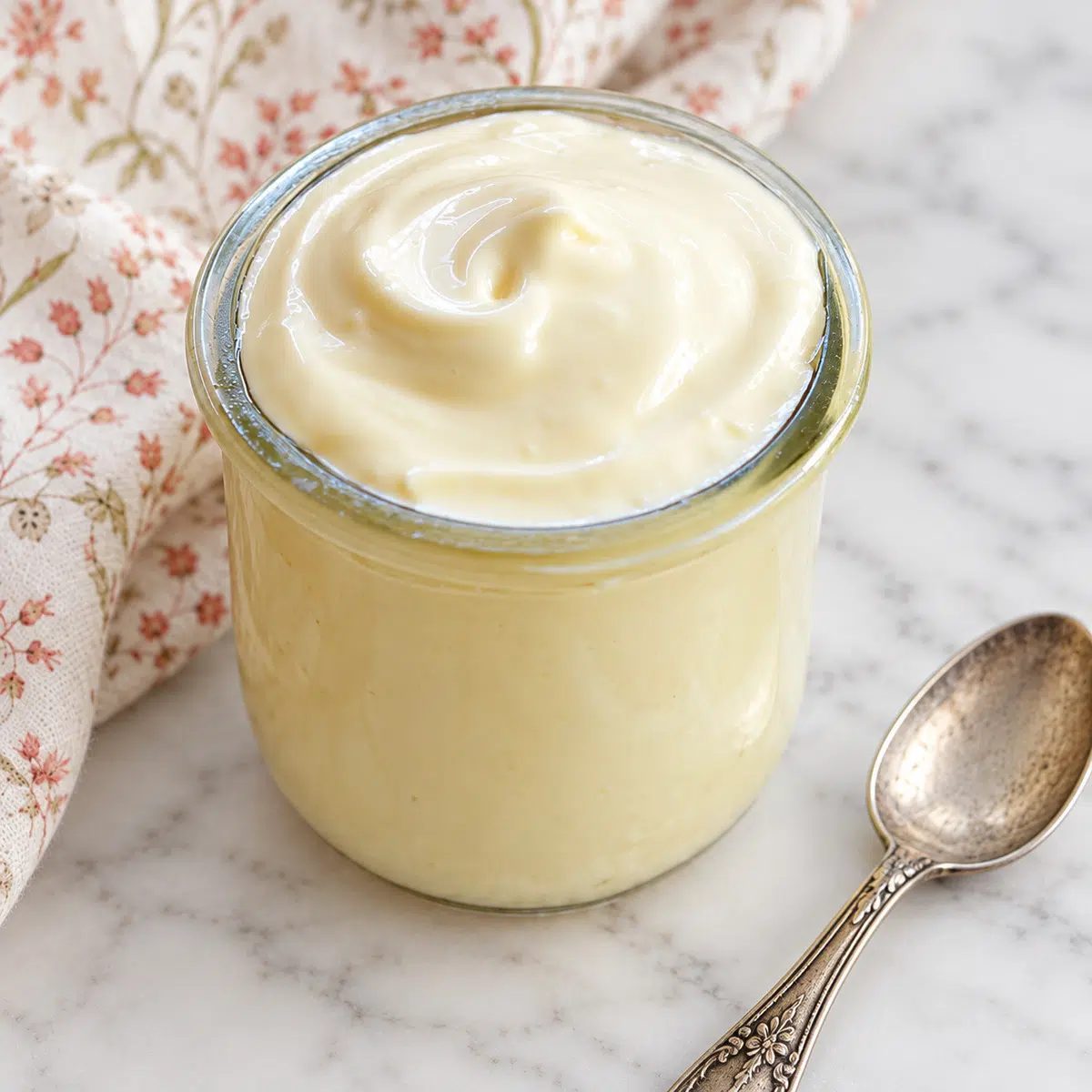
- Store and serve.Transfer to a clean jar or airtight container and refrigerate. Use it as you would any other mayonnaise or aioli.
Taste and Texture
Expect a rich, smooth mayonnaise with a light, fluffy consistency and a pleasant lemon-mustard tang. The oil you choose makes a difference: a neutral oil keeps the flavor mild, while extra-virgin olive oil gives it a more assertive character. The garlic variation is especially good when you want a flavorful dip for vegetables.
Storage
- Refrigerator:Store in a clean, airtight jar or container at 40°F (4°C) or below. As a conservative guideline, use within 3 to 4 days of cooking the chickpea base, including any time spent chilling it before blending. Use a clean utensil each time you take some from the jar.
- Separation:If the mayonnaise separates during refrigerated storage, re-whisk or re-blend it until smooth.
Serving Suggestions
Spread the mayonnaise on sandwiches and wraps, or use it to bind chickpea salad, potato salad, or coleslaw. A spoonful also makes a creamy starting point for dips and salad dressings.
Try the garlic aioli with roasted vegetables or chickpea flour fries. The lemon version is lovely with steamed vegetables or a plain vegetable sandwich.
Flavor Variations
Garlic AioliUse extra-virgin olive oil for the oil and add 2 small garlic cloves, mashed into a paste, when blending. The olive oil and garlic give the mayonnaise a fuller, more savory flavor.
Lemon MayonnaiseIncrease the lemon juice to 4 tablespoons and add 2 teaspoons of finely grated lemon zest when blending. Use the finely grated yellow zest, avoiding the bitter white pith.
“Eggy” MayonnaiseReplace the salt with kala namak (black salt) which has a distinct egg flavor.
Tips for Success
Make It Smooth and Creamy- Cook the base thoroughly.Adding boiling water to chickpea flour is not enough. Cook it on the stovetop until very thick and clinging to the whisk.
- Chill until cold and solid.The cooked mixture should be firm, rather than pourable, before you blend it.
- Do not worry about lumps.A lumpy cooked base is fine; it will be blended smooth.
- Give the blender time.The mixture may look lumpy and oily at first. Blend for at least 3 to 4 minutes, stopping to scrape down the sides, until pale, light, and smooth.
- Choose a mild oil.I suggest a neutral oil for a classic mayonnaise flavor. Save strong extra-virgin olive oil for the aioli variation.
- Add salt once, then taste.Blend in the optional salt with the other ingredients and adjust only after tasting.
Ingredient Substitutions
Ingredient Options and Testing Notes- Oil:Safflower oil, mild avocado oil, or mild olive oil are good choices. You can also combine mild olive oil with another neutral oil. Check blends for soybean oil if you need the mayonnaise to be soy-free.
- Lemon juice:I have not tried it, but one reader reported success using white wine vinegar in place of the lemon juice. I suggest keeping the lemon juice for your first batch so you can get to know the flavor of the recipe.
- Dijon mustard:If you need to avoid mustard, I suggest leaving it out or adding a tiny dash of prepared horseradish instead. Check the horseradish label if mustard is an allergen for you.
- Chickpea flour:I suggest using chickpea flour for this recipe. Pea protein powder is not a suitable substitute; it will not work in the same way.
- Oil-free option reported by a reader:I have not tried it, but one reader reported success replacing the oil with double-strength kitchen-made cashew milk. That version contains nuts and is a reader-tested variation, rather than the formula in the recipe card.
- Salt and cayenne:Both are optional; adjust or omit them to suit your taste.
Frequently Asked Questions
How do you make vegan mayonnaise without soy?I use a cooked, chilled chickpea flour mixture as the base, then blend it with oil, lemon juice, and mustard. No tofu or soy milk is needed. Choose a soy-free oil and check your mustard label.
Does the chickpea flour mixture need to be solid before blending?Yes. Once chilled, it should be cold and solid, with a consistency similar to a hard-boiled egg. If it is still pourable, it has not reached the consistency needed for this recipe.
Why is my mayonnaise runny?I suggest checking the cooked base first: was it very thick after cooking, then cold and solid before blending? An undercooked or insufficiently chilled base can lead to a thin mayonnaise. Make sure you have also used the amounts in the recipe card.
Do I need to add the oil in a slow stream?No. Add the oil to the blender with the cold chickpea mixture and the remaining ingredients. Blend thoroughly, stopping to scrape down the sides as needed.
Why does my vegan mayo taste strongly of olive oil?A pungent olive oil can dominate the flavor. I suggest a milder olive oil, a blend of mild olive oil and a neutral oil, or an entirely neutral oil such as avocado oil or safflower oil.
Can I make the chickpea base ahead of time?Yes. Cook the chickpea mixture, cover, and refrigerate until cold and solid, then blend when you are ready. Count storage time from the day you cook the base, rather than restarting it when you blend the mayonnaise.
Ultimate Collection of Chickpea Flour Recipes
Chickpea flour is one of my go-to ingredients for gluten-free baking. You can see all of mychickpea flour recipesHERE.
Vegan Chickpea Flour Mayonnaise (Soy-Free, Nut-Free)
- Prep Time: 15 minutes
- Cook Time: 6 minutes
- Total Time: 2 hours
- Servings: 3 cups
Ingredients
- 2 cups water
- 3/4 cup chickpea flour
- 3 tablespoons fresh lemon juice
- 1 tablespoon Dijon mustard (vegan certified, as needed)
- 1 1/3 cups mild olive oil or other neutral vegetable oil, such as avocado oil
- Adjustable: 3/4 teaspoon fine sea salt more or less to taste
- Optional: pinch of cayenne pepper
Method
- Boil the water. In a medium saucepan, bring the water to a boil over medium-high heat.
- Cook the chickpea mixture. Whisk in the chickpea flour . Cook for 1 minute, whisking constantly. Reduce the heat to medium-low and cook, whisking, for 4 to 5 minutes longer, until the mixture is very thick and clings to the whisk.
- Chill until solid. Transfer the mixture to a glass bowl or container, cover, and refrigerate until very cold and solid.
- Blend the mayonnaise. Break the cold chickpea mixture into pieces and transfer to a blender. Add the oil, lemon juice, mustard, optional salt, and optional cayenne. Blend for at least 3 to 4 minutes, stopping to scrape down the sides as needed, until the mayonnaise is smooth, light, fluffy, and pale in color. Taste and adjust the salt as desired.
- Refrigerate. Transfer to a clean, airtight jar or container and store in the refrigerator. Re-whisk or re-blend if separation occurs. Use as you would any other mayonnaise or aioli.
Notes
Refrigeration: Keep in an airtight container at 40°F (4°C) or below. As a conservative guideline, use within 3 to 4 days of cooking the chickpea base; include any time spent chilling the base before blending. Use a clean utensil for serving. Oil: I suggest a mild, neutral-flavored oil for a classic mayonnaise flavor. Strong olive oil will give the mayonnaise a pronounced olive flavor. Avoid soybean oil and vegetable oil blends containing soy, as needed. Flavor Variations Garlic Aioli: Use extra-virgin olive oil for the oil and add 2 small garlic cloves, mashed into a paste, when blending. Lemon Mayonnaise: Increase the lemon juice to 4 tablespoons and add 2 teaspoons finely grated lemon zest when blending. Mustard: To avoid mustard, I suggest omitting it or adding a tiny dash of prepared horseradish. Check the horseradish ingredients if you have a mustard allergy. Reader-Reported Oil-Free Variation: I have not tried it, but one reader reported success using double-strength kitchen-made cashew milk in place of the oil. That variation contains nuts. Dietary Needs: Use a soy-free oil, vegan Dijon mustard, and ingredients labeled gluten-free , as needed, for your dietary /allergy needs.