
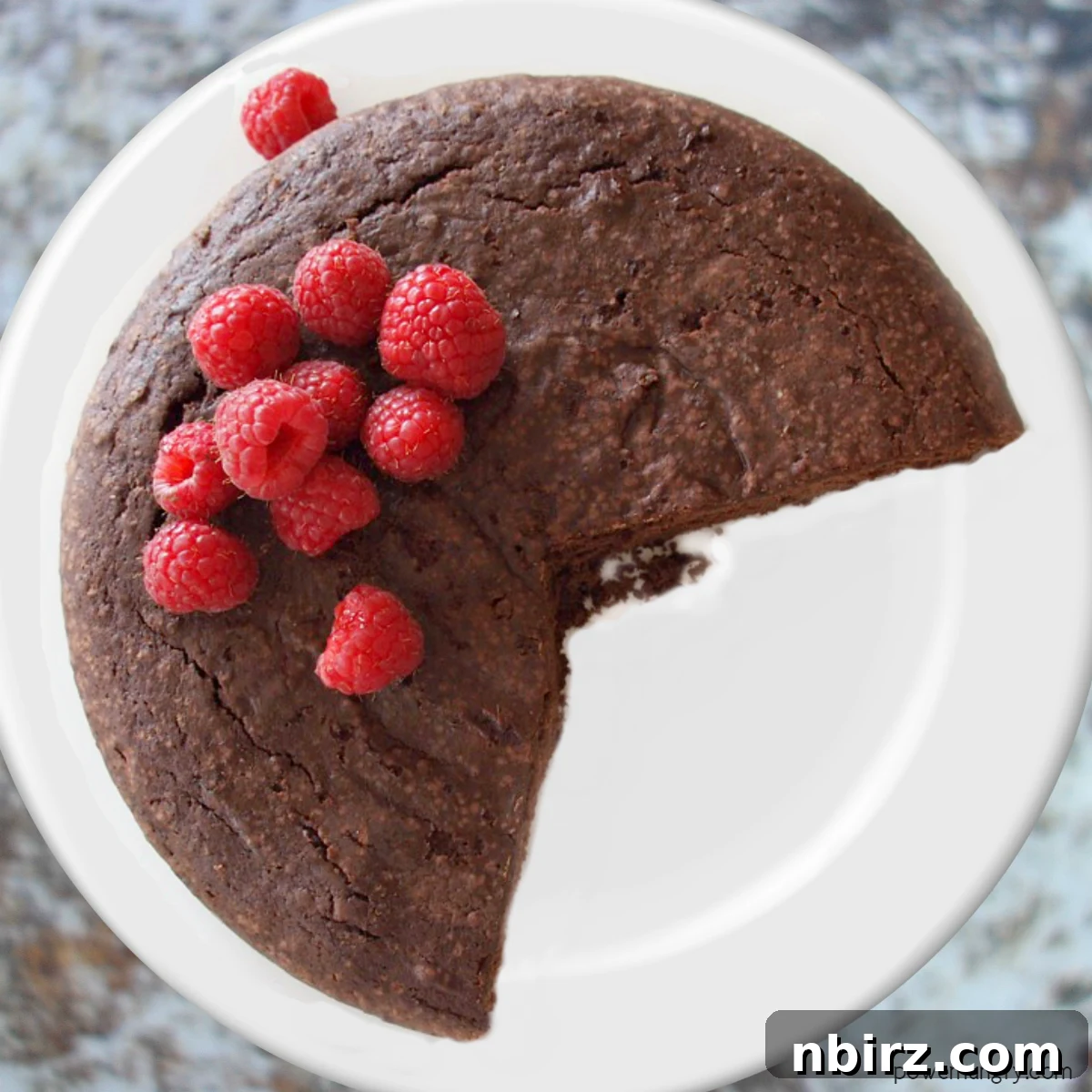
Indulge in the ultimate chocolate fantasy with this easy, amazing, and entirely vegan coconut flour chocolate cake. Crafted with a clever blend of coconut flour, rich coconut oil, and an innovative chickpea flour “egg” replacement, this recipe defies expectations. Not only is it a grain-free and gluten-free delight, but it also offers a Paleo version for those who prefer real eggs. Prepare to be amazed by its tender crumb and deep, satisfying chocolate flavor!
The Challenge and Triumph: Baking Coconut Flour Cake without Eggs
Coconut flour stands out as a truly unique and incredibly versatile ingredient in the world of baking. Its naturally sweet essence and ability to impart a light, fluffy texture make it a popular choice for a wide array of baked goods. Beyond its delightful taste, coconut flour is celebrated for being relatively inexpensive, rich in fiber, and a fantastic low-carb option, making it a boon for health-conscious bakers. Its high fiber content contributes to a feeling of fullness, aids digestion, and helps regulate blood sugar, while its healthy fats, including medium-chain triglycerides (MCTs), offer a nourishing boost.
However, working with coconut flour in vegan recipes presents a significant hurdle. Unlike wheat flour, coconut flour lacks gluten, the protein structure that provides elasticity and strength to baked goods. Furthermore, it possesses an extraordinary absorbency, acting almost like a sponge. This combination means it typically demands a tremendous number of eggs to provide the necessary structure and moisture balance. Without the architectural support of eggs, coconut flour baked creations often fall flat, turning into a gooey, dense, and unappetizing “porridge” rather than a light, airy cake.
For many bakers experimenting with vegan alternatives, the usual suspects for egg replacements often fail miserably when paired with coconut flour. I’ve personally undertaken countless (and frankly, often disheartening) experiments with common egg substitutes. Flax eggs, chia seeds, psyllium husk, and even commercial boxed egg replacers, while effective in other recipes, simply do not provide the robust binding and structural properties that coconut flour desperately needs. They often result in gummy textures or cakes that refuse to rise, leaving bakers feeling frustrated and defeated.
But fear not, for there is a culinary superhero in this story: chickpea flour. This unassuming ingredient, also known as garbanzo bean flour, proves to be the perfect counterpoint to coconut flour’s peculiarities. Its unique composition of both high protein and high fiber works synergistically to mimic the structural integrity of eggs. The protein in chickpea flour helps create a sturdy framework, allowing cakes, muffins, and cookies to rise beautifully and hold their shape with remarkable stability. Simultaneously, its fiber content ensures a moist, tender crumb that is wonderfully akin to baked goods made with conventional all-purpose flour. Moreover, the inherent sweet and mellow flavor of coconut flour gracefully balances out the subtle earthiness of chickpea flour, resulting in a harmonious and deeply satisfying taste profile.
Mastering the Method: How to Make Vegan Coconut Flour Chocolate Cake
Putting chickpea flour to the ultimate test, I developed this eggless coconut flour chocolate cake, perfecting a method that ensures success every time. Follow these detailed steps to create your own magnificent vegan dessert:
Step 1: Prepare Your “Chickpea Egg”
Begin by creating your innovative egg substitute. In a medium bowl, combine 3/4 cup of chickpea flour with 3/4 cup of warm water. Whisk this mixture vigorously until it is completely smooth and lump-free. The warmth of the water is key here, as it helps to activate the proteins in the chickpea flour and ensures a silky, uniform consistency, preventing any undesirable grittiness in your final cake. This “chickpea egg” will be the binding and lifting agent for your cake, performing the crucial role typically played by eggs.
Step 2: Craft the Decadent Chocolate Base
Next, prepare the rich chocolate foundation for your cake. In a medium, heavy-bottomed saucepan, gently melt 1 cup of semisweet chocolate chips with 1/2 cup of virgin coconut oil over low heat. It’s crucial to maintain a low temperature and stir constantly to prevent the chocolate from scorching. Continue whisking until the mixture is beautifully blended and utterly smooth, creating a luscious, glossy ganache-like base. Once melted, carefully scrape the chocolate mixture into a large mixing bowl.
Into this warm chocolate mixture, whisk in 1/2 cup of pure maple syrup, 1/2 cup of your favorite nondairy milk (almond, oat, or soy milk all work wonderfully), 2 teaspoons of vanilla extract for a fragrant aroma, and 2 teaspoons of cider vinegar. The vinegar is not just for flavor; it plays a vital role in reacting with the baking soda later to provide lift and lightness to the cake. Whisk until all these ingredients are thoroughly blended. Allow this wet mixture to cool for approximately 5 minutes. This brief cooling period is essential to prevent the chickpea flour mixture from “cooking” when added, which could affect its binding properties. Once slightly cooled, whisk in your prepared chickpea flour mixture until it is completely incorporated and the batter is smooth and uniform.
Step 3: Combine Dry Ingredients
While the chocolate mixture cools, prepare your dry ingredients. In a separate medium bowl, whisk together 1/3 cup of coconut flour, 1/2 cup of unsweetened cocoa powder, 1 teaspoon of baking soda, and 1/4 teaspoon of fine sea salt. Sifting the cocoa powder is recommended to prevent lumps and ensure even distribution. The baking soda will react with the vinegar in the wet mixture to create the gas needed for a beautiful rise, while the salt enhances all the other flavors, bringing out the depth of the chocolate.
Step 4: Bring It All Together & Bake
Add the whisked dry ingredients to the chocolate mixture. Using a whisk or a spatula, gently mix until everything is well-blended and smooth. Be careful not to overmix, as this can sometimes lead to a tougher cake texture. Once your batter is ready, transfer it to a prepared 9-inch round baking pan. Ensure the pan is greased or sprayed, and for extra ease of removal, you can line the bottom with a circle of parchment paper.
Bake the cake in your preheated oven at 350°F (180°C) for 25 to 30 minutes. You’ll know it’s ready when a toothpick inserted near the center comes out mostly clean, perhaps with a few moist crumbs attached. The edges of the cake may also begin to pull slightly away from the sides of the pan. Overbaking can lead to a dry cake, so keep a close eye on it during the final minutes.
Step 5: Cool and Serve
Once baked, remove the cake from the oven and allow it to cool in the pan for about 10-15 minutes. Then, carefully invert the cake onto a cooling rack. Let it cool completely on the rack before attempting to handle or frost it. A fully cooled cake will be much sturdier and less prone to breaking. Once cooled, you can use a flat plate or another cooling rack to gently invert it right side up.
This cake is a revelation: moist, tender, and boasting a profoundly deep chocolate flavor that will satisfy even the most discerning chocoholic. It’s wonderfully versatile for serving. You can elegantly frost it with your favorite vegan chocolate ganache or buttercream, or simply dust it with a sprinkle of confectioners’ sugar for a sophisticated touch. For a more rustic and fresh approach, serve it plain alongside a vibrant medley of fresh berries, which beautifully complement the rich chocolate.
Paleo Option: A Classic Approach
For those who adore the flavor and texture of this cake but do not require it to be vegan, a delightful Paleo option is available. Simply replace the chickpea flour and water mixture with 6 large eggs. This substitution will yield a cake that aligns with Paleo dietary guidelines, offering the same grain-free and gluten-free benefits with the traditional richness and binding power of eggs. It’s a versatile recipe designed to cater to different dietary needs without compromising on taste or texture.
Happy baking, and enjoy this incredible creation!
More Grain-Free Vegan Cakes to Try:
If you loved this recipe and are eager to explore more delicious and wholesome grain-free vegan baking, check out these other fantastic options:
- Vegan Coconut Almond Flour Cake {grain-free, oil-free}: A light and fragrant cake perfect for a delightful tea-time treat.
- Vanilla Almond Flour Cake {vegan, oil-free}: A classic vanilla cake, elevated with almond flour for a moist and tender result.
- Vegan Chickpea Flour Chocolate Cake {Grain-Free, 1-bowl}: Another ingenious recipe showcasing the power of chickpea flour in a simple, fuss-free chocolate cake.
- Chickpea Flour Banana Cake (Vegan, Grain-Free): A wonderful way to use ripe bananas in a healthy and satisfying cake.
Print Recipe
Vegan Coconut Flour Chocolate Cake {gluten-free, grain-free}
Camilla
10 minutes
30 minutes
40 minutes
10 slices
Ingredients
- 3/4 cup (90 g) chickpea flour
- 3/4 cup (175 mL) warm water
- 1 cup (6 oz/170 g) semisweet chocolate chips
- 1/2 cup (125 mL) virgin coconut oil
- 1/2 cup (125 mL) maple syrup
- 1/2 cup (125 mL) nondairy milk
- 2 teaspoons vanilla extract
- 2 teaspoons cider vinegar
- 1/3 cup (37 g) coconut flour
- 1/2 cup (40 g) unsweetened cocoa powder
- 1 teaspoon baking soda
- 1/4 teaspoon fine sea salt
Instructions
- Preheat oven to 350°F (180°C). Grease or spray a 9-inch round baking pan (optional: line the bottom of the pan with a circle of parchment paper).
- In a medium bowl, whisk the chickpea flour and water until completely smooth.
- In a medium, heavy-bottom saucepan, melt the chocolate with the coconut oil over low heat, stirring until melted and smooth. Transfer to a large bowl and whisk in maple syrup, nondairy milk, vanilla and vinegar until blended; let cool for 5 minutes and then whisk in the chickpea flour mixture until blended.
- In a medium bowl, whisk the coconut flour, cocoa powder, baking soda and salt. Add to the chocolate mixture, whisking until well-blended and smooth. Transfer batter to prepared pan.
- Bake in the preheated oven for 25 to 30 minutes until a toothpick inserted near the center comes out mostly clean with a few moist crumbs attached. Invert onto a cooling rack and cool completely. Then use a plate to invert right side up.
Notes
Paleo Version: To adapt this recipe for a Paleo diet (non-vegan), simply replace the chickpea flour and water mixture entirely with 6 large eggs. This will give you a delicious grain-free and gluten-free chocolate cake that fits Paleo dietary guidelines.
Nutrition
|
Calories: 281kcal
|
Carbohydrates: 28.9g
|
Protein: 3g
|
Fat: 18.6g
|
Saturated Fat: 14.3g
|
Sodium: 205.9mg
|
Fiber: 4.1g
|
Sugar: 18.1g
Like this recipe? We encourage you to rate it and leave a comment below! Your feedback helps other bakers discover and enjoy this delicious treat.