

Welcome to the world of perfect, scrumptious gluten-free and vegan cassava flour gingerbread cut-out cookies! These delightful treats are not only naturally grain-free and Paleo-friendly but also incredibly easy to make, ensuring a stress-free baking experience. Get ready to create holiday magic in your kitchen!
Unveiling the Best Vegan Cassava Flour Gingerbread Cut-Out Cookies
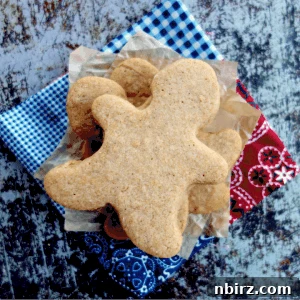
Are you searching for a gingerbread cookie recipe that truly stands out? Look no further! These are, without a doubt, the finest gingerbread cut-out cookies I have ever had the pleasure of baking and tasting. The texture is pure perfection—subtly crisp around the edges, yet wonderfully tender in the center. What’s more, they are remarkably easy to bake, consistently yielding fantastic results across the entire batch. And the flavor? Imagine all the warm, comforting spices of classic gingerbread, elevated to a truly heavenly experience. If you’ve been looking for a reliable, delicious, and diet-friendly gingerbread, your search ends here.
The secret to their incredible texture and ease of baking lies in one exceptional ingredient: cassava flour. Unlike many gluten-free baking recipes that require a blend of multiple flours, this recipe simplifies things by using just one. This makes it ideal for those with various dietary restrictions or anyone looking for a straightforward, foolproof baking process.
Allow me to introduce you to my Vegan Cassava Flour Gingerbread Cut-Out Cookies. Prepare to fall in love with these festive delights!
Why You’ll Love This Recipe: Incredible Benefits
Beyond their delightful taste and texture, these gingerbread cookies offer an array of benefits that make them a standout choice for anyone seeking wholesome yet indulgent treats. Whether you have specific dietary needs or simply prefer cleaner eating, this recipe has you covered:
- Vegan (Egg-Free, Dairy-Free): Perfect for those following a plant-based diet or managing egg and dairy allergies. You won’t miss any of the traditional richness.
- Gluten-Free: Made entirely without gluten-containing grains, these cookies are safe and delicious for individuals with celiac disease or gluten sensitivity.
- Grain-Free: Beyond gluten-free, this recipe is entirely grain-free, making it suitable for Paleo diets and those avoiding all grains.
- Nut-Free: A fantastic option for school events, parties, or households with nut allergies, ensuring everyone can enjoy a festive cookie.
- Seed-Free: Further broadening its allergen-friendly profile, these cookies are also free from seeds.
- Refined Sugar-Free: Sweetened naturally with coconut sugar and maple syrup, offering a more wholesome alternative to processed sugars.
- Quick & Easy to Make: Designed for simplicity, you’ll be amazed at how quickly these come together.
- No Chilling Required: One of the biggest time-savers! This dough is ready to roll out immediately, cutting down on preparation time significantly.
These combined benefits make this gingerbread recipe a true winner, allowing more people to enjoy the joy of holiday baking without compromise.
Essential Ingredients for Your Cassava Flour Gingerbread Cookies
For precise measurements of each ingredient, please refer to the detailed recipe card located at the end of this post. You can conveniently switch between US Customary (volume) and Metric (weights) units to suit your preferred measurement system.
- Cassava Flour: The star ingredient, providing structure and a tender crumb without gluten or grains.
- Non-Hydrogenated Vegetable Shortening: Crucial for achieving the perfect crisp-tender texture and richness. Alternatives are discussed in the recipe notes.
- Coconut Sugar: A natural, unrefined sweetener that imparts a subtle caramel note and beautiful color.
- Maple Syrup: Adds depth of flavor and moisture, contributing to the cookie’s delightful chewiness.
- Vanilla Extract: A classic flavor enhancer that complements the warm spices.
- Baking Soda: Our leavening agent, ensuring a light and airy texture.
- Gingerbread Spices: A blend of ground ginger, cinnamon, nutmeg, and cloves creates that unmistakable, aromatic gingerbread flavor.
- Salt: Balances the sweetness and enhances all the other flavors.
Each ingredient plays a vital role in crafting these exceptional cookies. Using high-quality spices will make a noticeable difference in the final flavor, so don’t skimp!
Step-by-Step Guide: How to Make Vegan Cassava Flour Gingerbread Cut-Out Cookies
Please remember that the full, comprehensive directions are also available in the recipe card below for easy reference.
Creating these gingerbread cookies is surprisingly simple—in fact, many find it even easier than traditional versions, thanks to the forgiving nature of cassava flour dough. The initial steps will feel very familiar to any experienced baker.
Step One: Prepare Your Oven and Baking Sheet
Begin by preheating your oven to 350°F (180°C). This ensures your oven is at the correct temperature when your cookies are ready to bake, preventing uneven cooking. Next, line a large baking sheet with parchment paper. Parchment paper is essential here as it prevents sticking and makes for easy transfer of the baked cookies.
Step Two: Combine the Dry Ingredients
In a medium-sized bowl, meticulously whisk together the cassava flour, baking soda, salt, and all your aromatic gingerbread spices (ground ginger, cinnamon, nutmeg, and cloves). Whisking ensures that these dry ingredients are thoroughly blended and evenly distributed throughout the dough, which is key for consistent flavor and texture in every bite.
Step Three: Cream the Wet Ingredients
In a separate, larger bowl, beat the softened non-hydrogenated vegetable shortening. I opted for an organic variety, but refer to the recipe notes for other fat options like plant-based butter. To this, add the coconut sugar, maple syrup, and vanilla extract. Beat these ingredients together on medium speed, pausing occasionally to scrape down the sides of the bowl. Continue until the mixture becomes light, fluffy, and well-combined. This creaming process incorporates air, which contributes to the cookies’ tender texture.
Step Four: Form the Cookie Dough
Gently add the whisked dry ingredients to the creamed wet mixture. While you can use your electric mixer for this step, I find that stirring by hand with a sturdy wooden spoon works wonderfully and gives you a better feel for the dough’s consistency. At first, the mixture will appear quite dry and crumbly, but persist! With a bit of mixing, it will quickly come together to form a smooth, soft, and pliable cookie dough.
No Chilling Required: A Baker’s Dream!
One of the most appealing features of this cassava flour gingerbread dough is that it requires absolutely no chilling! That’s right—once your dough is mixed, it’s immediately ready to be rolled out, cut into your favorite festive shapes, and baked. This saves significant time and effort, making last-minute holiday baking a breeze.
Step Five: Roll Out the Dough to Perfection
Divide your freshly made dough into two equal portions. Take one portion and place it onto a sheet of parchment paper or wax paper set on a flat surface. Using your fingertips, gently press the dough out into a rough, even layer. This initial pressing helps to distribute the dough more uniformly before rolling.
The Smart Way to Roll Your Cookie Dough
Cover the dough with a second piece of wax paper or parchment paper. Now, with a rolling pin, roll the dough out evenly to an approximate thickness of 1/8-inch. The beauty of this method is that no additional flour is needed for dusting! This means a much cleaner workspace and a faster, easier rolling process compared to traditional cookie doughs. Plus, because cassava flour dough is both grain-free and gluten-free, it is incredibly forgiving. You can roll and re-roll scraps as many times as you need without the dough ever becoming tough or unmanageable, ensuring no dough goes to waste.
While the dough’s easy rollability is a huge advantage, its tender, soft nature can make transferring cut-outs a tad challenging. But fear not, I have a simple trick up my sleeve!
Step Six: Effortlessly Cut Out Perfect Cookie Shapes
Here’s the foolproof method for achieving perfectly shaped cookies with ease, even with delicate dough:
Press your chosen cookie cutter firmly into the rolled dough, but leave the cutter in place. Using your fingertips, carefully remove the excess dough from around the edges of the cutter. Once the excess dough is cleared, gently slide a thin metal spatula directly under the cutter and the cut-out shape. This keeps the shape intact as you lift it. Carefully transfer the spatula with the cookie and cutter to your parchment-lined baking sheet. Once on the sheet, gently remove the cutter. Voilà! A perfectly formed cookie ready for baking.
Repeat this process with the remaining dough, re-rolling the scraps as needed (remember, it won’t get tough!). Space the cookies about an inch apart on the baking sheet to allow for even baking. You can use any size or style of cookie cutter you desire, but for best results, try to bake shapes that are similar in size on each sheet. For reference, I was able to yield exactly two dozen cookies using a classic gingerbread person cutter, measuring approximately 3 inches (7.5 cm) long and 2 inches (5 cm) wide.
Step Seven: Bake to Golden Perfection
Place your baking sheet into the preheated oven and bake for 9 to 10 minutes. This timing is ideal for medium-sized cookies; adjust slightly more or less depending on the specific size and thickness of your cut-outs. The cookies are done when they appear light golden brown around the edges and their surfaces look dry and set. They will firm up further upon cooling.
Once baked, remove the cookies from the oven and let them cool on the baking sheet for a crucial 3 minutes. This brief cooling period allows them to set slightly before you attempt to move them. After 3 minutes, carefully transfer the still-warm cookies to a wire cooling rack to cool completely. They may feel somewhat delicate when warm, but once fully cooled, they will achieve that wonderfully crisp-tender texture you crave in a perfect gingerbread cookie. Trust me, these are SOOOOOO good!
Now comes the fun part: enjoy decorating your beautiful cookies with your favorite vegan icing and sprinkles, or keep them perfectly plain to savor their rich, spicy flavor. Either way, these vegan cassava flour gingerbread cookies are guaranteed to make many holiday dreams come true. Happy baking, and happy feasting!
Frequently Asked Questions (FAQ)
Got questions? We’ve got answers to help you make these delicious cookies a success!
How Should the Cookies Be Stored?
To maintain their freshness and crisp-tender texture, store the completely cooled cookies in an airtight container at room temperature. They will remain delightful for up to 5 days. For longer storage, you can freeze them for up to 6 months. When ready to enjoy from the freezer, simply let them thaw at room temperature.
What Can Be Used in Place of the Shortening?
While non-hydrogenated vegetable shortening is recommended for its consistent results, you can certainly experiment with alternatives. An equal amount of plant-based butter, such as Earth Balance Buttery Sticks, is a great substitute and should yield similar results. I have not personally tested the recipe with coconut oil or dairy butter, but a softened version of either would likely work, though the final texture might vary slightly. If using coconut oil, ensure it’s solid but soft, not melted, to maintain the dough’s consistency.
Can Other Sweeteners Be Used?
Absolutely! The sweetness and depth of flavor can be customized to your preference. An equal amount of brown sugar can be directly substituted for the coconut sugar. For a richer, darker, and more traditional gingerbread flavor, consider using molasses (specifically regular molasses, not blackstrap, which can be too bitter) in place of the maple syrup. You also have the option to use 100% sugar—for example, 1/2 cup of either coconut sugar or brown sugar, omitting the syrup or molasses entirely. Be aware that using only dry sugar will result in slightly crisper cookies.
Can I Use Tapioca Flour in Place of Cassava Flour?
No, it is crucial not to substitute tapioca starch (often labeled as tapioca flour) for cassava flour in this recipe. While both are derived from the cassava plant, they are distinct ingredients with very different properties in baking. Cassava flour is a whole flour, whereas tapioca starch is pure starch. Using tapioca starch instead of cassava flour will drastically alter the texture and structure of these cookies, likely leading to unsatisfactory results.
Happy baking, and may your holidays be filled with the delicious aroma of these wonderful gingerbread cookies!
More Delicious Gluten-Free & Vegan Cookie Recipes:
- Coconut Flour Cut-Out Cookies {vegan, grain-free}
- Cassava Flour Chocolate Chip Cookies {vegan, grain-free}
- Vegan Cassava Flour Applesauce Cookies {oil-free, GF}
- Maple Almond Flour Cut-Out Cookies {vegan, grain-free}
- 2-Ingredient Almond Flour Cut-Out Cookies {vegan, keto option}
- Vegan Chickpea Flour Cut-Out Cookies (grain-free)
Vegan Cassava Flour Gingerbread Cut Out Cookies {gluten-free}
Camilla
10 minutes
10 minutes
20 minutes
24
2 to 3-inch (5 to 7.5 cm) cookies
Ingredients
-
1.5
cups
cassava flour -
1.5
teaspoons
ground ginger -
1
teaspoon
ground cinnamon -
1/2
teaspoon
baking soda -
1/4
teaspoon
salt -
1/4
teaspoon
ground nutmeg -
1/8
teaspoon
ground cloves -
2/3
cup
non-hydrogenated vegetable shortening ,
(see notes for options) -
1/4
cup
coconut sugar (see notes for options) -
1/4
cup
maple syrup (see notes for options) -
1
teaspoon
vanilla extract
Metric
Instructions
-
Preheat the oven to 350F (180C). Line a cookie sheet with parchment paper.
-
In a medium bowl, whisk the cassava flour, ginger, cinnamon, baking soda, salt, nutmeg, and cloves.
-
Place the shortening, coconut sugar, maple syrup and vanilla in a large bowl. With an electric mixer, mix on medium speed until fluffy. Add the flour mixture, stir with a wooden spoon until completely blended.
-
Divide the dough into two portions. Place a piece of wax paper or parchment paper on a flat surface; place half of dough on it and roughly press it out with fingertips. Cover with a second piece or wax/parchment paper. With a rolling pin, roll to 1/8-inch thickness.
-
Cut out one shape; peel/nudge away dough outside of cutter. Keeping cutter in place, slide a metal spatula under cut-out and cutter (this keeps the dough in shape) and move to prepared cookie sheet. Remove cutter.
-
Repeat with remaining dough. The dough can be re-rolled many times (it will not compromise the dough, at all). Space the cookies about 1 -inch (2.5 cm) apart on sheet.
-
Bake one sheet at a time in the preheated oven for 9 to 10 minutes until set and golden brown. Cool on cookie sheet for 3 minutes before (carefully) transferring to a wire rack to cool completely.
-
The cookies are somewhat delicate while warm. They will be perfectly firm once completley cooled! They are crisp-tender and about as close to perfect as a gingerbread cookie cut-out can be!
Notes
Alternative fats: An equal amount of plant-based butter (e.g., Earth Balance Buttery Sticks) can be used in place of the shortening. I have not tested the recipe with coconut oil, nor dairy butter, but softened versions of either will most likely work.
Alternative Sweeteners: An equal amount of brown sugar can be used in place of the coconut sugar. For a darker, richer cookie, use molasses (not blackstrap) in place of the maple syrup. You can also use 100% sugar (i.e., 1/2 cup coconut sugar or brown sugar, no syrup or molasses). The cookies will be slightly crisper.
Tip: Note that cassava flour and tapioca starch are not equivalent ingredients. The latter cannot be used in place of the former in this recipe.
Nutrition
Calories: 93kcal |
Carbohydrates: 10.9g |
Protein: 0.3g |
Fat: 5.8g |
Saturated Fat: 2.7g |
Sodium: 49.9mg |
Fiber: 0.5g |
Sugar: 4g
Like this recipe? Rate and comment below!