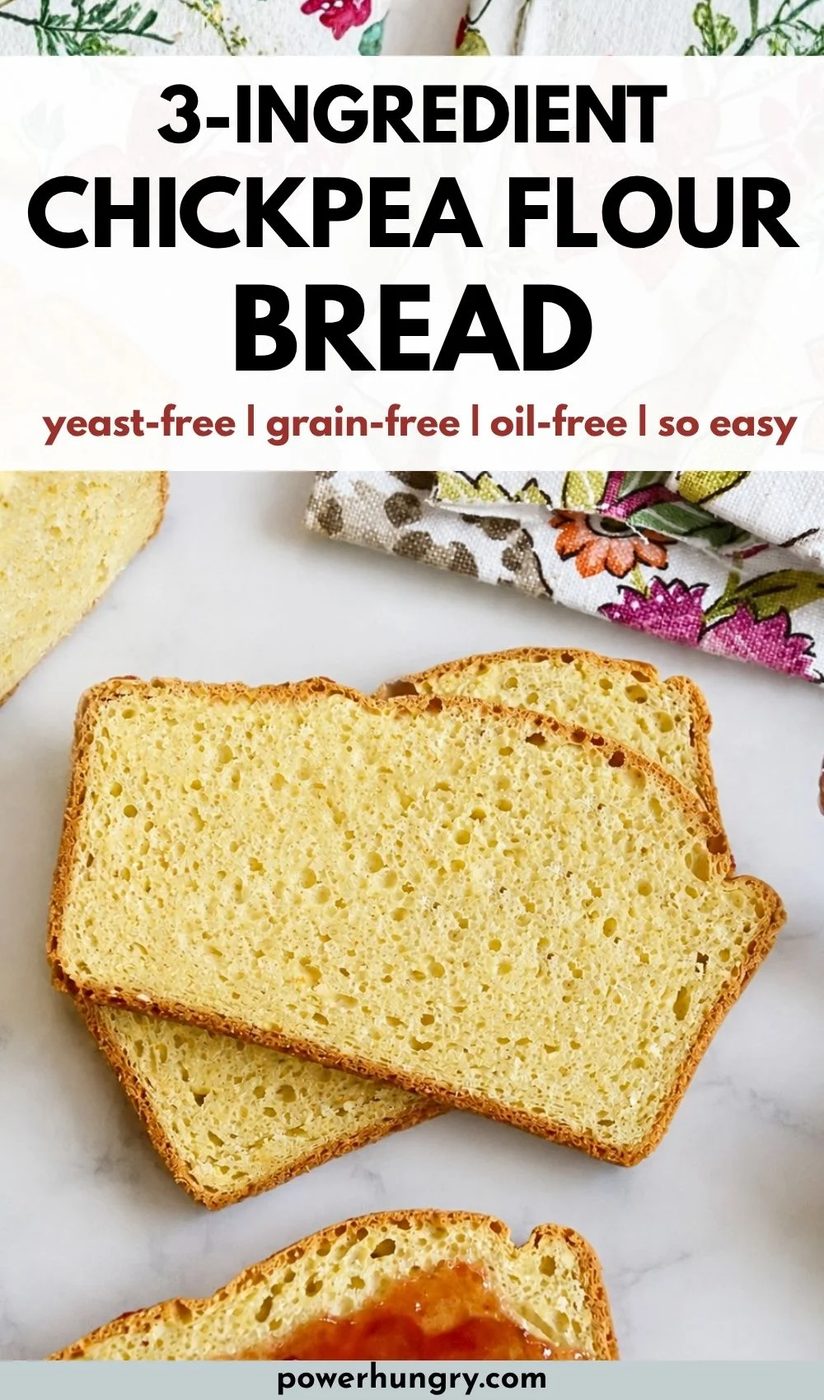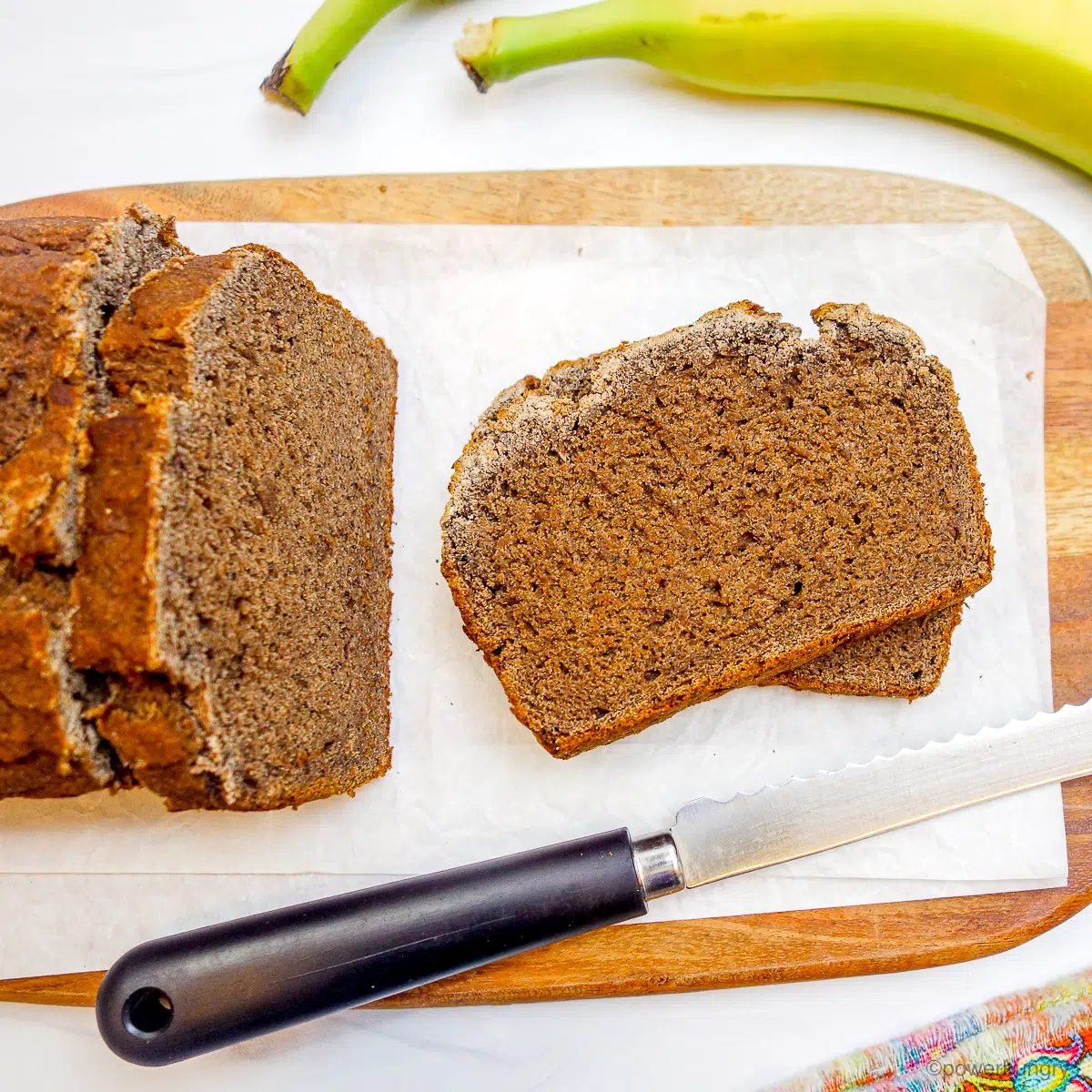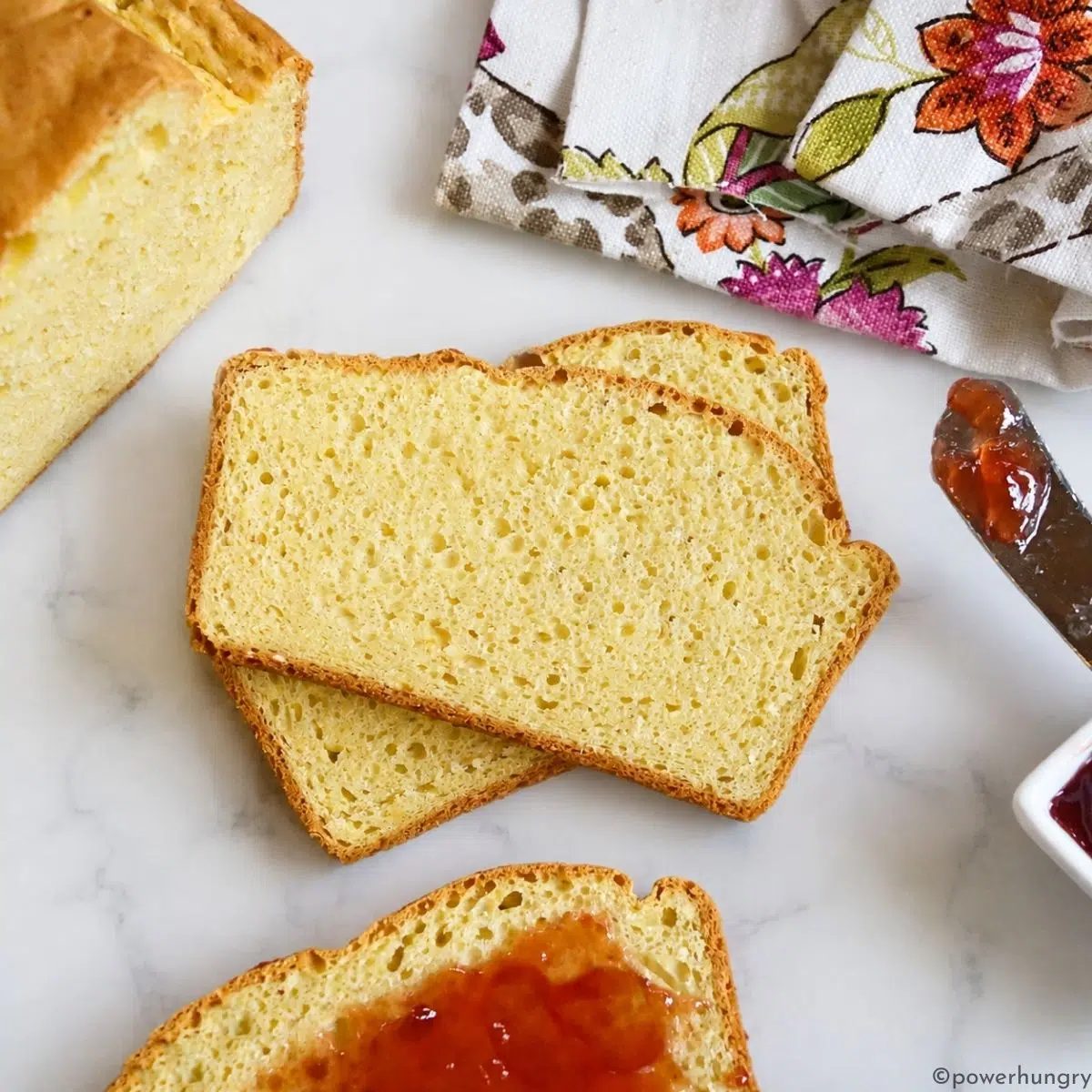
Tender and golden, this remarkable 3-ingredient chickpea flour bread is made with almond flour and baking powder—no yeast, eggs, gluten, grains, oil, or added sugar. Stir the one-bowl batter in five minutes, bake, cool, and slice it thinly for sandwiches or thickly for toast.
3-Ingredient Grain-Free Chickpea Bread
Some bread recipes ask for yeast, kneading, rising, shaping, and a sizable portion of the afternoon. This one asks for a bowl, a whisk, and about five minutes of actual work.
The batter—yes, batter, not dough—is a plain combination of chickpea flour, almond flour, baking powder, and water. Chickpea flour provides protein and structure, performing some of the work normally done by both wheat flour and eggs. Almond flour contributes tenderness, moisture, and enough natural fat to make added oil unnecessary. Together, they produce a handsome golden loaf that slices cleanly and tastes surprisingly similar to conventional bread.
How similar? My ever-skeptical husband took his first bite and said:
“Wow. That tastes like normal bread.”
I could not have written a better endorsement.
Unlike many breads made with chickpea flour, the flavor is mild and neutral rather than distinctly bean-like. Baking powder gives the loaf its lift without yeast, fermentation, or waiting around for dough to rise. Once cooled, it can be sliced thinly for sandwiches, cut thickly for toast, or transformed into particularly excellent croutons.
Minimalist baking can be unforgiving—when a recipe has only three principal ingredients, each one has an important job—but follow the measurements and method carefully and the reward is considerable: real, useful, everyday bread made from a very short list of ingredients.
Why You’ll Love This Recipe
- Only three principal ingredients.Chickpea flour, almond flour, and baking powder form the foundation of the loaf; water and optional salt complete the batter.
- No yeast or rising time.Baking powder supplies the lift, so there is no proofing, kneading, or waiting.
- Excellent for sandwiches and toast.The cooled loaf is sturdy, sliceable, and pleasantly tender.
- Vegan and naturally gluten-free.No eggs, dairy, wheat, or gluten-containing flour is required.
- Grain-free, oil-free, and sugar-free.Almond flour provides natural richness without added oil.
- Made in one bowl.The batter takes approximately five minutes to mix.
- Mild, versatile flavor.It works equally well with avocado and tomatoes, hummus, white bean dip, nut butter and jam, or any go-to sandwich filling.
- Freezer-friendly.Slice the loaf before freezing and remove only what you need.
- No binders.No psyllium (psyllium husk powder or whole psyllium husk), ground flaxseed, or starches.
Ingredients
The exact amounts of each ingredient are indicated in the recipe card at the end of the post.Toggle betweenUS Customary(volume) andMetric(weights) for preferred measurement option.
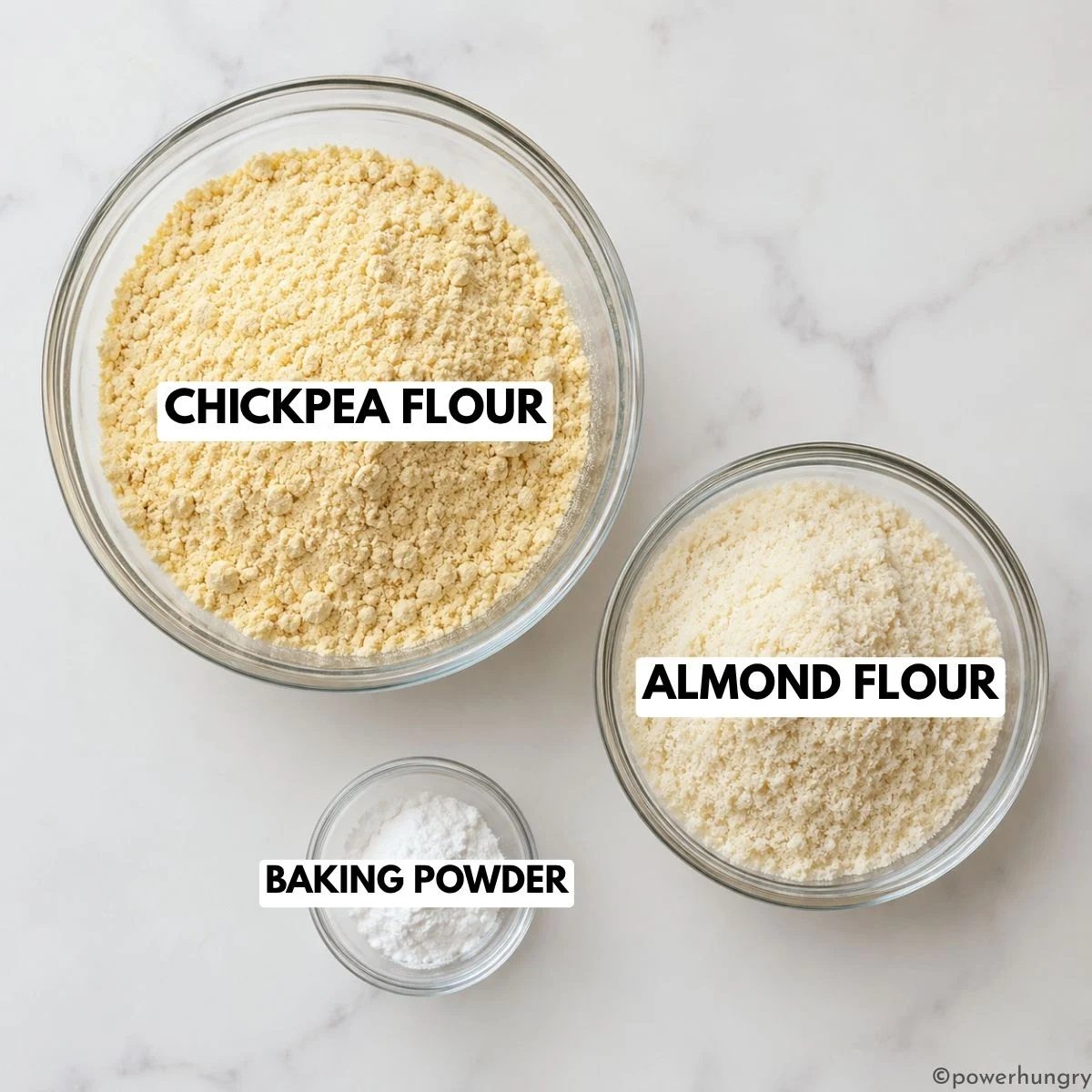
- Chickpea flour:Also known as garbanzo bean flour or besan, it is the structural workhorse of the recipe. Its protein helps the egg-free loaf rise, set, and hold together. Sift the flour first if it is lumpy.
- Finely ground almond flour:Adds moisture, tenderness, and natural fat. Use fine almond flour, not coarse almond meal, which can produce a heavy loaf with a dense, underbaked layer at the bottom.
- Baking powder:Leavens the bread without yeast. Use fresh baking powder and choose a certified gluten-free or grain-free product if necessary.
- Water:Turns the dry ingredients into a pourable batter. Ordinary tap or filtered water is all you need.
- Fine sea salt:Technically optional, but recommended. A small amount rounds out the flavor and makes the loaf taste more like traditional bread.
How to Make 3-Ingredient Chickpea Flour Bread
Note that the complete instructions are also in the recipe card below.
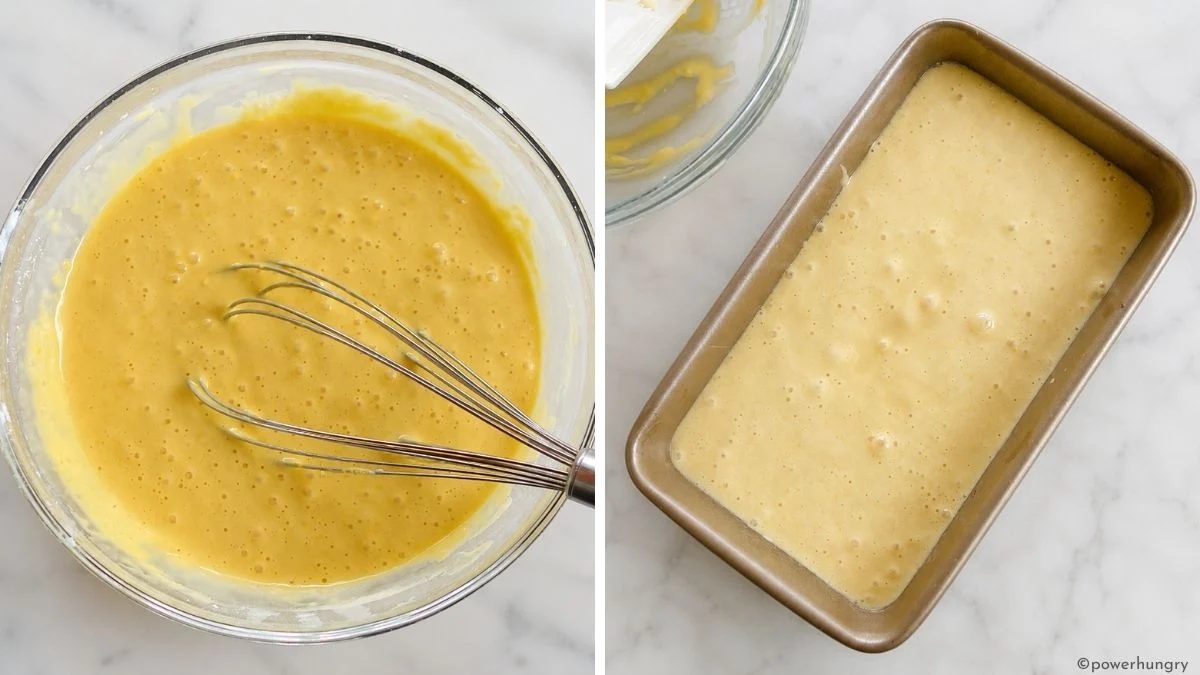
- Preheat the Oven and Prepare the Pan. Preheat the oven to400°F (200°C). Spray or lightly grease a9×5-inch (22.5×12.5 cm) metal loaf pan. For a completely oil-free loaf, line the pan with parchment paper instead. The parchment version may have a slightly softer, less deeply browned bottom crust, but it will still work.
- Combine the Dry Ingredients. In a large mixing bowl, whisk together the chickpea flour, almond flour, baking powder, and optional salt (see recipe card for full ingredients list). Break up every visible lump so the leavening is distributed evenly throughout the flours. For the most reliable results, measure the flours with a digital kitchen scale. Minimalist recipes leave very little room for an accidental extra scoop.
- Add the Water.Pour in the water and whisk until the batter is completely blended and smooth. It should resemble a traditional pancake batter: fluid and pourable, but not thin or watery. Note: If the batter is thick enough to mound or must be pushed from the bowl, the flours were probably overmeasured. Whisk in a little additional water until the batter reaches the proper consistency.
- Transfer the Batter Immediately.Pour the batter into the prepared loaf pan as soon as it is mixed. Smooth the top lightly, then place the pan in the fully preheated oven without delay. (The baking powder begins reacting as soon as it meets the water.)
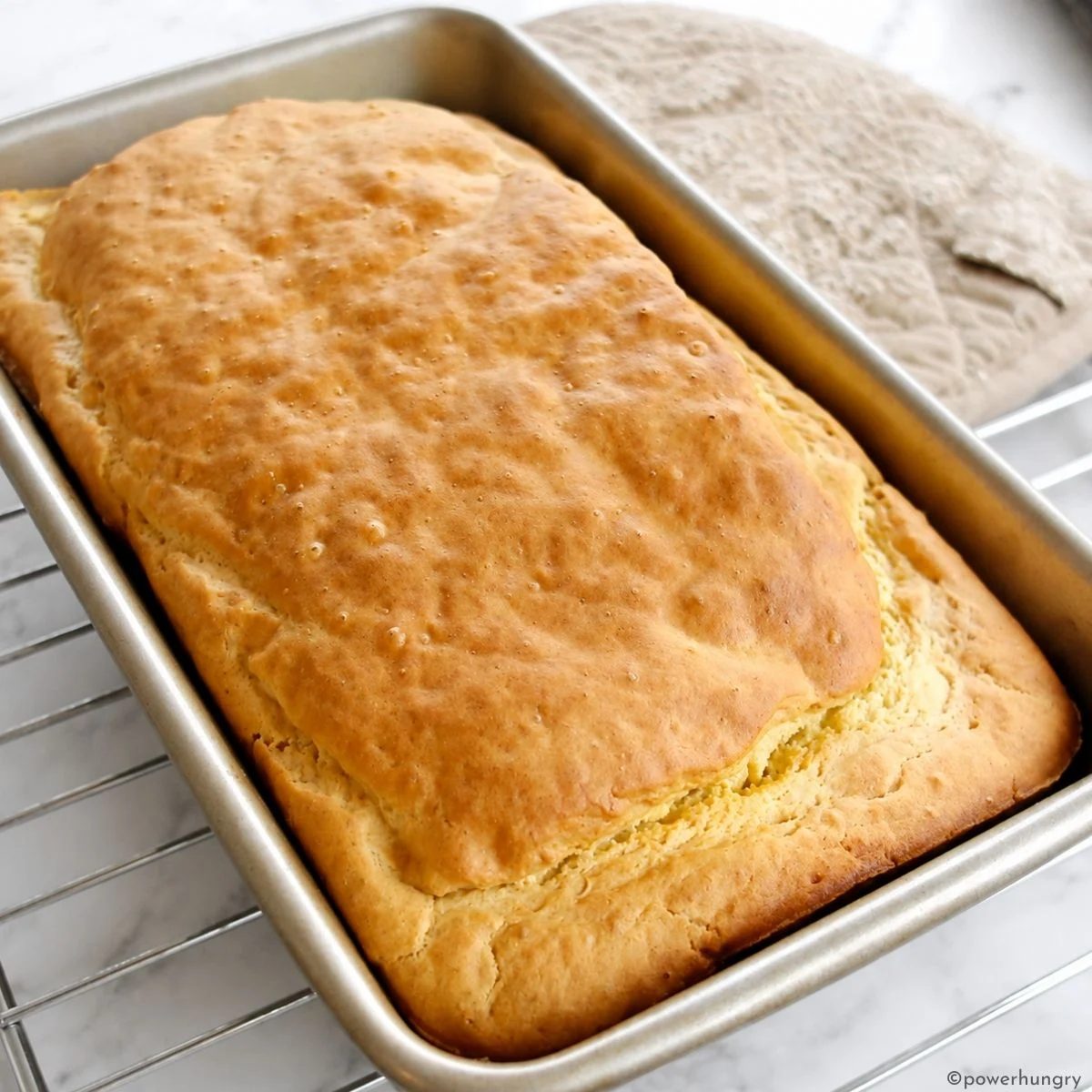
- Bake.Bake for40 to 45 minutes, until the loaf is risen and golden brown. A toothpick or thin skewer inserted near the center should come out clean or with only a few moist crumbs attached—not wet batter.
- Cool Completely.Place the pan on a wire cooling rack and let the bread cool in the pan for 20 minutes. Run a thin knife around the edges, remove the loaf, and place it directly on the rack. Let the bread cool completely before slicing. The crumb continues to set as the loaf cools; cutting it while hot can compress the interior and make it seem gummy. (See recipe card & recipe notes for complete recipe method).
Taste and Texture of Chickpea Flour Bread
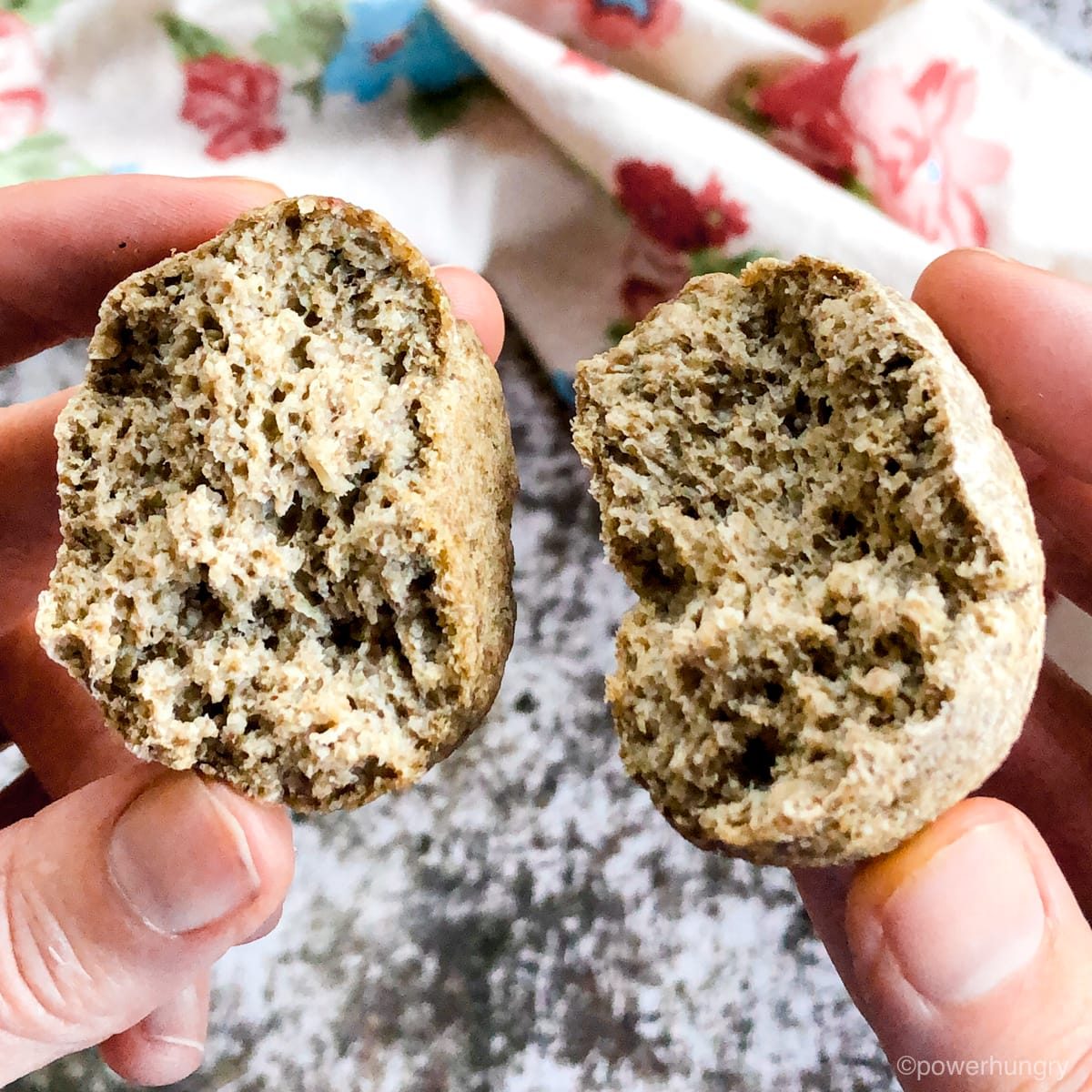
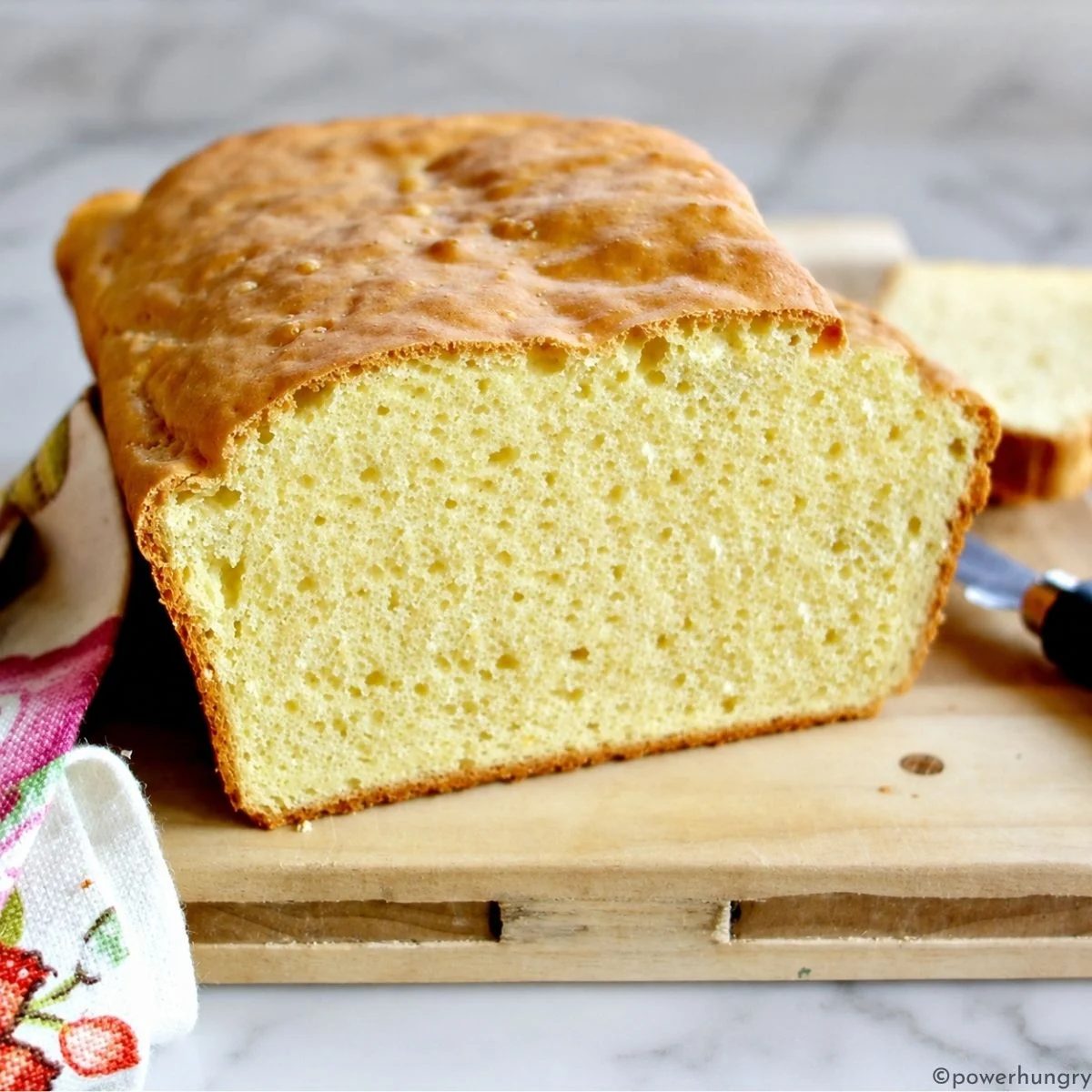
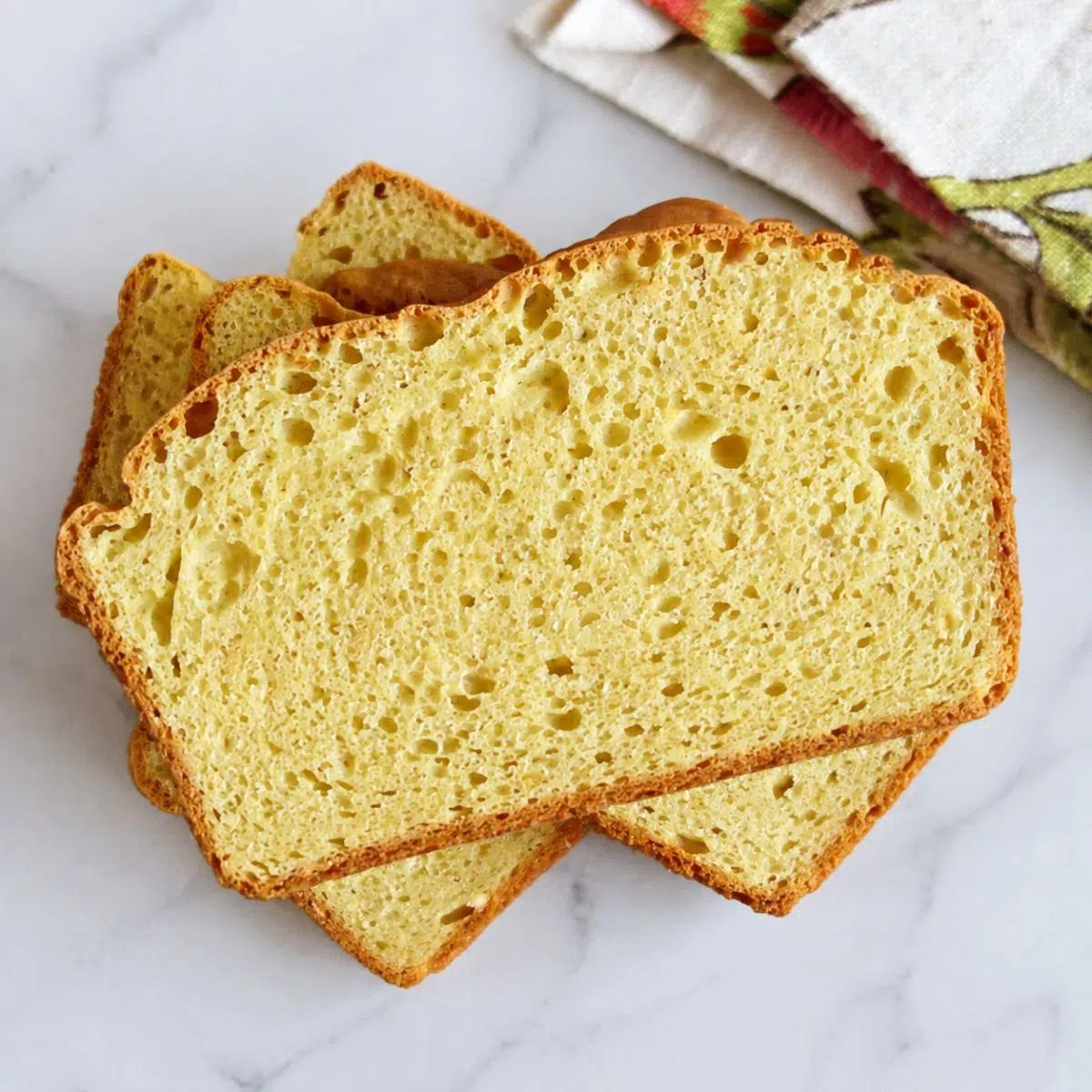
The baked loaf has a golden exterior, a tender interior, and a close, even crumb. It is somewhat more substantial than airy wheat bread, but it is neither fragile nor unpleasantly dense when measured, baked, and cooled correctly.
Chickpea flour can have a pronounced flavor in some recipes, especially before it is cooked. Here, almond flour softens that earthiness and gives the bread a mild, gently nutty flavor. Baking powder, rather than baking soda, also helps keep the flavor neutral. It is reliable for sweet toppings or savory options (e.g., as avocado toast, sautéedchickpea tofu, or withvegan cream cheese).
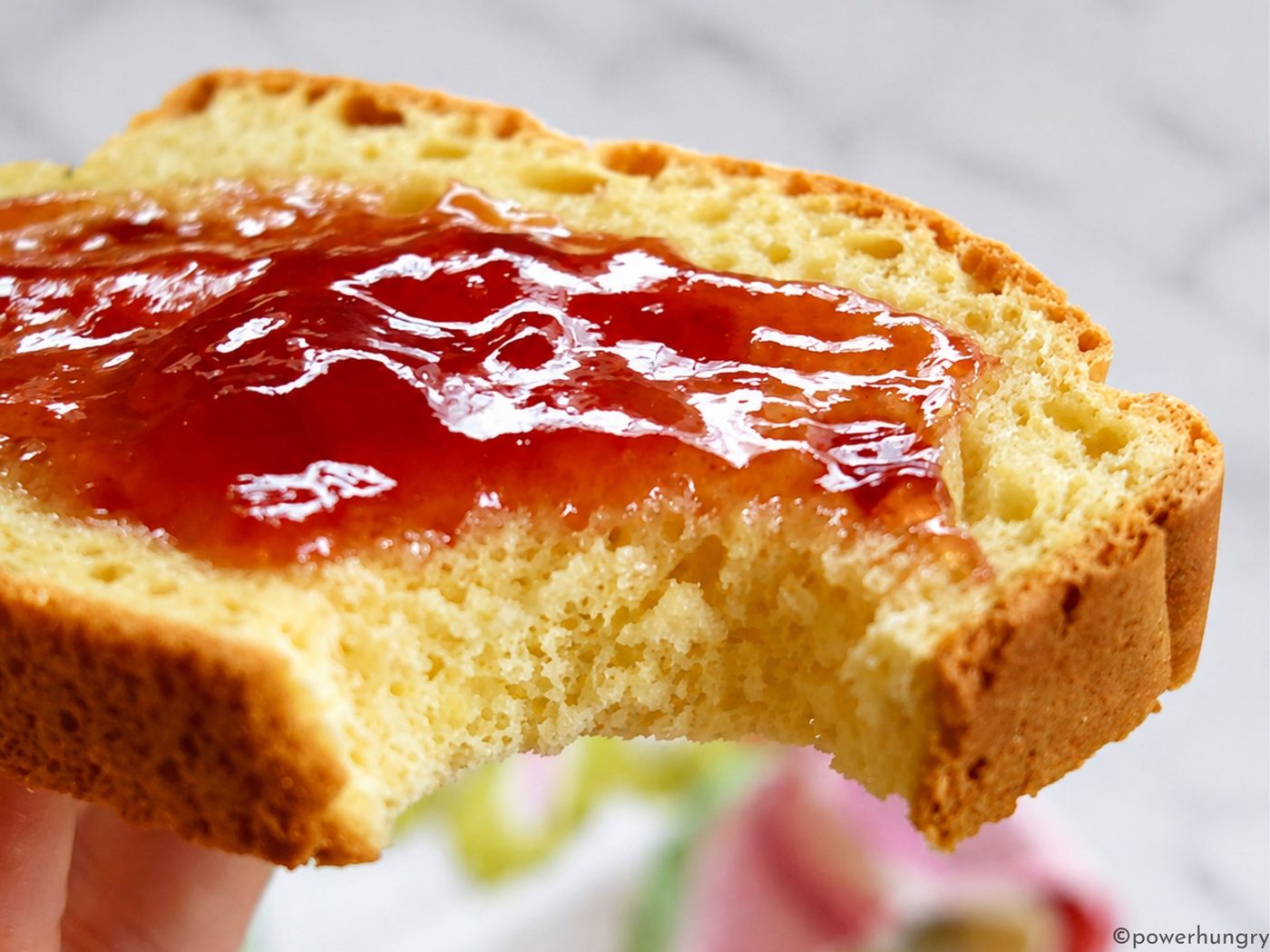
The bread is tender enough to enjoy fresh but becomes especially good when toasted. Toasting crisps the edges, deepens the nutty flavor, and gives the slices a sturdier bite for generous toppings.
Storage
Allow the chickpea flour bread to cool completely before storing it. Packing a warm loaf traps steam, and trapped steam is the sworn enemy of a good crust.
- Room temperature:Store in an airtight container at cool room temperature for 2-3 days.
- Refrigerator:Refrigerate in an airtight container for up to 1 week. For the reliable texture, lightly toast refrigerated slices before serving.
- Freezer:Freeze for up to 6 months in an airtight container or ziplock bag. Slice the loaf first, separate the slices with small pieces of parchment if desired, and place them in an airtight freezer container or freezer bag. Thaw individual slices at room temperature or toast them directly from frozen.
Flavor Variations
I suggest keeping additions relatively modest so they do not weigh down the batter or interfere with the loaf’s rise. Heavy items, like chocolate chips, big pieces of nuts, or large pieces of dried fruit will sink to the bottom of this batter bread.
- Rosemary Sea Salt:Add 1 to 2 teaspoons dried rosemary to the dry ingredients and sprinkle the top with a small pinch of flaky sea salt.
- Garlic and Herb:Whisk 1 teaspoon garlic powder and 1 teaspoon Italian seasoning into the flours. Add 1 to 2 tablespoons nutritional yeast for cheesey-garlic-herb.
- Everything Bread:Sprinkle 1 to 2 tablespoons everything bagel seasoning over the batter immediately before baking. If the seasoning contains a great deal of salt, reduce or omit the salt in the batter.
- Sesame Seed Bread:Scatter 1 to 2 tablespoons sesame seeds over the top of the loaf. Consider adding chopped herbs, too, such as parsley or cilantro.
- Black Pepper Bread:Add 1/2 teaspoon coarsely ground black pepper and 1 teaspoon dried thyme, rosemary, onion powder, cumin, paprika, or finely grated lemon peel.
- Cinnamon-Dried Fruit Bread:Add 1 teaspoon ground cinnamon and up to 1/3 cup finely chopped dried apricots, cherries, or raisins. Toss the fruit with the dry ingredients before adding the water.
Tips for Success
- Use finely ground almond flour, not almond meal.Coarse almond meal can make the loaf heavy and may leave a dense, underbaked layer along the bottom.
- Measure the flours by weight whenever possible.Too much flour is the most common reason for an excessively thick batter and dense loaf. Toggle to metric measurements in the recipe card for weights.
- If measuring by cups, spoon and level.Gently spoon the flour into the measuring cup and sweep away the excess. Do not scoop directly from the bag or pack the flour.
- Use fresh baking powder.Old or moisture-damaged baking powder can produce a short, flat loaf.
- Preheat the oven before mixing the batter.Once water is added, the baking powder begins working. The batter needs to go into a hot oven immediately.
- Watch the batter consistency.It should look like pourable pancake batter. Add a little more water if it is markedly thicker.
- Use the correct pan size.A 9×5-inch loaf pan gives the batter the support it needs as it rises. Doubling the recipe in one oversized pan can result in uneven baking or a collapsed center.
- Check the center, not merely the crust.A loaf may look golden before the interior has finished baking. Tap/pat the center for a hollow sound and test near the center for wet batter.
- Cool the loaf completely before slicing.The interior needs cooling time to finish setting.
- Toast slices after refrigeration.A brief toasting (toaster or air-fryer) restores the bread’s reliable flavor and texture (see following photo).
Ingredient Substitutions
- Chickpea flour:There is no dependable one-to-one replacement in this particular recipe. Chickpea flour provides both flour-like bulk and egg-like structure. Cassava flour, coconut flour, oat flour, and additional almond flour behave very differently and should not be substituted without substantial retesting.
- Almond flour:Finely ground hazelnut flour can be used as a one-to-one replacement for a slightly deeper, nuttier flavor. Sunflower seed flour, or pumpkin seed flour may work, but I have not tested them. Do not substitute almond meal. Lower-fat flours such as oat flour or sorghum flour may make the bread dry and are not equivalent replacements.
- Baking powder:Baking soda is not a direct substitute. It requires a carefully measured acidic ingredient to work properly and may give the loaf a stronger flavor. For predictable results, use baking powder.
- Fine sea salt:The salt may be reduced or omitted without changing the bread’s structure, although the flavor will be less rounded.
- Oil used for the pan:Line the loaf pan with parchment paper for a completely oil-free option. Expect a slightly softer and paler bottom crust.
Frequently Asked Questions (FAQS)
Is this bread really made with only three ingredients?Yes. Chickpea flour, almond flour, and baking powder are the three principal ingredients. Water is also required, and a small amount of salt is optional but recommended. As with recipes for pasta or steamed vegetables, water is not included in the headline ingredient count.
Does chickpea flour bread taste like chickpeas?The finished loaf has a mild, neutral flavor rather than a strong chickpea taste. Almond flour softens the earthiness of the chickpea flour, while baking powder provides lift without the potentially assertive flavor of baking soda. The bread works with both sweet and savory toppings.
Why is my batter much thicker than the batter in the photos?The most likely cause is overmeasured flour. Chickpea flour and almond flour can become compacted in a measuring cup, adding considerably more flour than the recipe requires. If the batter has already been mixed, gradually whisk in a little more water until it resembles pourable pancake batter. Next time, measure by weight or use the spoon-and-level method.
Why didn’t my bread rise?Make sure the baking powder is fresh, the oven is fully preheated, and the batter goes into the oven immediately after mixing. Baking powder begins reacting when it comes into contact with water. If the batter waits on the counter while the oven heats, part of its leavening power can be lost. Also, heavy items added to the batter (e.g., chopped nuts, olives, sun-dried tomatoes, chocolate chips, sauteed mushrooms, caramelized onions, sunflower seeds), can inhibit rising.
Why did my loaf rise and then collapse?A collapsing loaf is most often underbaked in the center. Test the thickest part of the bread with a toothpick or thin skewer before removing it from the oven. It should emerge without wet batter. An incorrectly sized pan, inactive baking powder, or substantial ingredient substitutions can also affect the loaf’s structure.
Can I use almond meal instead of almond flour?No. Coarsely ground almond meal does not absorb water or support the crumb in the same way as finely ground almond flour (fine powder consistency). It can produce a heavy loaf with a dense, undercooked layer near the bottom.
Can I replace the chickpea flour with another gluten-free flour?Not as a plain one-to-one substitution. Chickpea flour supplies much of the protein and structure that allows this egg-free, gluten-free loaf to hold together. Cassava flour, coconut flour, oat flour, and almond flour have very different properties and will not produce the same result. Lentil flour may work, but I suggest trying my testedLentil Protein Breadinstead. For a similar quinoa bread, look at my plainQuinoa Flour Almond Flour Bread.
Can I double the recipe and bake it in one large loaf pan?I do not recommend doubling the batter in a single oversized pan. Without gluten or eggs, the bread relies on the sides of a standard loaf pan for support as it rises. A very large loaf may bake unevenly, struggle to set in the center, or collapse. For two loaves, mix and bake the batter in two 9×5-inch pans. You can also use a long skinny loaf pan (sometimes called a cocktail bread pan) to get a log similar in size to a baguette!
Can I bake the batter as rolls or muffins?Yes. Divide the batter among the cups of a standard 12-cup muffin pan and bake at 400°F (200°C). Begin checking after about 23 minutes; depending on the pan and oven, they may need several additional minutes. The centers should be set and a tester should come out without wet batter.
Is this chickpea flour bread gluten-free?Yes. Chickpea flour and almond flour are naturally gluten-free. If gluten must be strictly avoided, check that the baking powder is certified gluten-free and that all ingredients have been processed without cross-contact. See the nutritional information in the recipe card for more details about the bread.
Can I make the recipe with yeast instead of baking powder?This loaf is formulated as a quick bread, so yeast is not a direct replacement for the baking powder. A yeast-leavened version would require different ingredient ratios and a separate method for proofing and baking.
I hope that you love the bread! If you do, please be sure to leave a recipe rating, or share a photo on Instagram, Facebook or Pinterest.
More Vegan Gluten-Free Bread Recipes to Try
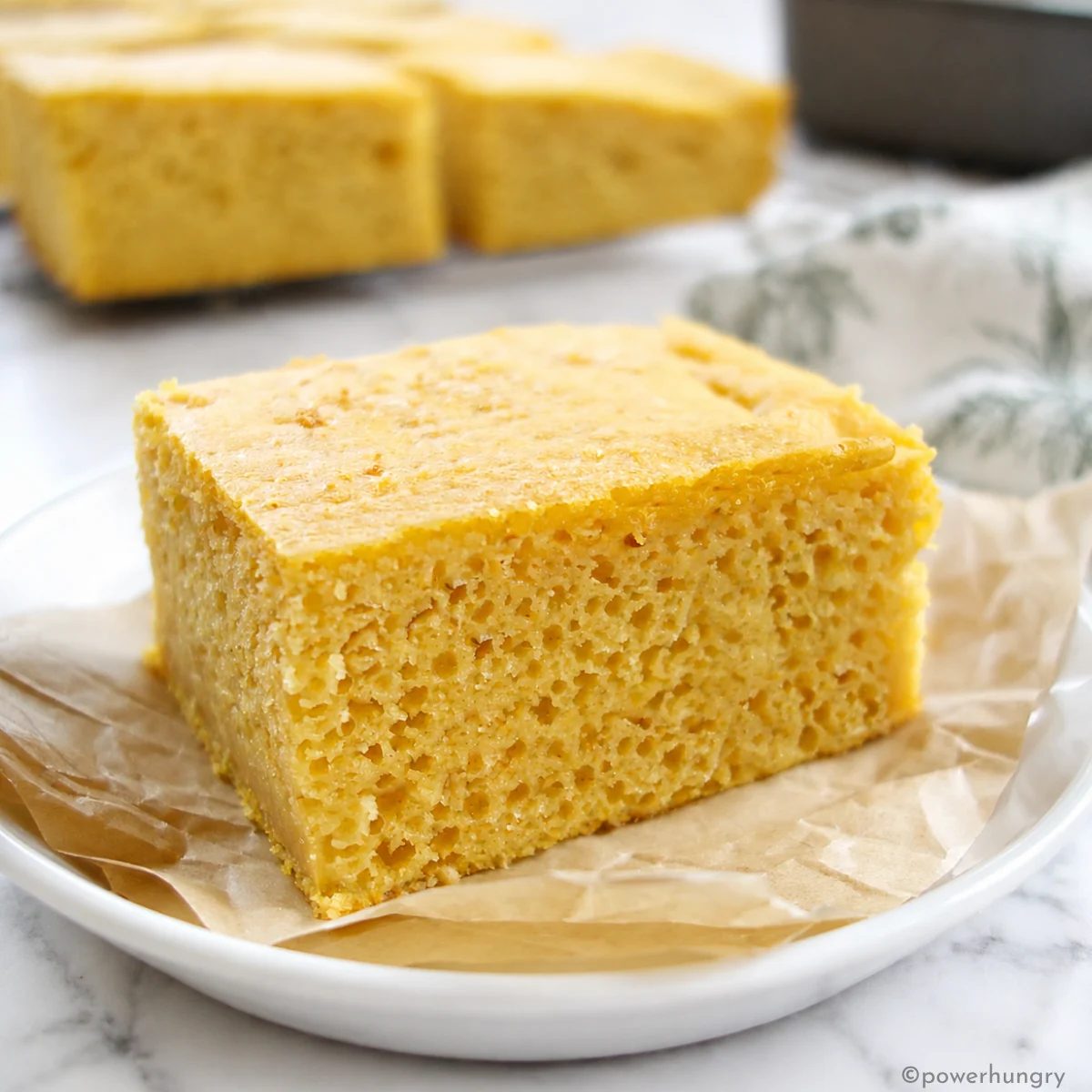
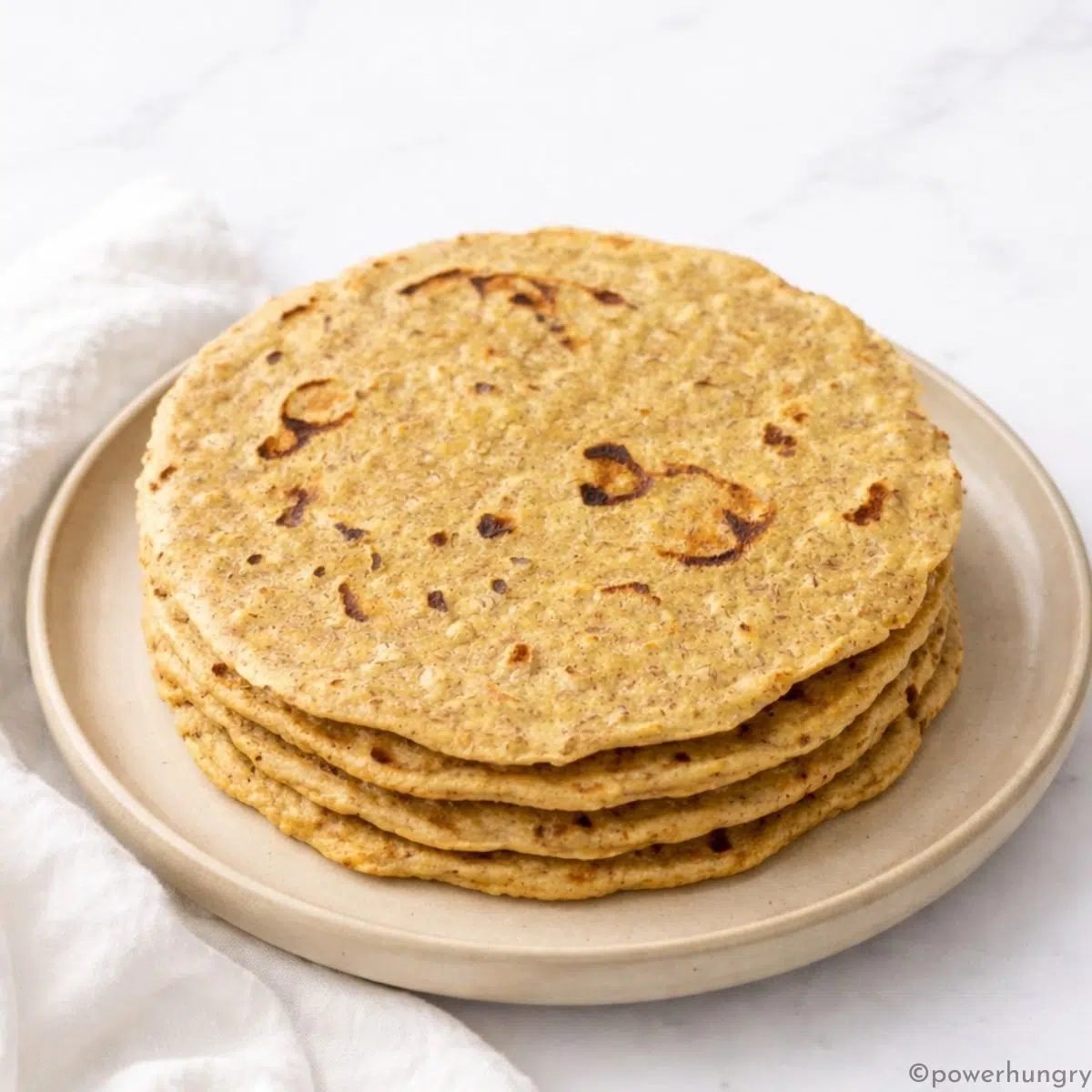
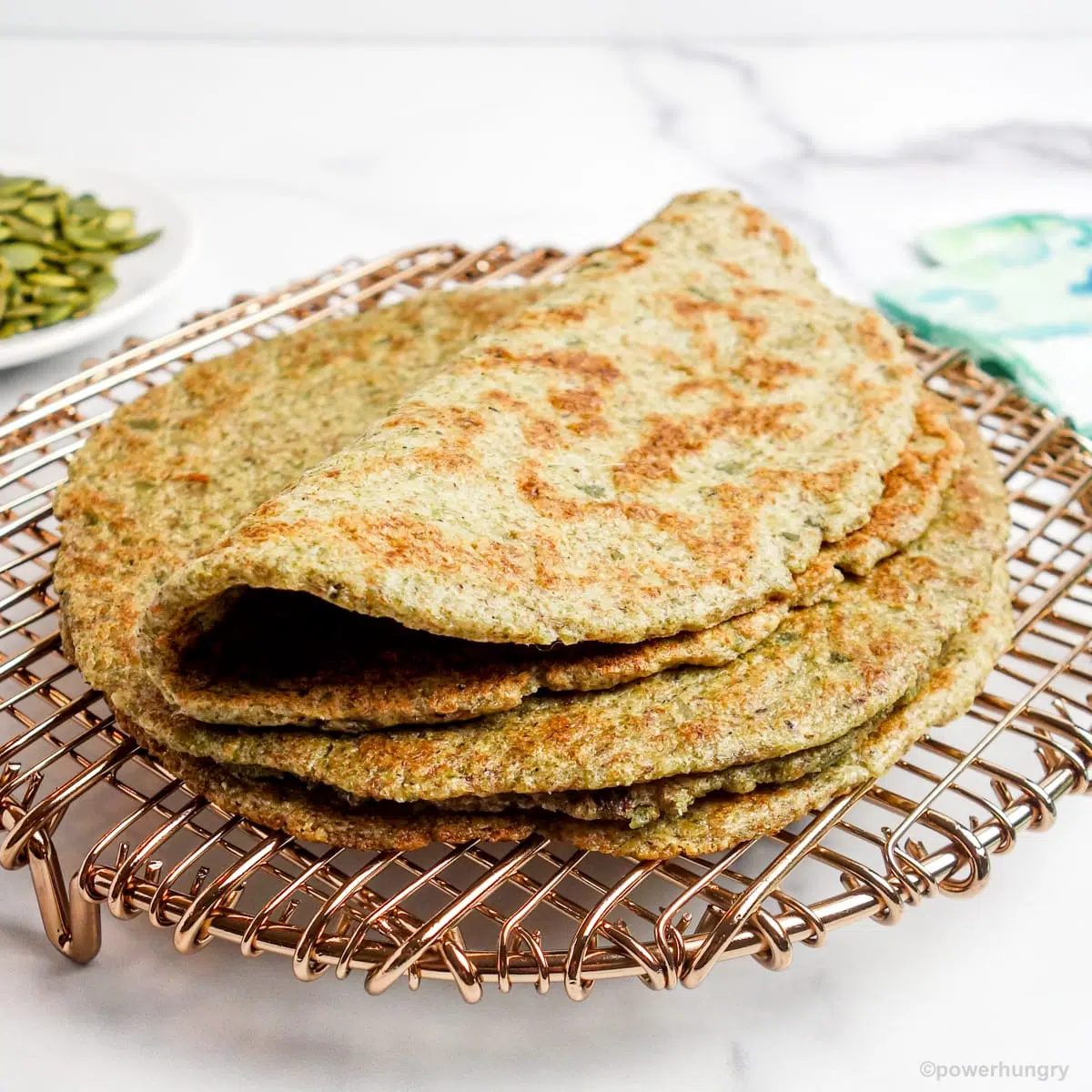
- Especially Straightforward Grain-Free Vegan Tortillas
- Vegan Gluten-Free Oat Sandwich Bread {oil-free, yeast-free}
- 2-Ingredient Flax Sandwich Bread {vegan, keto, grain-free}
- Chickpea Flour Flax Sandwich Bread {vegan, grain-free, oil-free}
- Gluten-Free Buckwheat Sandwich Bread {vegan, no yeast}
3-Ingredient Chickpea Flour Bread (Yeast-Free, Vegan)
- Prep Time: 5 minutes
- Cook Time: 45 minutes
- Total Time: 50 minutes
- Servings: 1 loaf (14 slices)
Ingredients
- 1 1/2 cups chickpea flour sifted if lumpy
- 1 1/4 cups almond flour (not almond meal )
- 1 tablespoon baking powder (certified gluten-free, as needed)
- Optional: 1/4 teaspoon fine sea salt (recommended amount)
- 1 3/4 cups water
Method
- Preheat oven to 400F (200C). Spray or grease a 9×5-inch (22.5×12.5 cm) loaf pan (for 100% oil-free, line with parchment paper , no greasing)
- In a large bowl , whisk together the almond flour , chickpea flour , baking powder , and (optional) salt.
- Add the water, whisking until completley combined. Immediately pour into prepared pan.
- Bake in the preheated oven for 40 to 45 minutes until golden brown and risen and a toothpick inserted near the center comes out with only moist crumbs attached.
- Transfer pan to a cooling rack and cool bread in pan for 20 minutes. Run a butter knife around edge of pan to loosen; remove bread and cool completely before slicing.
Notes
Storage: Store the completely cooled bread in an airtight container at cool room temperature for 2 to 3 days, the refrigerator for 1 week, or the freezer for up to 6 months. If freezing, consider pre-slicing the bread (so that you can remove one or a few slices at a time).