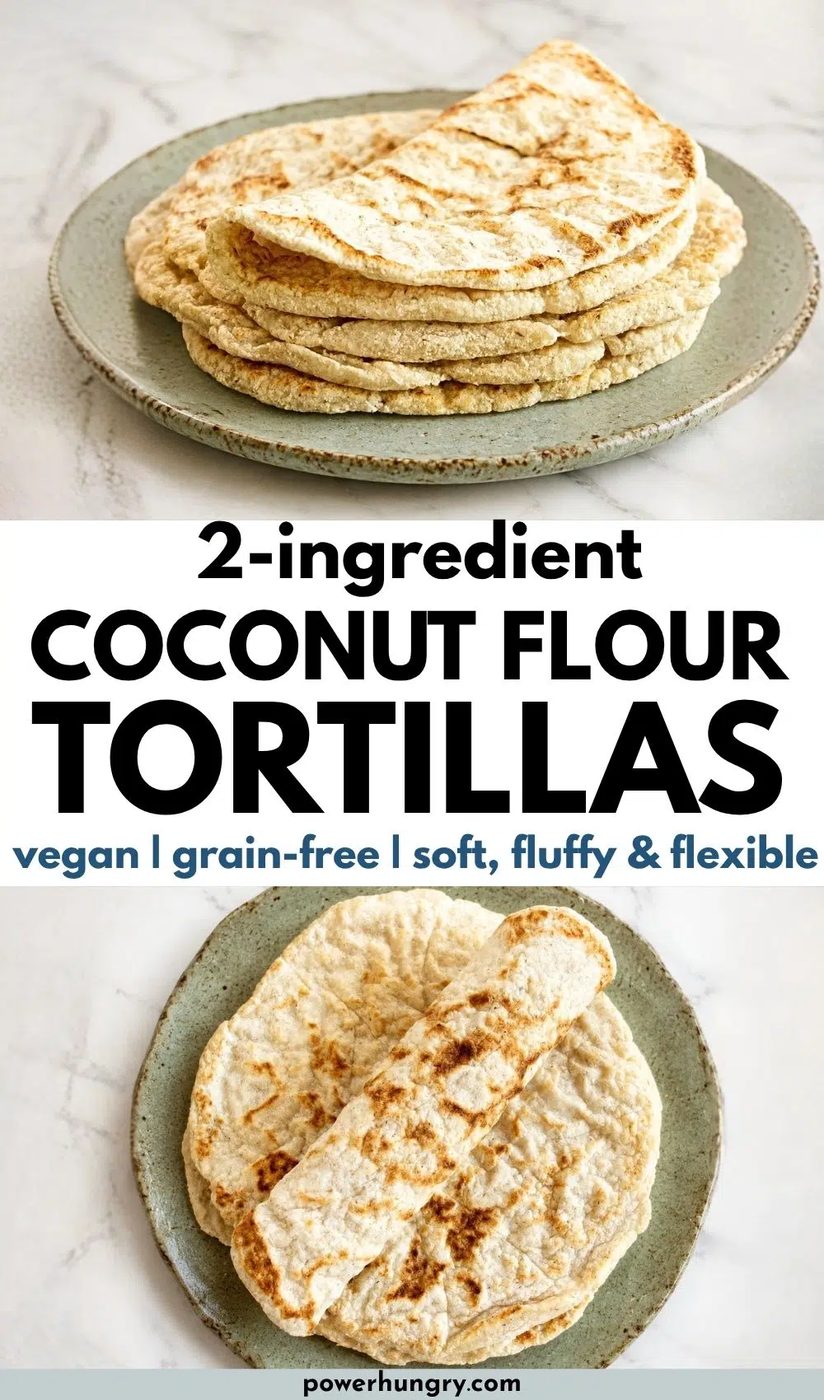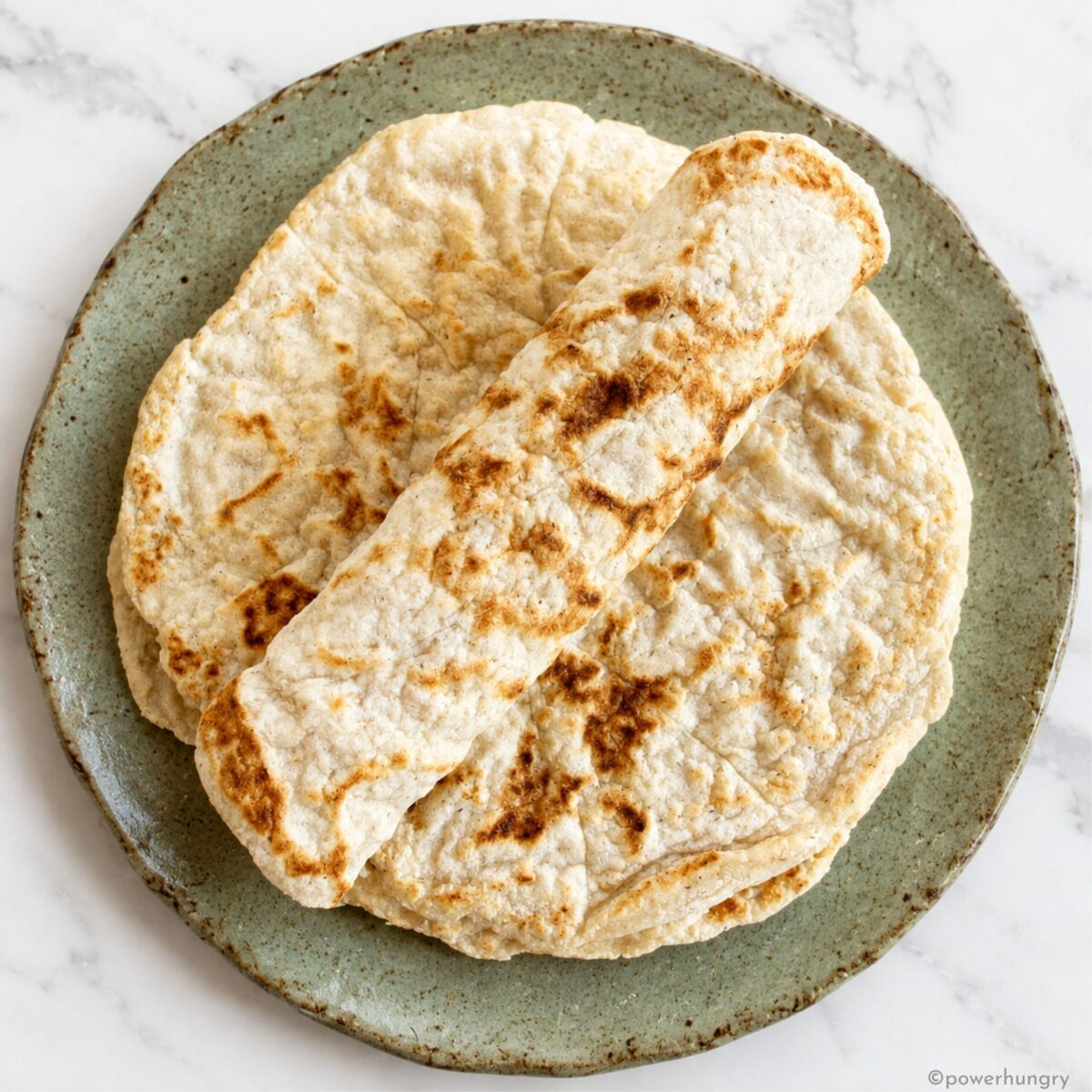
Soft, fluffy and wonderfully flexible, 2-ingredient coconut flour tortillas are remarkably straightforward to make. The vegan, gluten-free wraps are also grain-free, keto, Paleo, oil-free and nut-free, with 68 calories and 3.1 grams of net carbs apiece.
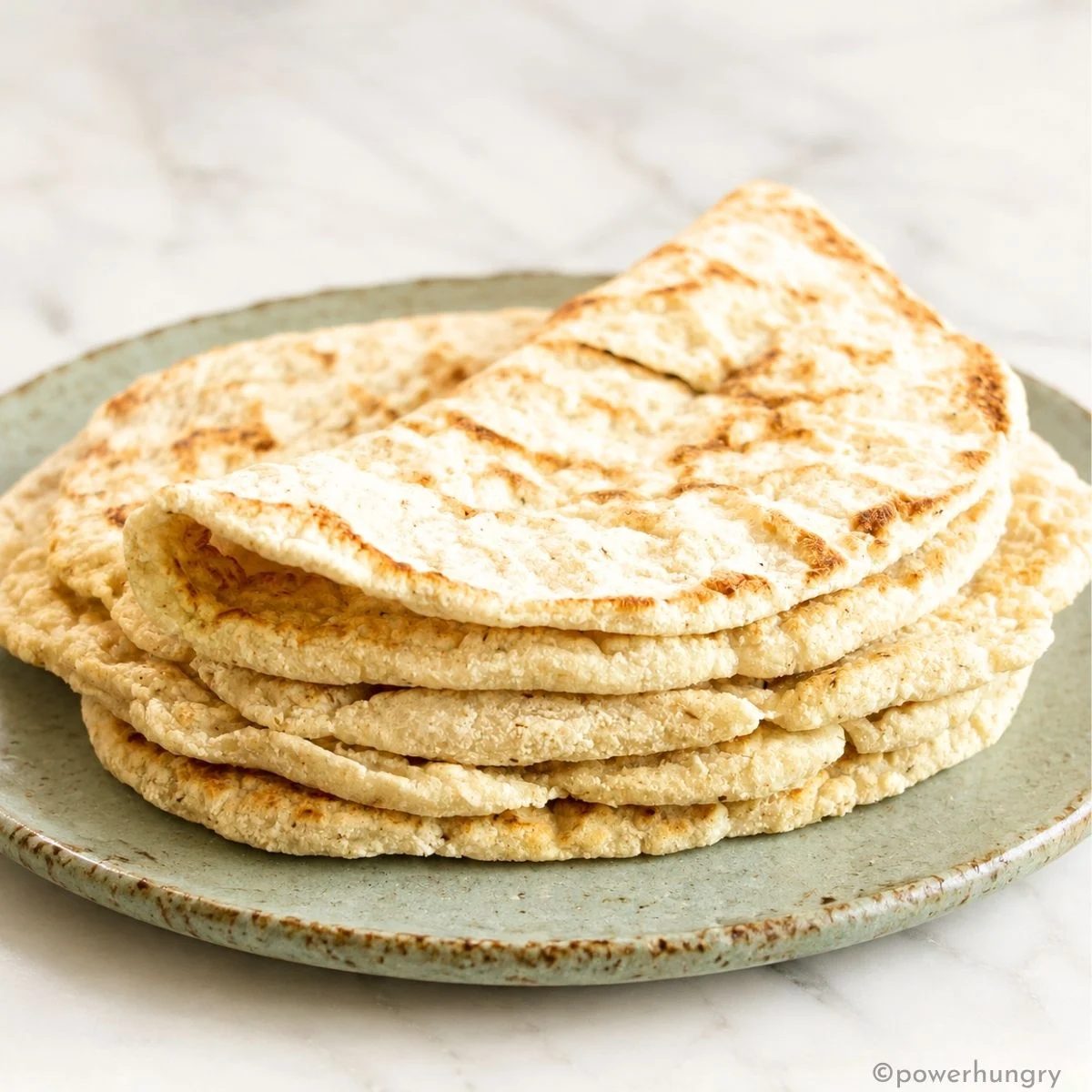
Well, you found it: a kitchen-made tortilla recipe with a two-item ingredient list and none of the usual grain-free drama. Coconut flour and whole psyllium husks—plus water and optional salt—mix into a soft, springy dough that rolls easily and cooks in a skillet.
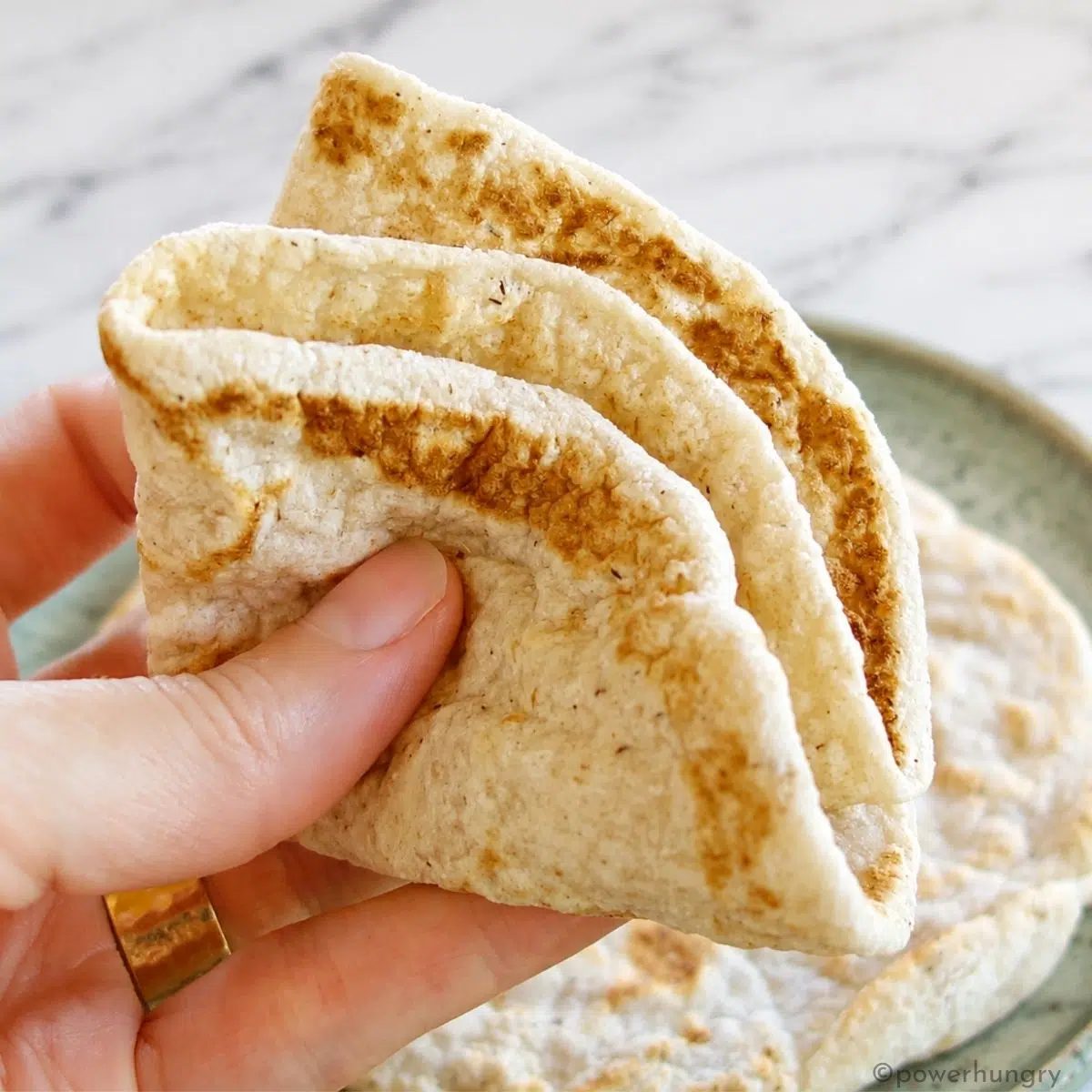
Flour tortillas are the reference point, but the result has charms of its own. Each tortilla is tender and flexible, with a light puff, browned skillet spots and enough strength for tacos, enchiladas, wraps and very enthusiastic scooping. The faint coconut flavor works with sweet or savory fillings; in fact, the tortillas smell more coconut-y than they taste.
This recipe has become a longtime Nbirz go-to, and I understand why. It is plain, economical and extraordinarily useful. The formula is also precise: use whole psyllium husks, measure the coconut flour carefully and cook the dough in a properly heated nonstick skillet. That is the entire brief. No eggs, oil, yeast, baking powder or complicated flour blend required.
Why You’ll Love This Recipe
- Only two essential ingredients.Coconut flour and whole psyllium husks do all the important work; water and salt complete the dough.
- Soft, fluffy and flexible.The tortillas bend, fold and roll—even after they have cooled.
- Straightforward to make.One bowl, a rolling pin and a skillet are all you need.
- Suitable for many eating styles.They are vegan, gluten-free, grain-free, keto, Paleo, oil-free and nut-free.
- Fiber-rich and satisfying.Each tortilla provides 6.2 grams of fiber.
- Endlessly useful.Fill them, fold them, roll them or serve them alongside soups, curries and stews.
- Freezer-friendly.Make a double batch and keep extras ready for fast meals.
Ingredients
The exact amounts of each ingredient are indicated in the recipe card at the end of the post.Toggle betweenUS Customary(volume) andMetric(weights) for preferred measurement option.
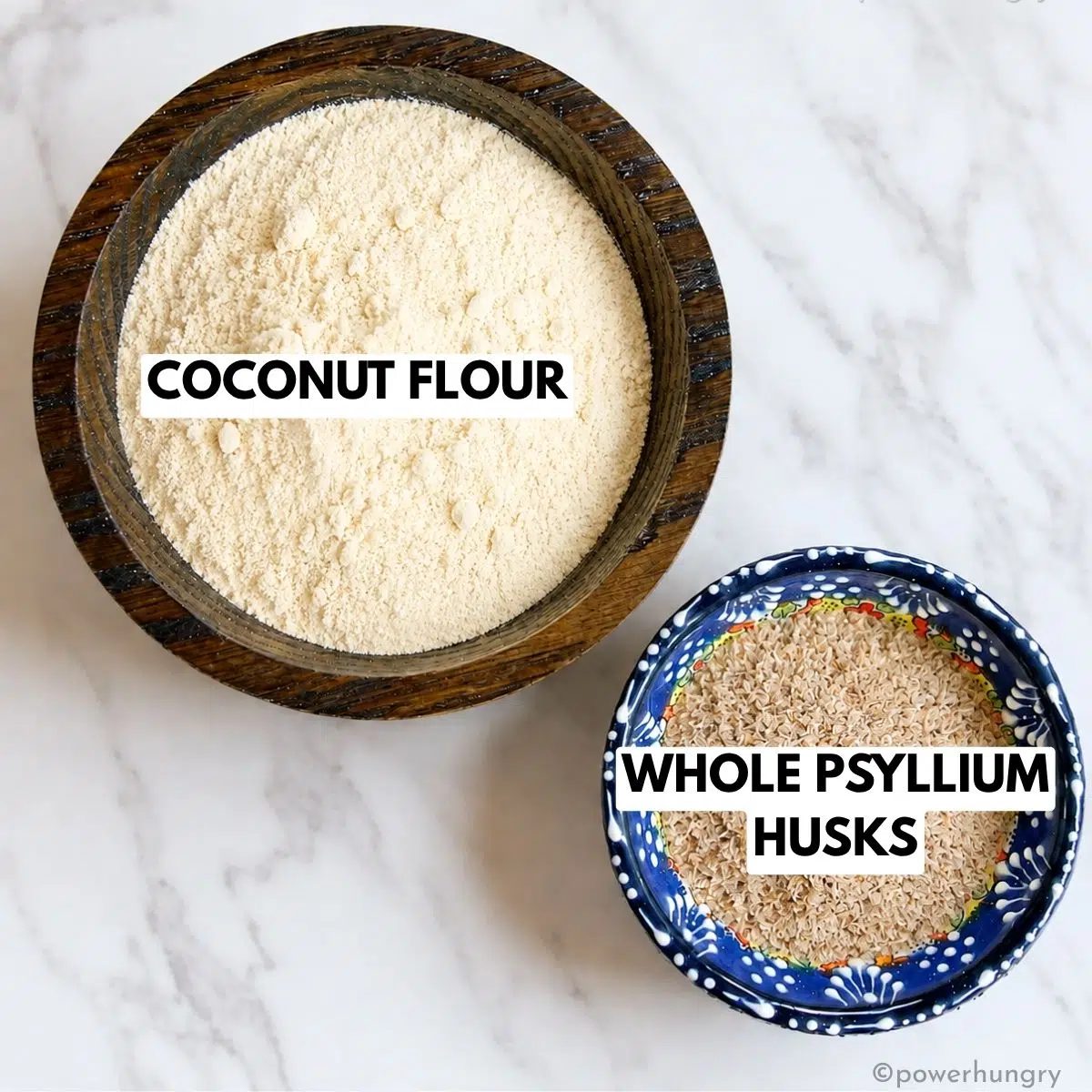
- Coconut flour (1/2 cup or 56 g):Coconut flour is exceptionally absorbent and gives the tortillas their tender texture. It cannot be replaced with another flour in this particular formula. Weigh it for greatest accuracy; even a little too much can make the dough dry and fragile.
- Whole psyllium husks (2 tablespoons or 10 g):Psyllium binds the dough, traps steam and gives the tortillas their strength, puff and flexibility. Use whole husks, not psyllium husk powder, for the tested result.
- Water (1 cup or 237 mL):Water hydrates the coconut flour and psyllium, turning the mixture into a soft, springy dough.
- Fine sea salt (optional, 1/4 teaspoon):Salt rounds out the flavor. Omit it or adjust the amount to suit your needs.
How to Make 2-Ingredient Coconut Flour Tortillas
Note that the complete instructions are also in the recipe card below.
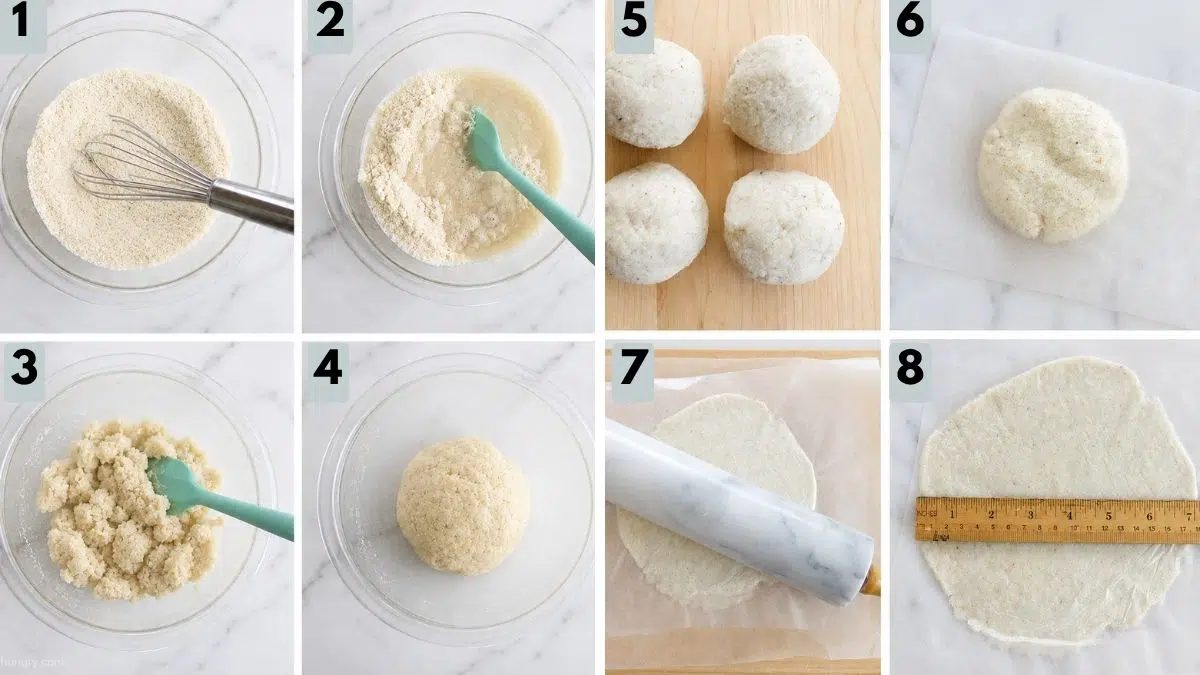
- Combine the dry ingredients.Whisk the coconut flour, whole psyllium husks and optional salt in a small mixing bowl, breaking up every lump in the flour.
- Add the water.Stir in the water until completely blended. The mixture will look loose at first; coconut flour and psyllium begin absorbing the liquid almost immediately.
- Rest the dough.Let the mixture stand for 5 minutes. It should become a moist, soft and springy dough that holds together easily.
- Divide the dough.Shape the dough into a ball, then cut it into 4 equal pieces. Roll each piece into a smooth ball.
- Roll a tortilla.Place one ball between two sheets of nonstick parchment paper, wax paper or plastic wrap. Roll it into a roughly 7-inch (17.5-cm) circle. Perfection is unnecessary; amoebas are welcome here.
- Heat the skillet.Preheat a well-seasoned cast-iron or ceramic nonstick skillet over medium-high heat until hot. If needed, lightly coat another skillet with cooking spray or a very thin film of oil.
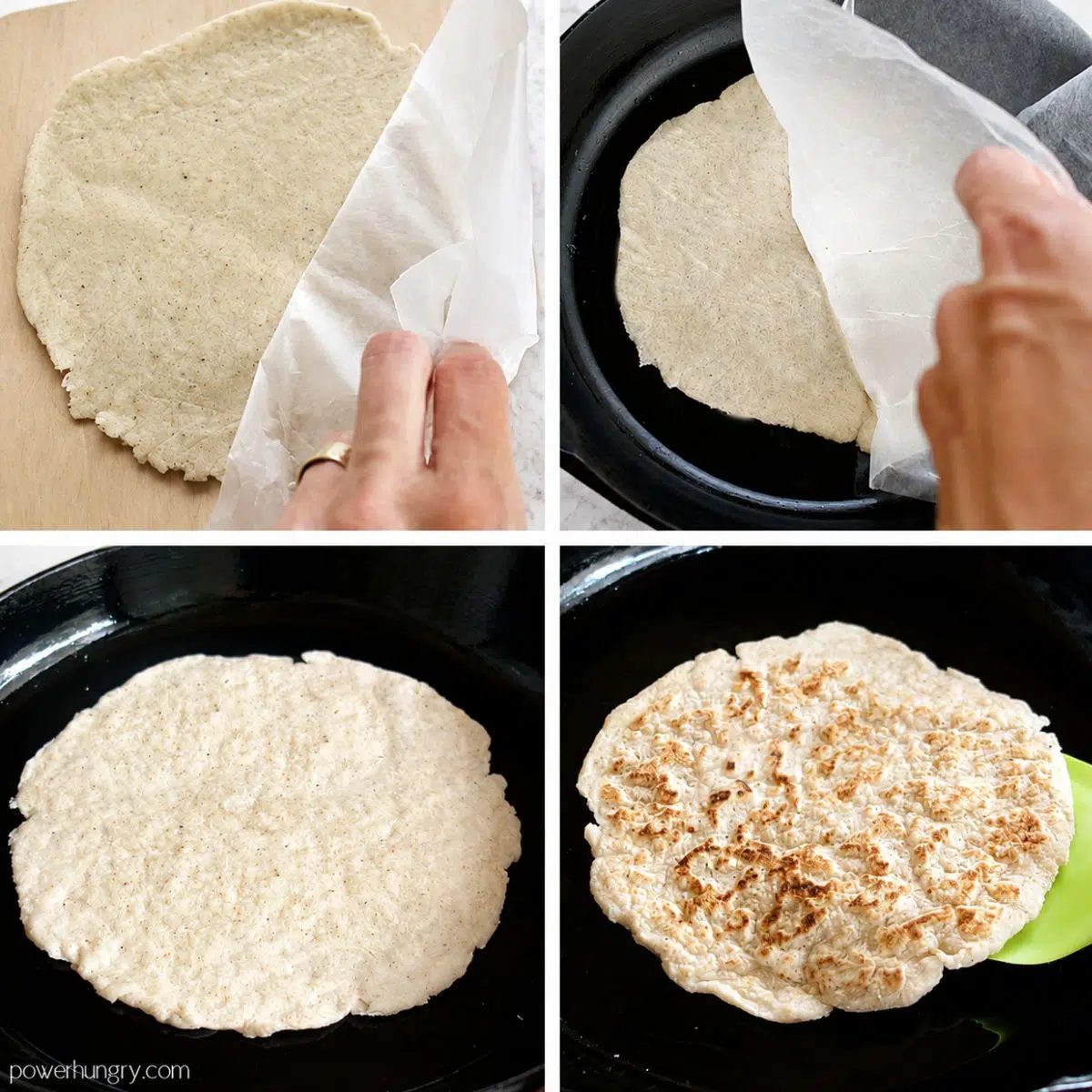
- Transfer the tortilla.Peel away the top sheet of paper. Place the exposed dough side down in the hot skillet, then carefully peel away the second sheet.
- Cook both sides.Cook for 2 to 3 minutes, until the tortilla puffs and develops browned spots underneath. Flip and cook for 2 to 3 minutes longer, until the second side is spotted and the center is fully cooked.
- Cool and repeat.Transfer the tortilla to a wire rack. Repeat with the remaining dough and serve warm, at room temperature or cold.
Taste and Texture
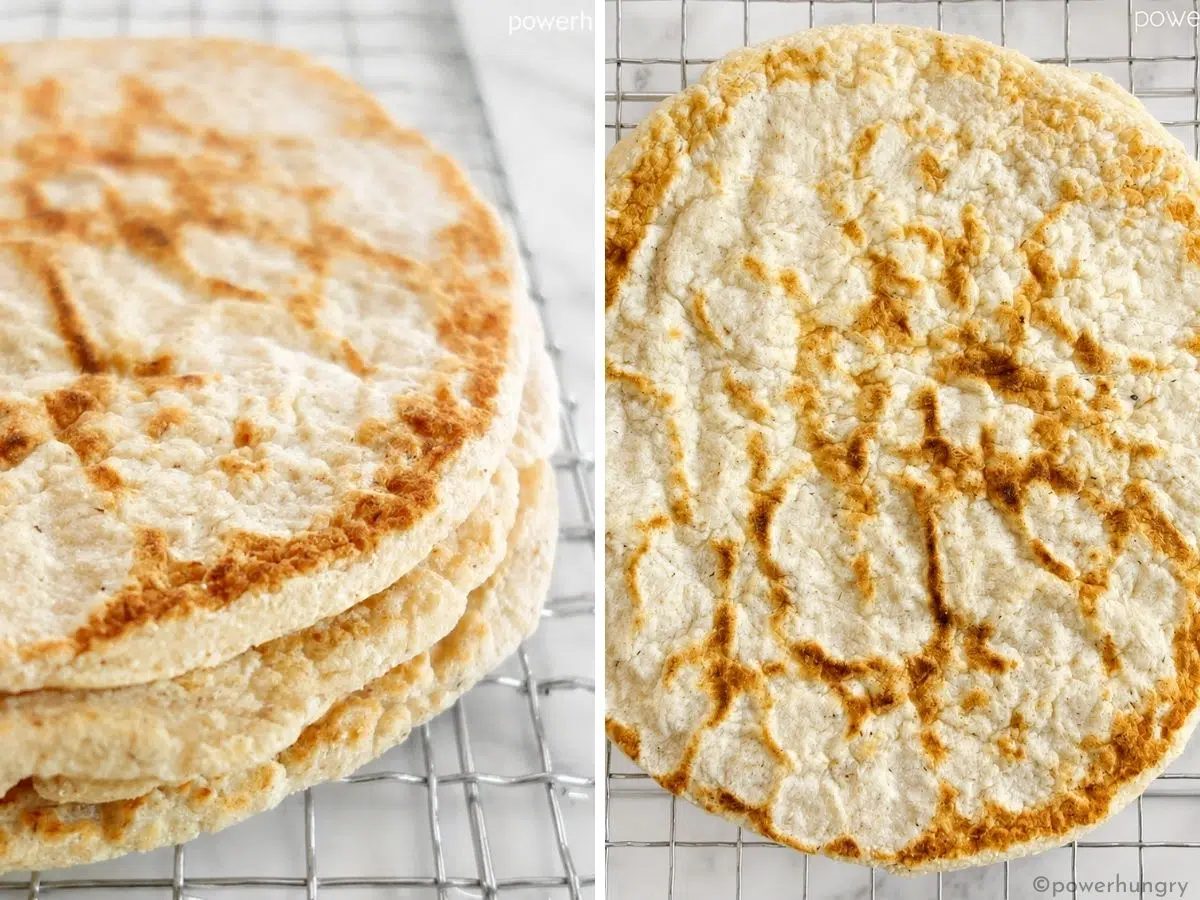
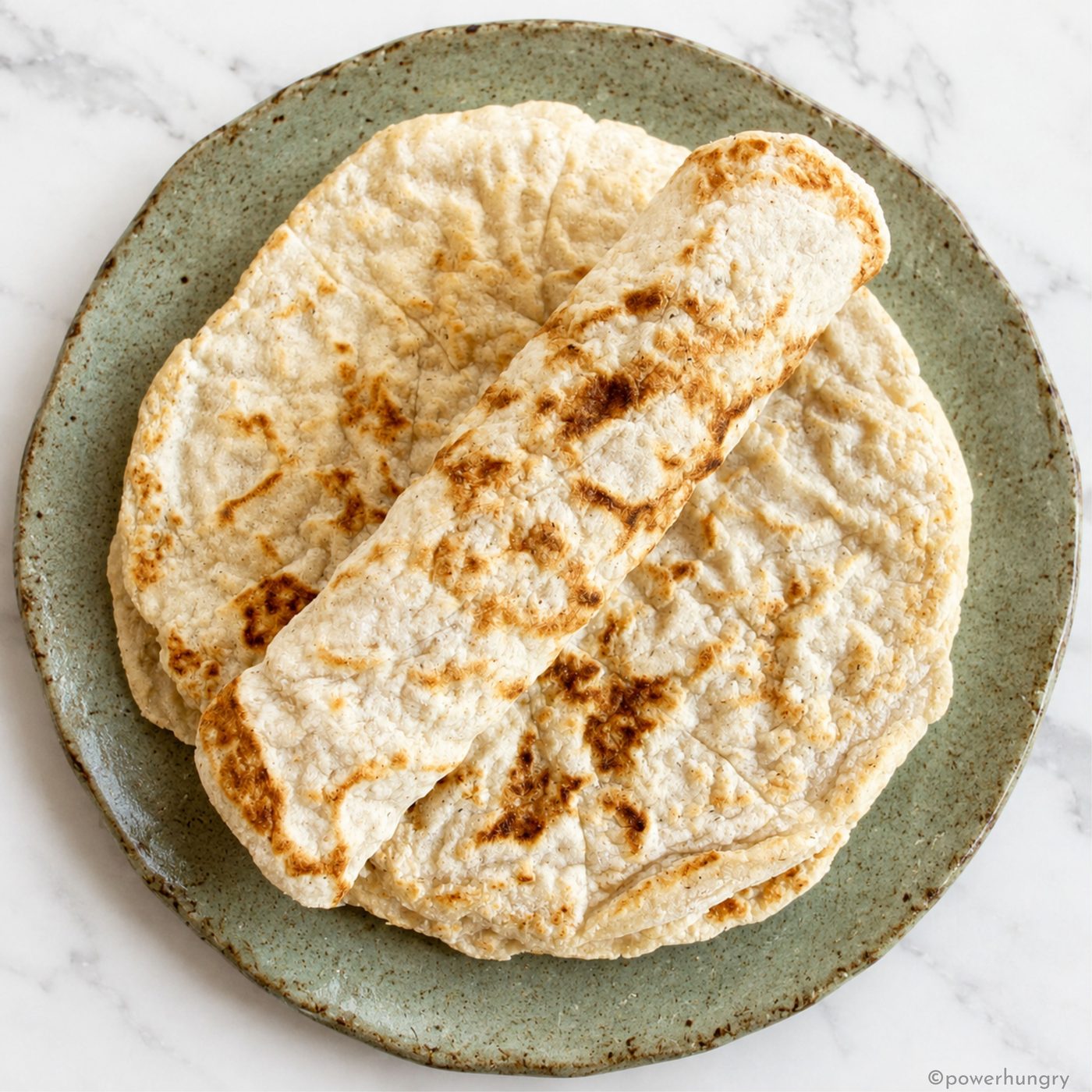
Coconut flour tortillas have a mild, faintly sweet flavor and a light coconut aroma, but they are neutral enough for both savory and sweet fillings. The texture is soft, tender and flexible, with golden skillet spots and a fluffy interior.
They are slightly thicker and puffier than a thin supermarket flour tortilla—somewhere in the very agreeable territory between a tender tortilla and a light flatbread. They should be pliable rather than crisp and fully cooked rather than damp or gummy in the center.
Storage
Let the tortillas cool completely before storing them; enclosing warm tortillas can trap condensation and make the surfaces damp.
- Room temperature:Store in an airtight container for up to 2 days in a cool kitchen.
- Refrigerator:Refrigerate in an airtight container for up to 2 weeks.
- Freezer:Place parchment between the tortillas, wrap well and freeze in an airtight container or freezer bag for up to 6 months.
- To reheat:Warm briefly in a dry skillet over medium heat, turning once. Frozen tortillas can be thawed at room temperature or overnight in the refrigerator before reheating.
Flavor Variations
Keep additions finely ground and modest—about 1 teaspoon of dry seasoning per batch—to preserve the structure of the dough.
- Garlic-herb:Add 1 teaspoon garlic powder and 1teaspoon dried Italian herbs.
- Smoky taco:Add 1/2 teaspoon chili powder or smoked paprika and 1/2 teaspoon ground cumin.
- Curry-spiced:Add 1/2 to 1 teaspoon mild curry powder.
- Rosemary-black pepper:Add 1 teaspoon finely crushed dried rosemary and 1/4 teaspoon of black pepper.
- Cinnamon:Add 1/2 teaspoon ground cinnamon for breakfast wraps or plain dessert tortillas.
- Warm spice:Add 1/4 teaspoon cinnamon and 1/4 teaspoon ground ginger.
Tips for Success
Weigh the coconut flour.Coconut flour is unusually absorbent, and a small measuring error can make a large difference. For reliable results, use 56 grams. If measuring by volume, spoon the flour very lightly into the cup and level it without packing.
Use whole psyllium husks.The recipe was developed and tested with whole psyllium husks. Psyllium powder absorbs water differently and has produced inconsistent results for readers, so it is not recommended here.
Look for soft, springy dough.After the 5-minute rest, the dough should feel soft, moist and pliable, but not wet. If it is dry or crumbly, knead in water 1 teaspoon at a time. If it is genuinely wet and sticky, add a very light sprinkle of coconut flour, mix and wait briefly before adding more.
Roll the tortillas thinly and evenly.A 7-inch (17.5-cm) circle gives each portion the right thickness. A thick or uneven tortilla may brown outside while remaining damp in the center. Patch cracks or uneven edges with small pieces of dough as needed.
Use a properly heated nonstick skillet.A hot skillet creates the steam that makes the tortilla puff. Use well-seasoned cast iron or a reliable ceramic nonstick skillet. If the tortilla darkens too quickly, reduce the heat slightly after the initial puff so the center has time to cook.
Chill sticky dough briefly.If a rolled tortilla clings stubbornly to the paper, place it—still between the sheets—in the freezer for 3 to 4 minutes. The paper should then peel away much more easily.
Let the tortillas cool on a rack.A wire rack allows steam to escape and prevents the bottoms from becoming damp. Cool the tortillas completely before placing them in an airtight container.
Ingredient Substitutions
This is an especially strict two-ingredient formula. The specialized behavior of coconut flour and whole psyllium husks is what makes it work.
- Coconut flour:There is no direct substitute. Almond flour, cassava flour, oat flour and all-purpose flour require entirely different ratios. Link readers to one of your recipes specifically developed for those flours instead.
- Whole psyllium husks:Flaxseed meal and chia seeds cannot be swapped directly into this recipe. For a psyllium-free option, direct readers to yourChia Coconut Flour Tortillas.
- Psyllium husk powder:I have not tested with psyllium powder, but you should be able to use an equal weight (10 grams/ 2 teaspoons) of psyllium powder. Some readers have made it work, but its absorption and texture can vary. Whole husks provide the reliable, tested result.
- Fine sea salt:Omit it for a sodium-free tortilla or adjust it to taste.
- Water:Plain tap or filtered water both work. Nondairy milk is unnecessary and has not been tested as a direct replacement.
Frequently Asked Questions
Do coconut flour tortillas taste strongly of coconut?No. They have a light coconut aroma and a faintly sweet flavor, but the taste is mild enough for tacos, burritos, enchiladas, curries and savory wraps. They also work well with sweet fillings.
Can I replace the coconut flour with another flour?No. Coconut flour has a unique absorbency, and the proportions in this recipe will not work with almond flour, cassava flour, oat flour or a gluten-free flour blend. Use a tortilla recipe developed specifically for the flour you have.
Can I make the tortillas without psyllium husks?Not with this formula. Psyllium provides the binding, flexibility and puff. Flaxseed meal and chia seeds are not direct substitutes. For a psyllium-free version, try myChia Coconut Flour Tortillas.
Can I use psyllium husk powder?I do not recommend it for this recipe. Psyllium powder is much finer than whole husks and absorbs liquid differently. Although a few readers have had success after changing the quantities, many others have reported wet, dry or fragile dough. Whole psyllium husks give the most consistent result.
Why is my dough too dry or crumbly?The most common cause is too much coconut flour, often from scooping or packing it into the measuring cup. Weigh 56 grams if possible. You may be able to rescue dry dough by kneading in water 1 teaspoon at a time until it feels soft and pliable.
Why is my dough wet or sticking to the paper?First, make sure the dough rested for the full 5 minutes and that you used the full amount of whole psyllium husks. If it remains wet, mix in a very small sprinkle of coconut flour and wait briefly. If the consistency is correct but the paper still clings, chill the rolled tortilla in the freezer for 3 to 4 minutes before peeling.
Why did my tortillas fall apart?Fragile tortillas usually point to too much coconut flour, the wrong form or amount of psyllium, or insufficient cooking. Measure carefully, use whole psyllium husks and wait until the first side is set and browned in spots before flipping.
Why did my tortillas stay raw in the middle?They were probably rolled too thickly or cooked at heat that browned the outside before the center could set. Roll every portion to about 7 inches (17.5 cm). Start with a hot skillet to encourage puffing, then lower the heat slightly if necessary and cook until the center is no longer damp.
Why did my tortillas not puff?The skillet may not have been hot enough, or the tortillas may have been rolled unevenly. Preheat the pan thoroughly and roll the dough to an even thickness. A tortilla can still taste good and remain flexible without a dramatic puff, so do not discard an otherwise well-cooked batch.
Can I use a tortilla press?Yes. Place each dough ball between sheets of parchment, wax paper or plastic wrap before pressing. Aim for an even tortilla about 7 inches (17.5 cm) across.
Can I make coconut flour tortillas ahead of time?Yes. Once completely cool, store them at room temperature for up to 2 days, refrigerate for up to 2 weeks or freeze for up to 6 months. Separate frozen tortillas with parchment so you can remove only what you need.
How can I use coconut flour tortillas?Use them for tacos, enchiladas, burritos, quesadillas, sandwich wraps and breakfast wraps. Their fluffy texture also makes them excellent alongside curry, chili, soup, stew, hummus or other dips.
More Grain-Free & Vegan Tortillas to Try
- 2-Ingredient Almond Flour Tortillas
- 1-Ingredient Red Lentil Tortillas
- 2-Ingredient Chickpea Flour Tortillas
- 3-Ingredient Sweet Potato Tortillas
- 1-Ingredient Black Bean Tortillas
- Grain-Free Spinach Tortillas {2 ingredients}
- 1-Ingredient Split Pea Tortillas
2-Ingredient Coconut Flour Tortillas
- Prep Time: 10 minutes
- Cook Time: 20 minutes
- Total Time: 35 minutes
- Servings: 4 tortillas
Ingredients
- 1/2 cup coconut flour (56 g) (I recommend weighing the flour for accuracy)
- 2 tablespoons whole psyllium husks (10 g) (see notes regarding psyllium powder)
- Optional: 1/4 teaspoon fine sea salt
- 1 cup water
Method
- In a small mixing bowl, stir the coconut flour , psyllium husk and (optional) salt, breaking up any lumps in the coconut flour .
- Add the water to the bowl, stirring until combined. Let stand 5 minutes to thicken and then shape dough into a ball (it will feel moist & springy).
- Cut the dough into 4 equal pieces. Shape each piece of dough into a ball.
- Place one dough ball between two large pieces of wax paper or parchment paper (plastic wrap will also work). Using a rolling pin , roll dough into a 7-inch (17.5 cm) circle. Carefully peel off top layer of paper.
- It is essential to use a nonstick skillet (I recommend very well seasoned cast iron or ceramic nonstick, as opposed to Teflon coated pans). If you do not have a nonstick pan, spritz a medium or large skillet with nonstick cooking spray . Place the skillet over medium-high heat and heat until it is hot.
- Place tortilla, dough side down, into skillet and carefully peel off second piece of paper.
- Cook the tortilla for 2 to 3 minutes until it begins to puff and the bottom is browned in spots (when you lift tortilla with a spatula). Flip the tortilla and cook the other side for 2 to 3 minutes longer until puffed and golden brown in spots.
- Transfer tortilla to a metal cooling rack and repeat with remaining pieces of dough.
- The tortillas are satisfying warm, room temperature, or cold!
Notes
Storage: Store the cooled tortillas in an airtight container at cool room temperature for 2 days, the refrigerator for 2 weeks or the freezer for up to 6 months. Psyllium Powder Option: I use WHOLE psyllium husks in my recipe. I have not tested with psyllium powder, but if that is what you have, use 2 teaspoons (10 g) of psyllium husk powder in place of the 2 tablespoons (10 g) whole psyllium husks . Tip for Removing Tortillas from Paper: if the paper is really sticking to the tortilla, place the tortilla (in its paper) in the freezer for 3 or 4 minutes (not much longer). The tortilla will come off with ease!