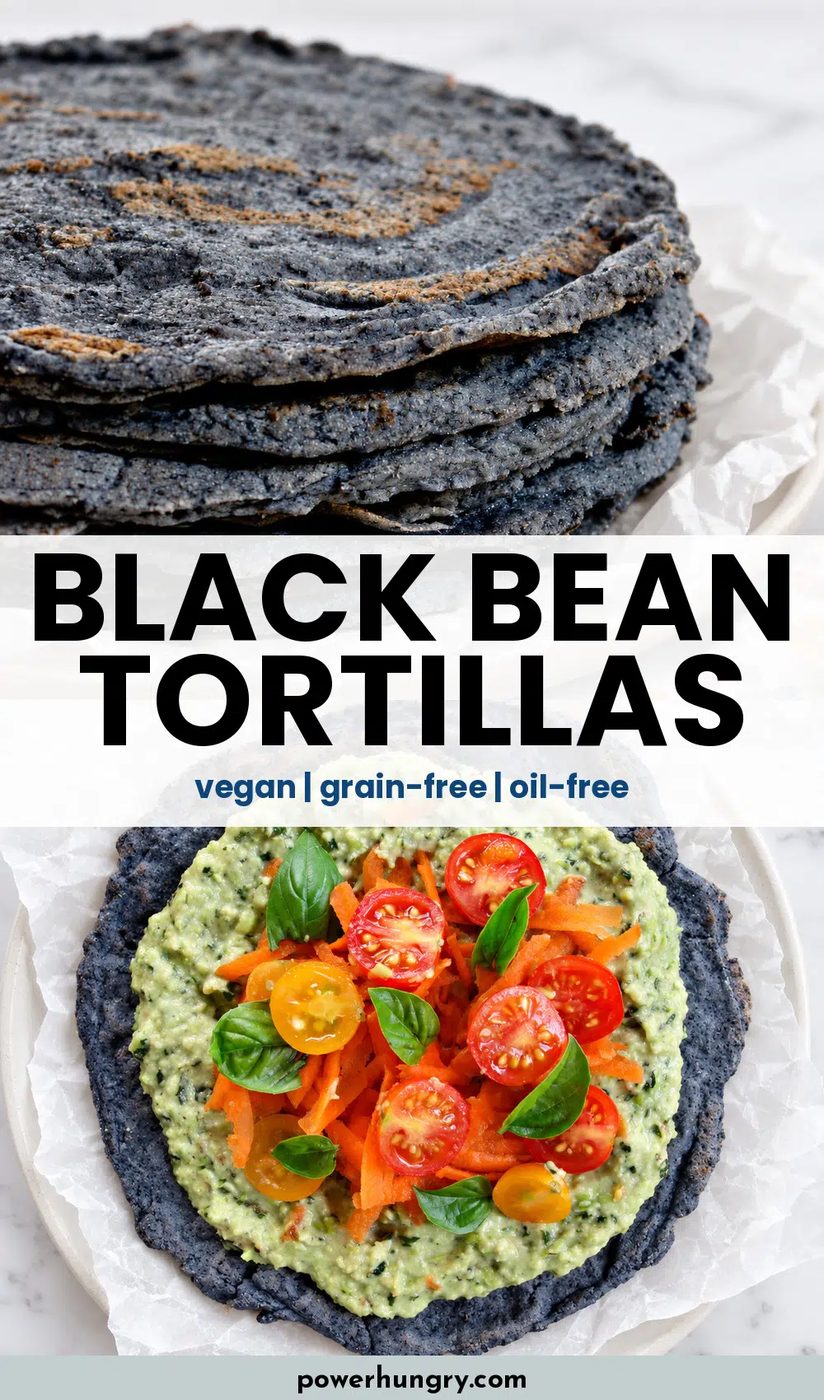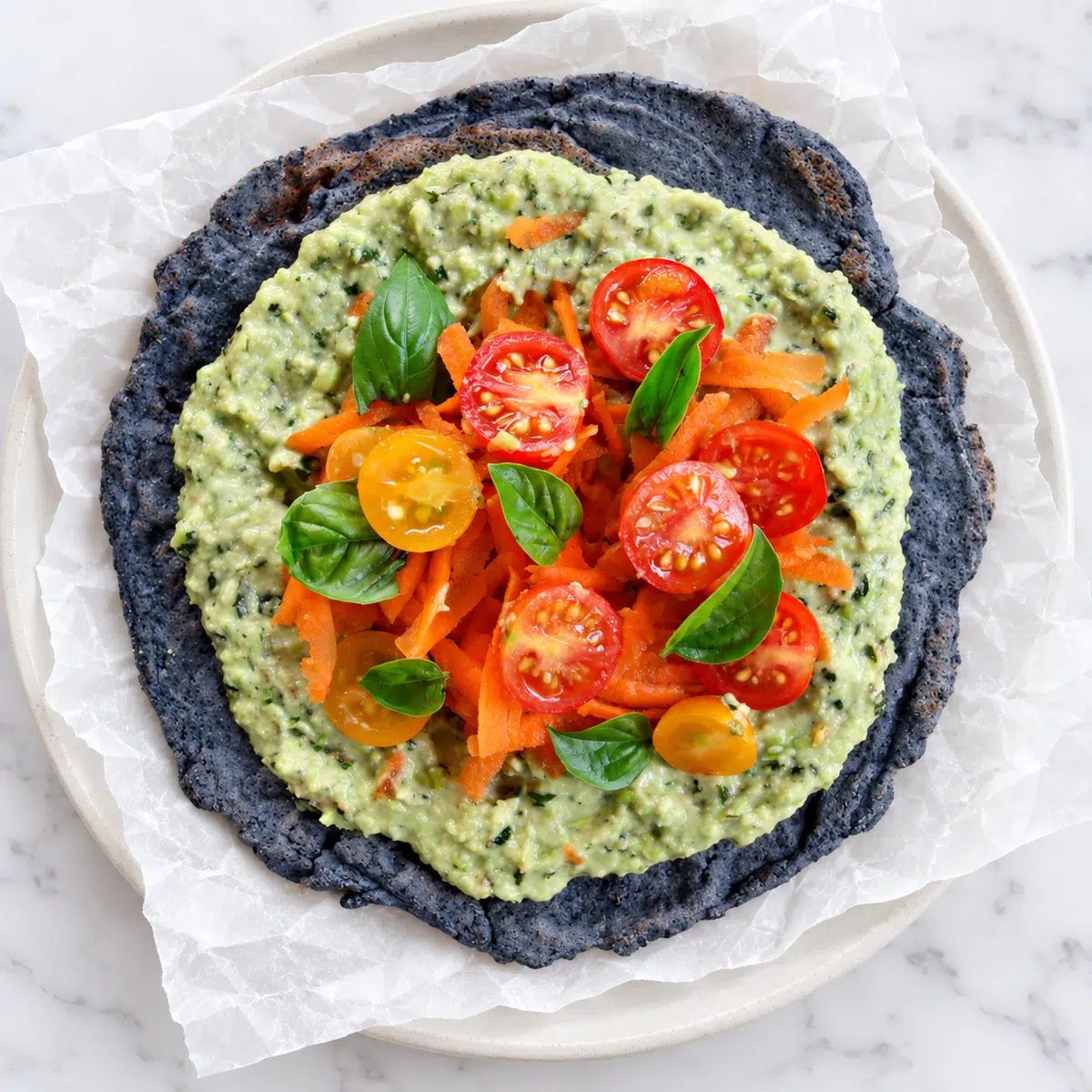
Hearty black bean tortillas need just one pantry ingredient, plus water and optional salt. Blend soaked dried beans into a smooth batter, then cook in a skillet for vegan, gluten-free, grain-free tortillas with no added oil.
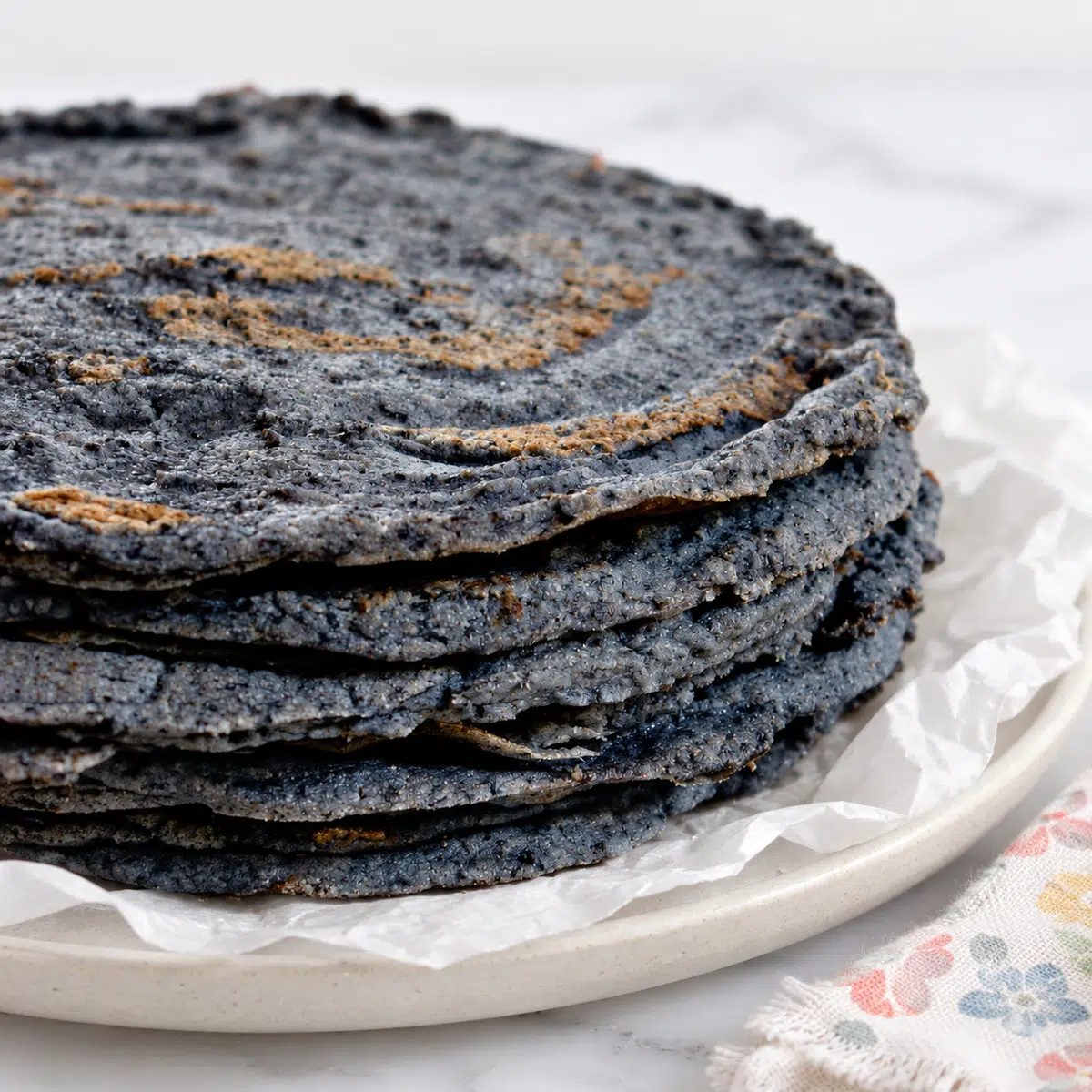
My question after making lentil and split pea tortillas was plain: will black beans “tortilla,” too? I pulled a bag of dried black beans from the pantry and started soaking to find out. Several batches later, with adjustments to the water and skillet heat, the answer was a very satisfying yes!
Black bean tortillas are hearty and filling, with a flavor that reminds me of blue corn tortillas. I love them topped with all kinds of options, like mypumpkin seed scramble,broccoli hummus, plenty of vegetables and fresh herbs, and sometimemorelegumes in the form of myred lentil tofuand orred lentil salmon. They’re a useful way to turn an inexpensive pantry staple into the foundation of a meal, without flour, eggs, or a long list of ingredients.
The batter does have one slightly unglamorous stage. My husband and son were quick to point out that it looks like wet concrete. They weren’t wrong—but that thick, gray batter cooks into satisfying tortillas. The important part is blending until it is completely smooth.
Plan ahead for the soak, then let your blender and skillet do the work. Do note that dried, uncooked beans are essential here. Canned beans will not produce the same result.
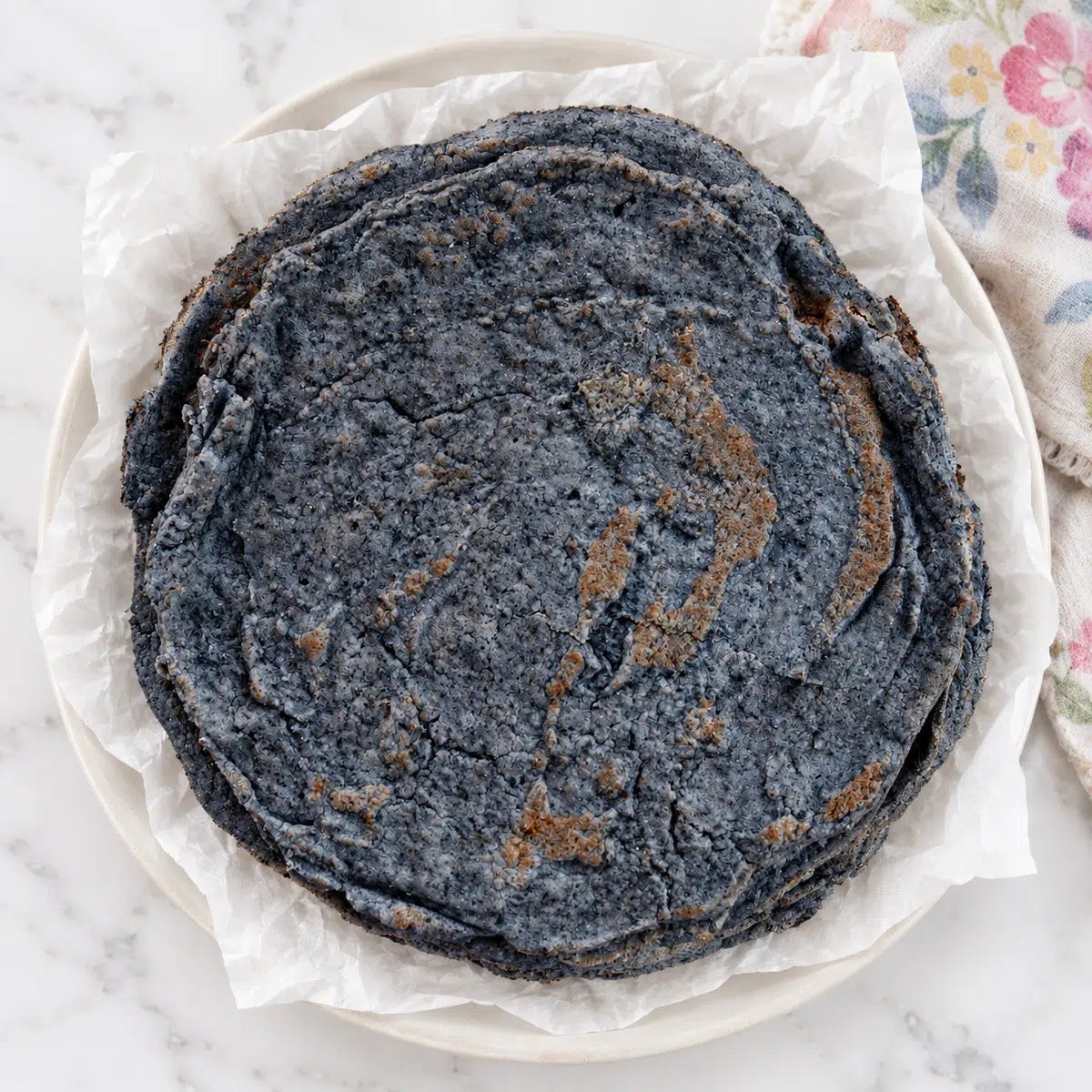
Why You’ll Love This Recipe
- One pantry ingredient:Dried black beans are the only required ingredient to buy; water and optional salt complete the batter.
- Vegan and allergy-friendly:Naturally egg-free, dairy-free, gluten-free, grain-free, nut-free, and soy-free.
- Protein and high fiber: Each tortilla has 5 grams protein and 4 grams fiber.
- Oil-free option:No oil goes into the batter, and a suitable nonstick surface lets you cook without adding any.
- Satisfying and sustaining:Black beans give the tortillas their hearty character, with protein and fiber in every serving.
- No added sugar:A plain, savory recipe without sweeteners.
- No kneading or rolling:Scoop the batter into your skillet and spread it with a spoon.
- Make-ahead convenience:Cook a batch for the refrigerator or freezer, then warm what you need.
Ingredients
The exact amounts of each ingredient are indicated in the recipe card at the end of the post.Toggle betweenUS Customary(volume) andMetric(weights) for preferred measurement option.
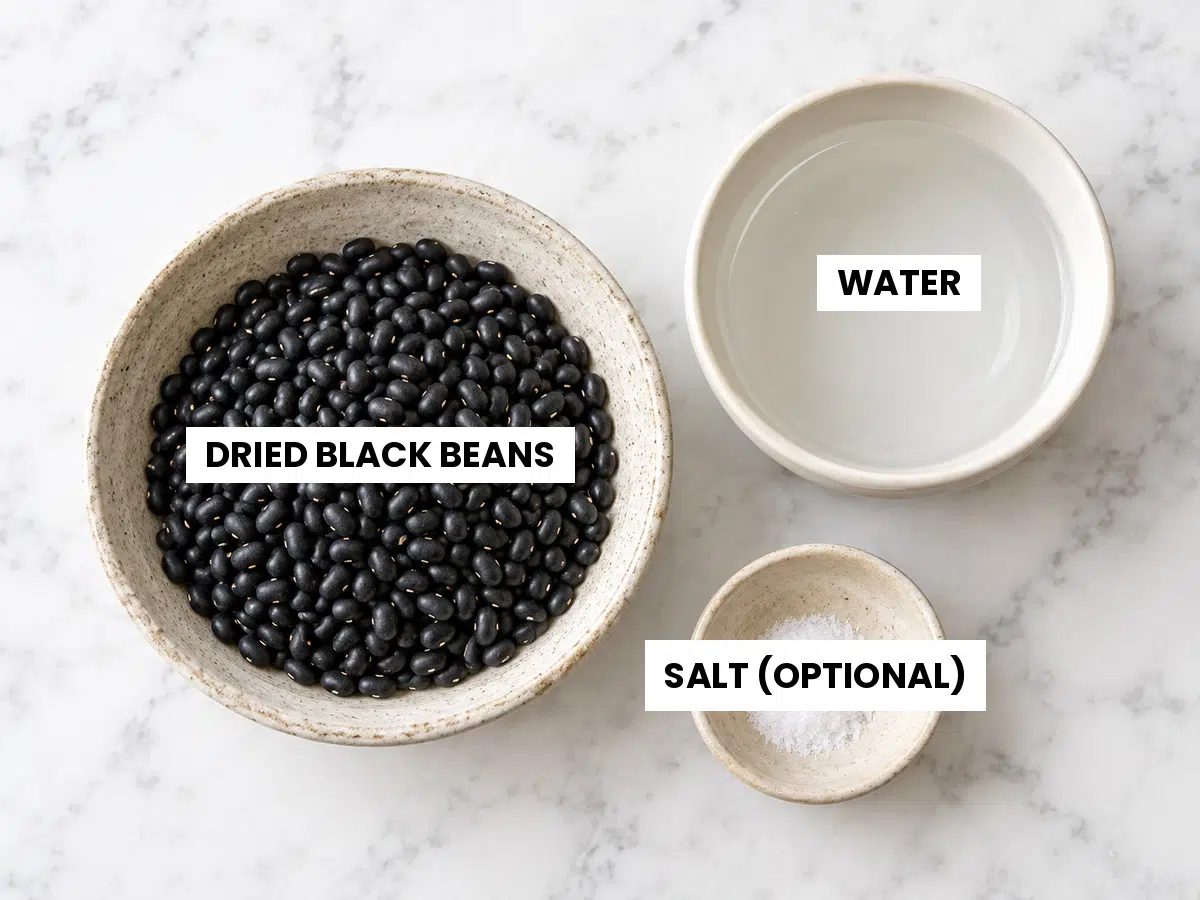
- Dried black beans:Choose dried, uncooked black beans. Soaking plumps them up for blending, but does not replace cooking. Cooked or canned black beans will not work in this formula.
- Water:Use water for soaking, then discard it. Fresh water goes into the blender with the drained beans to make the batter.
- Salt, optional:I recommend a little salt for flavor, but you can leave it out or adjust it to your taste.
How to Make Black Bean Tortillas
Note that the complete instructions are also in the recipe card below.
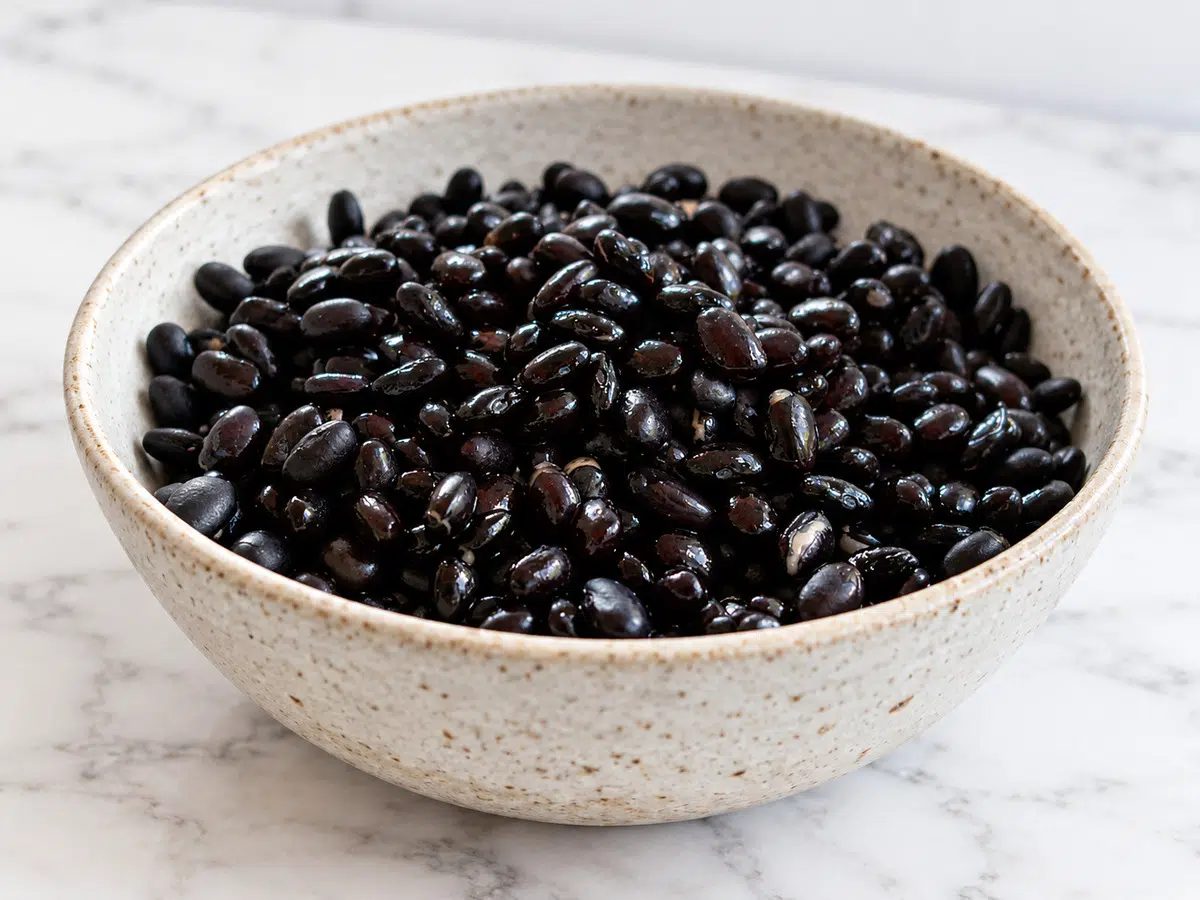
- Soak the beans.Rinse the dried black beans and place them in a medium bowl. Add enough water to cover by at least 1 inch. Soak for at least 12 hoursDrain and rinse.Discard all of the soaking water, rinse the beans, and drain well. The soaked beans will be glossy and plumped up.
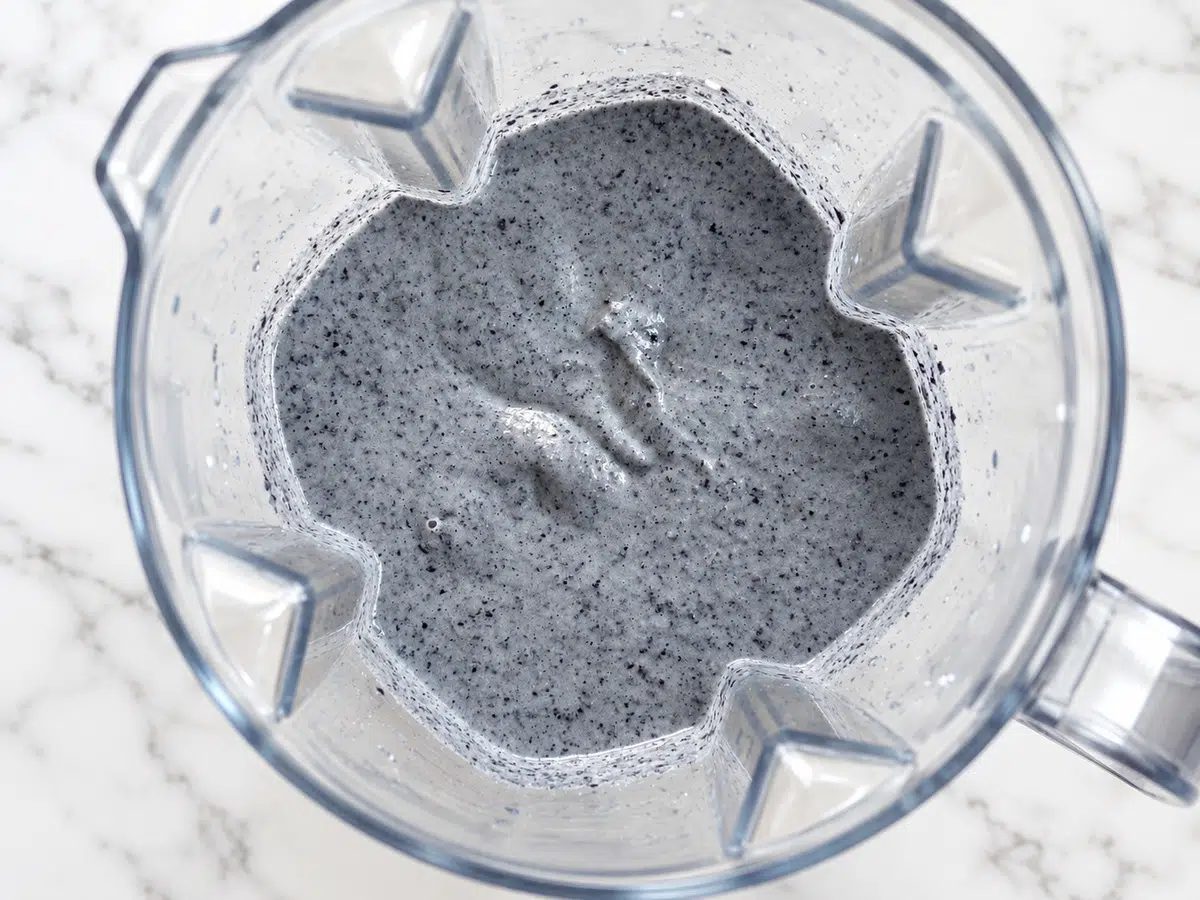
- Blend the batter.Blend the drained beans with the fresh water and optional salt until completely smooth, stopping to scrape down the container. A high-speed blender makes this easier. With a regular blender, pause as needed to let the motor rest. Transfer the thick batter to a bowl.
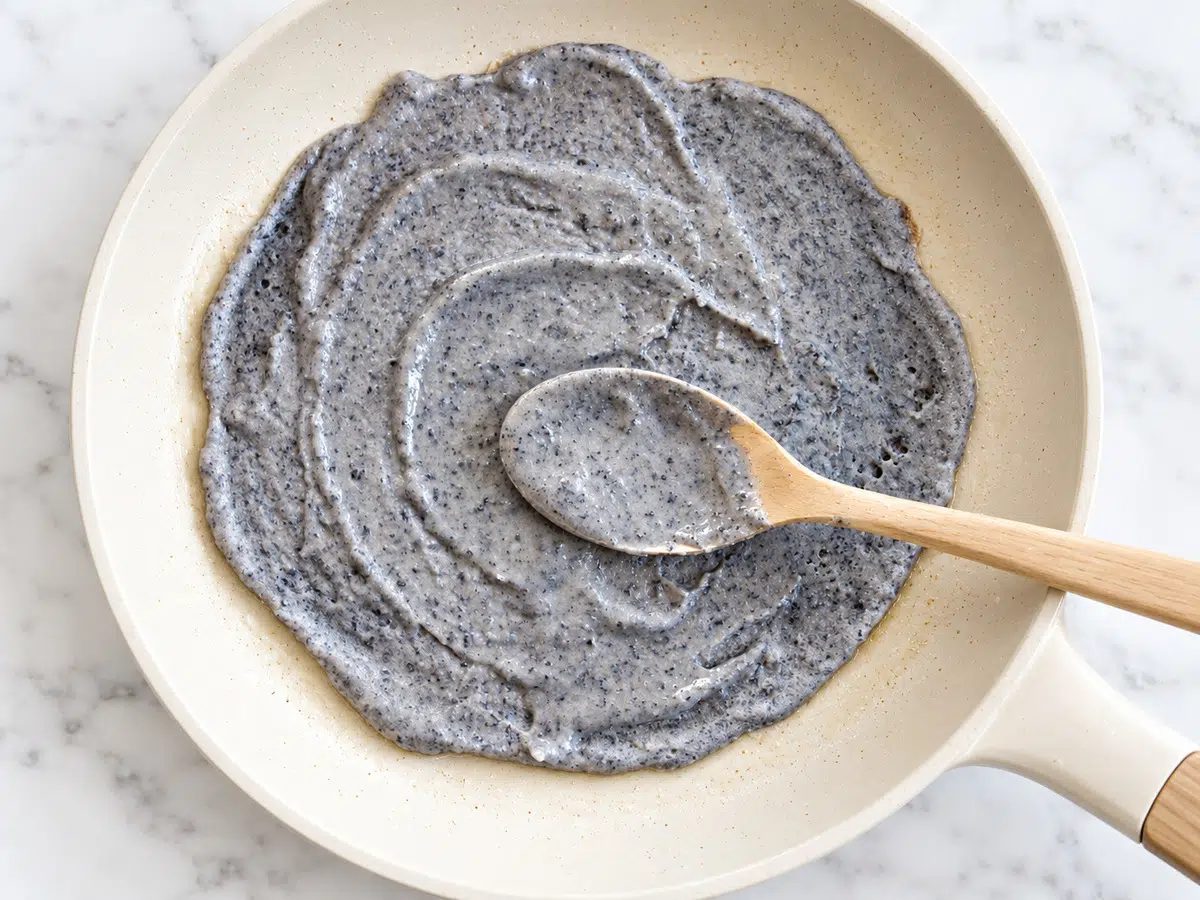
- Warm the skillet.Heat a nonstick skillet, well-seasoned cast-iron skillet, or nonstick griddle over medium heat, no hotter. Scoop 1/3 cup batter into the center of the warm pan. Wait 5 to 10 seconds, then use the back of a spoon to spread it into a 6½- to 7-inch circle.
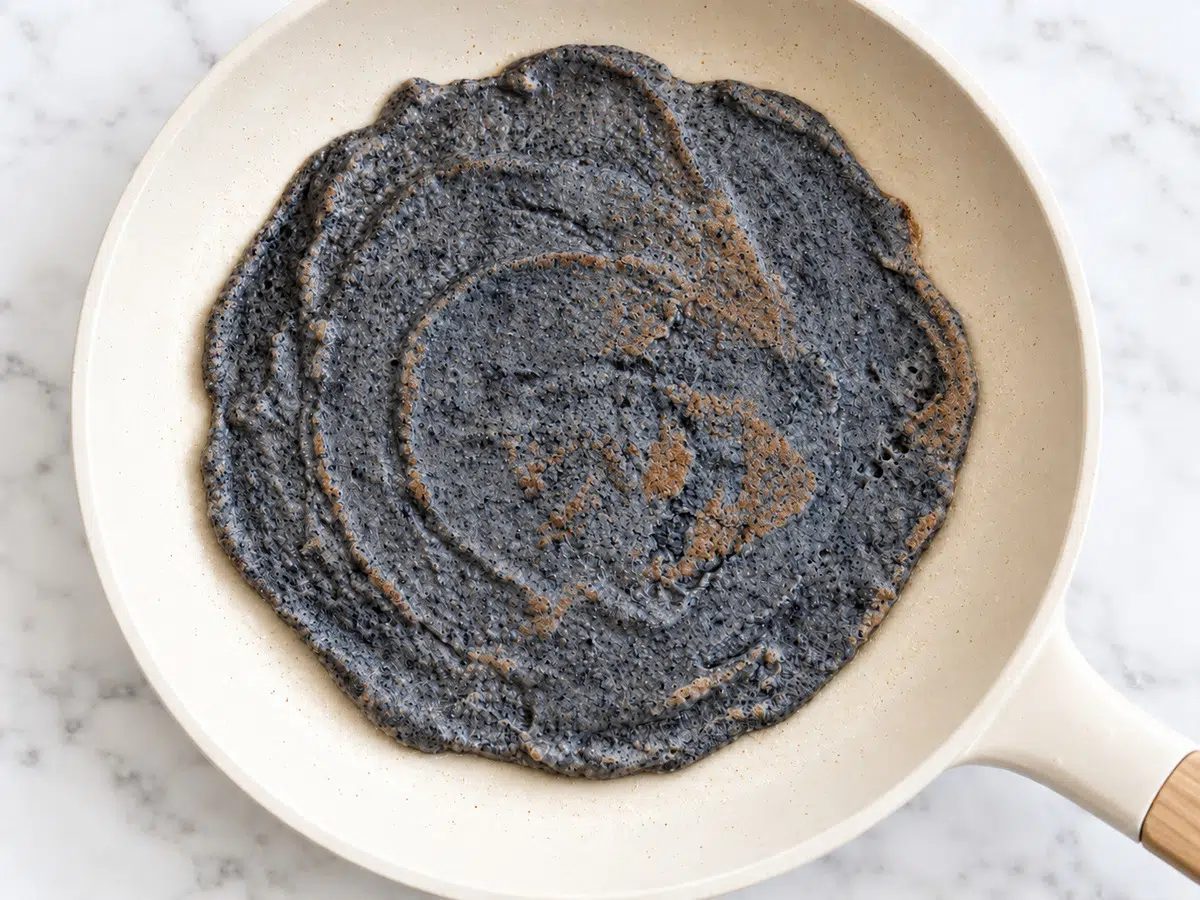
- Cook and flip.Cook for about 2 to 2½ minutes, until the surface looks dry and a spatula slides underneath easily. Flip and cook for about 1 minute more, until the other side is set and lightly browned.
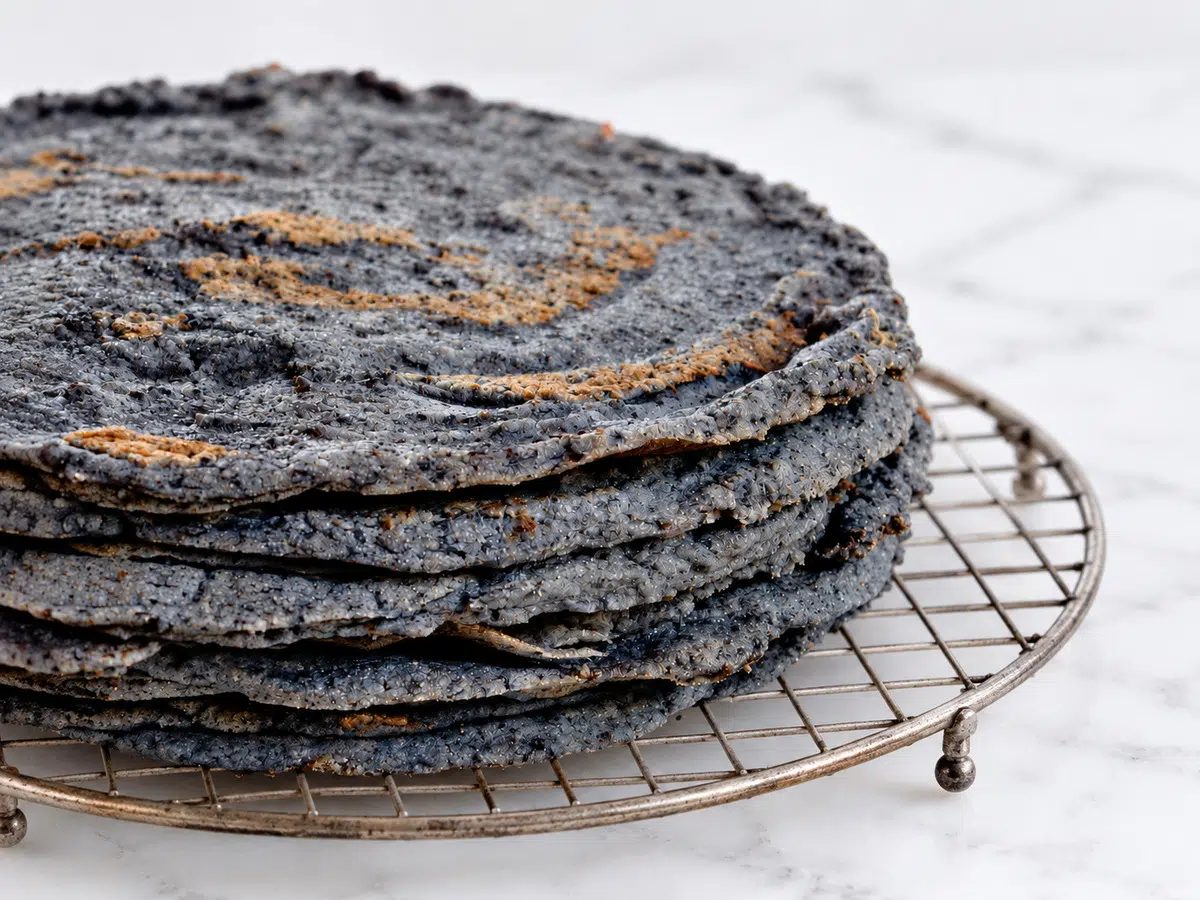
- Cool and repeat.Transfer to a wire rack and repeat with the remaining batter. Briefly take the skillet off the heat between tortillas if it is getting too hot. Warm the tortillas before filling or folding.
Taste and Texture
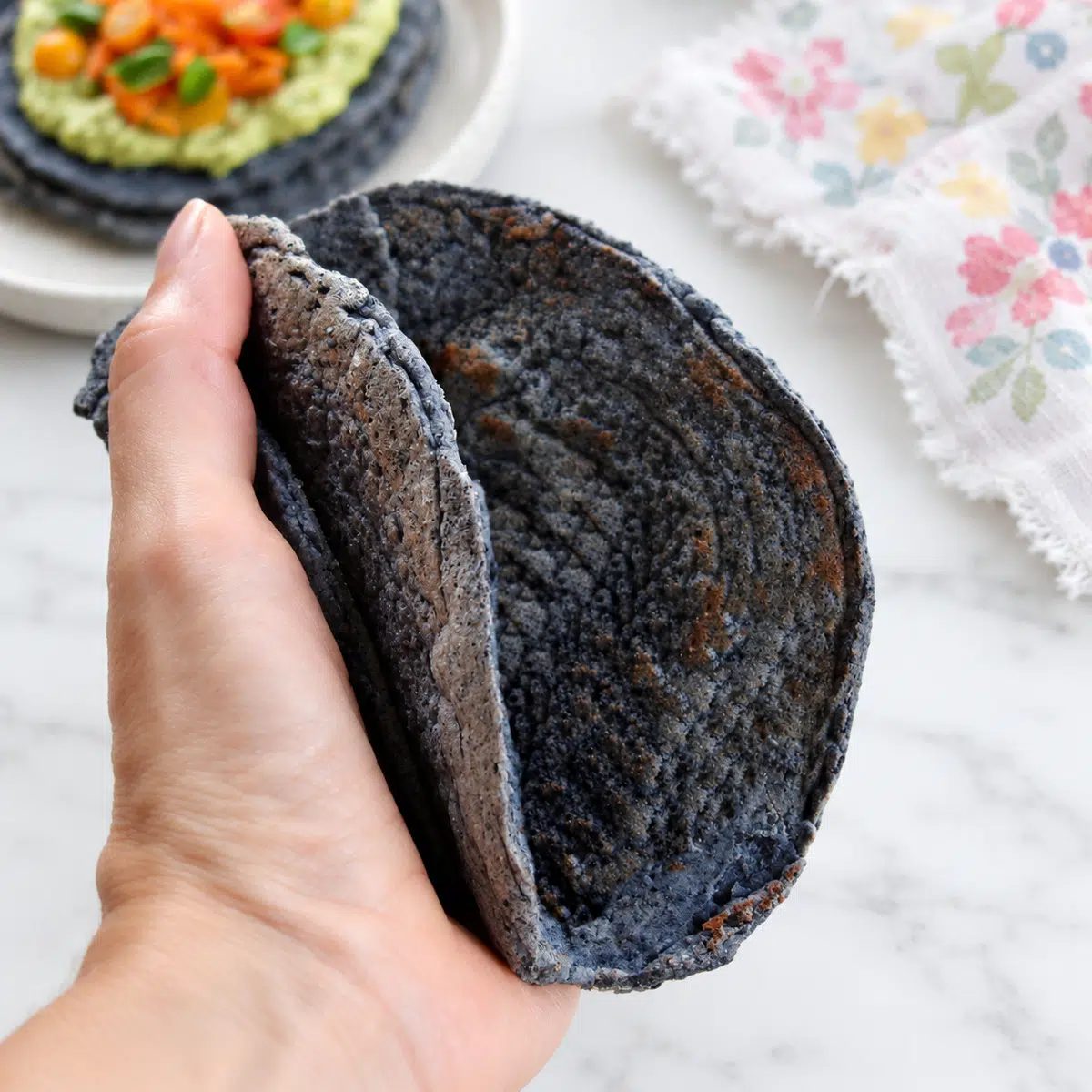
Expect a hearty tortilla with a flavor reminiscent of blue corn tortillas. Black bean tortillas are thicker than my red lentil tortillas, and they can crack when rolled cold. Warm them before folding, and keep the filling manageable rather than trying to make a tightly rolled burrito.
Storage
- Room Temperature:Cool on a wire rack, then refrigerate promptly. Do not leave cooked tortillas out for more than 2 hours, or 1 hour when the temperature is above 90°F.
- Refrigerator:Store in a covered container at 40°F or below and use within 3 to 4 days.
- Freezer:Store cooled tortillas in an airtight freezer container for up to 6 months. Separate with parchment if you want to remove them individually.
- Rewarm:Thaw frozen tortillas in the refrigerator. Warm until hot throughout before serving, on a baking sheet in a low heat oven, in a large skillet over medium heat, or in the microwave for 5 to 10 seconds. Warmed tortillas are more flexible for folding.
Serving Suggestions
Serve the tortillas warm, as you would flour tortillas or corn tortillas, with your go-to plant-based taco fillings. I love filling it with myAlmond Meat CrumblesorMushroom Oat Meat Crumbles, along with avocado, tomatoes, lettuce or cabbage slaw, and salsa. Mashed beans, roasted sweet potatoes orroasted carrot spread,straightforward beet hummus, gratedvegan Cheddar cheeseor sautéed vegetables also make sensational and satisfying fillings.
For an straightforward lunch, spread a warm tortilla with mygreen pea guacamoleand add vegetables. An open-faced tortilla works well when you want plenty of toppings without needing the tortilla to roll tightly closed.
Flavor Variations
Cumin and chili powderFor a savory variation, add a teaspoon ground cumin and 2 teaspoon of mild chili powder (or smoked sweet paprika) to the batter. No adjustments needed.
Onion and garlicAdd 1 to 1 1/2 teaspoons each of onion powder and garlic powder to the bean mixture (batter). No other changes needed.
Tips for Success
My tips for smooth batter and straightforward flipping- Measure the beans before soaking.Start with the dry bean amount in the recipe card, not the same volume of soaked beans.
- Discard the soaking water.Drain and rinse before adding the measured fresh water. Keeping the soaking water makes the batter too thin.
- Blend thoroughly.The batter needs to be completely smooth, without little pieces of bean. Give a regular blender rest breaks as needed.
- Keep the heat moderate.Medium heat is enough. If the skillet gets too hot as you work, briefly remove it from the burner between tortillas.
- Wait before spreading.Let the batter sit in the pan for 5 to 10 seconds so a little of it sets before spreading.
- Let the tortilla release.If a spatula won’t slide underneath easily, cook a little longer before trying again.
- Protect your skillet.Use a spoon and spatula appropriate for its surface; avoid metal utensils on a coating that can scratch.
- Warm before folding.Cold tortillas are more likely to crack when rolled.
Ingredient Substitutions
Which substitutions work?- Pinto beans:Dried pinto beans work here, and readers have reported success (I have not tested it). Soak, drain, and blend them following the same method.
- Cooked or canned beans:Neither a can of black beans nor home-cooked black beans will work in this recipe. You need dried, uncooked beans that are soaked before blending.
- Other bean varieties:I suggest sticking with black beans or pintos. Kidney beans and white beans do not work well in this recipe.
- Black bean flour:I have not established a flour-to-water ratio for this recipe. I suggest using the whole dried beans as directed.
- Salt:Leave it out if you prefer; it is optional.
Frequently Asked Questions
Why are they called 1-ingredient tortillas?Dried black beans are the one required pantry ingredient. Water is needed for soaking and blending, and salt is optional.
Can I use canned black beans?No. I use dried, uncooked beans, soak them, then blend them with fresh water. Canned or previously cooked beans will not hold together the same way.
Can I soak the beans in the refrigerator?Yes. I have soaked them in the refrigerator with good results. Allow at least 12 hours, then drain and rinse before blending.
Can I use a regular blender?Yes, but it takes longer. I suggest stopping several times to let the motor rest, then continuing until the batter is completely smooth. A high-speed blender makes the job easier.
Why is my batter runny?I suggest checking the water first. Discard all of the soaking water, then blend the drained beans with only the fresh water listed in the recipe. The finished batter should be thick, not watery.
Why is my tortilla sticking?Make sure the pan has a suitable nonstick surface and is warmed over medium heat. Wait until the top looks dry and a spatula slides underneath readily before flipping. A regular skillet needs cooking spray or a little oil.
Are black bean tortillas flexible enough for wraps?They are more flexible when warm. I suggest warming them before filling and folding; they are thicker than my red lentil tortillas and can crack if rolled cold or too tightly.
Can I double the recipe?Yes. Double both the dried beans and the fresh blending water, along with the optional salt if using it. You will also need enough soaking water to cover the beans. Blend in batches if necessary for your blender.
1-Ingredient Black Bean Tortillas
- Prep Time: 5 minutes
- Cook Time: 5 minutes
- Total Time: 12 hours
- Servings: 8 7-inch (17.5 cm) tortillas
Ingredients
- 1 cup dried black beans rinsed and drained
- water for soaking
- 1 1/2 cups water (I use filtered tap water)
- Optional: 1/2 teaspoon salt
Method
- Soak the beans. Place the rinsed beans in a medium bowl or other container. Add enough water to cover by at least 1 inch (2.5 cm). Let stand for at least 12 hours. Refrigerated overnight soaking also works. Drain and rinse, discarding all of the soaking water.
- Blend until smooth. Add the drained, soaked beans, 1½ cups fresh water, and optional salt to a blender, preferably a high-speed blender . Blend on high until completely smooth, with no tiny bumps, stopping once or twice to scrape down the sides. With a regular blender, pause as needed to let the motor rest. Scrape the thick batter into a bowl.
- Heat the pan. Warm a nonstick skillet , well-seasoned cast-iron skillet, or nonstick griddle over medium heat, no hotter. If using a regular skillet, add nonstick cooking spray or a small amount of oil to prevent sticking.
- Spread the batter. Add 1/3 cup batter to the center of the warm pan. Wait 5 to 10 seconds, then use the back of a spoon to spread into a 6½- to 7-inch circle. Use a spoon suitable for your pan’s surface.
- Cook the tortilla. Cook for about 2 to 2½ minutes, until the surface appears dry. Slide a spatula underneath; if it does not slide under easily, cook a little longer. Flip and cook for about 1 minute more, until the other side is set and lightly browned.
- Cool and repeat. Transfer the tortilla to a wire rack. Repeat with the remaining batter, briefly removing the skillet from the heat between tortillas if it gets too hot. Cool completely before storing; warm before filling or folding.
Notes
Storage: Cool and refrigerate promptly, within 2 hours of cooking (1 hour above 90°F). Store covered in the refrigerator at 40°F or below for 3 to 4 days, or in an airtight freezer container for up to 6 months. Thaw in the refrigerator and warm until hot throughout before serving. Bean choice: Cooked or canned black beans will not work. Use dried, uncooked black beans that have been soaked, drained, and rinsed. Dried pinto beans also work; kidney beans and white beans are not recommended. Batter: Blend until completely smooth. Discard the soaking water and use fresh water for blending. Oil-free cooking: The batter contains no added oil. To keep the finished tortillas oil-free, cook on a suitable nonstick surface without cooking spray or added oil. Flexibility: The tortillas are thicker than red lentil tortillas. Warm before folding; avoid tightly rolling them cold. Timing: The soaking time is additional. Cooking the full batch one tortilla at a time takes longer than the time for an individual tortilla.